
Fish feed processing is an important part of modern aquaculture. The quality of fish feed directly affects fish growth, feed conversion efficiency, water quality, and farming profitability. fish feed extruder machine Whether you are operating a small fish feed processing workshop or running a large-scale fish feed production plant, paying attention to every stage of production is essential.
However, producing high-quality fish feed involves more than simply mixing raw materials and processing them through an extruder. Factors such as ingredient selection, formulation, grinding, mixing, extrusion, drying, cooling, and storage all influence the final product.
So, what should you pay attention to when processing fish feed? This article explores the key considerations and practical solutions for producing nutritious, stable, and high-quality fish feed.

1. Choose High-Quality Raw Materials
Raw material selection is the foundation of fish feed production. The nutritional value, freshness, and safety of ingredients directly determine the quality of the finished feed.
Common raw materials used in fish feed production include:
- Fish meal: Provides high-quality animal protein and essential amino acids.
- Soybean meal: Supplies plant-based protein and helps reduce formulation costs.
- Corn and wheat: Provide carbohydrates and energy.
- Wheat flour: Helps improve pellet binding and processing performance.
- Fish oil and vegetable oils: Supply essential fatty acids and increase energy density.
- Vitamins and minerals: Support fish growth, immunity, and normal physiological functions.
When purchasing raw materials, pay attention to freshness, moisture content, nutritional composition, and possible contamination. Avoid ingredients containing mold, insects, excessive impurities, or unpleasant odors.
In particular, raw materials should be tested for mycotoxins, oxidation, and other potential contaminants when relevant.
The quality of raw materials should be evaluated according to the nutritional requirements of the target fish species rather than simply choosing ingredients with the lowest prices.
2. Develop a Scientific Feed Formula
Different fish species have different nutritional requirements. Even fish of the same species may need different feed formulations at different growth stages.
For example, young fish generally require easily digestible feed with relatively high protein levels, while adult fish may need different proportions of protein, carbohydrates, and fats.
When designing a fish feed formula, consider the following factors:
Protein content: Protein is essential for fish growth and tissue development. The required level depends on fish species, age, growth stage, and farming conditions.
Fat content: Fat provides concentrated energy and essential fatty acids. However, excessive fat may cause oxidation problems and negatively affect feed quality.
Carbohydrate content: Carbohydrates provide energy and can help reduce the cost of feed formulations when used appropriately.
Vitamins and minerals: These nutrients support metabolism, bone development, immunity, and overall health.
Digestibility: Ingredients should be selected according to their digestibility and suitability for the target fish species.
A scientific formulation should balance nutritional requirements, ingredient costs, and processing characteristics. It is also important to avoid excessive use of low-cost ingredients that may reduce feed digestibility.
3. Control Raw Material Grinding Size
Grinding is an important step before mixing and extrusion. The particle size of raw materials affects mixing uniformity, extrusion performance, pellet appearance, and nutrient digestibility.
If particles are too large, they may cause uneven mixing and produce rough or inconsistent pellets. Large particles can also create problems when producing small-diameter fish feed.
If particles are too fine, grinding energy consumption may increase, fish feed extruder machine and excessive dust can create additional handling and safety problems.
Therefore, the grinding fineness should be selected according to the target pellet diameter, fish species, and processing equipment.
A hammer mill is commonly used to grind grains and other dry ingredients into suitable particles. A properly selected screen size helps achieve a consistent particle distribution.
For small fish feed pellets, finer grinding is generally necessary to obtain a uniform structure and smooth pellet surface.
4. Ensure Uniform Mixing of Ingredients
After grinding, different ingredients need to be mixed thoroughly according to the established formulation.
Uniform mixing is essential because fish require balanced nutrients in every pellet. If vitamins, minerals, amino acids, or other minor ingredients are distributed unevenly, some pellets may contain excessive nutrients while others may lack essential components.
To improve mixing quality, consider the following points:
- Accurately weigh every ingredient according to the formula.
- Add small quantities of vitamins and minerals through appropriate premixing.
- Select a mixer with suitable capacity and mixing efficiency.
- Control mixing time to achieve uniform distribution.
- Avoid overloading the mixing equipment.
- Inspect the mixture regularly for consistency.
A ribbon mixer or paddle mixer can be used depending on the production capacity and material characteristics.
It is also important to control the moisture content of the mixed materials because excessive or insufficient moisture can affect subsequent extrusion.
5. Control Moisture Content Before Extrusion
Moisture content plays an important role in fish feed extrusion.
Water helps soften raw materials, improve starch gelatinization, and regulate the material’s behavior inside the extruder.
If the moisture content is too low, the material may experience excessive friction, unstable extrusion, and poor pellet formation.
If moisture content is too high, the extruded pellets may become too soft, lose their shape, or require longer drying times.
The appropriate moisture level depends on the formulation, extruder design, and processing conditions.
Water or steam can be added during conditioning or extrusion to achieve the desired moisture level.fish feed extruder machine Operators should monitor moisture content consistently instead of relying only on visual inspection.
6. Pay Attention to Extrusion Temperature and Pressure
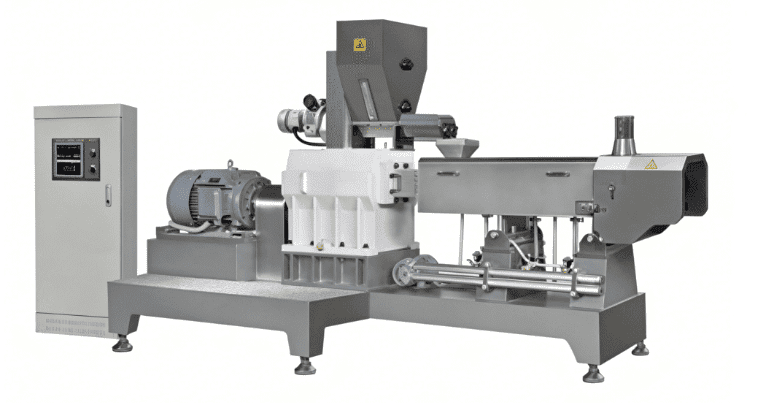
Extrusion is one of the most important stages in modern fish feed processing.
During extrusion, raw materials are exposed to heat, moisture, pressure, and mechanical shear. These conditions help gelatinize starch, improve ingredient digestibility, and form pellets with the required physical characteristics.
There are several important factors to control:
Temperature: Different formulations require different processing temperatures. Insufficient heat treatment may result in poor starch gelatinization, while excessive temperatures may damage heat-sensitive nutrients.
Screw speed: Screw speed influences material transportation, mixing, shear, and residence time.
Moisture: Moisture affects material flow, expansion, and pellet structure.
Pressure: Appropriate pressure helps produce stable and uniform pellets.
Die design: Die hole diameter and shape determine the basic dimensions of the finished feed.
The operating parameters should be adjusted according to the feed formula, fish species, pellet size, and equipment specifications.
For example, floating fish feed generally requires suitable expansion and internal porosity, while sinking feed needs a denser structure and controlled expansion.
Operators should avoid using identical extrusion parameters for every formulation.
7. Select the Appropriate Floating or Sinking Feed Processing Method
Fish feed can generally be classified into floating, slow-sinking, and sinking feed according to its behavior in water.
Different fish species have different feeding habits, so choosing the correct feed type is essential.
Floating fish feed
Floating feed is commonly used for fish that feed near the water surface. fish feed extruder machine It allows farmers to observe feeding activity and adjust feeding quantities.
To produce floating feed, the extrusion process needs to create an appropriate expanded structure. Starch gelatinization, moisture, temperature, pressure, and die conditions all influence buoyancy.
Sinking fish feed
Sinking feed is suitable for bottom-feeding fish and other species that obtain food underwater.
Compared with floating feed, sinking feed generally requires a denser structure and lower expansion.
The processing conditions should be adjusted to produce pellets with suitable density, water stability, and durability.
Selecting the appropriate processing method helps ensure that fish can consume feed efficiently while reducing unnecessary feed waste.
8. Control Pellet Size and Shape
Pellet size and shape are important factors affecting fish feeding efficiency.
If pellets are too large, young fish may have difficulty swallowing them. If pellets are too small, larger fish may need to consume more pellets to obtain sufficient nutrients.
The appropriate pellet diameter should be determined according to fish species, mouth size, age, and feeding habits.
Common fish feed pellet sizes range from less than 1 mm to several millimeters.
A cutting system installed after the extruder can control pellet length. Different die configurations can produce pellets with different diameters.
When adjusting pellet size, pay attention to:
- Die hole diameter.
- Cutter speed.
- Blade condition.
- Material flow rate.
- Pellet uniformity.
The finished pellets should have consistent dimensions, a smooth surface, and sufficient mechanical strength.
9. Control the Drying Process
Drying is another critical stage in fish feed production.
Freshly extruded pellets usually contain relatively high moisture levels. If they are not dried properly, they may develop mold, lose their shape, or deteriorate during storage.
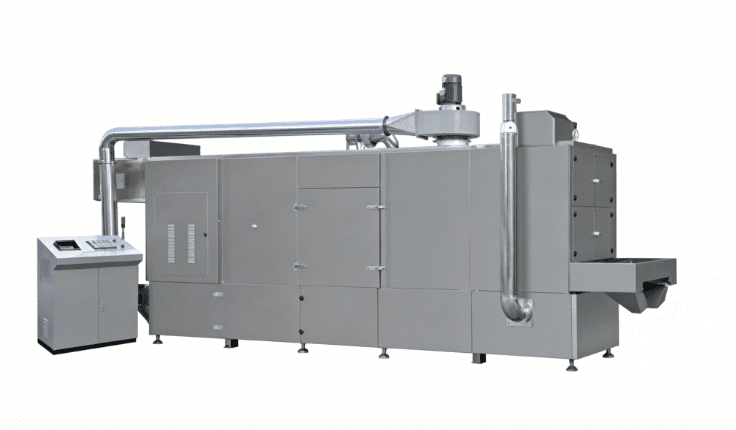
A continuous mesh belt dryer or multi-layer dryer is commonly used in commercial fish feed production lines.
When drying fish feed, pay attention to the following factors:
Drying temperature: Excessive temperatures may damage heat-sensitive vitamins and other nutrients. The temperature should be selected according to the formulation and equipment.
Drying time: Insufficient drying may leave excessive moisture inside the pellets, while excessive drying can increase energy consumption and affect pellet quality.
Air circulation: Uniform hot-air distribution helps prevent uneven drying.
Material thickness: Excessively thick material layers can cause inconsistent moisture levels.
Final moisture content: The target should be determined according to product specifications, packaging requirements, and storage conditions. Many commercial dry feeds are designed to reach approximately 8%–12% moisture, although the appropriate target varies.
It is important to measure the moisture content of finished pellets rather than judging dryness only by appearance.
10. Pay Attention to Cooling
After drying, fish feed pellets should be cooled before packaging.
Freshly dried pellets are often still warm. Packaging them immediately may cause condensation inside the bags when the temperature changes.
This can increase moisture levels and create conditions favorable for mold growth.
A counterflow cooler or other suitable cooling equipment can reduce pellet temperature efficiently.
During cooling, ensure that:
- Airflow is sufficient and evenly distributed.
- Pellets are not excessively exposed to humid air.
- The cooling process does not cause unnecessary pellet breakage.
- The finished product reaches a suitable temperature before packaging.
Proper cooling helps maintain pellet stability and extends storage life.
11. Apply Oil and Nutritional Coatings Properly
Some fish feed formulations require additional oil, vitamins, or functional ingredients after extrusion.
Post-extrusion coating can improve energy density, provide essential fatty acids, and help incorporate heat-sensitive ingredients.
A vacuum coater or suitable spraying and coating system can be used for this purpose.
When applying oil, pay attention to the following:
- Control the amount of oil added.
- Ensure uniform distribution across the pellets.
- Avoid excessive surface oil that may cause pellets to stick together.
- Use appropriate ingredients with good oxidation stability.
- Protect heat-sensitive nutrients from unnecessary processing temperatures.
Oil coating should be compatible with the pellet structure and intended storage conditions.
12. Improve Pellet Water Stability
Water stability is particularly important for aquaculture feed.
If pellets disintegrate too quickly in water, nutrients may dissolve or disperse before fish can consume them. This increases feed waste and may negatively affect water quality.
Several factors influence water stability:
- Raw material selection.
- Starch gelatinization.
- Protein composition.
- Grinding fineness.
- Extrusion conditions.
- Pellet density.
- Binder selection, when needed.
Appropriate starch gelatinization helps improve pellet structure and binding.
However, water stability should not be improved at the expense of digestibility or nutritional balance.
Manufacturers should conduct water stability tests under conditions that reflect actual feeding environments.
13. Strengthen Quality Control During Production
Quality control should cover the entire production process, from raw material inspection to finished product packaging.
Important quality indicators include:
Nutritional composition: Test crude protein, crude fat, crude fiber, ash, and other relevant nutritional components.
Moisture content: Ensure that the finished feed meets the specified moisture requirements.
Pellet durability: Evaluate whether pellets can withstand transportation, storage, and handling without excessive breakage.
Water stability: Check how long pellets maintain their structure in water.
Pellet size: Confirm that the product meets the required diameter and length specifications.
Safety indicators: Monitor relevant mycotoxins, microbial contamination, oxidation, and other potential hazards.
Establishing a regular sampling and testing system helps identify production problems early and maintain consistent product quality.
14. Maintain Proper Equipment Hygiene
Equipment hygiene is essential for safe fish feed production.
Raw material residues can accumulate inside grinders, mixers, conveyors, extruders, dryers, and other machines. If these residues are not removed regularly, they may become contaminated or attract insects and pests.
To maintain a clean production environment:
- Clean equipment according to a regular maintenance schedule.
- Remove accumulated powder and material residues.
- Inspect conveyors and material storage areas.
- Prevent cross-contamination between different formulations.
- Check lubrication systems and mechanical components.
- Keep production floors and working areas clean and dry.
Equipment maintenance also helps reduce unexpected downtime and improve production efficiency.
15. Pay Attention to Packaging and Storage
Even high-quality fish feed can deteriorate if packaging and storage conditions are poor.
Fish feed should be packed only after it has been properly dried and cooled.
Common packaging materials include moisture-resistant woven bags with suitable inner liners and other packaging materials designed for dry feed products.
During storage, pay attention to the following:
- Keep feed in a cool, dry, and well-ventilated warehouse.
- Protect products from direct sunlight and rain.
- Avoid placing bags directly on the floor.
- Keep products away from walls where moisture may accumulate.
- Use pallets to improve air circulation.
- Follow the first-in, first-out inventory principle.
- Protect feed from rodents, insects, and other pests.
Fat-containing fish feed is particularly vulnerable to oxidation. Appropriate antioxidant strategies and suitable packaging can help maintain product quality.
16. Choose Suitable Fish Feed Processing Equipment
The selection of processing equipment directly affects production capacity, product quality, and operating costs.
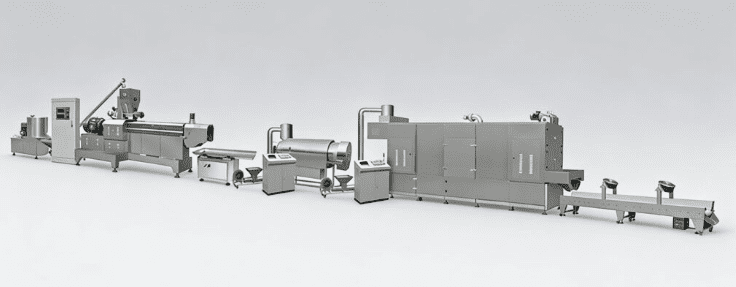
A typical fish feed production line may include:
- Raw material cleaning equipment.
- Hammer mill or other grinding equipment.
- Ingredient batching system.
- Ribbon or paddle mixer.
- Fish feed extruder.
- Pellet cutter.
- Drying machine.
- Cooling machine.
- Oil spraying or coating machine.
- Screening machine.
- Automatic weighing and packaging machine.
For small-scale production, some equipment can be configured according to the actual production requirements.
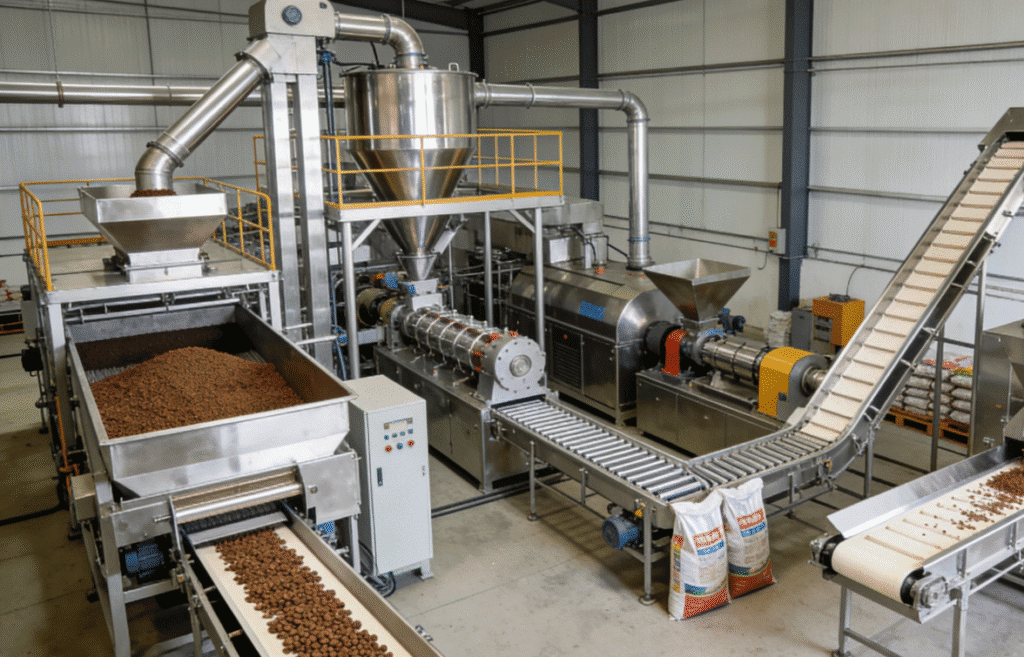
For large-scale factories, automated batching, conveying, extrusion, drying, and packaging systems can improve production efficiency and reduce labor requirements.
When selecting equipment, consider the following:
- Required production capacity.
- Types of fish feed to be produced.
- Floating or sinking feed requirements.
- Desired pellet diameters.
- Raw material characteristics.
- Energy consumption.
- Equipment reliability.
- Availability of technical support and spare parts.
It is also important to consider future production expansion rather than selecting equipment based only on current demand.
Conclusion
Processing high-quality fish feed requires careful control of every production stage. From raw material selection and formula design to grinding, mixing, extrusion, drying, cooling, coating, and packaging, each step can influence the nutritional value and physical quality of the final product.
Manufacturers should pay particular attention to raw material freshness, nutritional balance, moisture control, extrusion parameters, pellet size, water stability, and storage conditions.
At the same time, choosing suitable fish feed processing equipment and establishing a reliable quality control system can help improve production efficiency, reduce waste, and ensure consistent product quality.
Whether you are planning to establish a small fish feed processing factory or upgrade an existing production line, understanding these important considerations will help you produce safer, more nutritious, and more competitive fish feed.


