
The Science of Sustenance: Unveiling the Production Process of Fortified Rice
Introduction
Rice is the staple food for over half the world’s population, serving as a primary source of calories for billions, particularly across Asia, Latin America, and Africa. However, while rich in energy, conventional milled white rice is deficient in essential micronutrients. fortified rice making machine The milling process, which removes the husk, bran, and germ to improve shelf life and palatability, also strips away a significant portion of vital vitamins and minerals. This has contributed to the widespread prevalence of “hidden hunger” – micronutrient deficiencies in iron, zinc, vitamin A, and B vitamins that can lead to severe health consequences, including anemia, impaired cognitive development, and blindness.
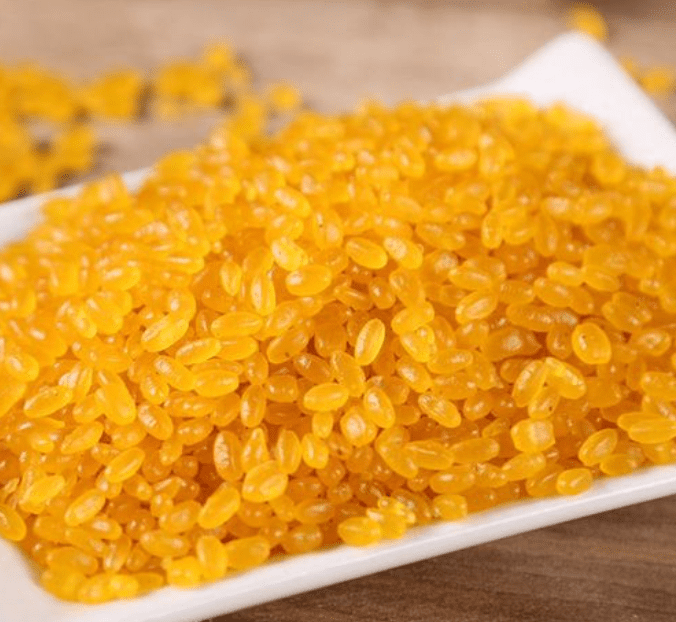
To combat this, food scientists and public health experts have developed fortified rice. This is rice that has been deliberately enhanced with additional micronutrients to restore its nutritional value. fortified rice making machine The production of fortified rice is a sophisticated technological process designed to deliver these nutrients effectively, efficiently, and in a form that consumers will accept. This article delves into the core production methodologies, focusing on the two predominant techniques: Coating and Hot Extrusion.
Part 1: The Foundation – The Nutrient Premix
Before any physical processing begins, the first critical step is formulating the nutrient premix. This is a precise blend of micronutrients in a powder form, which will be integrated into the rice. fortified rice making machine The selection of these nutrients is a science in itself, as they must be bioavailable (easily absorbed by the body), stable during storage and cooking, and not alter the taste, smell, or color of the final product.
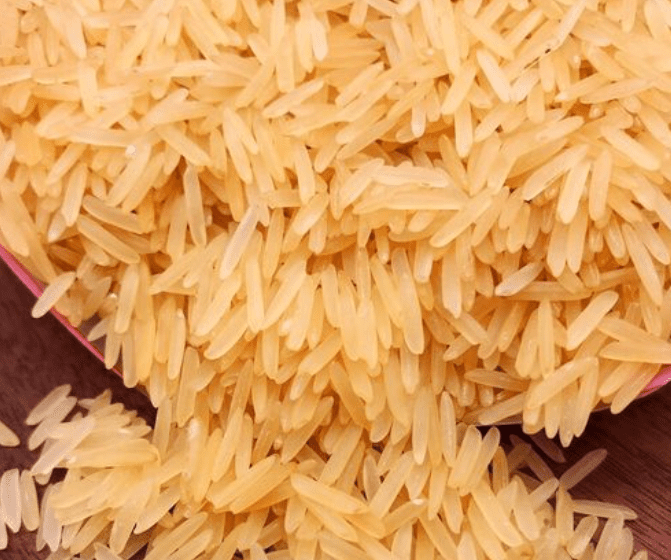
Common micronutrients include:
- Iron: Critical for preventing anemia. Compounds like Ferric Pyrophosphate or Sodium Iron (III) EDTA are often used because they are less reactive and don’t cause discoloration or a metallic taste, unlike simpler iron salts.
- Zinc: Essential for immune function and growth, typically added as Zinc Oxide.
- Vitamin A: Vital for vision and immunity, added as Retinyl Palmitate.
- B Vitamins: Including Folic Acid, Thiamine (B1), Riboflavin (B2), and Niacin (B3), which are crucial for energy metabolism and neurological health.
This premix is the “secret ingredient” that transforms ordinary rice into a powerful vehicle for public health.
Part 2: Core Production Methods
There are two primary industrial methods for producing fortified rice: Coating and Hot Extrusion. The choice of method significantly impacts the cost, stability of the nutrients, and the final product’s characteristics.
Method 1: Coating and Dusting
This is a simpler, more cost-effective approach, often used in smaller-scale operations or for specific applications. It involves applying the nutrient powder to the surface of pre-milled rice grains.
- Powder Coating (Dusting): In this basic method, the nutrient premix is directly mixed with the rice grains in a large rotating drum or mixer. The goal is to achieve a uniform coating through physical adhesion and electrostatic forces.
- Advantages: Low cost, simple technology, minimal equipment investment.
- Disadvantages: The nutrient layer is very fragile. Significant amounts of the powder can be lost during transportation, washing, and rinsing of the rice before cooking, drastically reducing its nutritional value.
- Spray Coating: A more advanced coating technique. Rice grains are tumbled in a drum while a nutrient solution (the premix dissolved or suspended in water and a food-grade binder) is sprayed onto them. Common binders include gums (e.g., guar gum), starches, or gelatin. The coated rice is then gently dried to set the layer.
- Advantages: Better adhesion than powder coating, leading to less loss during handling and washing. The rice appears more natural.
- Disadvantages: Water-soluble vitamins (like B vitamins) can still leach out during cooking, especially if the rice is boiled in excess water that is later discarded. The process is more complex and expensive than dusting.
The final product of coating methods is 100% fortified rice kernels.

Method 2: Hot Extrusion – The “Artificial Grain” Method
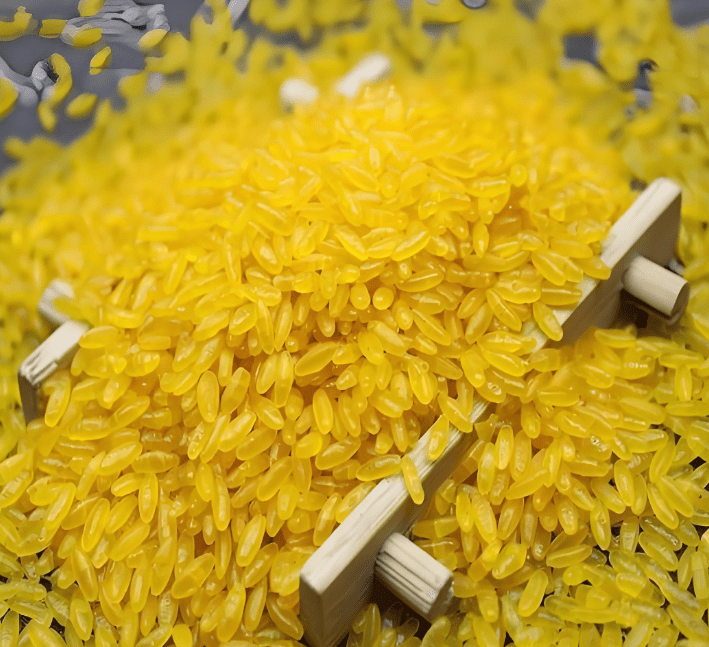
Hot extrusion is the most technologically advanced and widely recommended method for producing high-quality fortified rice, especially for large-scale public distribution programs. fortified rice making machine Instead of coating existing rice, this process creates artificial rice kernels from scratch.
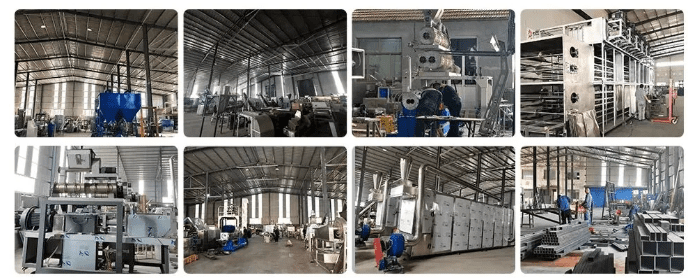
The process can be broken down into several key stages:
- Raw Material Preparation: The base material is rice flour, often produced by grinding broken rice kernels, which are a by-product of rice milling. This flour is blended with the precise amount of the nutrient premix in a high-speed mixer to ensure a perfectly homogenous distribution.
- Conditioning: Water and sometimes steam are added to the flour-premix blend to create a damp, consistent mixture. This “conditioning” is crucial for the next step.
- Hot Extrusion: The conditioned mixture is fed into a machine called a twin-screw extruder. Inside the extruder, the material is subjected to high temperature (90-120°C) and immense pressure. This process cooks the rice flour.
- The screws knead and compress the mixture into a molten, plasticized dough.
- This dough is then forced through a die—a metal plate with small, rice-grain-shaped holes.
- Shaping and Cutting: As the soft, cooked dough emerges from the die, a rotating knife cuts it into tiny pieces, each the size and shape of a grain of rice. The combination of the die shape and the cutting action creates the familiar oval form.
- Drying and Cooling: The newly formed, soft rice kernels are conveyed to a dryer, where hot air removes excess moisture, hardening them. Finally, they are cooled to ambient temperature.
The result is an artificial, fully fortified rice kernel that has several key advantages:
- Nutrient Encapsulation: The nutrients are embedded within the rice matrix, not just coated on the surface. This protects them from being washed or rubbed off during transport, storage, washing, and cooking.
- Superior Stability: Nutrient loss during washing and cooking is minimal, ensuring the intended nutritional benefit reaches the consumer.
- Sensory Similarity: The extruded kernels are engineered to have a density and transparency similar to local rice varieties. When cooked, they blend seamlessly with natural rice in terms of taste, texture, and appearance.
Part 3: Blending and Final Product
A critical concept in fortified rice production is that the final product sold to consumers is not 100% artificial kernels. Typically, the extruded fortified kernels (or the coated kernels) are blended with regular, unfortified rice at a low ratio, usually between 0.5% to 2%. This means for every 100 grams of rice, only 0.5 to 2 grams are the fortified kernels.
This blending is done for several reasons:
- Cost-Effectiveness: It dramatically reduces the cost of the final product.
- Nutritional Safety: It ensures that consumers receive the correct, safe dosage of micronutrients without risk of over-consumption.
- Consumer Acceptance: The small proportion of fortified kernels is virtually undetectable when mixed and cooked with normal rice.
The blending is a highly precise process, conducted in computerized mixing systems to guarantee a perfectly uniform distribution, ensuring that every single serving of rice contains the intended amount of micronutrients.
Challenges and Future Directions
Despite its promise, fortified rice production faces challenges. The initial investment for extrusion technology is high. fortified rice making machine There are also ongoing technical challenges in perfectly mimicking the cooking behavior of all the thousands of local rice varieties. Furthermore, ensuring the stability of sensitive nutrients like Vitamin A over long storage periods in varying climates requires continuous research.
Future advancements are focused on creating more cost-effective and efficient extrusion systems, developing more stable nutrient forms, and using novel techniques like cold extrusion to better preserve heat-sensitive vitamins.
Conclusion
The production of fortified rice is a powerful intersection of food science, engineering, and public health. Moving beyond simple coating methods, the hot extrusion process stands out as a robust solution for creating a staple food that is not only a source of sustenance but also a vehicle for vital nutrition. By ingeniously crafting artificial grains that are blended seamlessly into the food supply, this technology offers a sustainable and scalable strategy to combat hidden hunger and improve the health and well-being of millions who depend on rice for their daily survival.