
The Modern Canine Conundrum: A Deep Dive into the Science, Secrets, and Processing of Commercial Dog Food
The commercial dog food industry represents a monumental achievement in logistics, nutrition, and mass production. It has, for better or worse, liberated generations of dog owners from the complexity of formulating a balanced diet for their carnivorous companions. The simple act of pouring kibble from a bag into a bowl is a ritual of convenience,dog food machinery underpinned by a global industry worth over $100 billion. Yet, for most consumers, the process of how those uniform, shelf-stable brown morsels are created is a mystery, hidden behind marketing terms like “holistic,” “ancestral,” and “grain-free.”
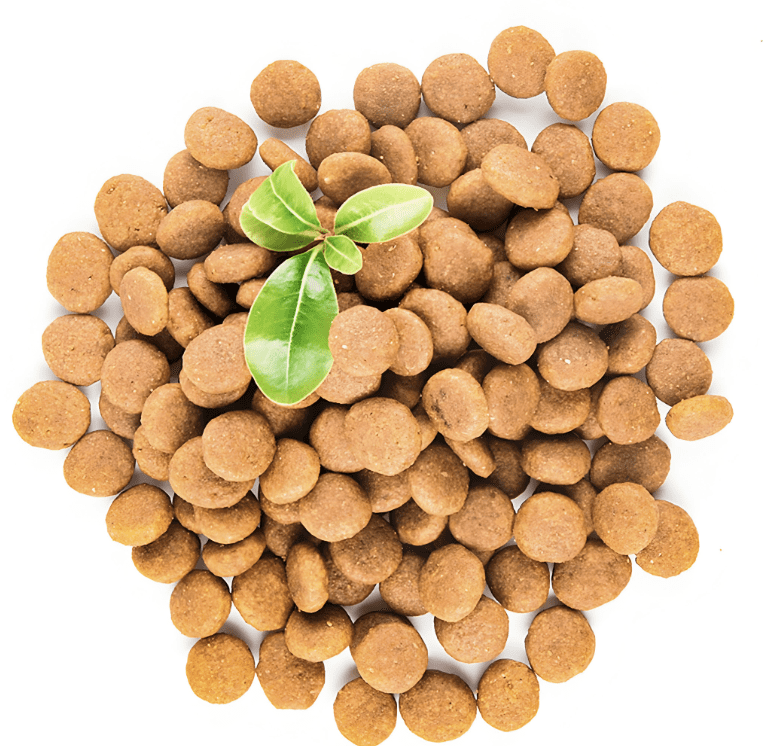
This article aims to pull back the curtain completely. We will embark on a detailed journey through the labyrinth of dog food processing, from the rendering plant to the extrusion line, from the high-pressure canner to the freeze-dryer. We will dissect the raw materials, the transformative technologies, the critical quality control measures, and the heated debates that define this ubiquitous yet often misunderstood cornerstone of modern pet ownership.
Part 1: The Foundation – Deconstructing the Ingredient Deck
Before any processing can begin, we must understand the building blocks. The ingredient panel on a bag of dog food is a cryptic document, its language defined by regulation and marketing.
1.1 The Protein Core: Meat Meals, By-Products, and Novel Proteins
The primary source of protein is the most scrutinized aspect of any dog food.
- Meat Meals: The Workhorse of Kibble. Terms like “chicken meal,” “lamb meal,” or “poultry by-product meal” are ubiquitous. A “meal” is the result of rendering—a process of cooking, drying, and grinding down animal tissues to a consistent, dry powder. This is not raw meat.
- The Rendering Process: Animal ingredients (which can include muscle tissue, organs, bone, and fat) are subjected to high heat (115°C-145°C / 240°-290°F) for 40-90 minutes. This cooks the material, separates the fat (tallow or grease) from the solid protein, and destroys pathogens. The solid material is then dried and ground into a uniform powder.
- Why Use Meal? For dry kibble, meal is functionally superior to fresh meat. Fresh meat is 70-80% water. Including a significant amount of fresh meat in a kibble formula means you are mostly adding water, which must be removed later, making the process inefficient and expensive. Meat meal is a concentrated protein source (often 60-65% protein), allowing manufacturers to achieve high protein percentages on the label efficiently. The quality of the meal, however, is paramount and depends on the source materials. “Chicken meal” should be made from clean flesh and skin, while “by-product meal” can include organs, heads, and feet.
- Fresh/Frozen Meat: Increasingly popular in marketing, the inclusion of “fresh chicken” or “deboned salmon” sounds appealing. However, as noted, this meat’s water content drastically reduces its contribution to the final protein content. dog food machineryOnce the water is cooked out during processing, its actual contribution by weight is much smaller than the meal that follows it on the ingredient list. It can, however, contribute to palatability.
- Novel and Hydrolyzed Proteins: For dogs with allergies, proteins like duck, venison, kangaroo, or hydrolyzed soy or chicken are used. Hydrolysis is a pre-processing step where proteins are broken down into their constituent amino acids and small peptides using enzymes or acids. This makes them less likely to be recognized by the immune system, thus reducing allergic reactions.
1.2 The Carbohydrate Matrix: Energy, Fillers, and Binders
Dogs have no strict biological requirement for carbohydrates, but they are a fundamental component of most dry foods.
- Grains: Corn, wheat, rice, barley, and oats. They provide a cheap source of energy (glucose), and their starch is crucial for the extrusion process (discussed later). “Grain-free” diets simply replace these with other carbohydrate sources like potatoes, lentils, peas, and tapioca. The 2018 FDA investigation into a potential link between grain-free diets and Dilated Cardiomyopathy (DCM) has cast a spotlight on the role of these non-traditional carbohydrates.
- Fiber Sources: Beet pulp, cellulose, and tomato pomace are added to promote healthy gut motility and firm stools.
1.3 The Lipid Package: Fats and Oils
Fats are the most concentrated source of energy and are essential for the absorption of fat-soluble vitamins (A, D, E, K). They are also critical for palatability and skin/coat health.
- Animal Fats: Rendered chicken fat, tallow (beef fat), or fish oil are common. These are often sprayed onto the food after cooking.
- Plant Oils: Flaxseed oil, canola oil, and sunflower oil provide essential fatty acids (Omega-3 and Omega-6). To be effective for anti-inflammatory purposes, plant-based Omega-3s (ALA) must be converted by the dog into EPA and DHA, a process they are not very efficient at, which is why marine sources (fish oil) are often preferred.
1.4 The Micro-Ingredient Cocktail: Vitamins, Minerals, and Preservatives
This is where nutritional precision is achieved.
- Vitamin and Mineral Premixes: Custom-blended powders ensure every kilogram of food contains the exact amount of calcium, phosphorus, zinc, Vitamin E, etc., required to meet AAFCO (Association of American Feed Control Officials) nutrient profiles. A deficiency or excess here can have serious health consequences.
- Preservatives: To prevent the fat in the food from going rancid (oxidizing), antioxidants are added.
- Synthetic Preservatives: Ethoxyquin, BHA (Butylated Hydroxyanisole), dog food machineryand BHT (Butylated Hydroxytoluene) are highly effective but have been the subject of consumer concern regarding long-term health effects.
- “Natural” Preservatives: Mixed tocopherols (a form of Vitamin E), rosemary extract, and citric acid are commonly used. They are generally perceived as safer but may have a shorter shelf life.
Part 2: The Alchemy of Kibble – The Extrusion Process
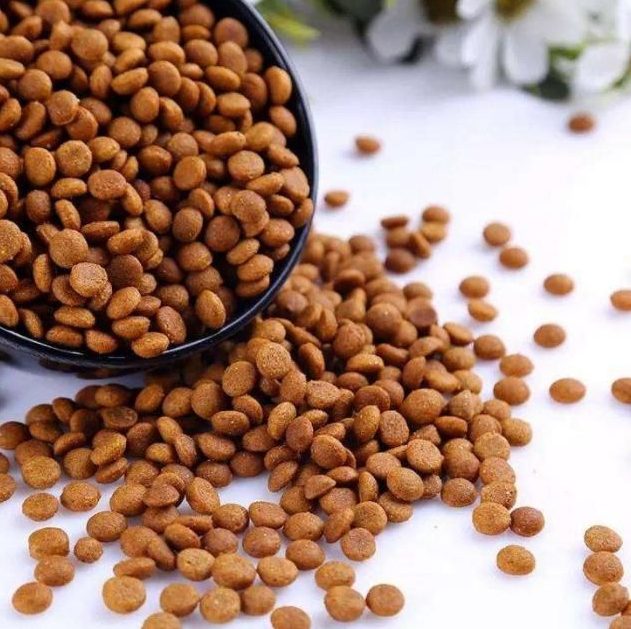
The transformation of this diverse list of dry powders, meals, and slurries into a uniform, shelf-stable kibble is a feat of engineering centered on the extruder. This is the heart of dry pet food production.
Step 1: Grinding and Mixing
All dry ingredients (meals, grains, etc.) are first ground into a fine, uniform powder. This is critical for creating a homogenous mixture and ensuring even water absorption during cooking. The powder is then blended with vitamin and mineral premixes in massive ribbon mixers to create a uniform “mash.”
Step 2: Conditioning
The dry mash is fed into a preconditioning chamber. Here, it is met with live steam and hot water. This hydrates the mixture, heating it to typically 80-100°C (175-212°F). This stage begins to cook the starches and proteins, making them more plastic and ready for extrusion.
Step 3: The Extruder: A High-Tech Pressure Cooker
The conditioned mash is fed into the extruder itself—a long, barrel-like machine with a rotating screw inside. The process within the extruder is one of intense mechanical shear, high temperature, and immense pressure.
- The Screw: As the screw rotates, it conveys the mash down the barrel. The flight depth of the screw decreases, or a restriction is placed, compressing the material into a dense, viscous dough.
- Cooking: The combination of frictional heat from the screw, external heating from steam jackets on the barrel, and direct steam injection thoroughly cooks the mixture. The starch in the carbohydrates undergoes gelatinization—the granules swell, rupture, and lose their crystalline structure, becoming a sticky, gelatinous matrix that will act as the primary binder for the kibble.
- The Die: At the end of the barrel, the superheated, pressurized dough (now at ~150°C and 20-30 atmospheres of pressure) is forced through a metal die plate. The die has precisely machined holes that give the kibble its characteristic shape—bones, stars, or simple rounds.
- The “Pop”: As the pressurized dough exits the die into the ambient air pressure, the superheated water within it instantly flashes into steam. This causes the kibble to expand rapidly, like popcorn. This expansion is crucial as it creates the porous, airy texture that makes the kibble light and easy to rehydrate in the dog’s stomach.
Step 4: Drying and Cooling
The newly extruded kibble is soft, moist, and fragile. It is conveyed through a multi-pass dryer, where hot air (120-150°C / 250-300°F) is forced through the product for 15-30 minutes. dog food machinery This reduces the moisture content from ~25% to below 10%, achieving shelf-stability and the required crunch. The kibble is then cooled to near ambient temperature to prevent condensation and spoilage in the bag.
Step 5: Coating – The Flavor Encapsulation
The dry, porous kibble is essentially a blank canvas. It is now tumbled in a large, rotating drum, and a flavor and fat coating is sprayed onto it. This coating, often called a “palatant,” is what makes the food appealing to dogs. It is typically a slurry of digested animal proteins, fats, and other attractants. The porous kibble acts like a sponge, absorbing this coating. This is also when probiotics, if used, are applied, as they would be destroyed by the high heat of the extruder and dryer.
Part 3: The Wet World of Canned Food – Retort Processing
Wet food offers a different set of benefits: high palatability, high moisture content, and often a texture that more closely resembles meat. Its processing is fundamentally different from kibble.
Step 1: Ingredient Preparation and Slurry Creation
For “chunks in gravy” formulas, a meat slurry is first prepared, similar to the mash for kibble but with a higher moisture content. This slurry is then extruded under lower pressure to form the distinct chunks. For “pâté” or loaf-style food, the ingredients—including muscle meats, organs, by-products, and grains—are ground into a fine, homogeneous emulsion.
Step 2: Canning and Sealing
The prepared food, whether chunks or pâté, is fed into a filling machine that dispenses a precise amount into a can or pouch. The gravy, a complex mixture of water, thickeners (like starches or gums), and flavors, is added separately for chunk-style foods. The container is then immediately sealed under a vacuum. This vacuum is critical as it removes oxygen, which slows spoilage and prevents the can from bulging during the heating process.
Step 3: Retort Sterilization – The Key to Safety
The sealed cans are loaded into a massive pressure cooker called a retort. This is a batch process. The cans are subjected to high-pressure steam, raising the internal temperature to 115-125°C (240-260°F) for a predetermined time—enough to achieve “commercial sterility.” dog food machinery This means all pathogenic microorganisms (like Clostridium botulinum, which causes botulism) and spoilage organisms are destroyed.
This intense thermal processing is what gives wet food its long shelf life without refrigeration. However, it also alters the food, cooking it thoroughly and affecting the texture and some heat-sensitive nutrients, which must be accounted for in the formulation.
Part 4: The High-End Spectrum – Alternative Processing Methods
As consumer demand for “human-grade” and minimally processed pet food grows, alternative methods have gained popularity.
4.1 Baking
Similar to how human cookies or crackers are made, baked kibble is produced in long, continuous ovens. The dough is formed and then baked at lower temperatures than extrusion, typically for a longer time. Proponents argue this gentler process preserves more nutrients and creates a denser, less porous kibble. However, it is generally a slower and more expensive process.
4.2 Freeze-Drying and Dehydration
These are among the gentlest processing methods, designed to preserve the raw or cooked state of the ingredients.
- Freeze-Drying: Raw or cooked food is first frozen solid. It is then placed in a vacuum chamber. Under the vacuum, the frozen water sublimates—turning directly from ice into vapor without passing through a liquid phase. This preserves the food’s original structure, nutrients, and flavor exceptionally well. The result is a light, crisp product that requires rehydration before feeding. It is very expensive due to the high energy cost and long processing time.
- Air Dehydration: Food is slowly dried with warm air over many hours. This is less expensive than freeze-drying but applies more heat, leading to greater nutrient loss and texture change compared to freeze-drying.
4.3 High-Pressure Processing (HPP)
Used primarily for raw or lightly cooked refrigerated foods, HPP subjects sealed packages of food to extremely high water pressure (up to 87,000 psi). This pressure inactivates pathogens (like Salmonella and E. coli) and spoilage enzymes without using heat, thus preserving the raw characteristics, nutrients, and flavor. The food must be kept refrigerated or frozen.
Part 5: The Guardians of Quality and Safety
A modern pet food plant is a fortress of quality control (QC). dog food machinery This system is integrated at every stage.
- Incoming Ingredients: Every batch of raw material is sampled and tested for key nutrients (protein, fat) and contaminants (mycotoxins, heavy metals, pesticides).
- In-Process Checks: The mash is checked for consistency and homogeneity. During extrusion, operators constantly monitor temperature, pressure, and moisture. The final product is tested for:
- Nutritional Adequacy: Ensuring it meets the guaranteed analysis and AAFCO profiles.
- Microbiological Safety: Testing for Salmonella, E. coli, Listeria, and total plate count.
- Physical Properties: Kibble size, durability, and moisture content.
- HACCP Plans: All reputable manufacturers operate under a Hazard Analysis and Critical Control Points (HACCP) plan—a systematic, preventive approach to food safety that identifies, evaluates, and controls potential biological, chemical, and physical hazards.
Part 6: The Great Debates – Processing and Canine Health
The processing of dog food is not without controversy.
6.1 The Maillard Reaction and Advanced Glycation End-products (AGEs)
The high heat of extrusion and retorting causes the Maillard Reaction—a chemical reaction between amino acids (from protein) and reducing sugars (from carbohydrates). This reaction is responsible for the brown color and “cooked” flavor of the food. However, it can also reduce the bioavailability of certain amino acids, most notably lysine. Furthermore, it creates compounds called Advanced Glycation End-products (AGEs). The consumption of dietary AGEs has been linked to inflammation and age-related diseases in humans, and while the research in dogs is less clear, it remains a topic of concern for some experts.
6.2 The DCM Dilemma
The ongoing investigation by the FDA into a potential link between grain-free diets (often high in legumes like peas, lentils, and potatoes) and Dilated Cardiomyopathy (DCM) has shaken the industry. The leading hypothesis is not necessarily about the presence of these ingredients, but the processing. It is theorized that the high heat of extrusion might alter these legumes in a way that reduces the bioavailability of the amino acid taurine (or its precursors), or that these diets might interact with the extrusion process to create compounds that interfere with taurine metabolism. Taurine deficiency is a known cause of DCM in certain species. This highlights that the interaction between ingredients and processing is complex and not fully understood.
6.3 Raw Diets vs. Processing
The debate between feeding commercially processed food versus raw diets is, at its core, a debate about processing. Proponents of raw feeding argue that high-heat processing destroys natural enzymes, denatures proteins, and creates harmful compounds. They advocate for a diet that is “biologically appropriate.” The counter-argument from the veterinary and scientific community focuses on the significant risks of bacterial contamination (Salmonella, E. coli, Listeria) and nutritional imbalance in homemade or poorly formulated raw diets. The PFMA (Pet Food Manufacturers Association) and other bodies emphasize that commercial processing is designed specifically to ensure safety and nutritional completeness.
Conclusion: The Calculated Compromise
The processing of commercial dog food is a story of remarkable engineering solving a complex problem: how to feed tens of millions of dogs a nutritionally complete diet safely, affordably, and conveniently. The extruder, the retort, and the freeze-dryer are tools that have enabled this reality.
However, this convenience comes with calculated compromises. The high-heat processing necessary for shelf-stability and safety inevitably alters the raw ingredients, potentially diminishing some nutrients and creating other compounds whose long-term effects are still being studied. dog food machinery The reliance on rendered meals and carbohydrate matrices is an economic necessity for mass production, but it distances the final product from its whole-food origins.
For the consumer, the key is informed awareness. Understanding that “chicken meal” is a concentrated, rendered product, that “fresh chicken” loses most of its weight in water, and that the shape and texture of kibble are a direct result of a violent, high-pressure process demystifies the bag. It allows owners to look past marketing and make choices based on a clearer understanding of the trade-offs between convenience, cost, safety, and the perceived “naturalness” of the diet they choose for their canine family members. The perfect dog food may not exist, but through transparency and continued science, the industry can move closer to an optimal balance for the health of the dogs it serves.