
Introduction: The Noodle That Feeds the World
Instant noodles are one of the most remarkable food inventions of the 20th century. Since their creation by Momofuku Ando in 1958, they have become a global staple, feeding billions of people across every continent. In China alone, annual consumption exceeds 40 billion servings. The convenience, affordability, and satisfying taste of fried instant noodles have made them an indispensable part of modern life—for students, migrant workers, office employees, and families struggling to make ends meet .
But behind the colorful packaging and the promise of a hot meal in three minutes lies a production process that remains largely invisible to consumers. Instant noodle making machine This is particularly true for small-scale manufacturing operations, which operate in the shadows of the giant corporations like Nissin, Master Kong, and Uni-President. While the industrial giants maintain gleaming facilities with rigorous quality control, the small-scale producers that dot the Chinese countryside and urban peripheries tell a different story—one of economic desperation, regulatory challenges, and occasionally, dangerous compromises .
Part One: Understanding the Product Category
1.1 What Are Fried Instant Noodles?
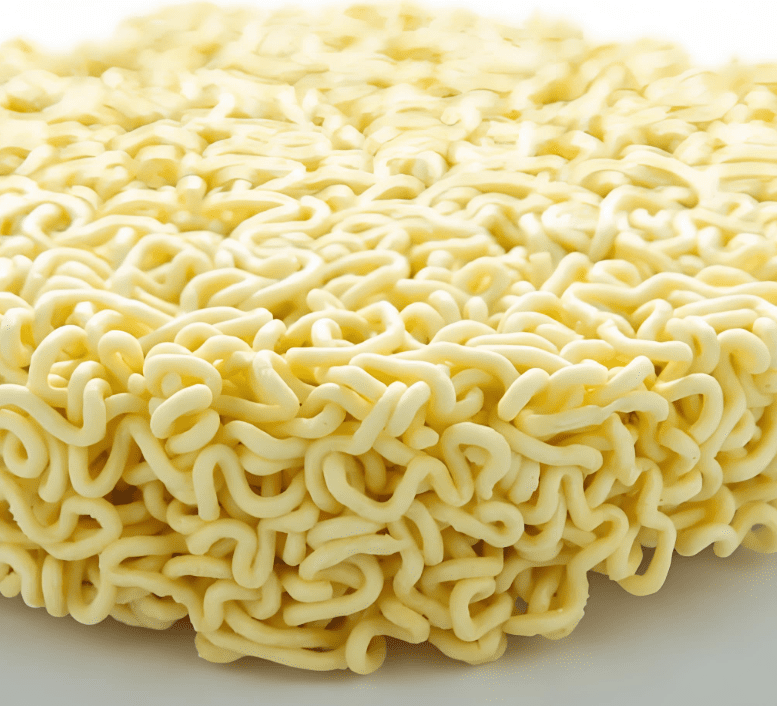
Fried instant noodles are a specific category of convenience food characterized by a manufacturing process that includes deep-frying as the final dehydration step. According to the Chinese national standard GB 17400-2015, which governs instant noodles, Instant noodle making machine these products are made from wheat flour as the primary ingredient, with water, salt, and alkaline agents (commonly known as “kansui” or jian shui) added to create the dough. The noodles are shaped, steamed to gelatinize the starch (a process called “α化” or alphaization), and then rapidly dehydrated .
The dehydration method is what distinguishes fried from non-fried instant noodles. Fried noodles are immersed in hot oil at temperatures between 130-150°C for a short period, typically 1-3 minutes. This process removes water through rapid evaporation while simultaneously cooking the noodle structure. The result is a product with a porous texture that rehydrates quickly when hot water is added .
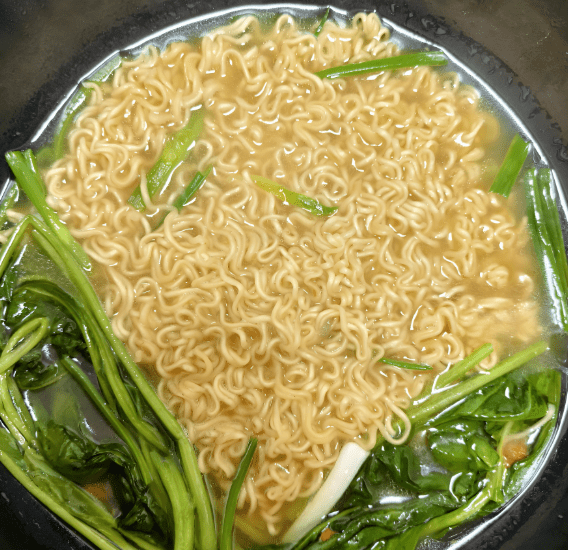
Non-fried noodles, by contrast, are dehydrated using hot air drying, which takes longer and produces a denser structure that requires more time to rehydrate. While non-fried noodles have lower fat content (typically under 3% compared to 15-20% for fried noodles), they lack the distinctive flavor and mouthfeel that fried noodles provide. This sensory advantage, combined with faster preparation time, explains why fried instant noodles dominate the market despite growing health concerns about fat content .
1.2 The Market Position of Small-Scale Producers
The instant noodle industry in China is characterized by a sharp dichotomy. At one end, multinational corporations and large domestic players operate fully automated factories with production capacities exceeding 1 million packs per day. These facilities employ sophisticated quality control systems, including X-ray inspection, metal detectors, and automated weight checkers at multiple stages .
At the other end, thousands of small-scale producers operate with limited resources. According to equipment manufacturers, a small production line capable of producing 11,000 packs per 8-hour shift requires an investment of only about one-tenth that of large industrial equipment. This low barrier to entry makes instant noodle production accessible to entrepreneurs with modest capital, particularly in regions where employment opportunities are limited .
These small producers typically serve local or regional markets, supplying convenience stores, small supermarkets, and wholesale distributors. Their products are often priced lower than major brands, making them attractive to price-sensitive consumers. However, this price advantage comes with trade-offs in consistency, quality control, and food safety .
1.3 Regulatory Classification and Restrictions
Importantly, fried instant noodle production is classified as a high-risk food activity by Chinese regulators. The Guangdong Province city of Jieyang, for example, explicitly lists “fried instant noodles” in its prohibited categories for food processing workshops (xiao zuo fang, or small workshops). The official documentation cites two primary risk factors: the tendency for peroxide values to exceed safety limits during storage, and the susceptibility to microbial contamination .
This regulatory classification means that legitimate small-scale producers must operate with full food production licenses (SC certification), which require facilities that meet specific hygiene standards, including:
- Separation of clean and dirty areas
- Controlled access for personnel
- Proper ventilation and drainage systems
- Sanitary equipment surfaces
- Temperature-controlled environments for critical steps
However, enforcement of these requirements varies significantly across regions, and the line between licensed small enterprises and unlicensed workshops is often blurred in practice.
Part Two: Raw Materials and Their Secrets
2.1 Wheat Flour: The Foundation
The primary ingredient in any instant noodle is wheat flour, typically accounting for 70-80% of the dry weight. The quality of flour directly determines the noodle’s texture, appearance, and cooking performance. For fried instant noodles, flour with medium to high protein content (10-13%) is preferred because it develops strong gluten networks that withstand the mechanical stress of sheeting and cutting while maintaining structure during frying .
Large manufacturers typically specify flour from approved mills with strict quality parameters: ash content, moisture content, wet gluten percentage, and falling number (a measure of enzyme activity). They conduct incoming inspections on every shipment and reject flour that fails to meet specifications.
Small-scale producers operate differently. Price is often the dominant consideration, leading them to source from smaller mills or through intermediate traders where quality consistency is less reliable. Some may use flour blends that incorporate lower-grade wheat or extenders to reduce costs. While not necessarily unsafe, these practices introduce variability that affects the final product.
The patent literature reveals that sophisticated formulations may include additional ingredients like pre-gelatinized starch (α化淀粉) and heat-coagulable proteins to improve texture and mouthfeel. These additives, properly used, enhance the eating quality by giving the noodles a more “fresh-like” texture with better chewiness and weight perception . Small producers, lacking the technical expertise or unwilling to bear the additional cost, typically stick to basic flour-water-salt formulations.
2.2 Water: The Hidden Variable
Water constitutes approximately 32-36% of the dough weight in fried instant noodle production. The quality of this water matters enormously . Mineral content, pH, and microbial purity all affect dough development and final product characteristics.
Large manufacturers treat their water through reverse osmosis or deionization systems to ensure consistency. They monitor hardness and adjust accordingly because excessive calcium or magnesium can tighten gluten structure excessively, while insufficient minerals can produce weak, slack dough.
For small producers, water quality is often whatever comes from the tap. In areas with hard water, this can lead to inconsistent dough behavior. More concerning is the microbial aspect: untreated water can introduce bacteria that multiply during processing, contributing to the high rates of coliform and bacterial count violations seen in regulatory actions .
2.3 Salt and Alkaline Agents
Salt (sodium chloride) serves multiple functions in instant noodles beyond taste.Instant noodle making machine It strengthens gluten structure by promoting protein hydration and alignment, and it inhibits enzyme activity that could otherwise break down starch and protein. Typical usage levels range from 1-3% of flour weight.
Alkaline agents, commonly referred to as jian shui (碱水) or kansui in Japanese, are a defining feature of instant noodles. These are typically solutions of sodium carbonate, potassium carbonate, or sodium hydroxide that raise the pH of the dough to between 9 and 11. This alkaline environment accomplishes several things:
- It promotes gluten cross-linking, creating firmer, more elastic noodles
- It imparts the characteristic yellow color through flavonoid pigment reactions
- It enhances the umami flavor profile that distinguishes noodle dishes
- It improves water absorption and reduces cooking loss
The classic formulation described in manufacturing guides involves dissolving precise amounts of salt and alkaline agents in the mixing water before incorporation into flour. This ensures even distribution throughout the dough mass .
2.4 The Oil: The Most Problematic Ingredient
Frying oil deserves special attention because it represents the greatest source of quality deterioration and health concerns in fried instant noodles. The oil serves as the heat transfer medium for dehydration, but it also becomes part of the final product, typically constituting 15-20% of the noodle weight .
Large manufacturers use high-quality oils specifically formulated for deep frying: palm oil (refined, bleached, and deodorized) is most common due to its stability at high temperatures, resistance to oxidation, and favorable melting profile. They maintain strict oil quality management programs including:
- Daily testing of free fatty acids (FFA)
- Monitoring of peroxide values (PV)
- Regular oil turnover to prevent accumulation of degradation products
- Filtering to remove particulates
- Temperature control within narrow ranges
Small producers face greater challenges in oil management. The economics of small-scale production incentivize extending oil life as long as possible. Each batch of noodles absorbs some oil and releases water, steam, and fine flour particles into the fryer. As oil degrades, it darkens, develops off-flavors, and forms harmful compounds including polar compounds, trans fats, and lipid oxidation products.
Regulatory records show that peroxide value exceedances are a primary reason for failed inspections of fried instant noodles. Peroxides are primary oxidation products that indicate oil deterioration, and their presence at levels above the standard (typically 0.25 g/100g) signals that the oil has been overheated, used too long, or stored improperly .
2.5 Additives: The Double-Edged Sword
Food additives play a crucial role in modern instant noodle production, but their misuse represents one of the most significant risks in small-scale operations.
Permitted Additives:
Under GB 2760, the Chinese national standard for food additive use, several additives are permitted in instant noodles:
- Guar gum and other hydrocolloids: Improve water retention and texture
- Emulsifiers (e.g., glycerol monostearate): Enhance oil dispersion and reduce stickiness
- Phosphates: Improve water binding and texture
- Antioxidants (e.g., TBHQ, BHA): Extend shelf life by preventing rancidity
- Colorants: Some varieties permit specific colors to achieve desired appearance
All of these must be used within specified maximum limits and declared on ingredient labels .
The Aluminum Problem:
A particularly troubling issue in small-scale production involves the use of aluminum-containing additives. In 2022, the Shenyang market regulation authority issued a formal warning after discovering that 17 products in a single quarterly inspection failed due to excessive aluminum residues. The problem traced to poor control over aluminum-containing leavening agents and firming agents used in fried dough products .
According to GB 2760-2014, fried dough products (including instant noodles) must have aluminum residues below 100 mg/kg (dry weight basis). Exceeding this limit indicates either deliberate overuse of aluminum-based additives or use of non-permitted aluminum compounds. Chronic aluminum exposure has been linked to neurological concerns, making this a significant public health issue .
The Prohibited Substances:
More alarming are cases where producers resort to entirely prohibited substances. Formaldehyde, for example, has occasionally been detected in noodle products in various Asian countries because it preserves freshness and provides a firmer texture. Similarly, borax (boric acid) has been used historically as a texturizer despite being toxic and prohibited in food. While enforcement has reduced such practices, the economic pressures on small producers create ongoing risks.
Part Three: The Manufacturing Process in Detail
3.1 Overview of the Production Line
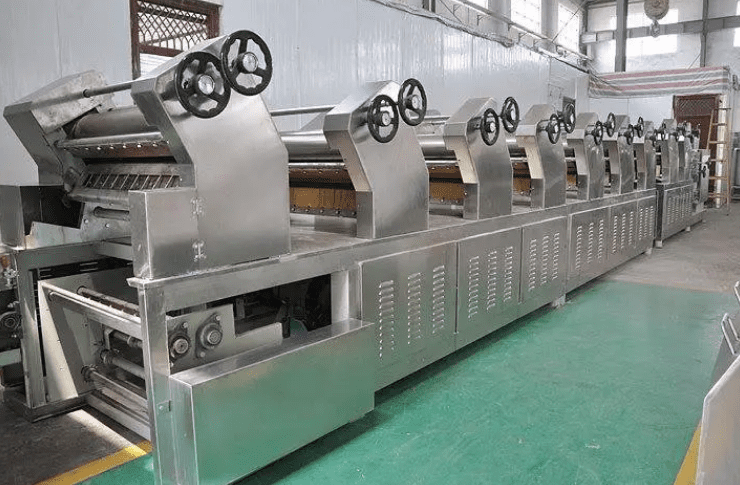
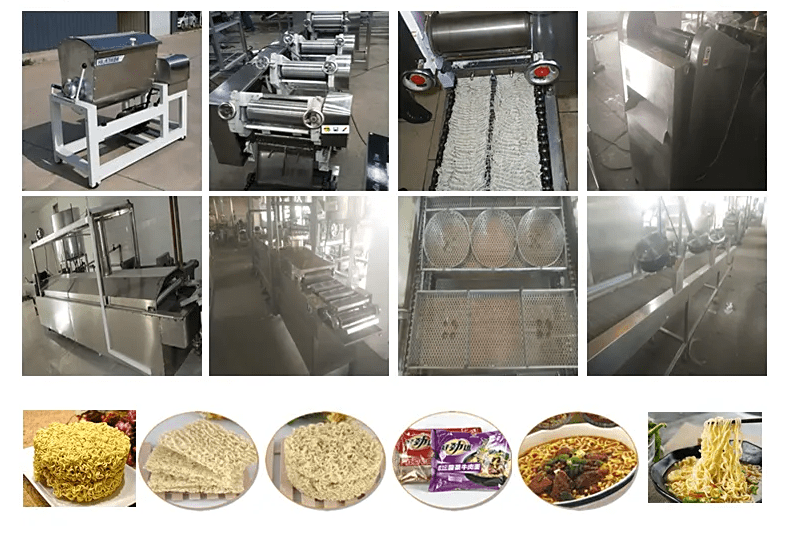
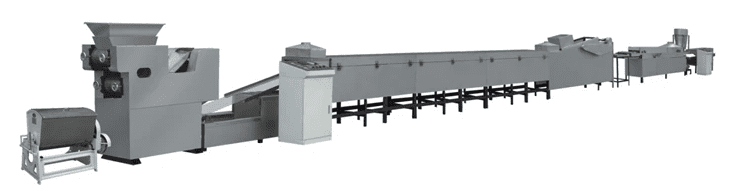
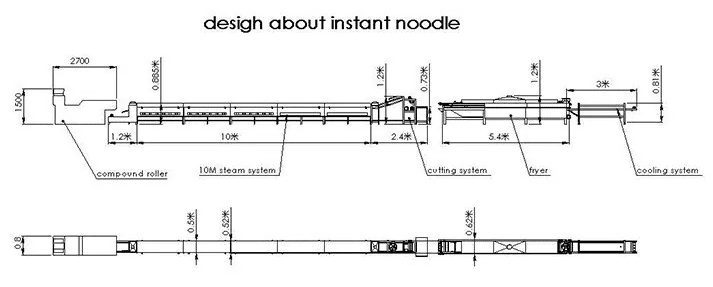
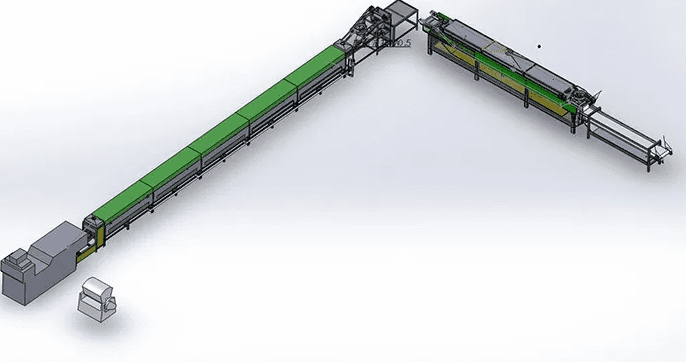
A typical small-scale fried instant noodle production line occupies approximately 25 meters of floor space and integrates several discrete machines into a continuous process. Equipment supplier specifications indicate that a complete line includes: mixing machine, compounding and sheeting rollers, steam box, cutting and folding unit, frying tank, and cooling conveyor .
The entire process, from flour to packaged noodle block, takes approximately 30-45 minutes depending on formulation and equipment settings. We will now trace this journey step by step.
3.2 Step One: Mixing and Dough Preparation
The production process begins in the mixing room, where raw materials combine to form a dough. In a well-designed facility, this area is physically separated from downstream processing to prevent raw flour dust from contaminating cooked product.
The Process:
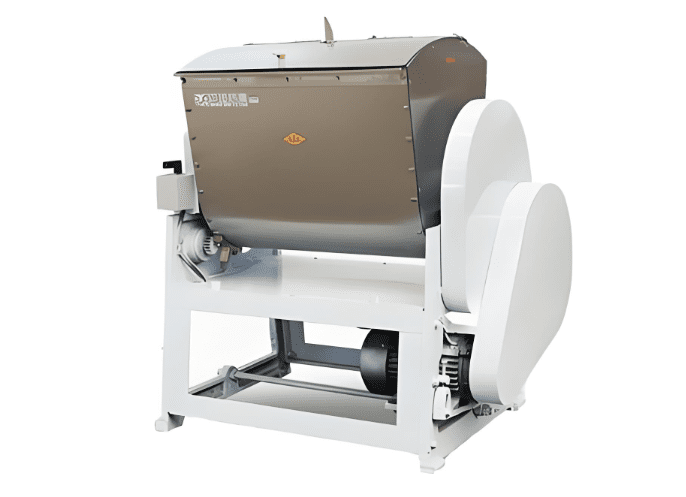
Operators first weigh flour according to the batch formula. For a 15-20 kg batch (typical of small mixers), this might be 15 kg of flour. In a separate container, water is measured and heated if necessary to achieve the target dough temperature (typically 30-35°C). Salt and alkaline agents are dissolved completely in this water to ensure uniform distribution .
The mixer, a horizontal trough with rotating paddles or arms, receives the flour first. With the mixer running, the liquid is sprayed or poured in gradually over 1-2 minutes. Total mixing time ranges from 10-15 minutes, producing a crumbly, moist mixture that barely holds together when squeezed—it is not a cohesive dough ball like bread dough, but rather a collection of small dough fragments .
Critical Parameters:
Water absorption is carefully controlled. Too little water and the gluten cannot fully develop,Instant noodle making machine producing weak, brittle noodles that break easily. Too much water makes the dough sticky and difficult to sheet, while also increasing the energy required for frying . The optimal range of 32-36% moisture reflects a balance between processability and final product quality .
The Small-Scale Reality:
In marginal operations, mixing may receive less attention than it deserves. Operators may shortcut the dissolution step, adding salt and alkaline agents dry or incompletely dissolved, leading to concentration variations within the batch. Mixing times may be shortened to increase throughput. Measuring equipment may be inaccurate or uncalibrated. Each of these shortcuts introduces variability that compounds through subsequent steps.
3.3 Step Two: Compounding and Sheeting
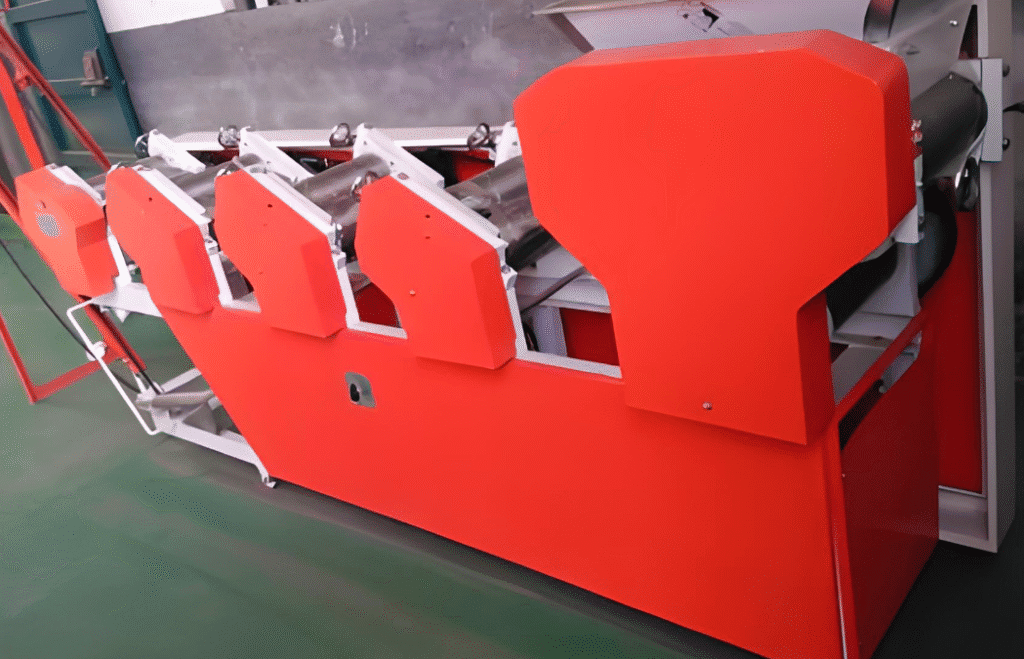
The crumbly dough mixture next enters the sheeting process, which transforms it into a continuous, smooth dough sheet. This is accomplished through a series of roller pairs that progressively compress and elongate the dough.
The Process:
A typical small production line includes multiple roller stands, often described as 6 sets of rollers in equipment specifications . The first pair takes the loose dough crumbs and compresses them into a rough, uneven sheet. This sheet passes through subsequent roller pairs with progressively decreasing gaps, each pass smoothing the surface and aligning the gluten structure.
After the final rolling stage, the dough sheet has achieved its target thickness, typically 0.8-1.2 mm for instant noodles. The sheet is smooth, uniform, and strong enough to handle without tearing .
Compound Rolling:
Many lines incorporate a “compounding” step where two separate sheets are combined into one. This improves the final noodle texture by creating laminated layers that simulate the gluten alignment achieved in traditional hand-pulled noodles. The compounded sheet passes through additional rollers to fuse the layers into a unified structure.
Small-Scale Considerations:
Roller condition is critical. Worn rollers produce uneven sheets with thin spots that tear during processing or thick spots that fry unevenly. Roller alignment affects sheet centering and tension. Bearing maintenance affects vibration, which transfers to the dough.
In small operations, maintenance may be deferred due to cost or lack of expertise. When problems arise, operators may compensate by adjusting formulations rather than addressing mechanical issues—adding more water to soften a dough that tears, for example, which then creates problems in later stages.
3.4 Step Three: Cutting and Wave Formation
The smooth dough sheet now enters the cutting head, where it transforms into individual strands of noodle. This is one of the most visually distinctive steps in the process.
The Process:
The cutting head consists of pairs of grooved rollers that mesh like gears. As the dough sheet passes between them, the grooves cut it into longitudinal strips. The spacing of the grooves determines noodle width, with typical instant noodles ranging from 1.0-2.0 mm in cross-section .
Immediately after cutting, the strands pass through a wave-forming device. This is typically a set of converging conveyors or vibrating guides that cause the straight strands to undulate into the characteristic wavy shape of instant noodles. The waves serve multiple functions:
- They prevent strands from sticking together
- They create spaces that allow even steam penetration
- They improve the structural integrity of the noodle block
- They provide the familiar appearance consumers expect
The Importance of Waving:
If noodles remained straight, they would pack densely in the fryer basket, preventing oil circulation and producing uneven cooking. The waves create channels that allow steam to escape and oil to penetrate, ensuring consistent dehydration.
In small operations, the waving mechanism requires careful adjustment. Too little waving produces dense blocks that fry unevenly. Instant noodle making machine Too much waving creates excessive bulk that may exceed the fryer basket capacity or produce blocks that don’t fit the packaging.
3.5 Step Four: Steaming (Alphaization)
Steaming represents the first cooking step and is critical to final product quality. The technical term for this process is “α化” (alphaization), which refers to the gelatinization of starch—the conversion of raw, crystalline starch into a cooked, digestible form .
The Process:
The waved noodle strands, still continuous and traveling on a mesh conveyor, enter a steam box. For small production lines, this box is typically 10 meters long, divided into sections to allow temperature control .
Steam at atmospheric pressure (100°C) floods the box, raising the noodle temperature rapidly. Transit time through the steamer is approximately 2 minutes, during which the starch absorbs water and swells, losing its crystalline structure. At the end of steaming, the noodles have achieved approximately 70-80% gelatinization—enough to set the structure but not so much that they become soft and sticky .
Conveyor Speed Profiling:
An interesting detail from manufacturing descriptions is that the conveyor speed increases progressively through the steamer. This stretching action gently pulls the noodles, aligning the gelatinized starch and contributing to the final texture .
Critical Parameters:
Steaming time and temperature determine gelatinization degree. Insufficient steaming leaves raw starch that will not rehydrate properly and may cause digestive issues. Excessive steaming produces noodles that are too soft, losing the chewy texture consumers expect.
Temperature distribution within the steamer matters. Hot spots near steam inlets can overcook some noodles while others remain undercooked. Steam quality—the proportion of steam versus air—affects heat transfer efficiency.
Small-Scale Challenges:
Steam systems require maintenance. Boiler scale, steam trap failures, and insulation deterioration all affect performance. In small operations, these systems may receive attention only when they fail completely, with gradual degradation going unnoticed until product quality suffers.
3.6 Step Five: Cutting and Portioning
After steaming, the continuous noodle sheet must be divided into individual portions. This occurs at the cutting station immediately following the steamer.
The Process:
A rotating blade or guillotine cutter descends at regular intervals, severing the noodle sheet into lengths appropriate for one serving. According to industry practice, each portion is typically cut to approximately 30 cm in length, which has been found optimal for consumer handling—long enough to provide satisfying mouthfuls but short enough to fit conveniently in the bowl .
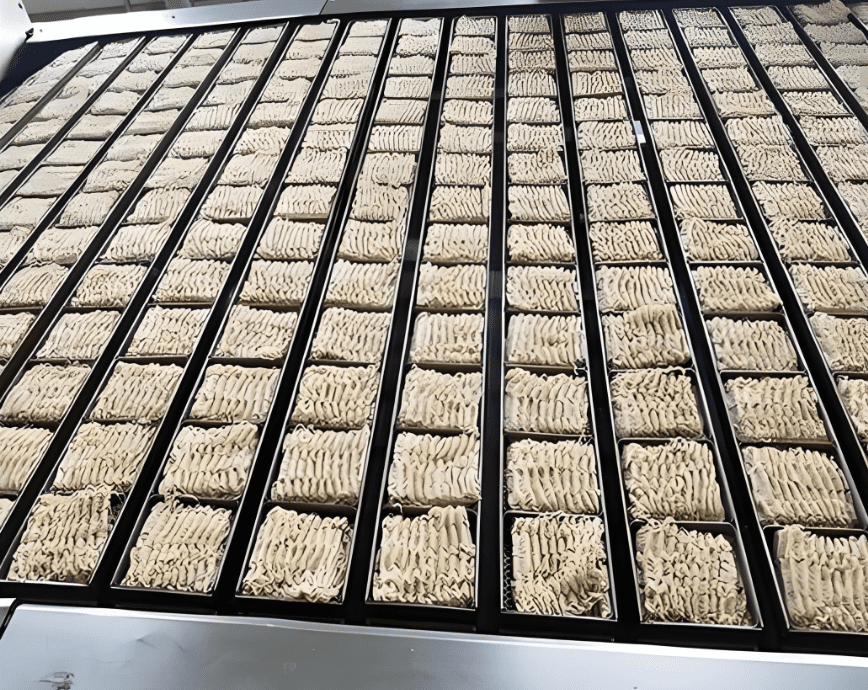
Each cut portion drops into a forming mold—a perforated metal basket that will carry it through the frying process. These baskets, often described as (stainless steel mesh baskets with holes), allow oil circulation while containing the noodle shape .
Mold Design:
The molds determine the final block shape. For cup noodles, molds are typically round or square to match the container. For bagged noodles, rectangular molds are common. The perforations must be sized appropriately: too large and noodle strands escape; too small and they restrict oil flow, slowing frying and increasing oil absorption .
3.7 Step Six: Frying—The Defining Step
Frying is simultaneously the most important and most problematic step in instant noodle production. It dehydrates the noodles, completes cooking, and creates the porous structure that enables rapid rehydration. It also introduces most of the fat content and creates the greatest food safety risks .
The Process:
The filled molds, each containing one portion of steamed noodles, enter the fryer on a continuous conveyor. The fryer is a long tank (approximately 5 meters for small lines) filled with oil heated to 130-150°C .
As the molds submerge, intense heat transfer begins. The water within the noodles vaporizes, creating steam bubbles that rush to the surface. This rapid dehydration—from approximately 35% moisture to 3-5% in just 1-3 minutes—creates the porous, sponge-like structure that makes instant noodles rehydrate so quickly .
Three-Stage Frying:
Advanced frying processes, as described in patent literature, employ temperature profiling for optimal results. A typical profile might include:
- First stage: Higher temperature (150-160°C) to rapidly set the surface and begin moisture removal
- Second stage: Moderate temperature (140-150°C) for bulk moisture removal
- Third stage: Lower temperature (130-140°C) for finishing without excessive browning
This profiling balances competing objectives: rapid dehydration for productivity, complete cooking for quality, and controlled browning for appearance.
Knocking for Oil Reduction:
An interesting innovation described in recent patents involves mechanical agitation during frying. By knocking or vibrating the molds at specific frequencies (e.g., 60±5 times per minute) during the final frying stage, Instant noodle making machine manufacturers can reduce final oil content. The vibration dislodges oil that would otherwise adhere to the noodle surface, potentially reducing fat content without affecting rehydration properties .
The Critical Transition:
At the fryer exit, the molds emerge from the oil and pass over a drip zone where excess oil drains back into the tank. Then, in a step often overlooked in descriptions, a mechanical arm knocks against each mold to shake loose additional oil. This mechanical de-oiling can significantly affect final fat content .
Temperature Control:
Oil temperature must be maintained within narrow bounds throughout production. If temperature drops too low, frying time extends, oil absorption increases, and throughput decreases. If temperature rises too high, surface browning accelerates, oil degradation increases, and harmful compounds form.
Large manufacturers achieve precise control through automated heating systems with rapid response. Small producers may rely on simpler thermostats with wider temperature swings, leading to inconsistent product.
Oil Management:
As frying proceeds, oil undergoes continuous change. Water evaporating from noodles hydrolyzes some fat, increasing free fatty acids. Fine flour particles accumulate, accelerating degradation if not filtered. Oxygen exposure promotes oxidation. Fresh oil must be added continuously to maintain volume, but the oil in the tank gradually ages .
The point at which oil must be discarded entirely is determined by multiple factors: free fatty acid content, peroxide value, polar compound percentage, and sensory characteristics like color and odor. In large operations, these are measured daily. In small operations, decisions may be based on visual assessment alone, and economic pressure encourages extending oil life beyond safe limits.
3.8 Step Seven: Cooling and Inspection
Emerging from the fryer, noodle blocks are too hot for packaging—temperatures may exceed 100°C. They must be cooled to 35-40°C before entering the packaging area .
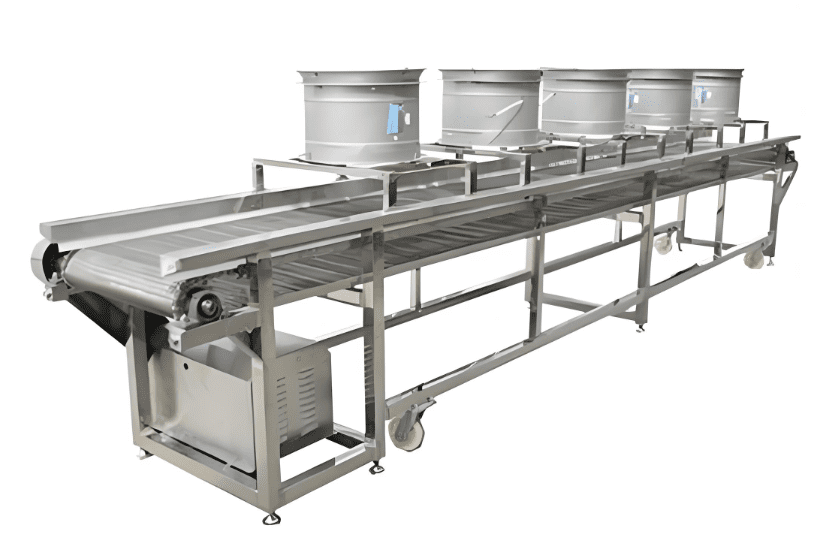
The Process:
Molds empty their noodle blocks onto a cooling conveyor equipped with fans. For small lines, this section is approximately 4 meters long with multiple fans blowing ambient air across the blocks .
Cooling serves multiple purposes:
- Prevents condensation inside packaging, which would promote mold growth
- Allows fats to crystallize, stabilizing the structure
- Brings the product to a temperature safe for handling
- Provides an opportunity for initial inspection
Inspection Points:
At the cooling conveyor exit, operators or automated systems conduct preliminary quality checks. Weight checkers verify that each block falls within specification. X-ray or metal detection systems scan for foreign objects. Visual inspection identifies blocks with abnormal color, shape, or damage .
In small operations, these checks may rely entirely on human observation. While trained eyes can detect many defects, they cannot match the consistency of automated systems for weight verification or foreign object detection.
3.9 Step Eight: Packaging
Packaging protects the fragile noodle blocks from breakage, moisture absorption, and contamination. It also provides the canvas for branding and consumer information.
The Process:
Packaging lines for small production typically operate semi-automatically. Noodle blocks enter the packaging machine, where film formed into a tube surrounds them. Heat seals close the ends, and a rotary knife cuts between blocks to separate individual packages .
Before sealing, many lines incorporate seasoning packet insertion. The packets drop onto the noodle block just before the final seal, ensuring they remain inside the package.
Quality Checks:
Finished packages pass through additional inspection: weight checking to verify total package weight, X-ray scanning for contaminants, and visual inspection of seals for integrity .
Date coding applies during packaging, either by inkjet printer onto the film before sealing or by embossing into the seal area after sealing.
Packaging Materials:
Packaging film must provide barriers against moisture and oxygen to preserve product quality through the stated shelf life (typically 6-12 months). Polypropylene-based films with aluminum layers or metallized coatings provide the necessary protection, though at higher cost than simple polyethelene.
Small producers face a trade-off: better packaging extends shelf life and protects quality but increases cost. Economic pressure may lead to using marginal packaging that allows moisture or oxygen ingress, accelerating rancidity and staleness.
3.10 Quality Control and Human Testing
The final step in many facilities, particularly in Japanese-influenced quality systems, is human sensory evaluation. Trained panelists regularly prepare and taste samples from each production batch, assessing flavor, texture, aroma, and appearance .
This practice acknowledges that instrumental measurements cannot fully capture the eating experience. While small producers may lack formal sensory programs, the principle remains: someone should eat what they produce.
Part Four: The Dark Side — Food Safety Failures in Small-Scale Production
4.1 The Regulatory Record
Government inspection records provide a sobering window into the realities of small-scale instant noodle production. Across multiple provinces and years, a consistent pattern of failures emerges, dominated by microbiological contamination and chemical deterioration .
4.2 Case Study One: The Equipment Failure (Henan Province)
In August 2025, a batch of (braised beef flavor) produced by Henan Yuyuan Food Company failed inspection due to elevated bacterial counts. The subsequent investigation revealed a telling sequence of events .
On the production day in question, equipment malfunction required two maintenance workers to enter the production area during operation. After repairs, the equipment was not adequately sanitized before production resumed. Bacteria that should have been killed during frying apparently contaminated the product at some point after the fryer—possibly on the cooling conveyor, in the packaging area, or on contaminated surfaces.
The company’s corrective actions are instructive:
- Increased cooling capacity to ensure product temperature below 36°C before packaging
- Implemented hourly temperature monitoring
- Enhanced sanitation protocols for maintenance activities
- Required hand sanitization for maintenance personnel before and after repairs
- Increased maintenance frequency on cooling equipment
This case illustrates how easily contamination occurs even in licensed facilities with established procedures. The root cause was not malicious intent but a cascade of small failures: equipment breakdown, inadequate sanitation, and insufficient temperature control.
4.3 Case Study Two: The Retail Chain Failures (Hebei Province)
Also in 2025, a crab-flavored noodle product distributed through a supermarket chain in Qing County, Hebei Province, failed due to coliform contamination. Notably, the retailer was excused from penalty because they had maintained proper documentation and could trace the product to its manufacturer in Tianjin .
This case highlights a common pattern in food safety enforcement: when contamination occurs, liability often stops at the retailer if they have maintained proper records. The burden falls on the manufacturer—but only if they can be identified and located. In practice, some small producers operate on the margins of legality, making enforcement difficult.
4.4 Case Study Three: The Repeat Offender (Hunan Province)
In Xiangyin County, Hunan Province, a小龙虾味拌面 (crayfish-flavored noodle) failed due to bacterial contamination in 2025. Again, the retailer escaped penalty by demonstrating proper sourcing records .
What makes this case noteworthy is its appearance alongside multiple other violations for different products (ginger with heavy metals, lychee with pesticides, beans with unauthorized pesticides), illustrating the systemic nature of food safety challenges in the supply chain. Small producers operate within an ecosystem where contamination can enter at any point.
4.5 The Microbial Threats
The repeated pattern of bacterial contamination in instant noodles demands explanation. How does a product that has been fried at 150°C end up contaminated with bacteria?
The answer lies in the post-frying steps. Frying effectively sterilizes the noodle surface—the high temperature kills vegetative bacterial cells. However, contamination can re-enter through several pathways :
Cooling Conveyors: As noodles cool on open conveyors, they pass through ambient air that may contain dust and microorganisms. If cooling is incomplete and packaging occurs while noodles are still warm (above 40°C), condensation inside the package creates moisture that supports bacterial growth .
Human Contact: Any manual handling—for inspection, repacking, or troubleshooting—introduces contamination risk. Even with gloves and hygiene protocols, humans remain sources of bacteria.
Airborne Contamination: Production areas that are not properly pressurized and filtered allow airborne microorganisms to settle on product surfaces. The distinction between “clean areas” and “general areas” in food plants exists precisely to manage this risk.
Equipment Surfaces: Any surface that contacts cooked product must be maintained in a sanitary condition. The Henan case illustrates how maintenance activities can disrupt sanitation, but even routine operation allows gradual biofilm formation if cleaning protocols are inadequate.
4.6 The Chemical Threats: Oxidation and Rancidity
Beyond microbiological concerns, fried instant noodles face inherent chemical stability challenges. The high fat content makes them susceptible to oxidation, which produces off-flavors and potentially harmful compounds .
Peroxide Value as Indicator:
Peroxide value measures primary oxidation products—the first chemical changes as fats react with oxygen. Elevated peroxide value indicates that oxidation is underway, though it may not yet be detectable by taste or smell. The regulatory limit exists to catch products before they reach consumers .
Factors Driving Oxidation:
Several factors accelerate oxidation in small-scale production:
- Oil quality: Starting with lower-quality oil that already contains oxidation products
- Oil age: Using oil beyond its safe life, allowing degradation compounds to accumulate
- Temperature abuse: Overheating or temperature fluctuations that accelerate oxidation
- Exposure to light and air: Inadequate packaging that allows oxygen penetration
- Storage conditions: High temperatures during warehouse or retail storage
The regulatory classification of fried instant noodles as high-risk specifically cites peroxide value exceedance as a primary concern, reflecting the difficulty small producers face in managing this chemical change .
4.7 The Additive Problem: Aluminum and Beyond
The Shenyang warning about aluminum residues reveals another dimension of the challenge. Aluminum-containing additives—typically used as leavening agents in fried dough or as firming agents in noodles—must be used within strict limits .
The problem in small-scale production often stems from inadequate measurement. A producer using a multi-ingredient premix may not know its aluminum content. A worker scooping additive without weighing may inadvertently overdose. A formulation adjusted for one batch may not account for aluminum contributed by multiple sources.
When regulators discovered 17 failed products in a single quarter, they identified the root cause as “添加量控制不严” (poor control over addition quantities)—a systemic failure of process control, not isolated incidents of deliberate contamination .
The prescribed response was comprehensive: strengthened supplier verification, improved record-keeping, enhanced training, and rigorous self-inspection. The warning also carried severe penalty schedules: fines up to 10 times product value for minor violations, up to 30 times for serious cases, and potential criminal liability for individuals .
Part Five: The Economics of Small-Scale Production
5.1 Investment Requirements
According to equipment supplier data, a complete small-scale fried instant noodle line costs approximately one-tenth of large industrial equipment. The DLE-II model described by one manufacturer costs approximately (80 kW actual power consumption) and produces 11,000 packs per 8-hour shift .
The complete line occupies 25 meters and includes:
- Mixer (3 kW)
- Sheeting line with 6 roller pairs (4 kW total)
- Steamer (32 heating elements at 3 kW each = 96 kW heating capacity)
- Frying tank (21 heating elements at 3 kW each = 63 kW heating capacity)
- Cooling conveyor (4 fans at 0.045 kW each)
- Supporting conveyors and controls
The total installed power of approximately 110 kW reflects the intensive energy requirements of steaming and frying. Actual consumption of 80 kW represents about 75% of installed capacity, with the difference accounting for heating element cycling .
5.2 Operating Costs
Raw Materials:
Flour represents the largest raw material cost, typically accounting for 40-50% of ingredient expense. Oil is the second-largest cost, with usage of approximately 150-200 grams per kilogram of finished product (15-20% fat content). Seasonings, packaging, and labor complete the cost structure.
Energy:
The energy intensity of frying creates significant operating costs. Heating 63 kW of frying elements for 8 hours consumes 504 kWh, plus steaming, mixing, and conveying loads. At industrial electricity rates, this represents a substantial daily expense.
Labor:
Small lines require multiple operators: mixer attendant, sheeting monitor, fryer operator, packaging line workers, and quality checkers. While automation reduces labor requirements, small lines still need 5-8 people per shift.
5.3 The Price Squeeze
Small producers compete primarily on price. Major brands command premium pricing based on consumer trust, consistent quality, and marketing investments. Small brands must offer lower prices to attract price-sensitive consumers.
This price pressure creates economic incentives that can conflict with quality:
- Extending oil life beyond safe limits reduces costs but increases rancidity risk
- Using lower-cost flour saves money but may reduce texture and increase breakage
- Reducing seasoning quality cuts costs but affects taste
- Minimizing packaging investment saves money but reduces shelf life
- Skimping on cleaning and maintenance reduces immediate costs but increases contamination risk
The regulatory records show that these pressures sometimes lead to failure. When producers cut corners too far, they risk inspection failures, product seizures, fines, and potentially business closure.
5.4 The Competition with Major Brands
Large manufacturers achieve economies of scale that small producers cannot match:
- Bulk purchasing of flour, oil, and packaging at volume discounts
- Automated production with lower labor cost per unit
- Sophisticated quality control that reduces waste and rework
- Distribution networks that reach national markets
- Marketing budgets that build brand recognition
Small producers survive by serving local markets, offering regional flavors, providing private-label manufacturing, or competing on price in segments where major brands have less presence. However, the economic pressures are relentless, and the failure rate among small food producers is high.
Part Six: Regulatory Framework and Enforcement
6.1 The Legal Structure
China’s food safety regulatory system operates at multiple levels. The central government sets national standards (GB standards) that establish safety requirements. Provincial and local authorities enforce these standards through licensing, inspection, and enforcement actions .
Key Regulations:
- Food Safety Law (2021 Revision): The foundational law establishing requirements for all food producers
- GB 17400-2015: National standard specifically for instant noodles, defining safety and quality parameters
- GB 2760: National standard for food additive use
- GB 2762: National standard for contaminant limits
- GB 7718: National standard for labeling requirements
Licensing Requirements:
Fried instant noodle production requires a (food production license) with appropriate scope. The application process includes facility inspection, documentation review, and product testing. Once licensed, producers face regular inspections and unannounced sampling .
6.2 The Small Workshop Exclusion
Significantly, many jurisdictions explicitly prohibit small workshops from producing fried instant noodles. Jieyang City’s prohibited products list includes as a category that small workshops may not manufacture, citing the difficulty of controlling peroxide values and microbial contamination in small-scale settings