
1. Introduction: The Global Appeal of Instant Noodles
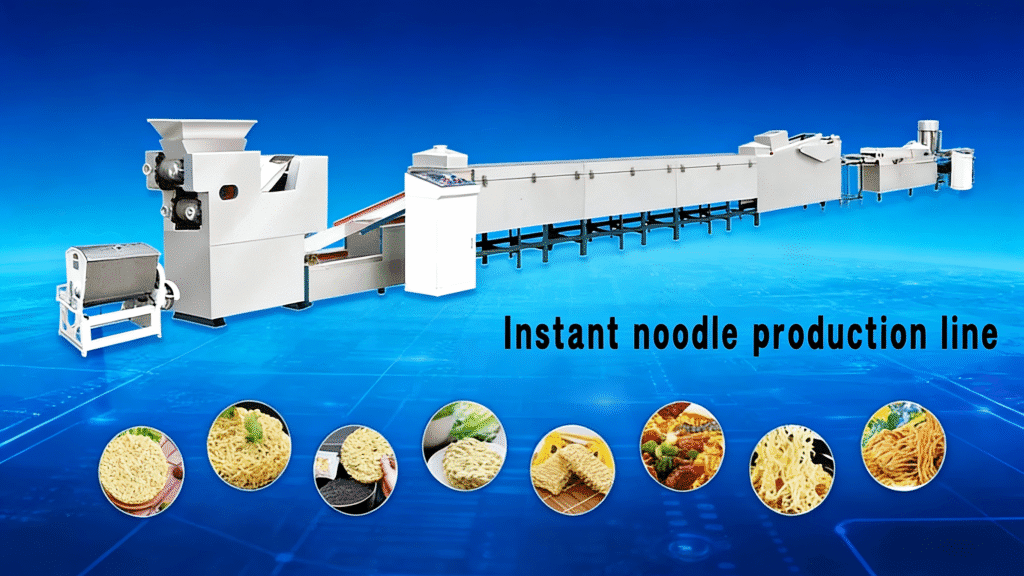
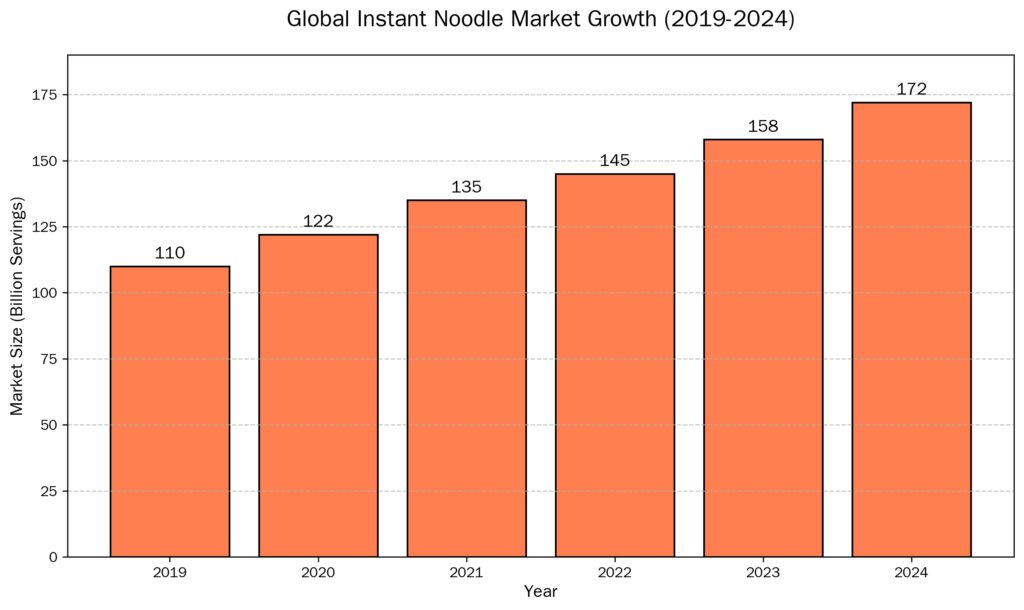
Since their invention by Momofuku Ando in 1958, instant noodles have become a global staple, transcending cultures and economic boundaries. What began as a post-war food solution in Japan has evolved into a multi-billion dollar industry. According to the World Instant Noodles Association (WINA), global demand surpassed 120 billion servings annually, with countries like China, Indonesia, and India leading consumption . This immense popularity is driven by three core factors: convenience, affordability, and a long shelf life .
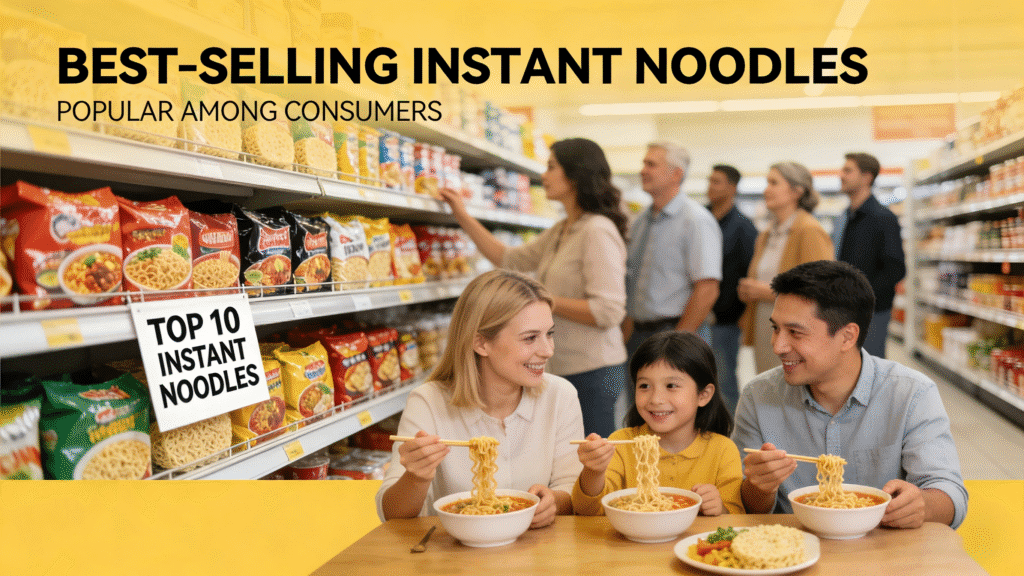
For entrepreneurs and food industry investors, a small-scale instant noodle production line represents a significant opportunity. It offers a lower barrier to entry compared to large-scale industrial operations while tapping into a market with consistent, year-round demand. This guide provides a comprehensive roadmap for planning, financing, and launching a successful small-scale instant noodle manufacturing venture.
2. Market Analysis and Product Positioning
Before purchasing a single machine, understanding your target market is paramount. The instant noodle market is not monolithic; it has distinct segments.
Global Demand and Trends
The market is driven by urbanization, a growing working population, and the need for quick meal solutions . However, consumer preferences are shifting. While traditional fried instant noodles dominate, there is a rising demand for healthier alternatives. Non-fried noodles, produced through hot-air drying, are gaining traction due to lower fat and calorie content . Similarly, premium instant noodles with authentic, localized flavors or high-quality ingredients are capturing the attention of discerning consumers willing to pay more .
Identifying Your Niche
For a small-scale startup, competing directly with giants like Indomie, Nissin, or Maggi on their core products is a high-risk strategy. Success often lies in finding a niche:
- Local and Regional Flavors: Develop unique flavors that cater to local taste buds, something multinational corporations may overlook.
- Health-Conscious Products: Focus on non-fried noodles or noodles made from alternative flours like buckwheat, whole wheat, or brown rice .
- Premium or Artisanal Lines: Target the premium segment with authentic recipes, better ingredients, and attractive packaging.
- Cup Noodles for Urban Professionals: If your target area has a high concentration of young workers, investing in cup noodle production can be lucrative .
Your product positioning—whether budget, mainstream, or premium—will directly influence your choice of machinery, raw materials, and packaging.
3. Understanding the Manufacturing Process
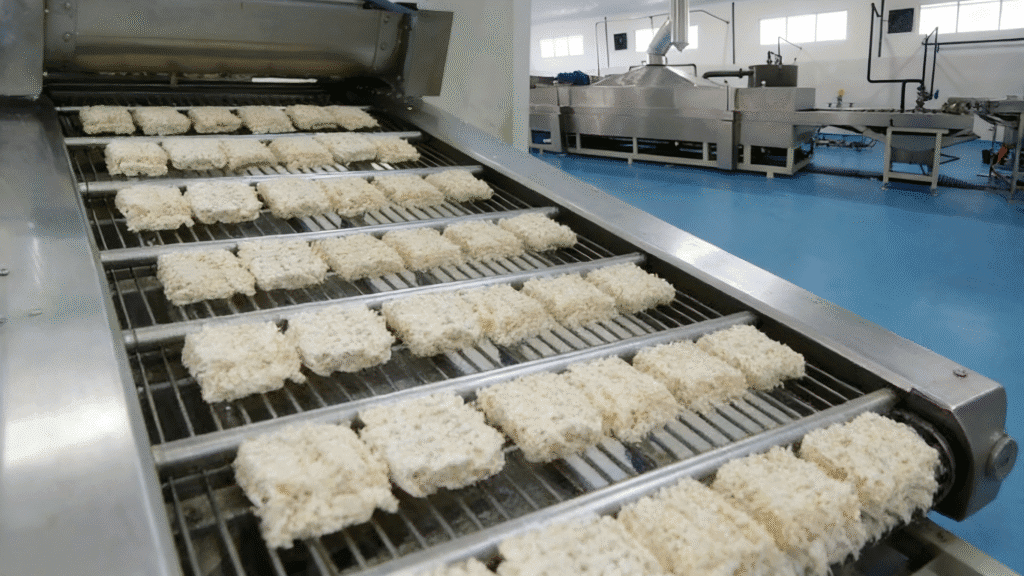
A clear understanding of the production process is essential for making informed equipment decisions. The process transforms raw ingredients into the familiar noodle block.
The Core Steps
- Mixing: Wheat flour, water, salt, and often alkaline water (kansui) are mixed in a flour mixer to form a crumbly dough .
- Compounding and Sheeting: The dough crumbs are passed through a series of compounding rollers to form a thick sheet. This sheet is then progressively passed through multiple rolling machines to reduce its thickness and align the gluten strands, giving the noodles their characteristic chewiness .
- Slitting and Waving: The thin dough sheet is cut into fine strands by a slitter. A waving machine then creates the signature wavy shape, which allows for even drying and efficient packaging .
- Steaming: The noodle strands pass through a steaming tunnel where they are cooked with steam. This gelatinizes the starch, setting the structure and texture of the noodle .
- Cutting and Folding: The steamed noodle strands are cut to the desired length and folded into a noodle block shape, ready for the drying stage .
- Drying (Frying or Air-Drying): This is the most critical step for shelf life.
- Frying: The noodle blocks are fried in hot oil (typically palm oil) at around 150°C for 1-2 minutes. This rapidly removes moisture and pre-cooks the noodles. Fried noodles typically have an oil content of 18-24% .
- Non-Fried (Air-Drying): The blocks are dried in a hot-air dryer at 70-90°C for a longer period. This results in a product with lower fat content .
- Cooling: The dried noodle blocks are passed through a cooling machine to bring them down to room temperature, preventing condensation inside the packaging .
- Packaging: The cooled noodles are conveyed to the packaging machine, where they are inserted into bags or cups along with seasoning sachets and sealed .
Table: Comparison of Fried vs. Non-Fried Noodle Production
| Feature | Fried Noodles | Non-Fried Noodles |
|---|---|---|
| Drying Method | Deep-frying in oil at ~150°C | Hot-air drying at 70-90°C |
| Moisture Content | 2-5% | 10-12% |
| Fat Content | 15-25% | 3-5% |
| Shelf Life | 12-18 months | 6-12 months |
| Key Equipment | Continuous Fryer | Hot Air Dryer (Multi-layer) |
| Market Position | Traditional, Rich Flavor | Health-conscious, Low-fat |
4. Machinery and Equipment for a Small-Scale Line
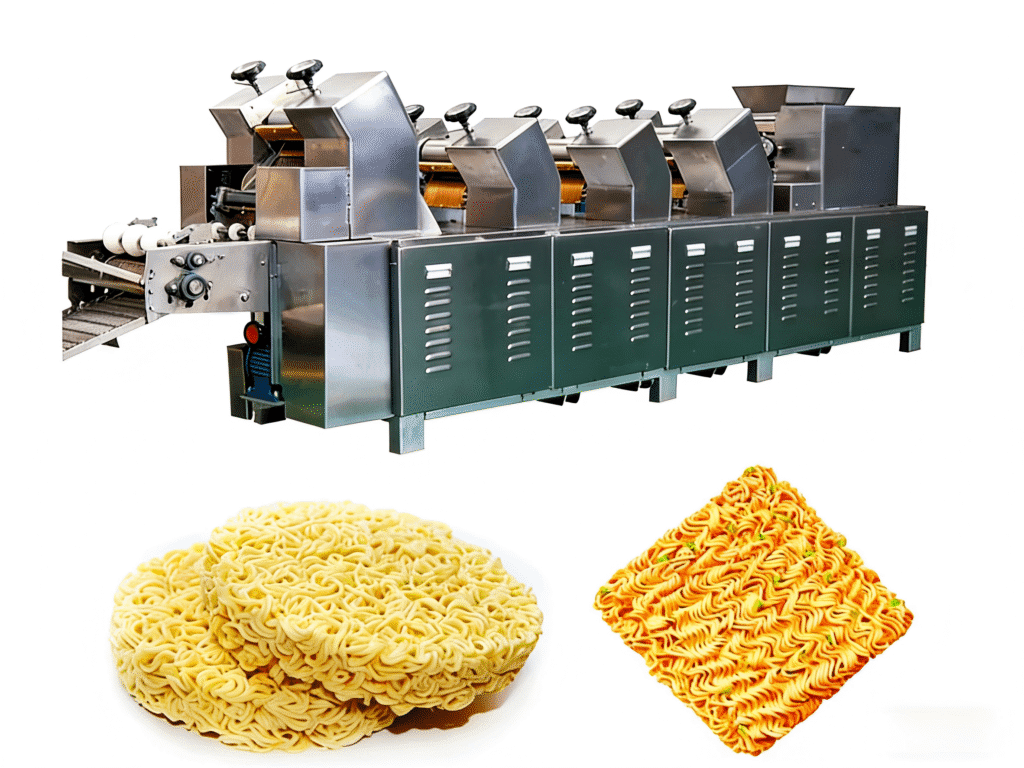
For a small-scale operation, the choice of machinery balances cost, output, and automation. A “small-scale” line is generally defined as one with a capacity of 1,000 to 10,000 packs per day .
Core Equipment List
A basic, semi-automatic line will consist of:
- Flour Mixer: To mix raw materials. Usually a horizontal mixer with stainless steel construction.
- Compound Roller / Sheeting Machine: To press the dough into sheets.
- Noodle Slitter & Waving Machine: To cut and wave the noodles.
- Steaming Tunnel: To steam the noodles. Requires connection to a steam boiler.
- Cutting and Folding Machine: To portion the noodles.
- Frying Unit or Drying Unit: Depending on your product choice.
- Cooling Conveyor: To cool the final product.
- Packaging Machine: A vertical form-fill-seal machine for bags or a cup-sealing machine for cups.
Automation Level: Semi-Automatic vs. Fully Automatic
For startups, a semi-automatic line is often the most practical choice.
- Semi-automatic: Requires more manual labor for tasks like moving noodles between machines, manual stacking for frying, or quality checks. The initial investment is significantly lower, making it ideal for testing the market and managing cash flow .
- Fully Automatic: Involves a continuous, integrated line with PLC controls. It requires less labor, ensures higher consistency, and has a much higher output, but comes with a proportionally higher price tag .
Technical Specifications
When sourcing equipment, pay close attention to material and build quality. The industry standard is food-grade stainless steel (SS304) for all parts that come into contact with food, as it is durable and corrosion-resistant . Key components like motors and inverters should ideally be from reputable brands (e.g., Siemens, Delta) to ensure reliability .
5. Financial Planning and Cost Analysis
A detailed financial plan is the cornerstone of any successful venture. Costs can be broken down into initial capital investment (CapEx) and ongoing operational expenditures (OpEx).
A. Initial Investment (Capital Expenditure)
This is the one-time cost to get your factory up and running.
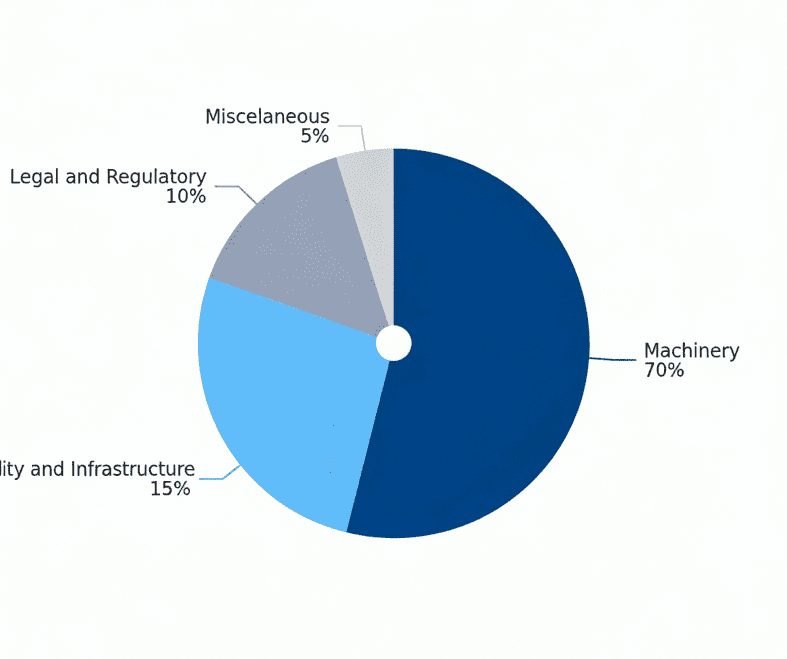
- Machinery: This is the largest cost center. A new, small-scale semi-automatic line typically ranges from $50,000 to $150,000 . The price varies based on capacity, automation level, and whether you choose a fried or non-fried line.
- Facility and Infrastructure:
- Land/Building: You will need approximately 500–800 m² of space for a small plant, including production area, raw material storage, finished goods warehouse, and a small quality control lab .
- Utilities Setup: Costs for installing a 3-phase electrical connection, a steam boiler, water supply system, and ventilation/exhaust systems .
- Legal and Regulatory: Costs for business registration, food safety licenses (like HACCP or ISO 22000), and permits .
- Miscellaneous: Office furniture, laboratory equipment for quality testing, fire safety systems, and worker uniforms .
B. Operating Costs (Operational Expenditure)
These are the recurring costs of running the business.
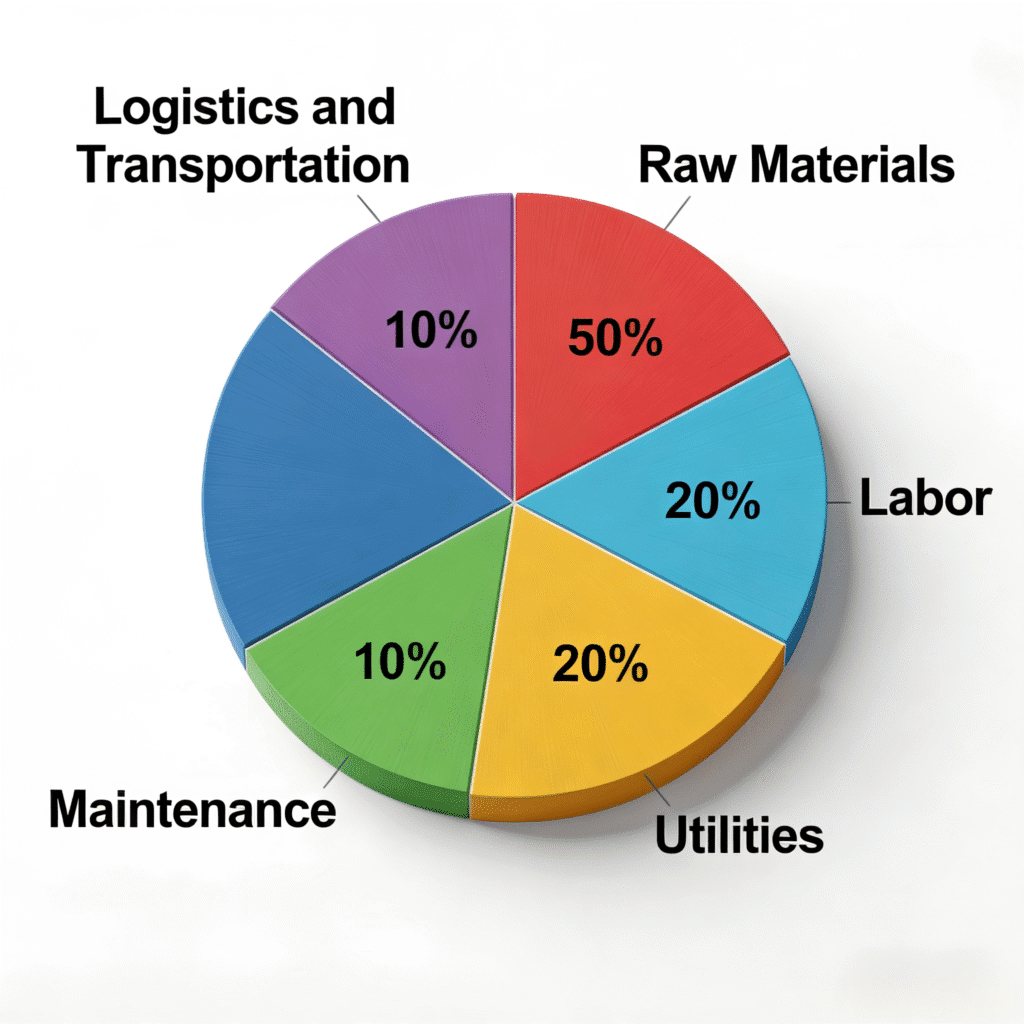
- Raw Materials (50-60% of total cost): The primary cost driver. This includes wheat flour, palm oil (for fried noodles), seasoning ingredients (salt, sugar, spices, flavor enhancers), and packaging materials .
- Labor: Salaries for machine operators, quality control staff, production supervisors, and packaging personnel .
- Utilities: Ongoing costs for electricity to run motors and controls, and fuel (gas, diesel, or coal) for the steam boiler .
- Maintenance: Regular servicing of machinery, spare parts replacement, and cleaning supplies.
- Logistics and Transportation: Costs for transporting raw materials to the factory and distributing finished products to customers .
C. Profitability Example
While highly variable based on location and market, a typical financial model for a small-scale producer might look like this:
- Cost per Pack: $0.12 – $0.18 (including raw materials, labor, overheads)
- Selling Price (to distributors): $0.22 – $0.35
- Gross Margin: 40% – 55% .
A general rule of thumb is to allocate an additional 15-20% of your initial budget for unexpected costs and contingencies .
6. Facility Setup and Layout
An efficient factory layout ensures a smooth, linear flow of materials and minimizes the risk of cross-contamination. A typical small-factory layout follows this sequence:
- Raw Material Storage: A clean, dry area for storing flour, oil, and seasonings.
- Production Floor: The machines are arranged in the order of the process flow—mixing, sheeting, steaming, frying/drying, cooling.
- Packaging Area: A separate, clean room where finished noodles are packed. It should be well-sealed to prevent dust and pests.
- Quality Control Lab: A small room equipped with basic instruments to test moisture content, oil content, and check for contaminants .
- Finished Goods Warehouse: A dry, ventilated space for storing packaged products before dispatch.
The key principle is to maintain a “clean” to “less clean” flow, preventing raw materials or waste from contaminating the final product .
7. Raw Materials, Quality Control, and Compliance
Key Raw Materials
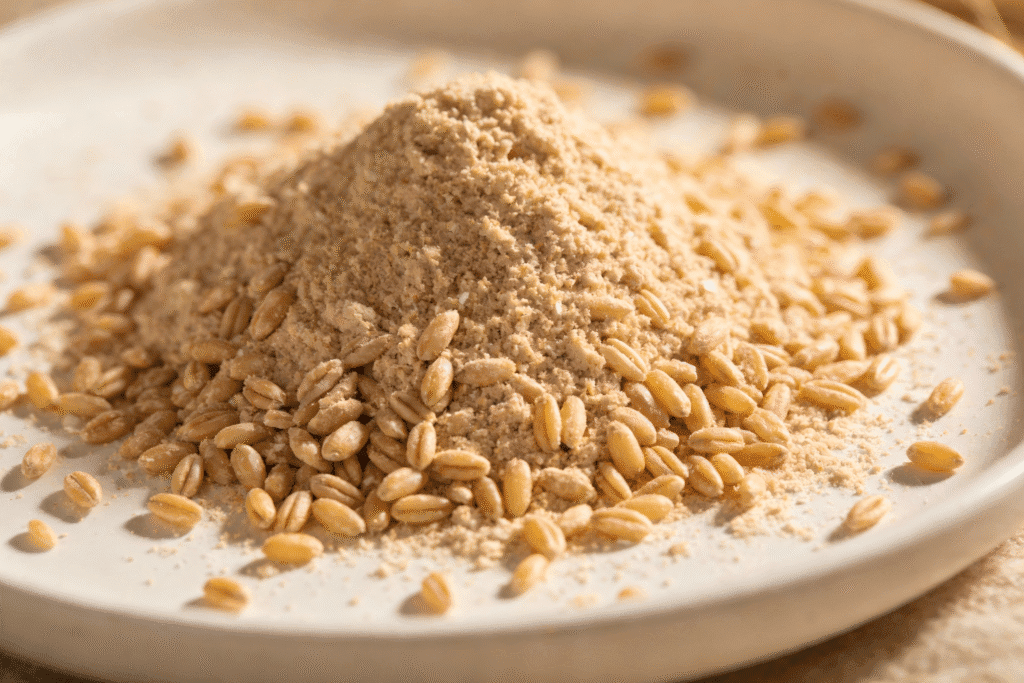
- Wheat Flour: The backbone of the product. It must meet specific protein content and quality standards to produce the right texture .
- Oils: For fried noodles, high-quality, food-grade palm oil is standard. Regular filtration and monitoring of the oil’s quality are crucial .
- Seasonings: The flavor profile that sets your product apart. These can be sourced as pre-mixed powders or developed in-house.
Quality Control (QC)
QC is non-negotiable. It protects your brand and ensures consumer safety.
- Incoming Raw Materials: Test flour and oil upon arrival.
- In-Process Checks: Monitor dough moisture, steaming temperature, and frying time continuously.
- Finished Product Tests: Regularly test for:
- Moisture Content: Should be below 10% to ensure shelf life .
- Oil Content: For fried noodles, ensure it stays within target (18-24%).
- Cooking Time: Verify that the noodles rehydrate in the advertised time (usually 3-5 minutes) .
- Microbiological Safety: Regular tests for pathogens.
Regulatory Compliance
Compliance with food safety laws is mandatory. Key standards include:
- HACCP (Hazard Analysis Critical Control Point): A systematic preventive approach to food safety.
- ISO 22000: An international standard for food safety management systems.
- Local FDA or Equivalent: You must meet your country’s specific food safety regulations and labeling requirements .
8. Risk Factors and Key Success Factors
Like any business, instant noodle production comes with risks, but these can be managed with proper planning.
Key Risk Factors
- Intense Competition: The market is crowded with established brands.
- Fluctuating Raw Material Prices: Wheat and palm oil prices can be volatile, squeezing profit margins.
- Equipment Breakdown: Machine downtime can halt production and lead to losses.
- Food Safety Scandals: A single quality issue can destroy a brand’s reputation.
Key Success Factors
- Right-Sizing Your Investment: Start with a capacity that matches realistic market demand. Over-investing in a huge line from day one can be financially crippling .
- Strategic Equipment Selection: Choose reliable machinery from a supplier that offers good after-sales service, installation support, and spare parts availability . Prioritize durable, food-grade materials .
- Unique Flavor and Quality: Invest time in developing a great-tasting, unique flavor profile. This is often the deciding factor for consumers .
- Robust Quality Control: Implementing and strictly following a QC plan is the best defense against product failure and regulatory issues.
- Efficient Cost Management: Carefully managing raw material procurement, labor, and energy consumption is vital for profitability.
- Strong Distribution: Getting your product onto store shelves is just as important as making it. Build relationships with local distributors and retailers.
9. Conclusion
Investing in a small-scale instant noodle production line is a viable and potentially rewarding venture. The global appetite for convenient, affordable food shows no signs of slowing. Success, however, requires more than just capital. It demands thorough market research to identify a unique position, a solid understanding of the manufacturing process, careful selection of the right equipment, and an unwavering commitment to quality and compliance.
By viewing your production line as an integrated ecosystem—from the quality of the flour you buy to the design of your packaging—and by planning for both the obvious and hidden costs, you can build a sustainable business. For the diligent entrepreneur, the noodle industry offers a path to transform a simple staple into a successful enterprise. It is advisable to consult with equipment manufacturers and industry experts to refine your business plan before making any final investment decisions .
11.Faq
1.Will you help us with the installation ?
Yes , We will send engineers to install and debug the equipment, and assist in training your staff.
2.Are you a factory or trading company?
We are a factory.
3.What certificate do you have?
We have ISO and CE certificate.
4.How long is the warranty period?
All of our machines have one year warranty.
5.What’s the main market of your company?
Our customers all over the world.
6.How much production capacity of your company one year?
This depends on your needs.