
Introduction
The pet food industry is booming, driven by increasing pet ownership and a growing demand for high-quality, natural, and breed-specific nutrition. dog food making machine For an entrepreneur, a small-scale dog food processing plant can be a profitable venture. However, jumping in without thorough preparation is a recipe for costly mistakes. Before buying your first piece of equipment, you need a solid blueprint. Here are the essential preparations required for investing in a small dog food processing business.
1. Conduct In-Depth Market Research & Niche Definition
The “premium” dog food market is saturated, but there are always gaps for specialty products. Your first task is to identify yours.
- Analyze local demand: Who are your potential customers? Local pet stores, breeders, dog daycare centers, or direct-to-consumer online?
- Define your niche: Will you produce dry kibble (extruded), baked treats, dehydrated raw food, or frozen fresh meals? Each has different equipment and shelf-life requirements.
- Study competitors: What are they missing? Consider grain-free, insect-protein, organic, or breed-size-specific formulas (e.g., small-breed kibble).
- Understand regulations: In the US, you must comply with AAFCO (Association of American Feed Control Officials) nutrient profiles and FDA labeling and safety rules. In the EU, follow EFSA guidelines. Non-negotiable.
2. Develop a Robust Business Plan & Financial Model
A detailed business plan is your roadmap. It should include:
- Startup costs: Equipment (mixers, extruders, dryers, coaters, packaging machines), facility lease/renovation, initial raw materials, licensing, and branding.
- Operating expenses: Utilities (high for drying/cooking), labor, quality testing, packaging, storage, and marketing.
- Pricing strategy: Calculate cost-per-kg (including waste and returns) and determine wholesale vs. retail pricing.
- Break-even analysis: How many bags do you need to sell monthly to cover costs? Small plants often struggle with scale, so realistic projections are critical.
3. Secure a Suitable Facility & Navigate Zoning Laws
Dog food production involves heat, moisture, dog food making machine and animal proteins—this is not a backyard operation.
- Space requirements: You’ll need separate zones for raw material storage (cool/dry), processing (with wash-down floors), packaging, and finished goods.
- Zoning & permits: Check local regulations. Some zones prohibit industrial food processing due to odors, noise, or waste runoff.
- Utility capacity: Ensure the site has sufficient electrical capacity (for motors/ovens), water supply (for cleaning and hydration), and drainage. A three-phase power supply is often essential.
4. Source High-Quality, Consistent Ingredients
Your product is only as good as what goes into it.
- Identify suppliers: For proteins (chicken, lamb, fish, plant-based), grains (rice, oats), vegetables, vitamins, and preservatives (natural like vitamin E/tocopherols).
- Demand consistency: Dogs have sensitive stomachs. Ingredient batch variation can cause digestive upset and destroy your reputation.
- Storage plan: Raw meats require freezing; dry goods need pest-proof silos or bins. Invest in temperature and humidity logging.
- Testing: Plan for periodic lab analysis of incoming ingredients (aflatoxins, heavy metals, pathogens).
5. Choose the Right Production Equipment
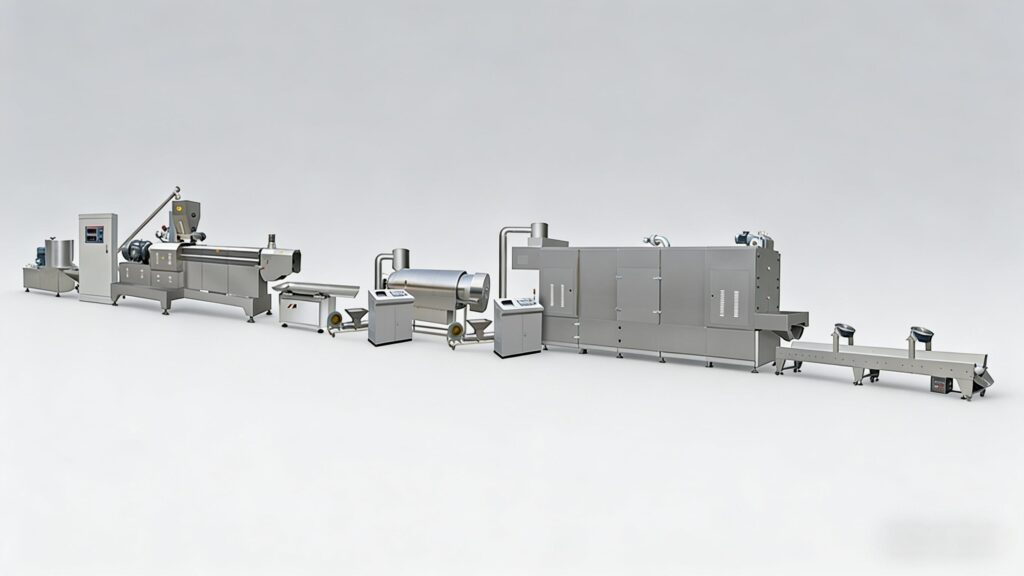
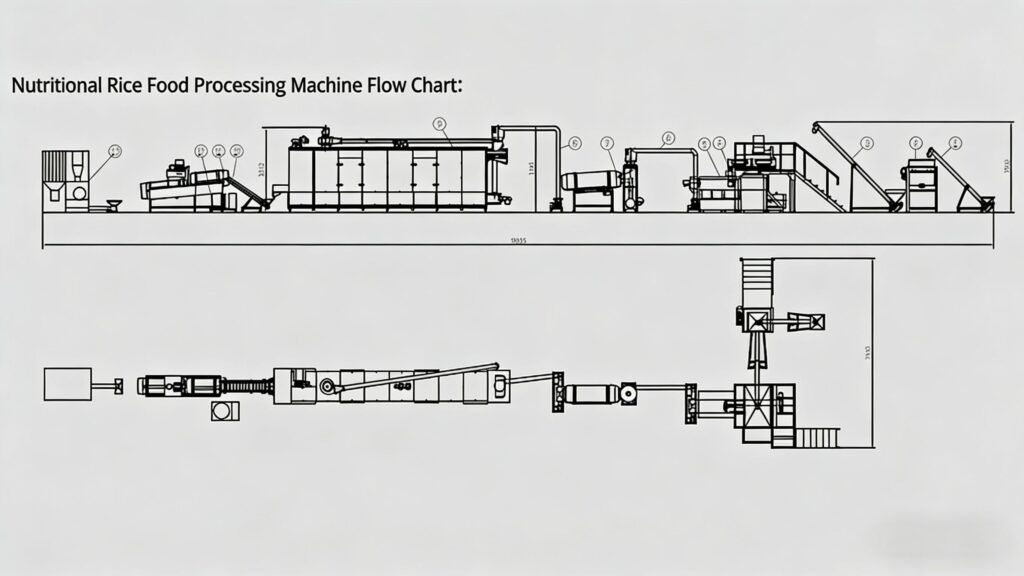
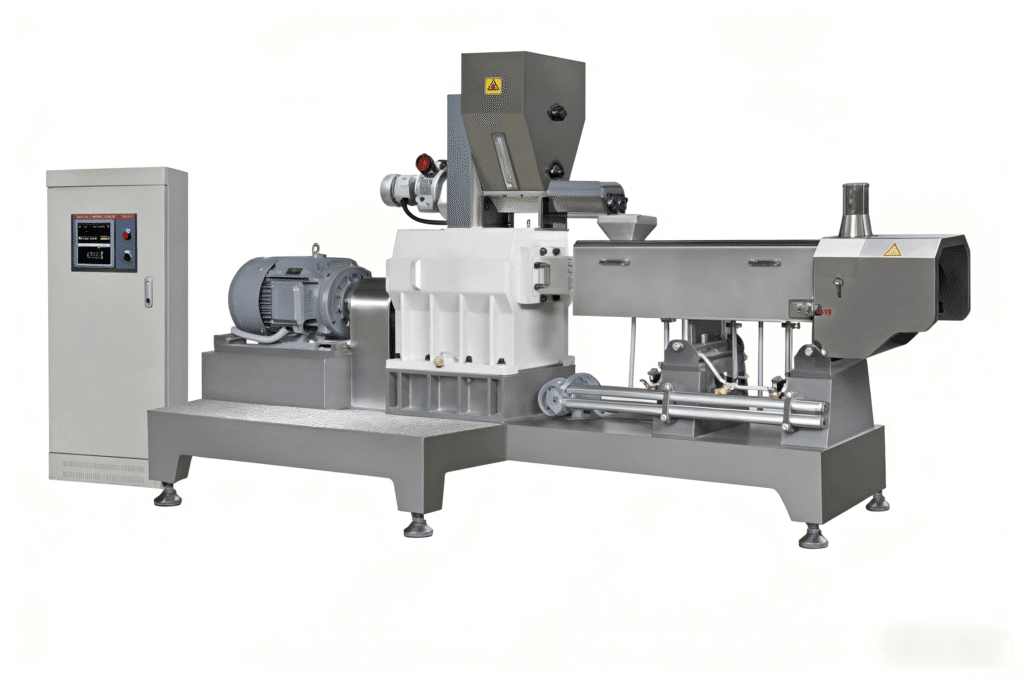
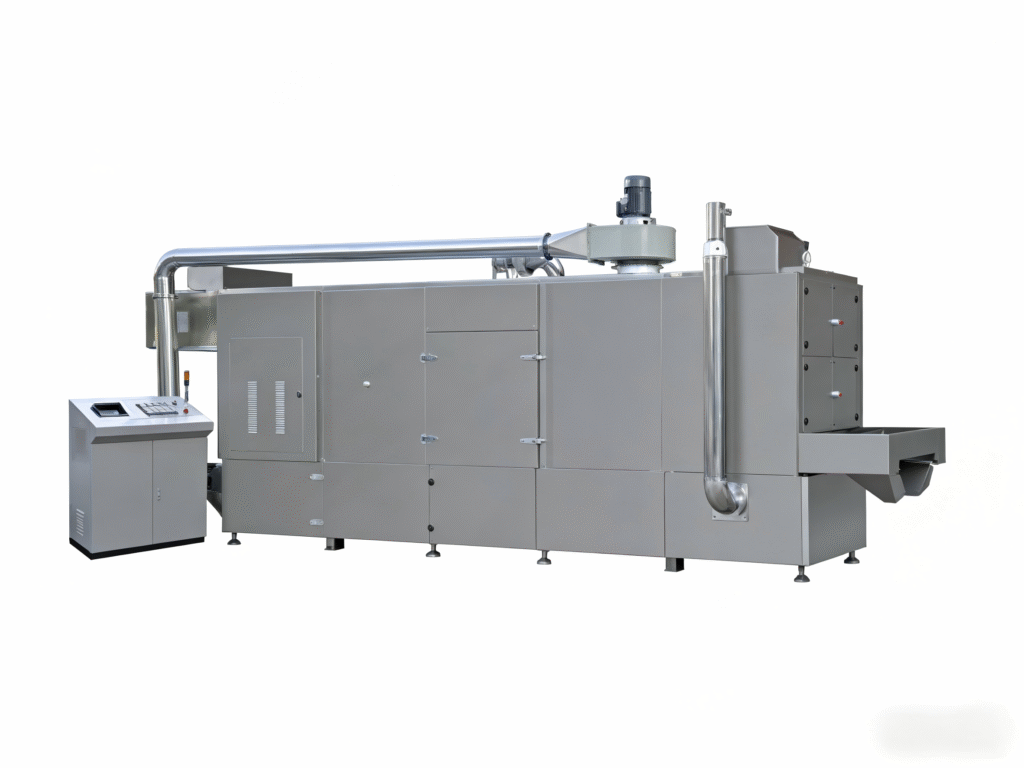
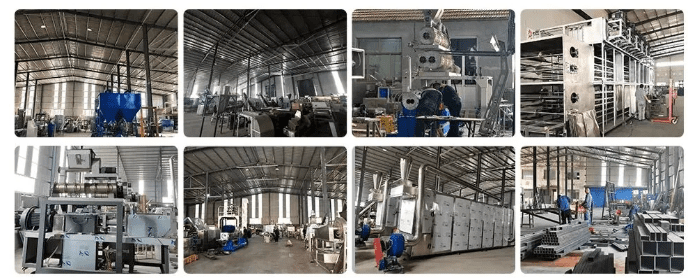
Small scale does not mean low quality. dog food making machine Your equipment must be food-grade, cleanable, and durable.
- Core machinery:
- Grinder/mixer (for blending dry and wet ingredients)
- Extruder (for kibble shaping – the most critical investment)
- Dryer/oven (to reduce moisture to <10% for shelf stability)
- Coating drum (for spraying fats/flavors after drying)
- Packaging machine (vertical form-fill-seal for bags)
- Consider used/reconditioned: Reputable dealers can save you 40-60% vs. new, but inspect thoroughly.
- Sanitation design: Look for stainless steel surfaces, no harborage points for bacteria, and easy disassembly for cleaning.
6. Develop a Food Safety & Quality Assurance (QA) System
Pet food is heavily regulated. A single contamination recall can bankrupt a small business.
- Implement HACCP (Hazard Analysis Critical Control Points): Identify critical points where hazards (biological, chemical, physical) can be controlled, e.g., cooking temperature and time.
- Lab testing: Partner with a third-party lab for regular nutrient analysis, Salmonella, E. coli, and mycotoxin testing.
- Traceability system: Be able to trace every bag back to specific production batches and ingredient lots.
- Cleaning protocols: Establish daily, weekly, and monthly sanitation schedules.
7. Navigate Licensing, Labeling & Legal Compliance
Don’t overlook the paperwork.
- Business license & FDA registration: In the US, all pet food facilities must register with the FDA.
- State feed control: Each state has its own feed laws and registration fees for each product formula.
- Label requirements: AAFCO mandates a specific format: product name, net weight, guaranteed analysis, ingredient list (descending order), nutritional adequacy statement, and feeding directions.
- Liability insurance: Pet food carries risk (choking, allergic reactions, contamination). General liability plus product liability insurance is a must.
8. Build a Brand & Go-to-Market Strategy
You can have the best recipe, but if nobody knows about it, you have no business.
- Brand identity: Name, logo, packaging design that communicates your niche (e.g., “organic,” “grain-free,” “vet-recommended”).
- Sales channels: Start with local pet boutiques, farm supply stores, or an e-commerce website. Offer samples to dog influencers or local kennels.
- Marketing: Use social media (especially video of happy dogs eating your food), content marketing about pet nutrition, and partnerships with dog trainers or rescues.
Conclusion
Investing in a small dog food processing plant is not a simple “set it and forget it” venture. It requires rigorous preparation in market research, regulatory compliance, equipment selection, and food safety. The reward, however, is a loyal customer base of pet owners who treat their dogs like family. By methodically working through these eight preparation steps, you will move from a risky idea to a well-grounded, operational business. Start with the paperwork and the recipe—the kibble can come later.If you are interested in the dog food making machine, you can contact me , i will give you good advice and solutions .
1.Will you help us with the installation ?
Yes , We will send engineers to install and debug the equipment, and assist in training your staff.
2.Are you a factory or trading company?
We are a factory.
3.What certificate do you have?
We have ISO and CE certificate.
4.How long is the warranty period?
All of our machines have one year warranty.
5.What’s the main market of your company?
Our customers all over the world.
6.How much production capacity of your company one year?
This depends on your needs.