
The global pet food market is booming, and entrepreneurs and manufacturers are looking to capitalize on the growing demand for high-quality dog food. Whether you are a startup testing the waters or an established player scaling up operations, selecting the right production line is the most critical decision you will make. Dog food making machine Your choice between a small, medium, or large-scale line will impact your initial investment, operational costs, product flexibility, and overall business strategy.

This guide breaks down the key factors to consider when choosing a dog food production line based on your specific scale of operation.
1. Define Your Production Capacity
The most straightforward differentiator between line sizes is output. You must honestly assess your current market demand and, more importantly, your projected sales for the first three to five years.
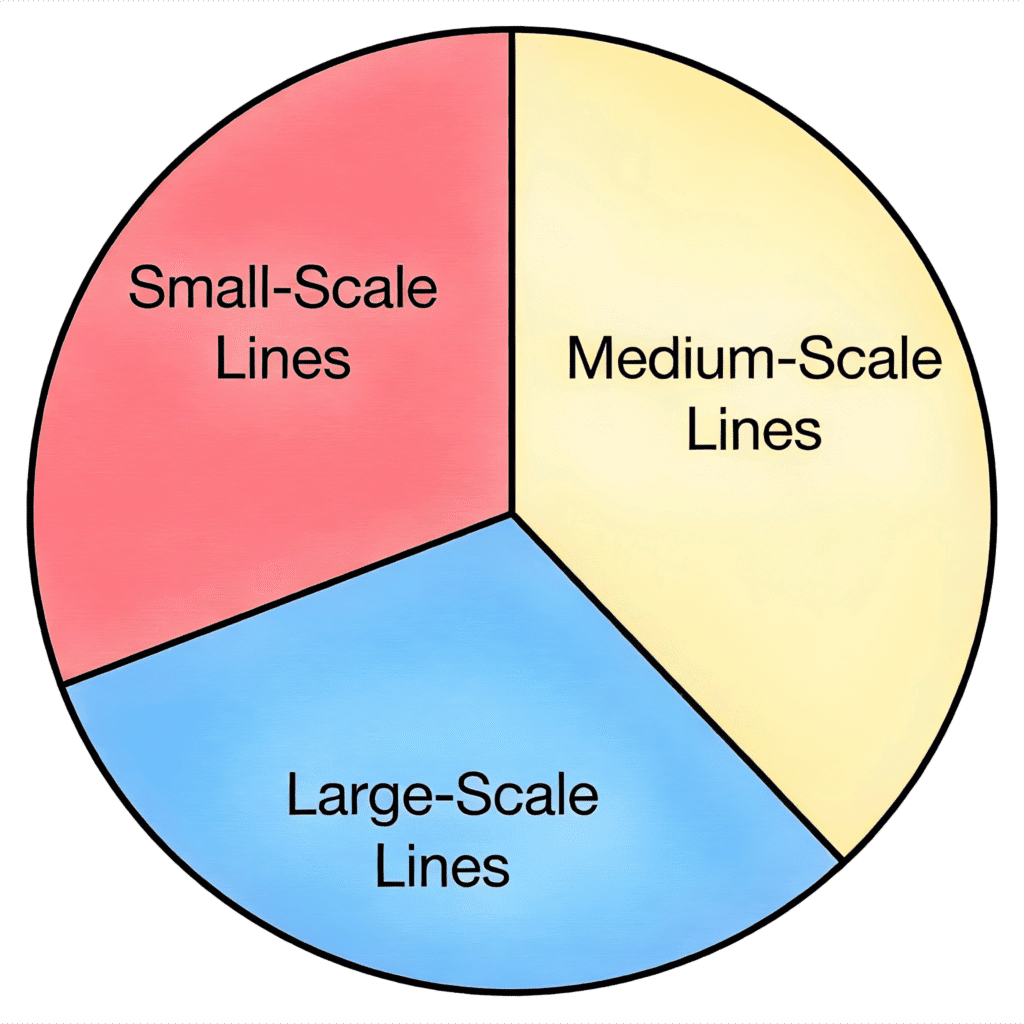
- Small-Scale Lines: These are ideal for family workshops, pet shops making house-brand food, or R&D departments. They typically have an hourly capacity of 50 kg to 200 kg . Some sources define small-scale production up to 1-5 tons per hour for very small industrial setups . They are perfect for testing recipes and serving niche local markets without massive inventory risk.
- Medium-Scale Lines: Designed for small to medium-sized pet food processing plants, these lines generally produce 200 kg to 1,000 kg per hour . Dog food making machineThis scale suits businesses that have secured a foothold in the market and need to supply a growing customer base with consistent volume.
- Large-Scale Lines: Built for large enterprises and mass production, these industrial lines exceed 1,000 kg per hour and can reach capacities of over 10 tons per hour . For example, major manufacturers like Josera build facilities with annual capacities exceeding 100,000 tons .
2. Match Equipment to Product Type
The type of dog food you plan to produce will dictate the machinery required. While the core equipment remains similar, the scale and technology vary.
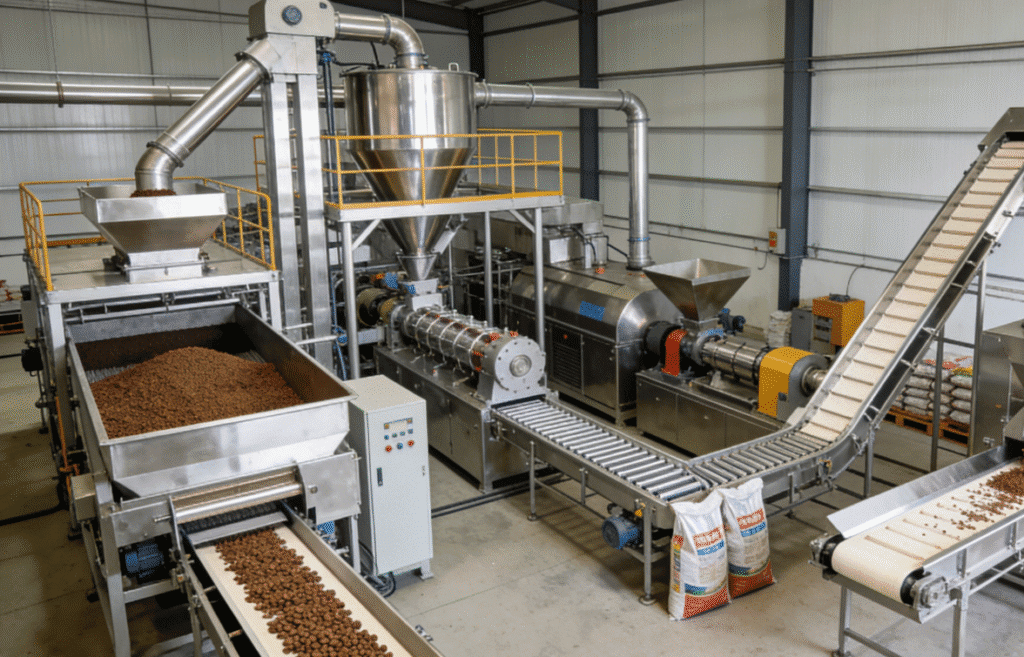
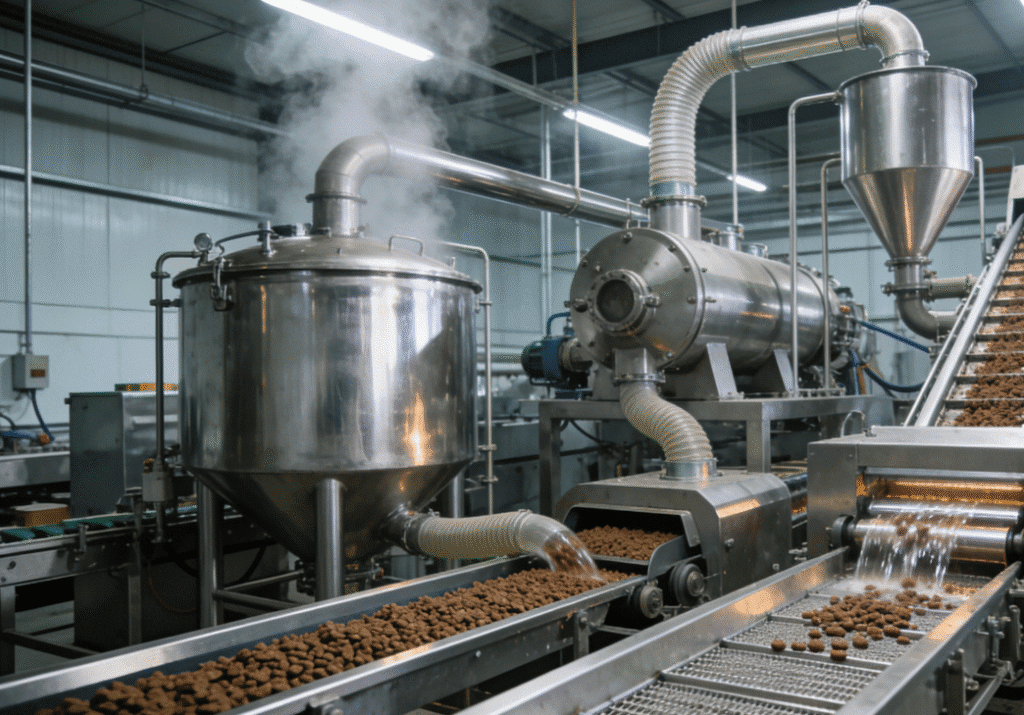
- Dry Kibble (Most Common): The process involves grinding, mixing, extrusion, drying, cooling, and coating.
- Small Lines: Often use simpler, single-screw extruders which are cost-effective and easier to maintain for straightforward recipes .
- Medium/Large Lines: Benefit from twin-screw extruders. These offer better mixing, cooking uniformity, and flexibility for complex recipes (e.g., high-meat, grain-free) .
- Specialty Products:
- Freeze-Dried/Raw: If you are entering the high-end freeze-dried segment, be aware that commercial freeze dryers alone can range from $75,000 to over $1 million . Scaling this requires significant investment in ancillary equipment like freezers, dicers, and washing stations .
- Wet Food: Requires canning or pouch filling lines, along with sterilizers, which are a different investment category altogether .
3. Assess Facility and Utility Requirements
A common mistake, especially when scaling up, is underestimating the physical footprint and infrastructure needed.
Raw Material Receiving & Inspection → Raw Material Cleaning & Screening → Batching & Measuring → Premixing → Ultrafine Grinding
     ↓
Conditioning (Adding Water, Heating, Pressurizing)
     ↓
Twin-Screw Extrusion (Main Machine Molding, High Temperature & High Pressure)
     ↓
Hot Air Drying & Dehydration
     ↓
Cooling Down (Anti-Caking)
     ↓
Spraying Grease, Flavoring Agents & Vitamins
     ↓
Screening & Grading (Eliminate Unqualified Products)
     ↓
Finished Product Packaging → Metal Detection → Palletizing & Warehousing- Floor Space: A small line might fit in a modified garage. However, as capacity grows, so does the equipment.
- A small extruder line (e.g., DSE65) may be around 17 meters long .
- A large industrial line (e.g., DSE120) can stretch an enormous 45 meters long and 20 meters wide , requiring a dedicated industrial building .
- Auxiliary Space: Beyond the machinery, you need space for raw material storage, finished goods warehousing, quality control labs, and pan washing. Experts note that businesses consistently “underestimated space requirements” when scaling up .
- Utilities: Large lines consume significantly more power and water. Check the “installed power” on technical specs—it can jump from 74 kW on a small line to over 700 kW on a massive line . Ensure your location can support these demands.
4. Evaluate Automation and Labor
The level of automation directly affects labor costs and product consistency.
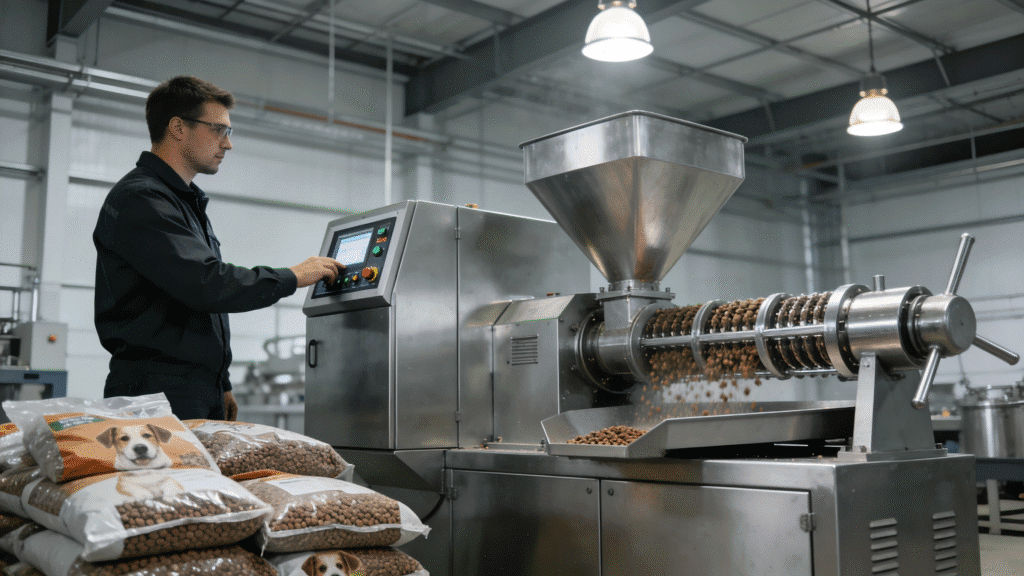
- Manual & Semi-Automated (Small/Medium): Suitable for small-batch and artisanal production. It offers flexibility but relies heavily on operator skill .
- Fully Automated (Medium/Large): Reduces human error and labor costs while ensuring uniformity in every batch. Large-scale operations often integrate IoT and smart manufacturing systems for real-time data monitoring, predictive maintenance, and full traceability .
5. Consider Regulatory Compliance and Food Safety
Regardless of size, compliance is non-negotiable, but the methods to achieve it differ.
- Small Lines: Must still adhere to local food safety laws, but inspection and cleaning can be done manually.
- Medium/Large Lines: Must invest in robust features to meet standards like FSMA (USA) or GMP/HACCP . This includes stainless steel construction, automated Clean-in-Place (CIP) systems, metal detectors, and X-ray inspection machines to prevent contamination at high speeds . Large manufacturers also invest heavily in in-house research laboratories to ensure quality .
6. Analyze Total Cost of Ownership (TCO)
The purchase price is just the beginning.
| Cost Factor | Small-Scale Line | Medium/Large-Scale Line |
|---|---|---|
| Initial Investment | Lower entry barrier ($10,000 – $50,000 for basic setups) . | High upfront cost (can exceed $1 million for fully automated systems) . |
| Operating Costs | Higher per-unit labor and energy costs. | Lower per-unit costs due to economies of scale and energy efficiency. |
| Maintenance | Simpler maintenance, but potential for higher downtime if not industrial-grade . | Requires preventive maintenance plans and spare parts inventory to avoid costly downtime . |
| Scalability | Limited; you may need to replace equipment entirely to grow. | Modular systems allow for expansion by adding lines or upgrading components . |
7. Plan for the Future
Your choice today must leave room for tomorrow.
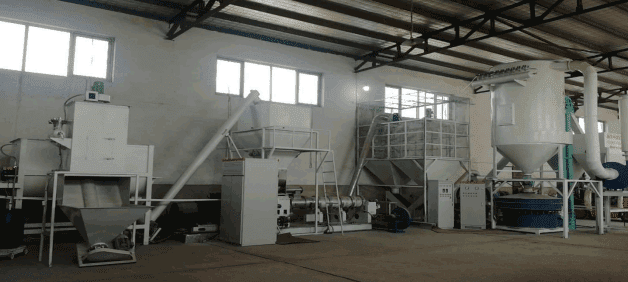
- Small to Medium: If you are starting small, look for equipment that offers a slight buffer in capacity or can be integrated into a larger line later. Dog food making machine Some suppliers offer modular designs .
- Medium to Large: If you are in this bracket, scalability is key. Choose suppliers who offer robust after-sales support, training, and the ability to customize recipes and die shapes to keep up with market trends like high-protein or functional foods .
FAQ
Q1: Can I upgrade a small line to medium later?
Yes, all our lines are modular and upgradable.
Q2: How to choose floating vs sinking feed extruder?
Depends on fish type: surface feeders → floating; bottom feeders → sinking.
Q3: How often should maintenance be done?
Daily: clean screw & barrel;
Monthly: check motor & bearings;
Yearly: overhaul key parts.
Q4: Is on-site installation worldwide available?
Yes, professional engineers can assist globally.
Q5: What is the expected service life of extruder?
High-quality extruder: 10–15 years with proper maintenance.
Q6: How to reduce energy cost?
Use energy-saving motors
Recover heat from dryer
Optimize process parameters
Choosing the right dog food production line is a balancing act between ambition and practicality.
- Choose a Small Line if you are a startup with limited capital, want to test the market with artisanal or specialty products, and value flexibility over raw output.
- Choose a Medium Line if you have established a customer base, need to increase consistency and volume, and are ready to invest in semi-automated systems.
- Choose a Large Line if you are an established manufacturer aiming for mass-market domination, require maximum efficiency and the lowest per-unit cost, and have the facility and capital to support industrial-scale operations.
Before making any purchase, conduct thorough market research, visit manufacturer facilities, and speak with other producers. The right machinery, matched to your scale, will be the engine that drives your success in the competitive pet food industry.