A extrusora de parafuso duplo: Um tratado abrangente sobre funcionalidade e aplicações multifacetadas
The twin-screw extruder (TSE) stands as a cornerstone of modern industrial processing, a versatile and sophisticated workhorse that has revolutionized the manufacture of products across a staggering array of sectors. Moving far beyond its origins in polymer processing, the twin-screw extruder has emerged as a quintessential platform for continuous mixing, compounding, reacting, and shaping. This in-depth exploration delves into the fundamental engineering principles, twin screw extruder machine intricate functionalities, and vast, cross-disciplinary applications of the co-rotating and counter-rotating twin-screw extruder. We will dissect its modular architecture, analyze the complex thermomechanical dynamics within its barrel, twin screw extruder machine and chart its indispensable role in industries ranging from plastics and food to pharmaceuticals and advanced materials. With a focus on its unparalleled ability to precisely control shear, residence time, temperature, and pressure, this treatise positions the TSE not merely as a machine, but as a continuous, intensive, and highly tunable reactor central to innovation in the 21st century.
Table of Contents
- Introduction: The Evolution of an Industrial Paradigm
- Fundamental Principles and Classifications
- 2.1. Core Geometry: Intermeshing vs. Non-Intermeshing
- 2.2. Rotational Direction: Co-rotating vs. Counter-rotating
- 2.3. The Modular Philosophy: Barrels, Screws, and Dies
- Deep Dive into Functionality: The Machine as a Reactor
- 3.1. Solids Conveying and Feeding
- 3.2. Melting and Plastication: The Role of Shear and Conduction
- 3.3. Mixing Mechanisms: Distributive and Dispersive
- 3.4. Devolatilization and Reactive Extrusion
- 3.5. Pumping, Pressurization, and Die Forming
- Applications in Polymer Science and Plastics Engineering
- 4.1. Compounding: The Heart of the Plastics Industry
- 4.2. Masterbatch and Colorant Production
- 4.3. Polymer Alloying and Compatibilization
- 4.4. Devolatilization and Recycling
- Transformative Role in the Food Industry
- 5.1. Breakfast Cereals and Snack Foods: Texturization via Expansion
- 5.2. Confectionery and Pet Food Processing
- 5.3. Protein Texturization: Meat Analogues and TVP
- 5.4. Biopolymer Modification and Starch Cooking
- Pharmaceutical and Nutraceutical Manufacturing
- 6.1. Hot-Melt Extrusion (HME) for Amorphous Solid Dispersions
- 6.2. Taste Masking and Controlled Release Formulations
- 6.3. Continuous Granulation and API Dispersion
- Emerging Frontiers and Advanced Applications
- 7.1. Chemical Reactor for Polymer Synthesis and Grafting
- 7.2. Nanocomposite and Advanced Material Fabrication
- 7.3. Processing of Energetic Materials and Ceramics
- 7.4. 3D Printing Filament Production
- Process Design, Control, and Scale-Up Considerations
- Future Trends and Conclusions
1. Introduction: The Evolution of an Industrial Paradigm
The extruder, in its earliest single-screw form, was conceived as a simple pump for thermoplastics—a device to melt and push material through a shaping die. However, twin screw extruder machine the limitations of single-screw extruders in mixing efficiency, heat transfer, and process flexibility became glaringly apparent as material science and product demands advanced. The invention and subsequent refinement of the twin-screw extruder marked a paradigm shift. By incorporating two parallel screws within a single barrel, engineers unlocked a new dimension of process control.
The twin-screw extruder is fundamentally a continuous intensive mixer. Its genius lies in the positive displacement action of the intermeshing screws, which provides superior conveying efficiency, self-wiping characteristics (reducing material hang-up and degradation), and an unprecedented ability to manipulate the process environment along the length of the machine. From its feed throat to its die, the TSE can be sequentially zoned to perform distinct unit operations: solid feeding, melting, mixing, venting, reacting, and pressurizing. This transforms a linear process into a spatially distributed, integrated manufacturing line contained within a single apparatus.
Today, the TSE is ubiquitous. It is the engine behind high-performance plastic composites in our cars and airplanes, the creator of textured vegetable protein in plant-based burgers, the producer of life-enhancing pharmaceutical formulations, and the tool for pioneering next-generation nanomaterials. Its adaptability and precision make it indispensable for both mass production and specialized, high-value manufacturing.
2. Fundamental Principles and Classifications
Understanding TSE functionality begins with its geometry and kinematics.
2.1. Core Geometry: Intermeshing vs. Non-Intermeshing
In intermeshing designs, the flight crests of one screw protrude into the channel of the other. This creates a positive calendering gap and ensures a strong interaction between the screws, leading to excellent conveying, mixing, and self-cleaning. Most modern TSEs for compounding and reactive extrusion are fully intermeshing.
Non-intermeshing (or tangential) TSEs have screws that do not penetrate each other’s channels. They behave more like two parallel single-screw extruders with some interaction in the nip region. They offer longer residence times and are sometimes used for specific devolatilization or reaction tasks but offer poorer mixing and conveying.
2.2. Rotational Direction: Co-rotating vs. Counter-rotating
This is the most critical operational distinction.
- Co-rotating Twin-Screw Extruders: The screws rotate in the same direction (typically clockwise when viewed from the drive end). At the intermeshing region, the screws wipe each other, moving material in a figure-8 pattern around both screws. This creates:
- High Average Shear: Efficient melting and dispersive mixing.
- Excellent Homogenization: Superior distributive mixing from the constant division and recombination of material streams.
- High Screw Speeds: Capable of running at very high RPMs, generating significant mechanical energy input.
- Reduced Axial Pressure Gradient: Conveying is more drag-induced than positive, allowing for easier implementation of multiple feed ports and venting zones.
- Lower Maximum Pressure Build-up: Typically requires a gear pump at the discharge for high-pressure die filling.
Co-rotating TSEs are the dominant design for compounding, reactive extrusion, and most food and pharmaceutical applications due to their versatility and mixing prowess.
- Counter-rotating Twin-Screw Extruders: The screws rotate in opposite directions. In the intermeshing region, material is calendered through the nip, creating a squeezing, rolling action. This results in:
- Positive Pumping Action: Conveying is more positive displacement, like a gear pump.
- Lower Average Shear, High Local Shear: The calendering nip generates intense local shear, but overall residence time distribution is narrower.
- Excellent Pressurization Ability: Can build high pressure efficiently without auxiliary pumps.
- Potentially Higher Wear: The calendering action can lead to higher forces on the screws and barrel in the nip region.
Counter-rotating TSEs are often preferred for profile extrusion of sensitive materials (like PVC) where precise output and lower overall thermal stress are needed, and for processes requiring excellent positive conveying.
2.3. The Modular Philosophy: Barrels, Screws, and Dies
The true power of a modern TSE lies in its modularity. twin screw extruder machine Both the barrel and the screw are constructed from individual segments.
- Barrel Sections: These can be solid, vented (for devolatilization or side-stuffing), or have special feed ports. They are typically clad with wear-resistant alloys (e.g., bimetallic liners) and have multiple independently controlled heating/cooling zones.
- Screw Elements: The screw is not a single helix but a shaft upon which various screw and kneading elements are mounted.
- Elementos de transporte: Transport material forward. Pitch and channel depth control fill level and conveying speed.
- Blocos para amassar: Staggered discs that provide intense mixing. Their stagger angle (forward, neutral, reverse) controls backflow, residence time, and shear intensity. Neutral and reverse kneading blocks create restrictive “plugs” that fully fill screw channels, enhancing mixing and creating seals for vent ports.
- Elementos especiais: Mixing gears, blister rings, and shear discs for specific functions.
- Montagem da matriz: The final shaping tool. While simpler than the extruder itself, die design is critical for product shape, swell, and surface finish.
This modularity allows process engineers to “build” a screw configuration and barrel setup tailored precisely to the material recipe and desired transformation, making the TSE a universally configurable processing platform.
3. Deep Dive into Functionality: The Machine as a Reactor
The TSE performs a sequence of integrated unit operations. We follow the material’s journey.
3.1. Solids Conveying and Feeding
The process starts with metering raw materials (pellets, powders, liquids) into the feed throat via loss-in-weight or volumetric feeders. Accuracy here is paramount for formulation consistency. In the first few barrel sections, conveying elements move the solid bed forward. The design ensures a starved feed condition (screw channels are not fully filled), allowing independent control of throughput and screw speed—a key advantage over single-screw extruders.
3.2. Melting and Plastication: The Role of Shear and Conduction
Melting is initiated not just by barrel heaters but predominantly by mechanically generated heat (viscous dissipation). As the solid bed is compressed against a closed discharge (created by a restrictive screw element or die), twin screw extruder machine the work done by the rotating screws is converted into frictional and shear heat. In co-rotating TSEs, kneading blocks are strategically placed to accelerate this. They fluidize the solid bed, creating a thin melt film that wipes the barrel wall and gets swept into the inter-screw region, where it coalesces. This “dissipative mix-melting” is extremely rapid and efficient, allowing for high throughputs with relatively low barrel temperatures, minimizing thermal degradation.
3.3. Mixing Mechanisms: Distributive and Dispersive
This is the TSE’s signature capability.
- Distributive Mixing: The laminar stretching, folding, and reorientation of components to achieve spatial uniformity without reducing particle size. The figure-8 flow path in co-rotating TSEs and the division/recombination at kneading blocks are exceptionally effective for this. It’s critical for blending polymers, incorporating additives, and color dispersion.
- Dispersive Mixing: The breaking down of agglomerates (e.g., carbon black, silica, pigment clusters) or droplets in immiscible blends into finer particles. This requires overcoming the cohesive or interfacial forces through the application of high stress. In a TSE, high-stress zones are created in the narrow gaps: between the screw flight and barrel, in the intermeshing region, and most intensely in the nip of counter-rotating screws or the tips of kneading blocks. Screw configuration design places these high-stress zones strategically to de-agglomerate fillers or disperse a minor polymer phase.
3.4. Devolatilization and Reactive Extrusion
- Devolatilization (DV): TSEs can have multiple vent ports along the barrel. Under a restrictive screw element that creates a melt seal, the screw channels are only partially filled, exposing a large, renewed melt surface to the vacuum applied at the vent. This efficiently removes solvents, monomers, moisture, or reaction by-products. The intense surface renewal, combined with vacuum, makes TSEs far superior to tanks for devolatilization.
- Reactive Extrusion (REX): The TSE is an ideal continuous reactor for polymerization, graft modification, polymer degradation (controlled rheology), and crosslinking. Reactants are fed at precise points (monomers, initiators, agents). The excellent mixing ensures homogeneity, while precise temperature control and defined residence time distribution allow for controlling reaction kinetics and product molecular weight. REX eliminates the need for solvents, making it a “green” technology.
3.5. Pumping, Pressurization, and Die Forming
The final functional zone meters the homogeneous melt to the die. While counter-rotating TSEs are good pumps, co-rotating designs often use the last few conveying elements merely to forward the melt into a gear pump. twin screw extruder machine This positive displacement pump decouples the mixing/processing functions from the pressure-generation function, providing utterly stable, pulse-free pressure to the die for consistent product dimensions. The melt then flows through the die, where it takes its final shape (strand, sheet, profile) before being cooled.
4. Applications in Polymer Science and Plastics Engineering
The TSE is the undisputed centerpiece of the plastics compounding industry, valued globally in the tens of billions of dollars.
4.1. Compounding: The Heart of the Plastics Industry
Virtually no engineering plastic is used in its pure form. TSEs compound base resins with:
- Reinforcements: Glass fibers (fed downstream to minimize breakage), carbon fibers.
- Fillers: Talc, calcium carbonate, wollastonite to reduce cost and modify properties.
- Additives: Flame retardants, antioxidants, UV stabilizers, plasticizers, lubricants.
- Impact Modifiers: Elastomers to improve toughness.
The TSE’s dispersive mixing ensures filler de-agglomeration, and its distributive mixing guarantees uniform additive distribution, which is critical for consistent mechanical, electrical, and aesthetic properties in the final molded or extruded part.
4.2. Masterbatch and Colorant Production
Masterbatch is a concentrated mixture of pigments and/or additives in a carrier resin. TSEs produce masterbatches with extremely high loading levels (50-80%) and flawless dispersion. The intense shear of kneading blocks breaks down pigment agglomerates to sub-micron levels, ensuring brilliant, consistent color and no specks in the final diluted product.
4.3. Polymer Alloying and Compatibilization
Most polymers are immiscible. Blending them (e.g., PC/ABS, PPE/HIPS) creates a multiphase morphology that determines properties. The TSE controls this morphology through shear/stress history and the use of compatibilizers (often added or formed in-situ via REX). The TSE can finely tailor the size and distribution of the dispersed phase, creating materials with synergistic properties unattainable by a single polymer.
4.4. Devolatilization and Recycling
TSEs are used to remove contaminants and volatiles from post-industrial and post-consumer plastic waste. They can also degrade polymers like PET or polycondensates in controlled ways (via REX) to regenerate monomers or create recycled resins with specified viscosities.
5. Transformative Role in the Food Industry
Here, the TSE operates as a high-temperature, short-time (HTST) biochemical reactor, primarily for starch- and protein-based materials.
5.1. Breakfast Cereals and Snack Foods: Texturization via Expansion
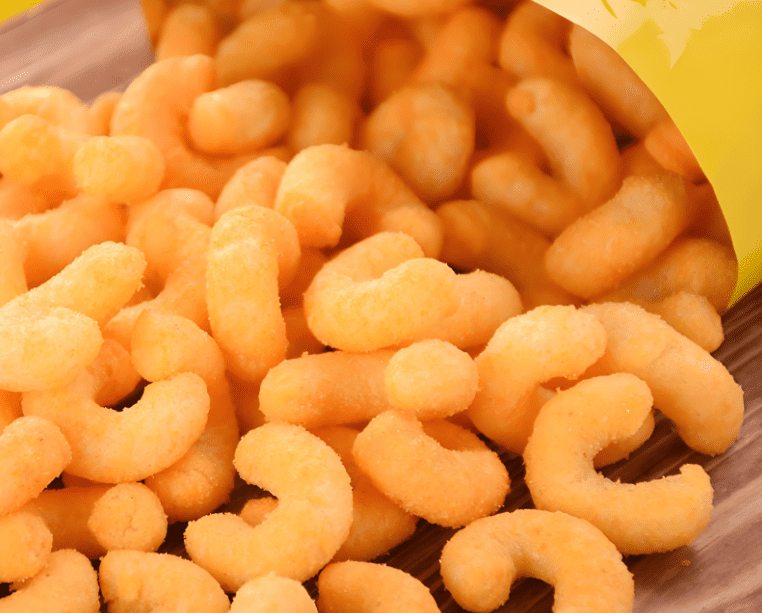
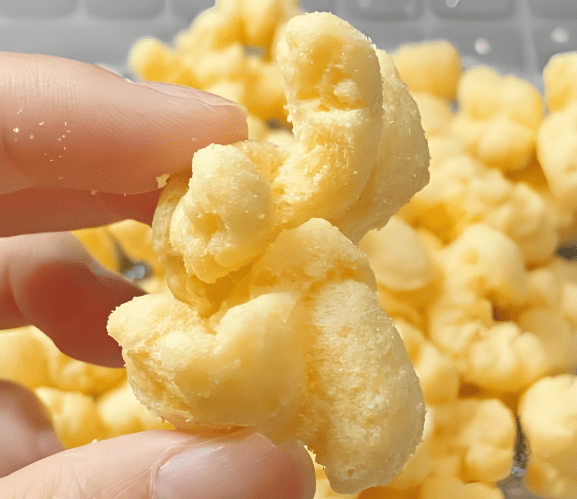
As detailed in the previous article, TSEs cook flour-water mixtures under heat and shear, gelatinizing starch. The superheated melt exits the die, and the sudden pressure drop causes water flashing, creating a porous, expanded, crispy structure. Die shape and cutter speed create endless varieties: rings, balls, curls, flakes. Product density and texture are finely tuned via moisture content, screw speed, and temperature.
5.2. Confectionery and Pet Food Processing
- Confectionery: TSEs cook candy masses (like licorice, fruit chews), gelatinize starch for gummi candies, and aerate products like marshmallows or nougat by injecting and dispersing gas under pressure.
- Pet Food/Kibble: The process is similar to cereal expansion but optimized for nutritional density and palatability. Proteins, fats, vitamins, and grains are mixed, cooked, expanded, and shaped into kibble. The HTST process improves digestibility and destroys anti-nutritional factors and pathogens.
5.3. Protein Texturization: Meat Analogues and TVP
This is a rapidly growing application. Plant protein flours (soy, wheat gluten, pea) are fed into a TSE with water. Under high temperature, shear, and pressure, the proteins denature, unravel, and realign into fibrous, meat-like structures. This process, known as high-moisture extrusion cooking, can produce continuous strands or layers that mimic the texture of chicken, beef, or pork. It is the core technology behind many next-generation plant-based meats.
5.4. Biopolymer Modification and Starch Cooking
TSEs modify native starch properties (e.g., creating pre-gelatinized starch for instant foods) or process biodegradable polymers like PLA. They can also be used for continuous cooking of grains or pulses for ingredients in other food products.
6. Pharmaceutical and Nutraceutical Manufacturing
The adoption of TSE, specifically via Hot-Melt Extrusion (HME), is one of the most significant advancements in pharmaceutical manufacturing over the last two decades, enabling Quality by Design (QbD) and continuous processing.
6.1. Hot-Melt Extrusion (HME) for Amorphous Solid Dispersions
The primary application is to enhance the bioavailability of poorly water-soluble drugs (a major challenge in drug development). twin screw extruder machine The API and a polymeric carrier (e.g., PVP, HPMCAS) are processed in a TSE above their melting points or glass transition temperatures. The intense mixing molecularly disperses the API within the polymer matrix, forming an amorphous solid dispersion. This amorphous state has much higher apparent solubility than the crystalline API, dramatically improving dissolution rate and absorption in the body. The TSE provides a solvent-free, continuous, and highly reproducible method to manufacture these complex formulations.
6.2. Taste Masking and Controlled Release Formulations
Unpleasant-tasting APIs can be embedded in a polymeric matrix via HME, preventing interaction with taste buds. Furthermore, by selecting specific polymers (e.g., enteric or sustained-release polymers), the TSE can be used to create matrix tablets or pellets for controlled drug release profiles.
6.3. Continuous Granulation and API Dispersion
TSEs offer a continuous, wet granulation alternative to batch-based high-shear mixers. Binders can be added as melts or solutions, and the TSE’s mixing action creates uniform, dense granules with excellent flow properties for tableting. It ensures a homogeneous dispersion of low-dose APIs, a critical quality attribute.
7. Emerging Frontiers and Advanced Applications
7.1. Chemical Reactor for Polymer Synthesis and Grafting
Beyond reactive extrusion, TSEs are used for bulk polymerization of caprolactam to Nylon-6, polymerization of acrylics, and grafting of maleic anhydride onto polyolefins to create compatibilizers in-line.
7.2. Nanocomposite and Advanced Material Fabrication
Exfoliating and dispersing nano-scale fillers like layered silicates (clay), graphene, or carbon nanotubes into polymers is exceptionally demanding. The high shear and extensional flow fields in a TSE are one of the few practical methods to achieve a proper dispersion at industrial scales, unlocking the dramatic property enhancements (strength, barrier, conductivity) promised by nanocomposites.
7.3. Processing of Energetic Materials and Ceramics
In specialized, safely engineered TSEs, explosives and propellants can be mixed with binders to create highly uniform, safe-to-handle plastic bonded explosives (PBX). Similarly, TSEs are used to compound ceramic powders with binders (feedstock) for subsequent shaping and sintering in advanced ceramics manufacturing.
7.4. 3D Printing Filament Production
The consistent diameter and homogeneous dispersion of colorants or performance additives (conductive, magnetic) required for high-quality FDM 3D printing filament are perfectly achieved using TSE compounding lines.
8. Process Design, Control, and Scale-Up Considerations
Successful TSE operation is not just about the machine; it’s a systems engineering challenge.
- Feeding Systems: Precision, synchronized feeders for solids and liquids are essential.
- Downstream Equipment: Gear pumps, dies, face-cutters, pelletizers, dryers, and winders must be integrated.
- Process Analytical Technology (PAT): In-line sensors for melt pressure, temperature, viscosity, and even spectroscopy (NIR, Raman) are used for real-time quality control and closed-loop feedback.
- Scale-Up: A significant advantage of modular TSEs is scalability. twin screw extruder machineProcess parameters are often scaled by maintaining specific mechanical energy input (SME), shear rate, or residence time when moving from laboratory (16-20mm screw diameter) to production (70-130+mm) scales.
9. Future Trends and Conclusions
The future of twin-screw extrusion is marked by digitalization, intensification, and diversification.
- Digital Twins & AI: High-fidelity simulation software coupled with machine learning will allow for virtual process optimization and predictive maintenance.
- Supercritical Fluid Assisted Extrusion: Using CO2 as a plasticizer or foaming agent in-process opens new avenues for creating microcellular foams or processing heat-sensitive materials.
- Multi-Material and Functionally Graded Products: Advanced feeding and screw design could enable the continuous production of spatially varying compositions along or across the extrudate.
- Expansion into Bioeconomy: Processing of lignin, algae, and other biobased feedstocks for materials and chemicals.
In conclusion, the twin-screw extruder is far more than a mere machine.twin screw extruder machine It is a platform technology for continuous process intensification. Its unique combination of modular flexibility, intense yet controllable mixing, and ability to integrate multiple unit operations into a single, compact, and efficient line has made it a critical enabler across the manufacturing spectrum. From the plastic composites in modern vehicles to the plant-based meat on our plates and the life-saving medicines in our cabinets, the twin-screw extruder quietly shapes the material world, proving itself to be one of the most versatile and indispensable tools in industrial engineering.