
Macaroni is one of the world’s most beloved pasta shapes, its hollow form perfectly designed to capture sauces and deliver satisfying bites. But behind this simple, iconic shape lies a sophisticated industrial process that combines centuries of tradition with cutting-edge food engineering. This article provides a comprehensive, step-by-step look at exactly how macaroni is manufactured, from the arrival of raw wheat to the final packaging of the dried product.
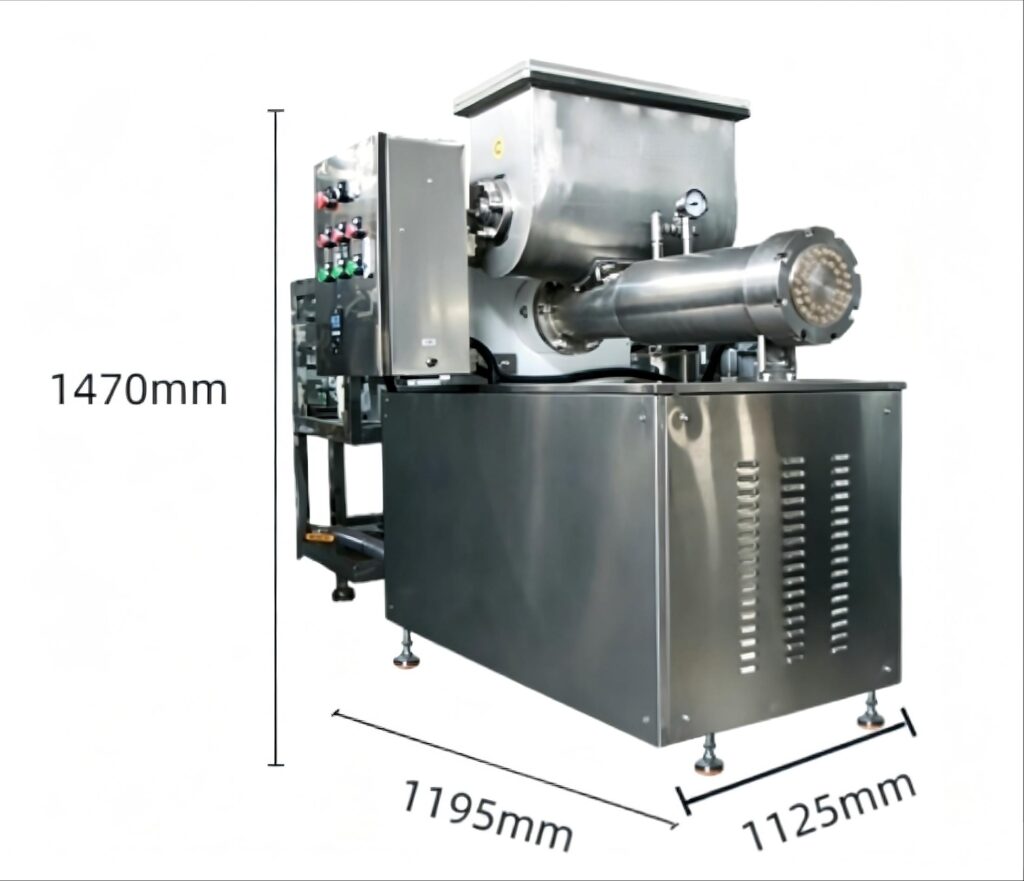
1. Raw Material Selection: The Durum Wheat Imperative
The journey of macaroni begins with the selection of the right wheat. Durum wheat (Triticum durum) is the undisputed gold standard for high-quality pasta production. Unlike common bread wheat (Triticum aestivum), durum wheat has several critical characteristics:
- High Protein Content (12-14%): This provides the strong, elastic gluten network essential for holding the pasta’s shape during extrusion and cooking.
- Hard Vitreous Endosperm: This creates a granular, rather than powdery, flour that is ideal for extrusion.
- High Carotenoid Pigment: Durum wheat contains natural yellow pigments (lutein and zeaxanthin) that give pasta its characteristic golden-amber color.
Upon arrival at the mill, the wheat undergoes rigorous cleaning. Magnets remove ferrous contaminants, aspirators blow away chaff and dust, and destoners separate out heavier impurities like stones and glass. The cleaned wheat is then conditioned with water to temper the kernels, making the bran more flexible and easier to separate from the endosperm during milling.
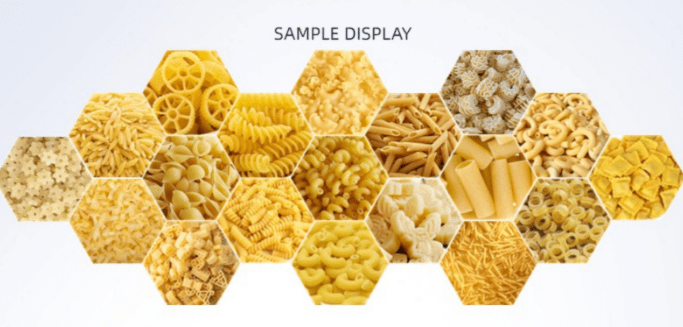
2. Milling: Creating the Perfect Semolina
The milling process is specifically designed to produce semolina—a coarse, granular flour—rather than the fine powder used for bread. The process involves a gradual reduction system:
- Break Rolls: The tempered wheat passes through a series of corrugated steel rollers that crack the kernels open. The goal is to separate the starchy endosperm from the bran and germ with minimal fragmentation.
- Sifting and Purification: The cracked material is sifted through a series of screens. The coarser endosperm particles (semolina) are separated from finer flour (middlings) and the bran. Purifiers use air currents to separate the semolina particles by density, removing any remaining bran specks.
- Reduction Rolls: The semolina is then passed through smooth reduction rolls to achieve the desired particle size and uniformity.
The resulting semolina should be a clean, uniformly granular product with a bright yellow color, free from bran specks or impurities. Its granularity is crucial—it allows for better water absorption and a more uniform dough during mixing.
3. Mixing and Dough Preparation
The semolina is conveyed to a large mixer, where it is combined with water—the only essential ingredient besides semolina itself.
The Water Addition:
- The optimal water content for macaroni dough is approximately 31-33% of the total weight.
- The water should be potable, preferably slightly hard to strengthen the gluten structure.
- The water temperature is carefully controlled to achieve a final dough temperature of around 40-50°C (104-122°F) . This temperature range optimizes gluten hydration without damaging the dough.
Vacuum Mixing: This is a critical and often overlooked step. The mixing chamber is placed under a vacuum to remove entrapped air. Why is this so important?
- Air bubbles in the dough become weak points in the pasta structure.
- They cause the pasta to break during cooking.
- They create white, chalky specks on the surface of the finished product.
- Vacuum mixing produces a more compact, homogeneous, and translucent dough that cooks evenly and has a superior texture.
The mixing process typically lasts 10-20 minutes, during which the semolina and water form a cohesive, plastic, and crumbly dough. No fermentation or leavening agents are used—macaroni is an unleavened product.
4. Extrusion: Giving Shape to the Tube
Extrusion is the defining moment in macaroni production—the process that transforms a shapeless dough into a precise hollow tube. The dough is fed into a powerful screw extruder, which consists of a large steel barrel containing one or two rotating augers.
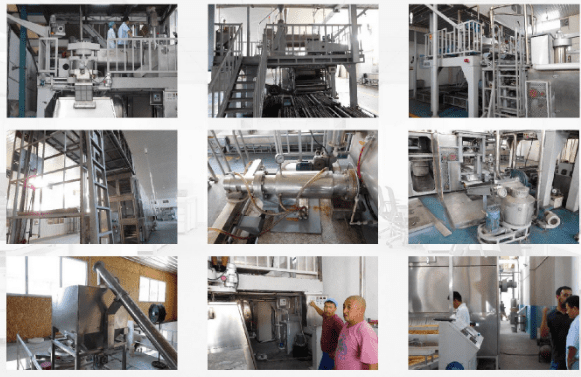
The Extrusion Process:
- Conveying and Compacting: The screw auger draws the dough into the barrel and conveys it forward. As the space between the screw flights decreases, the dough is compressed and compacted, expelling any remaining air.
- Kneading and Homogenization: The rotation of the screw kneads the dough, ensuring that the moisture is uniformly distributed and the gluten network is fully developed.
- Temperature Control: Friction from the rotating screw generates substantial heat. If the dough temperature exceeds 65-74°C (149-165°F) , the gluten proteins will denature and the starch will gelatinize, ruining the pasta’s cooking quality. Therefore, the extruder barrel is equipped with a water-cooling jacket to maintain the dough at a consistent, safe temperature.
- Die Passage: At the end of the barrel, the pressurized dough is forced through a metal plate called a morrer. The die for macaroni is a masterpiece of precision engineering. It features small circular holes with a centrally positioned steel pin or core. The space between the hole and the pin creates the tubular shape. As the dough emerges, it forms a continuous hollow tube.
The Role of the Die Material: High-quality dies are made from bronze, Teflon-coated bronze, or tungsten carbide. Bronze dies are traditional and create a rough surface that allows sauce to cling better. Teflon-coated dies produce a smoother, more polished surface. Tungsten carbide dies are extremely durable for high-volume production.
Corte: A rotating knife, positioned directly against the face of the die, cuts the emerging tube into precise lengths—typically 2-3 cm for standard macaroni. The speed of the knife determines the length of the final piece.
5. Pre-Drying: Stabilizing the Fresh Pasta
Freshly extruded macaroni is soft, moist, and sticky. It must be stabilized immediately to prevent the pieces from sticking together and to give them enough strength to withstand handling. This is accomplished in a pre-dryer.
The Pre-Drying Process:
- The pasta enters a pre-dryer chamber, where it is exposed to warm air at approximately 40-60°C (104-140°F) .
- The air is blown over the pasta in a continuous flow, and the pieces are gently agitated to prevent sticking.
- In this stage, only the surface moisture is removed. The moisture content drops from about 31% to roughly 20-25%.
- The outer layer of the macaroni becomes firm and leathery, allowing the pieces to be moved to the main drying stage without deformation or adhesion.
6. The Critical Art of Drying
Drying is universally considered the most difficult and critical step in pasta production. The goal is to safely reduce the moisture content from the pre-drying level (around 20-25%) down to a stable 12-13% . This low moisture level ensures a long shelf life and prevents microbial growth.
The Drying Challenge:
- The pasta dries from the outside in. If the exterior dries too quickly, it becomes rigid, while the interior remains moist.
- As the interior moisture eventually tries to escape, it causes stress on the rigid outer layer, leading to micro-cracks in the pasta.
- These micro-cracks are invisible at first but become apparent during cooking, when the pasta breaks apart in the boiling water.
The Drying Solution:
To prevent cracking, a sophisticated, multi-stage drying cycle is used. The exact profile depends on the pasta’s shape, thickness, and size.
The Three-Phase Drying Cycle:
- High-Temperature Phase: The pasta is exposed to high temperatures (60-80°C/140-176°F) with high relative humidity (around 75-85%). This removes moisture slowly and evenly, keeping the interior plastic and preventing case-hardening.
- Falling-Rate Phase: As moisture content decreases, the temperature is raised further (often to 80-90°C/176-194°F) while the relative humidity is lowered. This drives out the remaining internal moisture. High temperatures at this stage also promote a Maillard reaction, enhancing the pasta’s color and flavor.
- Tempering: The pasta is allowed to rest in a controlled environment to allow the remaining moisture to distribute evenly throughout the piece, eliminating any residual internal stress.
The entire drying cycle for macaroni typically lasts 4 to 12 hours, depending on the specific drying profile used. High-temperature drying (HTD) is now the industry standard, offering faster processing and superior product quality.
7. Cooling
After the drying cycle, the macaroni is still warm from the drying chamber. It is conveyed to a cooler, where ambient or chilled air is passed over the product. This cooling step is essential for:
- Preventing condensation inside the packaging.
- Hardening the pasta structure fully.
- Achieving the final, rigid texture associated with commercial macaroni.
8. Quality Control and Sorting
Before packaging, the macaroni undergoes rigorous quality control checks:
- Visual Inspection: Automated optical sorters use cameras to detect off-color pieces, black specks, or shape defects. High-pressure air jets blow any defective pieces out of the product stream.
- Moisture Analysis: Samples are tested to ensure the moisture content is within the specified 12-13% range.
- Metal Detection: All product passes through metal detectors to ensure it is free from any metallic contamination from the machinery.
- Cooking Tests: Regular cooking tests are performed to check for cooking time, texture, and color stability. The ideal macaroni should cook in 8-12 minutes, remain firm (al dente), and not turn mushy or break apart.
9. Packaging
The cooled, sorted macaroni is then conveyed to the packaging line. It is typically packed in either:
- Flexible Films: Polypropylene or cellophane bags, often with a clear window to show the product.
- Cardboard Boxes: Standard retail boxes.
The packaging is sealed to protect the pasta from moisture, light, and oxygen, all of which can degrade its quality over time. A shelf life of 2-3 years is standard for properly dried and packaged macaroni.
Summary: The Macaroni Processing Flowchart
| Stage | Purpose | Key Variables |
|---|---|---|
| Raw Material | Select high-protein durum wheat | Protein content, vitreousness, color |
| Milling | Produce granular semolina | Particle size, purity, bran removal |
| Mixing | Hydrate semolina to 31-33% moisture | Water quality, temperature, vacuum |
| Extrusion | Form hollow tube via die and core | Die design, temperature, pressure, knife speed |
| Pre-Drying | Remove surface moisture to prevent sticking | Air temperature, air velocity |
| Drying | Reduce moisture to 12-13% without cracking | Temperature, humidity, time profile |
| Cooling | Stabilize product for packaging | Air temperature, airflow rate |
| QC & Sorting | Remove defects and ensure quality | Visual inspection, moisture, metal detection |
| Packaging | Protect from moisture and light | Sealing integrity, material choice |
Conclusion
Macaroni processing is a remarkable marriage of tradition and technology. While the ingredients are deceptively simple—semolina and water—the process demands precision, patience, and deep understanding of starch and protein behavior. From the vacuum mixing that eliminates air bubbles to the carefully controlled drying cycles that prevent stress fractures, every step is optimized to create a product that cooks perfectly, holds its shape, and delivers the satisfying texture that has made macaroni a global comfort food. The next time you enjoy a forkful of perfectly cooked macaroni, you are tasting the result of centuries of culinary refinement and modern food science working in perfect harmony.