
Introdução
Extrusion technology is one of the most widely used manufacturing methods in the snack food industry. It enables the production of a wide variety of products, snack extruder machine including corn puffs, cheese balls, breakfast cereals, rice snacks, and multigrain snacks. The extrusion process combines mixing, cooking, kneading, shaping, and expansion into a single continuous operation, offering high efficiency and consistent product quality.
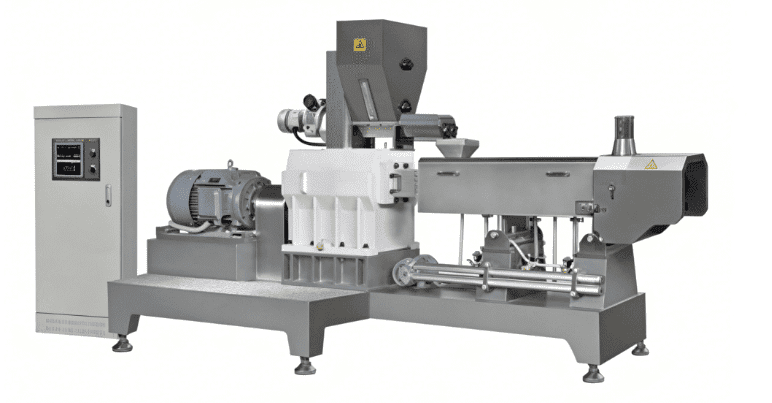
This article introduces the main processing steps involved in manufacturing extruded snacks and the key factors that influence product quality.
Raw Material Preparation
The quality of an extruded snack begins with the selection of raw materials. Common ingredients include:
- Corn flour
- Rice flour
- Wheat flour
- Potato starch
- Tapioca starch
- Protein powders
- Dietary fibers
- Seasonings and additives
The ingredients are accurately weighed according to the product formulation and mixed thoroughly to ensure uniform distribution. Proper moisture content, usually between 12% and 20%, is critical for successful extrusion.
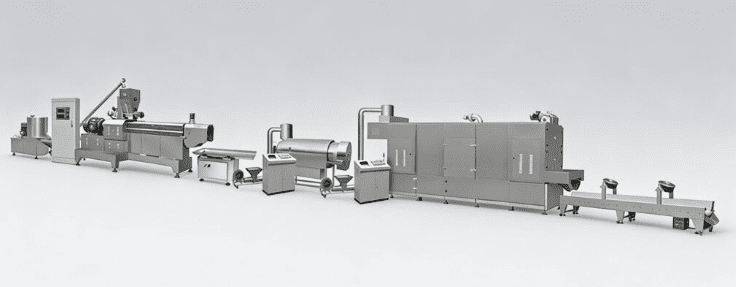
Feeding and Preconditioning
After mixing, the raw materials are fed into a preconditioner. snack extruder machine In this stage, steam and water are added to increase moisture and temperature before the materials enter the extruder.
The benefits of preconditioning include:
- Improved starch gelatinization
- Reduced energy consumption
- Increased production capacity
- Better product texture and expansion
Typically, the material temperature is raised to 70–100°C during preconditioning.
Extrusion Cooking
The extrusion cooking process is the core of snack production. The conditioned material enters the extruder barrel, where rotating screws convey and compress the material.
Inside the extruder, the material experiences:
- High temperature
- High pressure
- Mechanical shear
- Intensive mixing
As a result, starch granules gelatinize and proteins denature, creating a plasticized dough. Depending on the product requirements, barrel temperatures may range from 100°C to 180°C.
Key extrusion parameters include:
- Screw speed
- Barrel temperature
- Feed rate
- Moisture content
- Die design
Careful control of these parameters determines product expansion, texture, density, and appearance.
Shaping and Expansion
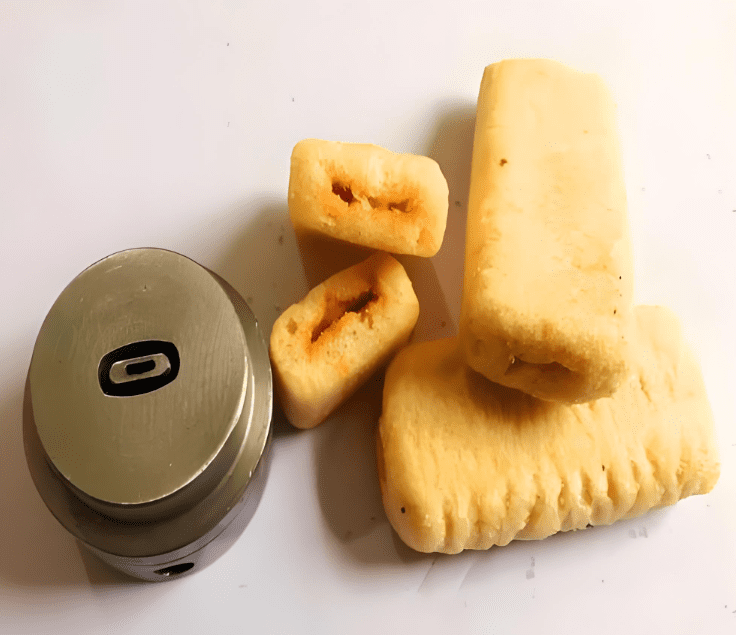
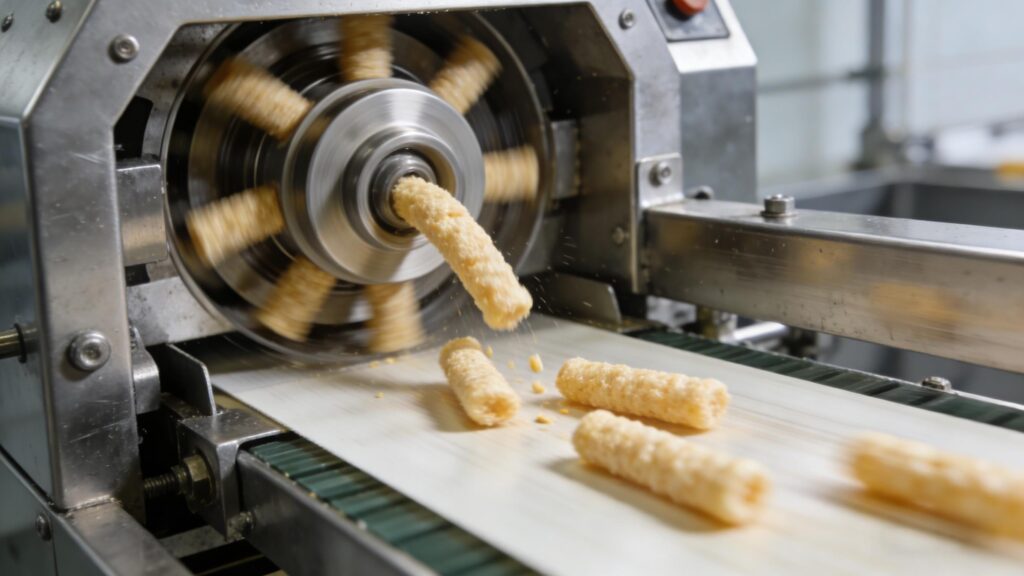
When the cooked dough exits the die, the sudden pressure drop causes moisture to flash into steam. This rapid vaporization expands the product and creates its characteristic porous structure.
Different die designs can produce various shapes such as:
- Balls
- Rings
- Tubes
- Sticks
- Shells
- Custom shapes
Expansion is one of the most important quality characteristics of extruded snacks because it directly affects crispness and mouthfeel.
Drying
Freshly extruded snacks usually contain excessive moisture and require drying to improve shelf life and maintain crispness.
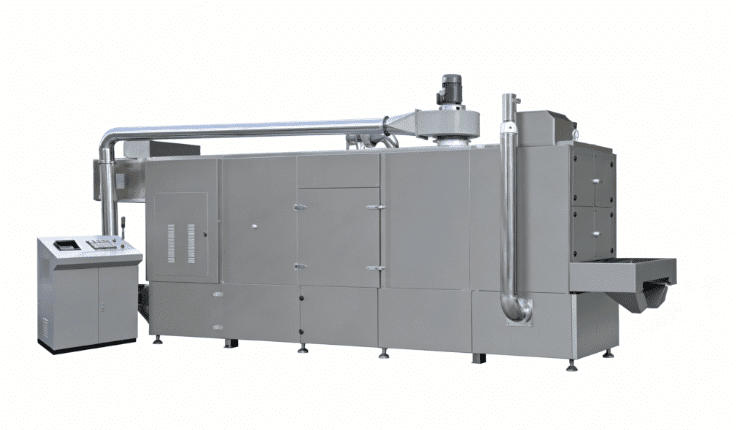
Typical drying conditions include:
- Temperature: 80–120°C
- Final moisture content: 2–5%
Uniform drying is essential to prevent cracking, deformation, or uneven texture.
Seasoning
After drying, snacks are transferred to a seasoning system. Flavoring ingredients are applied using a rotating drum or coating machine.
The seasoning process generally involves:
- Applying edible oil
- Spraying liquid flavors (if required)
- Adding dry seasoning powders
- Mixing to achieve uniform coating
Common flavors include cheese, barbecue, spicy, sour cream, and various regional seasonings.
Cooling and Packaging
Following seasoning, the products are cooled to room temperature before packaging. Proper cooling prevents condensation inside the package, which could negatively affect product crispness.
Packaging materials should provide protection against:
- Humidade
- Oxygen
- Light
- Physical damage
Nitrogen flushing is often used to extend shelf life and preserve product freshness.
Controlo de qualidade
To ensure consistent product quality, manufacturers monitor:
- Moisture content
- Expansion ratio
- Bulk density
- Texture and crispness
- Product dimensions
- Flavor uniformity
- Microbiological safety
Regular testing helps maintain product standards and customer satisfaction.
Conclusion
Extrusion technology has revolutionized the snack food industry by enabling efficient, snack extruder machine continuous, and versatile production. From raw material preparation to packaging, every processing stage plays a crucial role in determining the final product quality. By carefully controlling extrusion parameters, drying conditions, and seasoning techniques, manufacturers can produce high-quality extruded snacks with excellent texture, flavor, and shelf stability.