
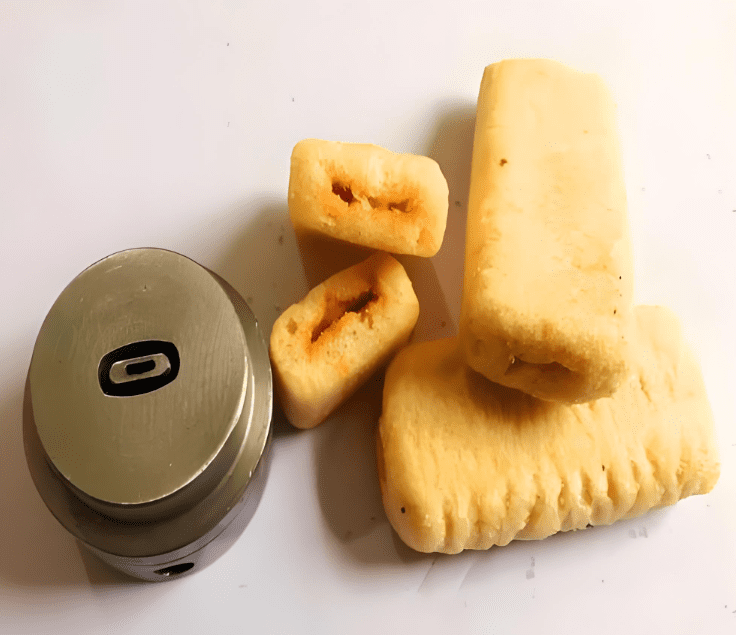
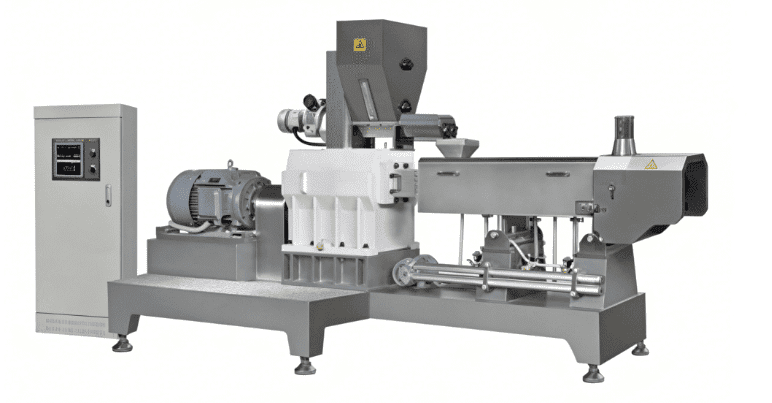
Extruded snack products are popular worldwide because of their crispy texture, attractive shapes, and long shelf life. snacks production machines However, one of the most critical steps in the production process is drying. Proper drying not only improves product quality but also prevents spoilage, maintains texture, and enhances flavor stability. In this article, we will discuss the key drying techniques and practical tips for producing high-quality extruded snack products.
Why Drying Is Important
After extrusion, snack products usually contain a relatively high moisture content. If the moisture is not properly reduced, the products may become soft, moldy, or unstable during storage. Effective drying helps achieve several important goals:
- Improve crispiness and texture
- Extend shelf life
- Prevent microbial growth
- Ensure uniform seasoning adhesion
- Reduce product breakage during packaging and transportation
For most puffed snacks, the final moisture content is generally controlled between 2% and 5%.
Common Drying Methods
1. Hot Air Drying
Hot air drying is the most widely used method in the snack food industry. Heated air circulates through the dryer and removes moisture from the product surface.
Advantages
- Simple operation
- Low equipment cost
- Suitable for large-scale production
Key Tips
- Maintain stable air temperature
- Ensure even airflow distribution
- Avoid overheating to prevent burnt flavor or discoloration
The drying temperature usually ranges from 80°C to 130°C depending on the product type and thickness.
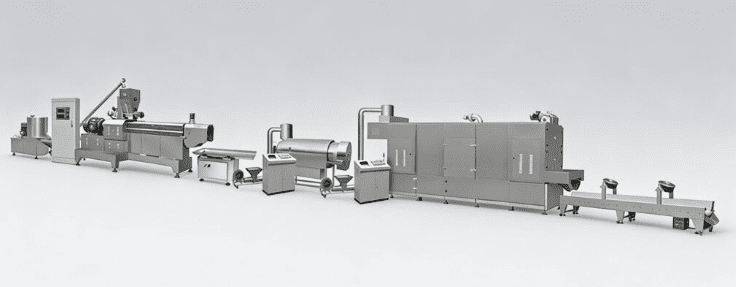
2. Multi-Layer Belt Drying
In this system, products move continuously on conveyor belts through different drying zones.
Advantages
- Continuous production
- Better moisture control
- Suitable for high-capacity factories
Key Tips
- Adjust belt speed according to product moisture
- Use different temperature zones for gradual drying
- Prevent product overlap for uniform drying
Gradual drying helps reduce cracking and maintains product expansion structure.
3. Fluidized Bed Drying
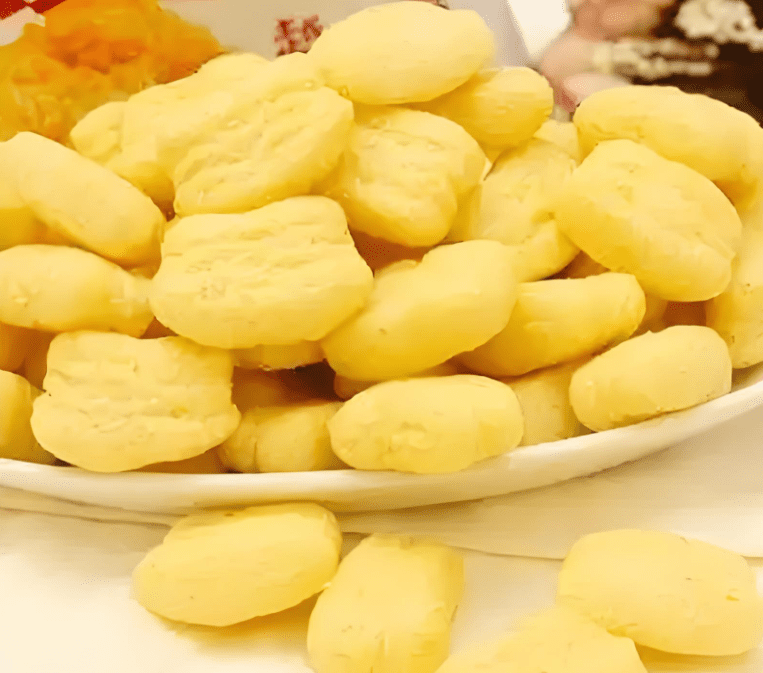
Fluidized bed dryers use high-velocity hot air to suspend and dry small snack particles evenly.
Advantages
- Fast drying speed
- Uniform moisture reduction
- Excellent heat transfer efficiency
Key Tips
- Suitable for pellets and small-size snacks
- Control air pressure carefully
- Avoid excessive airflow that may damage fragile products
This method is highly efficient for modern snack processing lines.
Key Factors Affecting Drying Quality
1. Temperature Control
Temperature is one of the most important parameters in drying. Excessively high temperatures may cause:
- Surface hardening
- Internal moisture retention
- Product burning
- Nutrient loss
Low temperatures, on the other hand, snacks production machines may lead to insufficient drying and reduced production efficiency.
A gradual temperature profile often provides the best results.
2. Airflow Management
Good airflow ensures that moisture is removed evenly from all products.
Important considerations include:
- Uniform air distribution
- Proper air velocity
- Adequate exhaust ventilation
Poor airflow can create uneven moisture levels and inconsistent texture.
3. Drying Time
Drying time must match the product size, density, and moisture content.
- Short drying time may leave excess moisture
- Excessive drying can cause brittleness and product breakage
Manufacturers should regularly test product moisture during production.
4. Product Layer Thickness
Products should be spread evenly during drying. Thick layers reduce drying efficiency and create uneven moisture distribution.
For best results:
- Keep product layers thin
- Avoid stacking
- Use vibration or spreading systems when necessary
Tips for Improving Drying Efficiency
Optimize Pre-Drying Moisture
Controlling moisture during extrusion reduces the drying load and saves energy.
Use Zoned Temperature Control
Different drying stages require different temperatures:
- Initial stage: higher moisture removal
- Final stage: lower temperature stabilization
Monitor Moisture Continuously
Modern factories often use online moisture analyzers to maintain consistent product quality.
Maintain Equipment Regularly
Dirty air ducts, damaged fans, or poor insulation can reduce drying efficiency significantly.
Regular maintenance helps:
- Reduce energy consumption
- Improve product consistency
- Extend equipment lifespan
Common Drying Problems and Solutions
| Problem | Possible Cause | Solution |
|---|---|---|
| Product becomes soft | Insufficient drying | Increase drying time or temperature |
| Surface burns | Excessive temperature | Lower dryer temperature |
| Uneven texture | Poor airflow | Improve air circulation |
| Product cracking | Drying too fast | Use gradual drying stages |
| High energy consumption | Poor insulation | Maintain and optimize equipment |
Conclusion
Drying is a crucial step in the production of extruded snack products. Proper control of temperature, airflow, moisture, and drying time directly affects product quality, texture, and shelf life. snacks production machines By selecting suitable drying equipment and optimizing processing conditions, manufacturers can produce crispy, stable, and high-quality snack products efficiently.
As the snack food industry continues to develop, advanced drying technologies and automation systems will play an increasingly important role in improving production efficiency and maintaining consistent product quality. If you are interested in snacks production machines you can contact me , i will give you good advice and solutions .
1.Will you help us with the installation ?
Yes , We will send engineers to install and debug the equipment, and assist in training your staff.
2.Are you a factory or trading company?
We are a factory.
3.What certificate do you have?
We have ISO and CE certificate.
4.How long is the warranty period?
All of our machines have one year warranty.
5.What’s the main market of your company?
Our customers all over the world.
6.How much production capacity of your company one year?
This depends on your needs.