
Corn extruded snacks are among the most popular convenience foods in the world. Products such as corn puffs, cheese balls, and crunchy corn sticks are widely consumed because of their crispy texture, attractive flavor, and long shelf life. corn puff making machine The manufacturing process of corn extruded snacks combines food science, engineering technology, and precise quality control to create products with consistent taste and appearance.
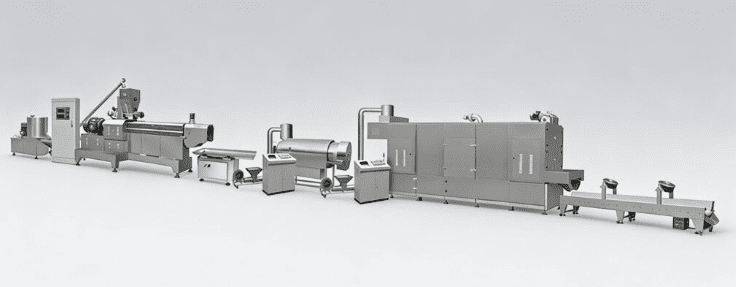
1. Raw Material Selection
The quality of the final product begins with the selection of raw materials. Corn grits or corn flour are the primary ingredients used in corn extrusion processing. The raw materials should have:
- Low impurity content
- Uniform particle size
- Appropriate moisture level
- Good starch quality
Additional ingredients may include:
- Rice flour
- Wheat flour
- Potato starch
- Sugar
- Salt
- Seasonings
- Vegetable oil
These ingredients help improve texture, flavor, expansion ratio, and nutritional value.
2. Mixing Process
The selected dry ingredients are transferred into a mixer where water and other liquid additives are added. The purpose of mixing is to ensure uniform moisture distribution throughout the material.
The moisture content is usually adjusted to around 15%–20%, depending on the product type and extrusion conditions. corn puff making machine Proper mixing is essential because uneven moisture can lead to poor expansion and unstable product quality.
3. Extrusion Cooking
Extrusion is the core process in corn snack production. The mixed material enters the extruder through a feeding system. Inside the extruder, the material is subjected to:
- High temperature
- High pressure
- Mechanical shear
- Continuous mixing
The screw inside the extruder pushes the material forward while cooking it. During this process, starch gelatinization occurs, which is critical for product expansion and texture formation.
When the cooked material exits the die opening, the sudden pressure drop causes moisture to evaporate rapidly, creating the puffed and crispy structure of the snack.
There are two common types of extruders used in the industry:
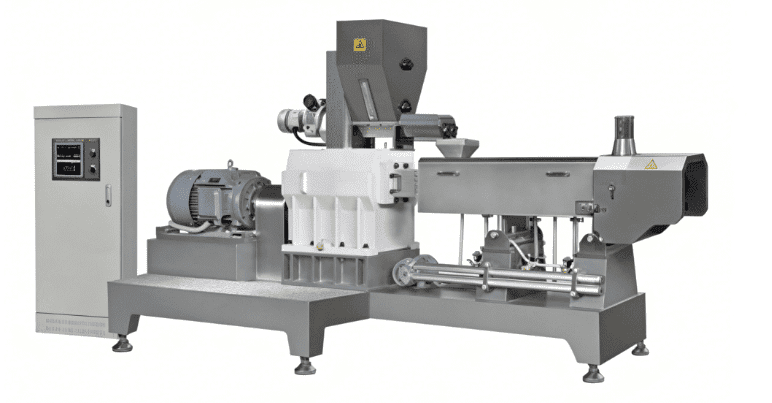
Single-Screw Extruder
- Simple structure
- Lower investment cost
- Suitable for basic snack products
Twin-Screw Extruder
- Better mixing performance
- More stable processing
- Higher product flexibility
- Suitable for advanced formulations
4. Shaping and Cutting
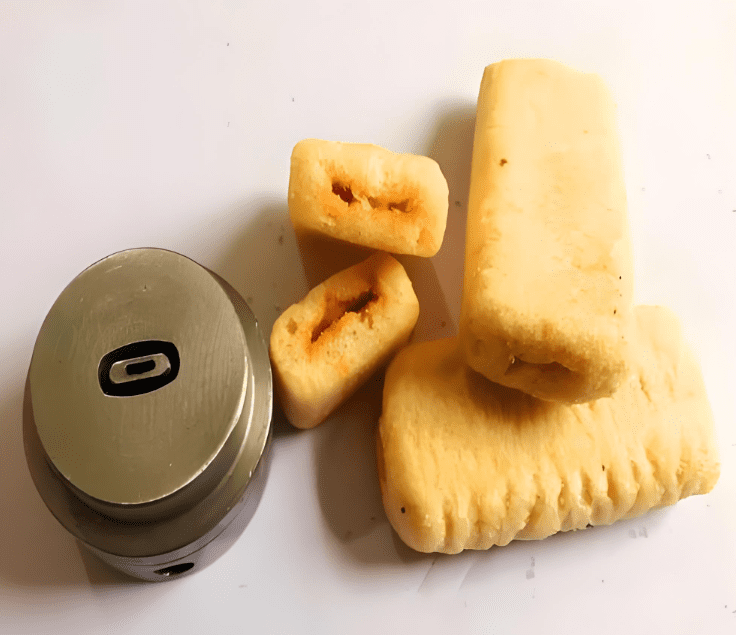
The extruded product is shaped according to the die design. Different dies can produce various shapes such as:
- Balls
- Rings
- Sticks
- Tubes
- Shells
A rotating cutter installed near the die cuts the product into uniform sizes. The cutting speed directly affects product length and appearance.
5. Drying Process
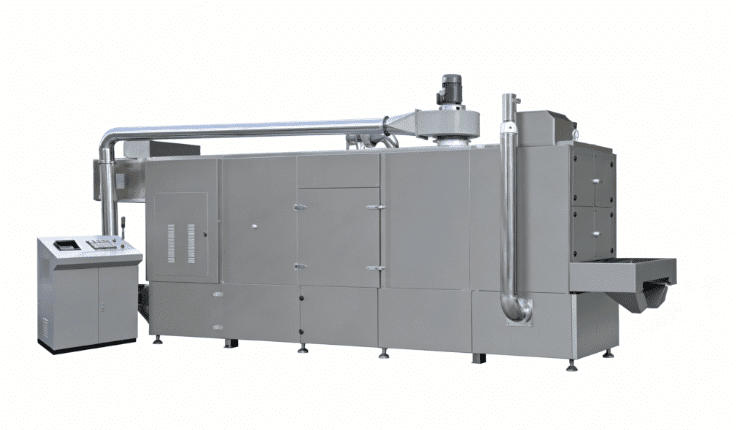
After extrusion, the snacks still contain relatively high moisture. Drying is necessary to improve shelf life and maintain crispiness.
The products are transferred into a dryer where hot air removes excess moisture. The final moisture content is generally reduced to about 2%–5%.
Key drying parameters include:
- Temperature
- Airflow
- Drying time
- Product thickness
Improper drying may cause cracking, deformation, or poor texture.
6. Flavoring and Seasoning
Seasoning is one of the most important steps affecting consumer acceptance. After drying, the snacks enter a flavoring drum where oil and seasoning powders are evenly applied.
Common seasonings include:
- Cheese flavor
- Barbecue flavor
- Spicy flavor
- Tomato flavor
- Sweet corn flavor
Oil spraying improves adhesion of the seasoning powder and enhances mouthfeel.
7. Cooling and Packaging
Before packaging, the products must be cooled to room temperature. Cooling prevents condensation inside the package, which could reduce crispiness.
Packaging materials should provide good barriers against:
- Humidade
- Oxygen
- Light
Nitrogen flushing is often used to extend shelf life and protect product freshness.
8. Quality Control in Production
Modern corn snack factories implement strict quality control systems throughout the production process. Important quality indicators include:
- Expansion ratio
- Bulk density
- Texture and crispiness
- Moisture content
- Product size consistency
- Flavor uniformity
- Microbial safety
Advanced automation systems help manufacturers maintain stable production efficiency and product quality.
9. Advantages of Corn Extruded Snacks
Corn extruded snacks offer several advantages:
- Fast and efficient production
- Wide variety of product shapes
- Low production cost
- Attractive texture and flavor
- Long shelf life
- Easy flavor customization
Because of these benefits, extrusion technology has become one of the most important processing methods in the snack food industry.
Conclusion
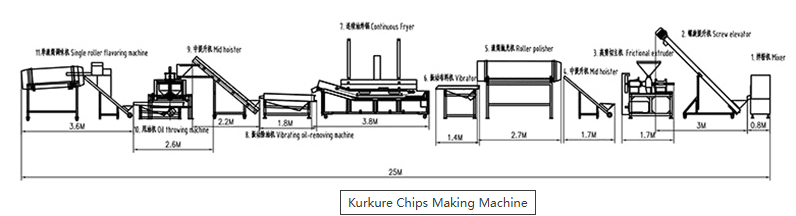
The processing technology of corn extruded snacks involves multiple important stages, corn puff making machine including raw material preparation, mixing, extrusion cooking, drying, seasoning, and packaging. Among these steps, extrusion technology plays the central role in determining product texture and expansion characteristics.
With continuous improvements in food machinery and automation systems, corn snack manufacturers can now produce high-quality products with better efficiency, improved nutrition, and greater flavor diversity to meet the growing demands of global consumers.
If you are interested in corn puff making machine you can contact me , i will give you good advice and solutions .
1.Will you help us with the installation ?
Yes , We will send engineers to install and debug the equipment, and assist in training your staff.
2.Are you a factory or trading company?
We are a factory.
3.What certificate do you have?
We have ISO and CE certificate.
4.How long is the warranty period?
All of our machines have one year warranty.
5.What’s the main market of your company?
Our customers all over the world.
6.How much production capacity of your company one year?
This depends on your needs.