Investing in a small-scale instant noodle production line is a significant venture that combines food processing, packaging, and market strategy. While instant noodles are a global staple, success requires meticulous planning. This guide outlines the key steps, considerations, and a realistic roadmap for such an investment.
Phase 1: In-Depth Feasibility & Market Analysis
Before purchasing any equipment, you must validate the business case.
- Define Your Niche: The mass market is dominated by giants. Your success likely lies in a specialty niche. Consider:
- Premium/Health-Conscious: Noodles made with alternative flours (quinoa, buckwheat, whole wheat), lower sodium, organic ingredients, or baked instead of fried.
- Ethnic/Regional Flavors: Authentic, soup-based flavors targeting specific diaspora communities or food enthusiasts (e.g., Thai Tom Yum, Indonesian Mi Goreng, Japanese Ramen-style).
- Functional Noodles: Fortified with vitamins, protein, or other functional ingredients.
- Understand Regulations: Food production is heavily regulated. You must understand FDA (USA), EFSA (EU), or local food safety authority requirements for your region. This includes facility licensing, Good Manufacturing Practices (GMP), HACCP plans, nutritional labeling, and ingredient approvals. Consult a food safety expert early.
- Analyze Local Competition & Distribution: Identify how you will sell. Will you supply local grocery stores, farmers’ markets, specialty food shops, or sell online? Understand margin expectations for distributors and retailers.
Phase 2: Core Equipment & Process Breakdown
A basic small-scale line consists of several integrated machines. Budget roughly $50,000 to $200,000+ for a new, semi-automatic line, depending on automation level and capacity (e.g., 500-2000 packs per hour).
The Standard Process Flow & Necessary Equipment:
- Dough Mixing & Kneading: A flour sifter and a dough mixer combine flour, water, salt, and alkaline agents (kansui) to form a consistent dough.
- Sheeting & Compound Slitting: The dough passes through a series of roller sheeters that gradually press it into a thin, even sheet. It is then folded and slit by a compound slitter to create the noodle strands.
- Steaming: The noodle strands are conveyed through a steaming tunnel to gelatinize the starch, which is essential for texture and later rehydration.
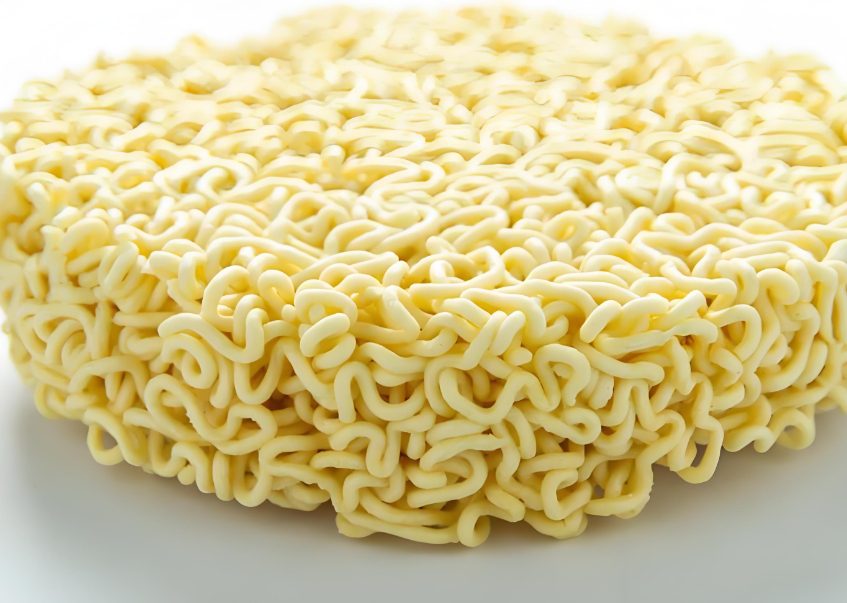
- Cutting & Forming: The steamed noodles are cut to length and formed into the specific nest or block shape using a cutting and forming device.
- Frying (or Alternative Drying):
- Fritura: The most common method. A deep fryer cooks and dehydrates the noodles in hot oil (typically palm oil) for 1-2 minutes, creating the porous structure. This requires an oil filtration system.
- Non-Fried Alternatives: For a healthier product, consider an hot air dryer ou oven dryer. This takes longer (30-40 minutes) and affects the final texture and shelf life.
- Cooling: A cooling conveyor brings the noodles to room temperature, crucial before packaging.
- Seasoning & Packaging: This can be semi-automatic.
- Seasoning: Powder or liquid seasoning is applied. For cups/bowls, vegetables and seasoning are added by hand or with a volumetric filler.
- Packaging: A weighing machine portions the noodles into bags. An automatic bagmaker forms, fills, and seals the packets. For cups, a cup sealer applies the lid.
Key Investment Considerations:
- Automation Level: Fully automatic lines are faster but cost 3-5x more. A semi-automatic line (manual seasoning addition and bag placement) drastically reduces initial cost.
- Power Requirements: Significant electrical power and, for frying, thermal energy (gas) are needed. Ensure your facility has adequate capacity.
- Footprint: A small line requires a minimum of 3,000-5,000 sq. ft. of clean, well-ventilated production space with separate areas for raw material storage, production, packaging, and finished goods.
Phase 3: Sourcing & Business Setup
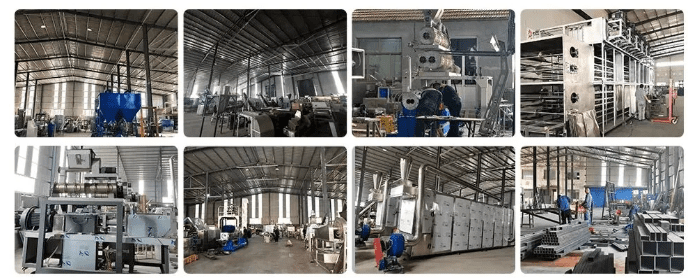
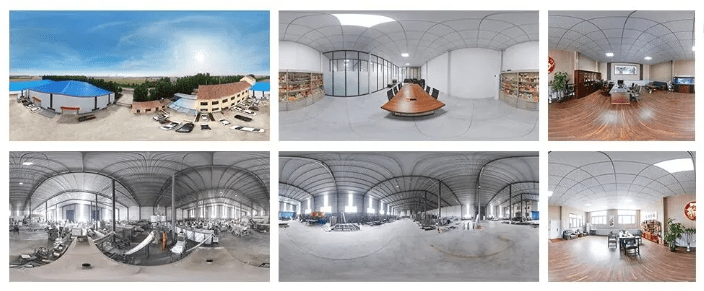
- Equipment Suppliers: Research reputable manufacturers, primarily in China, Taiwan, Japan, or Italy. Request detailed quotations, videos of equipment in operation, and client references. Strongly consider visiting a factory to see the machine run. Factor in shipping, installation, and commissioning costs.
- Ingredient Sourcing: Secure reliable suppliers for flour, palm oil, seasonings, and packaging materials. Consistency is key to product quality.
- Facility: Your facility must be a certified food-grade warehouse or factory. Investment in flooring (epoxy), ventilation (especially over fryer), sanitation systems, and pest control is mandatory.
- Labor: You will need machine operators, packing staff, a quality control supervisor, and a plant manager. Training is essential.
Phase 4: Financial Planning & Realistic Challenges
- Capital Cost Breakdown:
- Equipment: 40-60%
- Facility Renovation & Utilities: 20-30%
- Initial Ingredient/Packaging Inventory: 10-15%
- Licensing, Consulting, Working Capital: 10-15%
- Major Challenges:
- Scale & Cost: Competing on price with multinationals is impossible. Your premium quality must justify a higher price point.
- Shelf Life & Food Safety: Improper frying/drying or packaging leads to rancidity (oil oxidation) or microbial growth. Rigorous QC is non-negotiable.
- Distribution Hurdles: Getting shelf space in stores is difficult. Be prepared to start direct-to-consumer (DTC) via e-commerce or local markets.
- Operational Expertise: Running a food plant requires technical knowledge. Hiring an experienced production manager is highly advisable.
Conclusion: A Niche-Focused Manufacturing Venture
Investing in a small noodle line is not a get-rich-quick scheme but a niche food manufacturing business. Success depends on:
- A Differentiated Product in a specific, underserved market.
- Uncompromising Focus on Quality and Food Safety.
- A Realistic Financial Plan that accounts for high upfront costs and a gradual sales ramp-up.
- Patience and a Hands-On Approach to solving the myriad operational challenges.
Start small, perfect your product and process, and build a loyal customer base around a unique story and superior quality before attempting to scale. The investment is substantial, but for an entrepreneur passionate about food production, it can be a rewarding path to creating a tangible, branded product.