
The Food Extruder: A Versatile Engine of Modern Food Production
The food extruder, often described as the “workhorse” of the food processing industry, is a remarkably versatile machine that shapes, textures, and transforms ingredients into a vast array of products that fill our pantry shelves. double screw extruder machine From breakfast cereals and snack foods to pet kibble and pasta, this technology is fundamental to efficient, large-scale food manufacturing.
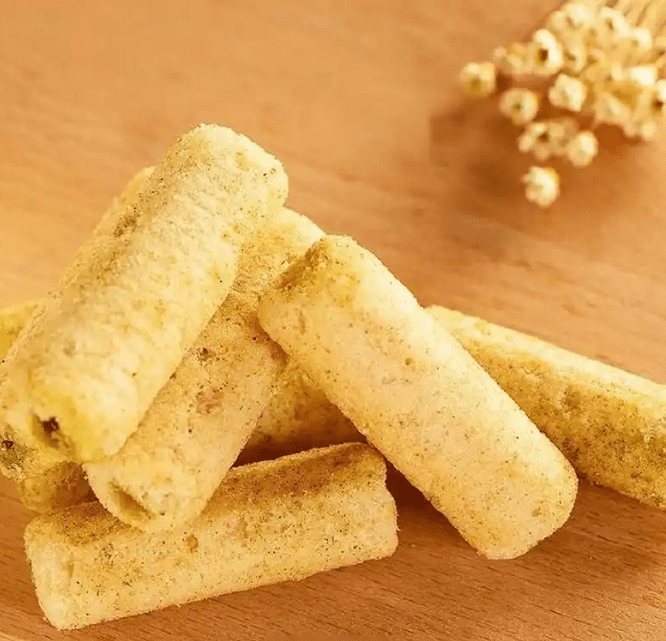
Core Principle and Mechanism
At its heart, extrusion is a continuous process that combines several unit operations into one streamlined system. extruding machines The core principle involves forcing a mixture of food ingredients—typically powders, grains, and water—through a tightly controlled barrel under high temperature, pressure, and shear force. This mixture, known as the “dough” or “mass,” is conveyed by a rotating screw(s) inside the barrel.
The process has two main stages:
- Cooking & Transformation: As the mass moves through the barrel, it is subjected to heat (from external heaters or friction) and intense mechanical energy. This cooks the starches and proteins, gelatinizing and plasticizing the mixture into a hot, viscous fluid.
- Shaping & Expansion: The hot mass is then forced through a precisely designed opening called a morrer at the end of the barrel. Upon exiting, the sudden drop in atmospheric pressure causes instantaneous steam expansion, a phenomenon known as “flash-off.” This “puffs” the product, creating its final texture—whether airy and light or dense and crunchy. The shape is determined entirely by the die’s profile, allowing for an incredible variety of forms, from simple rings and balls to intricate animal shapes.
Types of Extruders
There are two primary categories:
- Single-Screw Extruders: Utilize one rotating screw within the barrel. They are robust, relatively simple, and ideal for high-volume production of simpler products like pasta or certain expanded snacks.
- Twin-Screw Extruders: Employ two intermeshing, co-rotating screws. They offer superior mixing, pumping, and heat control, providing much greater flexibility. extruding machines Twin-screw machines can handle more complex recipes with higher fat or moisture content, variable particle sizes, and are excellent for developing specific textures and nutritional products.
Key Advantages and Applications
The widespread adoption of extrusion technology is driven by its numerous benefits:
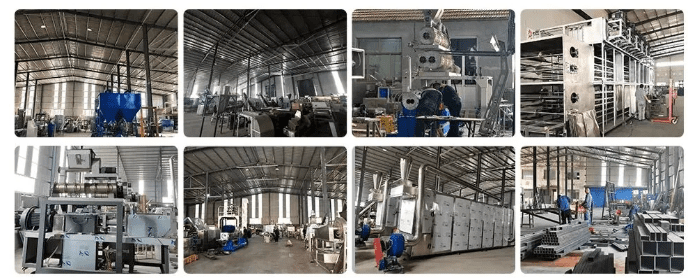
- Versatilidade: It can produce an immense range of products: direct-expanded snacks (cheese puffs, cereal balls), breakfast cereals (flakes, shreds), textured vegetable protein (meat analogs), pasta, baby food, confectionery, and pre-cooked flours.
- Efficiency: It is a continuous, high-throughput process that integrates cooking, shaping, and texturizing into a single, automated operation, reducing time, labor, and energy costs.
- Food Safety: The high temperatures and pressures achieved during extrusion effectively reduce microbial loads, enhancing shelf-life and product safety.
- Potencial de inovação: Extrusion allows for significant recipe engineering, enabling the fortification of foods with proteins, vitamins, fibers, and functional ingredients, contributing to the development of novel and nutritious food products.
While powerful, extrusion requires precise control over variables like recipe formulation, moisture content, screw speed, barrel temperature, and die design to achieve the desired product characteristics. Initial setup and die customization can be complex and costly.
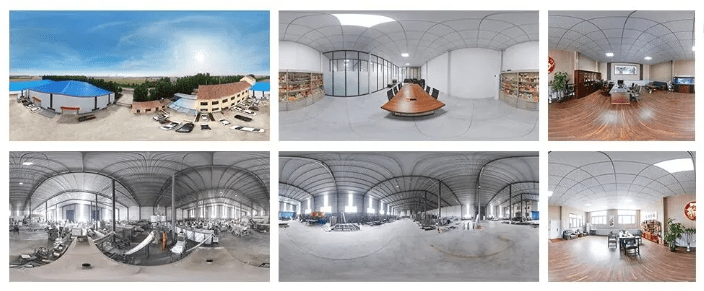
The food extruder is far more than just a shaping tool; it is a sophisticated thermomechanical reactor that lies at the core of modern food innovation and manufacturing. By efficiently transforming raw ingredients into consistent, safe, and appealing finished goods, extrusion technology plays an indispensable role in feeding the global population, continually adapting to create the diverse and evolving foods we enjoy today.