
A Comprehensive Guide to the Production of High-Quality Puffed Snacks
The global puffed snack market is a multi-billion dollar industry, characterized by intense competition and ever-evolving consumer preferences. snacks making machine While the basic principle of puffing—the rapid expansion of a starchy or proteinaceous matrix through the application of heat and pressure—is simple in theory, the consistent production of high-quality puffed snacks is a complex interplay of food science, engineering, and stringent quality control. This article provides a detailed examination of the entire production process, from raw material selection to final packaging, snacks making machine with a specific focus on the strategies and parameters that define and ensure superior quality. We will explore the science behind puffing, the critical role of ingredient functionality, the nuances of different processing technologies (primarily extrusion and frying), and the comprehensive quality assurance protocols necessary to deliver a product that excels in texture, flavor, nutrition, and shelf stability
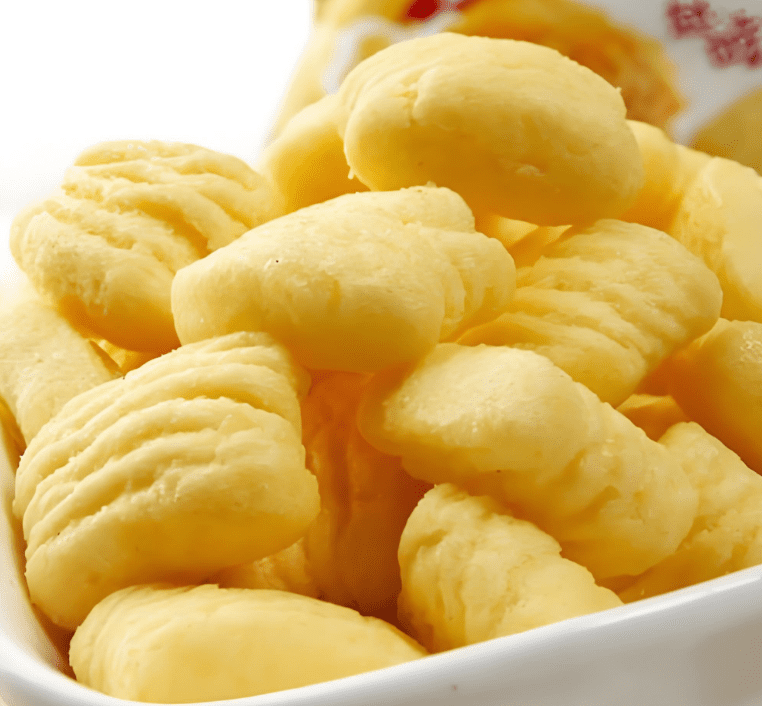
1. Introduction: Defining Quality in Puffed Snacks
Before delving into the “how,” it is crucial to define the “what.” What constitutes a high-quality puffed snack? It is not a single attribute but a symphony of characteristics that together create a superior consumer experience.
- Texture: This is paramount. The ideal puffed snack possesses a delicate, crisp, and highly porous structure that fractures easily with a sharp, clean bite (audible crunch). It should be light and melt-in-the-mouth, without any hard, unexpanded centers (hard spots) or a gritty, mealy mouthfeel. The texture must be maintained from the point of manufacture until consumption.snacks making machine
- Flavor: The flavor should be well-balanced, pronounced, and consistent throughout the product. It should not be overly salty, greasy, or carry off-notes from the base ingredients or processing (e.g., burnt, raw, or stale flavors). The flavoring should adhere uniformly and not dust off excessively.
- Appearance: The product should have a uniform size, shape, and color. snacks making machine The puffing should be even, resulting in a consistent cellular structure without blisters, charring, or deformation. The product’s appearance is the first indicator of quality to the consumer.
- Nutritional Profile: In the modern market, quality increasingly includes nutritional value. This can mean a lower fat content (in fried products), higher dietary fiber, increased protein, reduced sodium, or the fortification with vitamins and minerals.
- Shelf Stability: A high-quality snack must maintain its desirable attributes over its shelf life. This means resistance to moisture uptake (which causes sogginess), fat migration (which causes rancidity and texture loss), and structural collapse.
Achieving this level of quality consistently requires a deep understanding of the raw materials and the processes they undergo.
2. The Foundation: Raw Material Selection and Functionality
The journey to a high-quality puffed snack begins with the careful selection and specification of raw materials. Each ingredient plays a specific functional role.
2.1. The Base Material: Starches and Flours
The primary ingredient is almost always a cereal grain or tuber that is rich in starch.
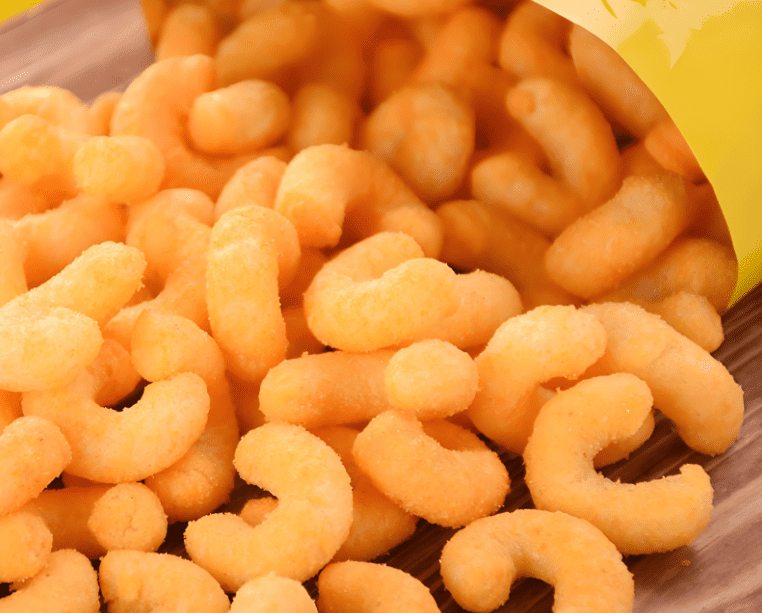
- Corn (Maize): The most common base for puffed snacks globally. Corn grits (degermed, dehusked, and milled to a specific granulation) are the gold standard for extruded puffs like cheese balls. The type of corn (e.g., yellow, white, blue) and the granulation size significantly impact expansion and texture. Fine grits lead to a finer, more uniform cell structure.
- Rice: Rice flour, particularly from long-grain or waxy rice, is excellent for producing very light, crisp, and white puffs. It has a low lipid and high amylose content, which contributes to its strong expansion properties. It is often used in cakes and crisps.
- Wheat: Wheat flour provides gluten, which can be both an advantage and a challenge. In some baked puffs, gluten provides structure. In direct expansion extrusion, its presence can limit expansion, so it is often used in blends.
- Potato: Potato flakes, granules, or starches are used to create the distinctive texture of potato-based puffs and snacks. Potato starch has high swelling power, leading to a desirable crispness.
- Oats, Sorghum, and Ancient Grains: Used for creating differentiated, often healthier, products. They may require specific processing or blending with traditional bases to achieve acceptable puffing.
The Science of Starch: Starch is the key to puffing. Native starch granules are semi-crystalline structures. During processing with heat and moisture (cooking), they undergo gelatinization—the granules swell, absorb water, and lose their crystalline structure, forming a viscous gel. snacks making machine When this gelatinized mass is subjected to a sudden pressure drop, the superheated water within flashes into steam, rapidly expanding the plasticized starch matrix. Upon exiting the die, the structure sets almost instantly as the steam escapes and the temperature drops, trapping the expanded structure. This process is called dielectric expansion. The ratio of amylose to amylopectin in the starch is critical; high amylopectin starches (e.g., waxy maize) tend to produce more tender, less rigid puffs, while high amylose starches produce stronger, more expanded structures but can be harder.
2.2. Water
Water is not just an ingredient; it is a processing aid and a plasticizer. Its primary functions are:
- To facilitate starch gelatinization during the cooking phase.
- To act as the blowing agent when it vaporizes.
- To control the viscosity of the melt within the extruder.
The moisture content of the raw mix and the precise injection of water or steam during processing are among the most critical control points in the entire operation. A deviation of just 1-2% can drastically alter product density, texture, and appearance.
2.3. Lipids (Fats and Oils)
Fats play a complex role. A small amount (0.5-2%) added to the raw formula acts as an internal lubricant in the extruder, reducing mechanical energy input and wear on the equipment. snacks making machine However, higher levels can severely inhibit starch expansion by coating the starch granules and interfering with water absorption and the formation of a continuous matrix. In the context of flavor, oils are the carrier for fat-soluble flavors and are critical for mouthfeel and the perception of richness.
2.4. Proteins
Proteins from sources like soy, whey, or pulses can be incorporated to boost nutritional value. However, they generally do not expand like starch. High protein content can disrupt the starch continuum, leading to denser, harder puffs. Specialized high-protein extrusion techniques, often involving higher temperatures and specific die designs, are required to achieve acceptable puffing.
2.5. Minor Ingredients with Major Impact
- Leavening Agents: Sodium bicarbonate, alone or with an acidulant (e.g., monocalcium phosphate), can be added to generate additional gas (CO₂) during puffing, fine-tuning the texture and creating a more open, crispy cell structure.
- Emulsifiers: Lecithin, mono- and diglycerides help in the even distribution of fats and water, improving mix consistency and stability. They can also complex with amylose to reduce stickiness and retrogradation (staling).
- Sugars and Salts: Besides flavor, these soluble compounds compete with starch for water, which can raise the gelatinization temperature and affect the viscosity of the melt, thereby influencing expansion.
- Gums and Fibers: Ingredients like guar gum or various dietary fibers (e.g., inulin, oat fiber) are added for nutritional labeling or to provide specific textural properties. They absorb significant amounts of water, which must be accounted for in the moisture balance of the recipe.
3. The Core Processing Technologies
There are two primary industrial methods for producing puffed snacks: extrusion and hot-air/oven puffing. Frying, while a form of puffing, is often categorized separately.
3.1. Extrusion Processing: The Workhorse of the Industry
Extrusion cooking is a continuous, high-temperature, short-time process that is exceptionally efficient for producing a wide variety of puffed snacks. A twin-screw extruder is the most versatile and commonly used equipment for high-quality production.
The process within the extruder can be broken down into distinct functional zones:
- Feeding Zone: The raw material blend is metered into the extruder barrel via a loss-in-weight feeder to ensure absolute consistency. This is the first critical control point.
- Mixing and Conveying Zone: The material is conveyed forward by the screw configuration. Water and/or steam is injected to begin hydration. The screws here may have forward-conveying elements to gently mix the components into a homogeneous dough.
- Compression and Cooking Zone: This is where the magic happens. The screw configuration changes to include reverse-pitch elements, kneading blocks, and other restrictive elements. This creates a “fill” in the barrel, increasing pressure and mechanical shear. The combination of this shear and the external heat from the barrel jackets cooks the dough, fully gelatinizing the starch. The material transforms from a powder to a plasticized, viscoelastic “melt.” Temperatures can range from 120°C to 180°C, and pressures can exceed 50 bar.
- Metering and Die Zone: The fully cooked melt is forced under high pressure towards the die plate at the end of the extruder. The die serves as the final pressure seal. The design of the die—its shape, land length, and opening size—is critical in determining the final shape, texture, and expansion of the product.
- Expansion Zone: As the superheated, pressurized melt exits the die, it experiences an instantaneous pressure drop to atmospheric pressure. The superheated water within the mass flashes into steam, causing the product to expand radically. The starch matrix sets almost instantly, locking in the expanded, porous structure.
Key Parameters for Quality Control in Extrusion:
- Specific Mechanical Energy (SME): This is the mechanical energy input per unit mass of product (kWh/kg). It is a crucial parameter that directly correlates with starch gelatinization and product texture. Too low SME results in incomplete cooking and poor expansion; too high SME can cause over-gelatinization, leading to a burnt flavor and a brittle, fragile texture. SME is controlled by screw speed, screw configuration, feed rate, and moisture content.
- Melt Temperature and Pressure: These are monitored just before the die. They must be kept within a tight window specific to the recipe to ensure consistent expansion.
- Desenho da matriz: A die with a short land length promotes greater expansion, while a longer land length increases resistance, resulting in a denser, tougher texture, which might be desirable for certain shaped products.
3.2. Alternative Puffing Methods
- Puffing Guns (Pellets to Puffs): This is a two-step process. First, a pre-cooked, unexpanded pellet (or half-product) is made via extrusion. These pellets are shelf-stable. In a second step, the pellets are exposed to a sudden application of heat, such as in a hot-air popper or, more commonly, a “puffing gun” where they are subjected to high-pressure steam and then ejected into a vacuum, causing instantaneous puffing. This method offers excellent control over the final puffing and is used for cereals and some snacks.
- Fritura: While not “puffing” in the same sense, frying achieves a similar result. Products like potato chips or tortilla chips are fried. However, for direct expansion, a formulated dough (e.g., for prawn crackers) can be extruded directly into hot oil. The oil temperature (typically 160-190°C) causes the water to vaporize rapidly, puffing the product. The oil also cooks the product, imparting flavor and texture. Quality control here focuses on oil quality (free of fatty acids, polymerized oils), temperature stability, and fry time to achieve the right moisture content (<2%), color, and oil uptake.
- Baking / Hot-Air Puffing: This is a healthier alternative to frying. The product (often a pellet) is puffed and dried in a multi-zone oven using circulating hot air. It results in a lower-fat product but can present challenges in achieving the same level of crispness and flavor development as frying. The process requires precise control of temperature, humidity, and air velocity in each zone.
4. Post-Processing: The Finishing Touches
A puffed product exiting the extruder or fryer is bland and largely unfinished. The following steps are critical for adding value and final quality.
4.1. Drying and Toasting
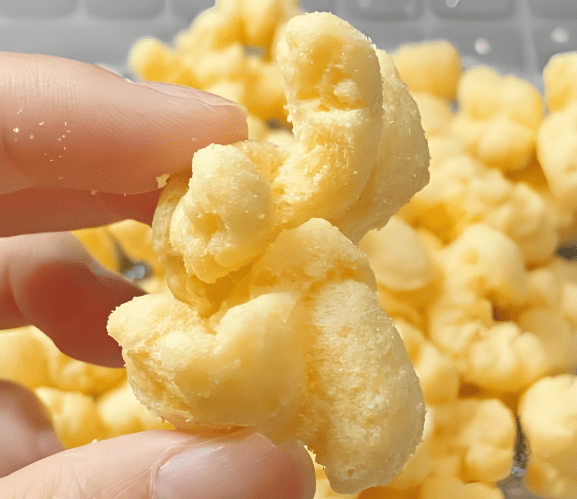
After expansion, the product’s internal moisture is still relatively high (e.g., 8-10% for extrudates). It must be dried in a multi-pass dryer or toaster to achieve a final moisture content of 1-3%. This step is vital for achieving the desired crispness and ensuring microbial stability. The drying process uses heated air, and the time-temperature profile must be carefully controlled to avoid case-hardening (where the outside crusts over, trapping moisture inside) or scorching.
4.2. Coating and Flavor Application
This is where the snack gets its identity. The two main methods are:
- Oil-based Slurry Coating: The dried, warm puffs are tumbled in a revolving drum, and a slurry of oil and fine powder seasonings is sprayed or metered onto them. The warm product helps the oil to coat evenly, and the powder adheres to the oil. This is the most common method for cheese, sour cream & onion, and barbecue flavors. The type of oil used (e.g., palm, sunflower, coconut) affects flavor and shelf life.
- Dusting: Dry seasonings are applied directly to the puffs. This often requires a preceding step where a light oil or gum solution is applied to help the powder adhere.
The key to quality here is uniformity. The coating system must be precisely calibrated to ensure every piece receives the same amount of seasoning. snacks making machine The ratio of oil to powder, the viscosity of the slurry, and the tumbling action are all critical factors.
4.3. Cooling
Before packaging, the coated product must be cooled to near ambient temperature. This prevents condensation inside the package, which would lead to rapid sogginess and microbial growth. Cooling conveyors or belts with ambient or conditioned air are used.
5. The Guardian of Quality: Packaging
Packaging is the final, and one of the most important, steps in preserving the quality of a puffed snack. Its primary functions are to provide a barrier against:
- Moisture: This is the single greatest threat. Puffed snacks are hygroscopic and will quickly lose their crispness upon absorbing moisture from the air. Packaging must use high-barrier materials with very low Water Vapor Transmission Rates (WVTR), such as metallized polyester or polypropylene, or aluminum foil laminates.
- Oxygen: To prevent the oxidation of fats, which leads to rancidity and off-flavors. The package must have a very low Oxygen Transmission Rate (OTR). This is often achieved by the same barrier layers used for moisture.
- Light: Light can accelerate both oxidative rancidity and the fading of colors. Opaque or metallized films provide an excellent light barrier.
- Physical Damage: The package must protect the fragile puffs from breaking during handling and transportation.
Modified Atmosphere Packaging (MAP) is a common technique for premium products. The air inside the package is evacuated and replaced with an inert gas, typically nitrogen. Nitrogen does not support oxidation and also acts as a cushioning agent, further protecting the puffs from breakage.
6. A Holistic Approach to Quality Assurance and Control
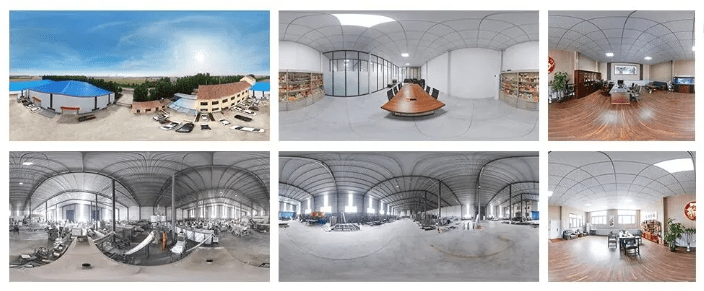
Producing high-quality puffed snacks is impossible without a robust Quality Assurance (QA) and Quality Control (QC) system that operates from incoming raw materials to the finished product.
6.1. Incoming Raw Material Inspection
- Grains/Flours: Test for moisture, protein, ash, granulation profile (particle size distribution), and microbiological counts (e.g., yeast, mold, total plate count). A farinograph or viscoamylograph can be used to test the functional performance of flours.
- Oils: Test for Free Fatty Acid (FFA) content, Peroxide Value (PV), and moisture. These indicate freshness and stability.
- Seasonings: Check for color, particle size, and microbiological quality.
6.2. In-Process Control
- Teor de humidade: Continuously monitored at the feeder, pre-die, and post-dryer stages using Near-Infrared (NIR) sensors or frequent manual checks.
- Temperature and Pressure: Continuously monitored at the extruder barrel sections and just before the die.
- Product Density/Bulk Density: A key real-time indicator of expansion. This can be measured manually (by weighing a known volume) or with automated systems.
- Color and Shape: Machine vision systems can be used to automatically detect and reject off-color or misshapen products.
6.3. Finished Product Testing
- Teor de humidade: Must be within the specified range (typically 1-3%).
- Water Activity (a_w): A more accurate predictor of microbial stability and texture than moisture content alone. For crispy snacks, a_w should be below 0.3.
- Texture Analysis: An instrumental texture analyzer (e.g., TA.XT Plus) is used to perform a puncture or compression test, measuring properties like hardness, fracturability, and crispiness. This provides objective, numerical data to complement sensory evaluation.
- Avaliação sensorial: A trained panel assesses the product for flavor, aroma, texture, and appearance against established standards.
- Accelerated Shelf-Life Testing: Products are stored at elevated temperatures and humidity to model and predict their behavior over the intended shelf life, checking for texture loss, rancidity, and flavor changes.
- Package Integrity: Tests for seal strength, and barrier properties (OTR, WVTR) are conducted regularly.
7. Emerging Trends and Innovations
The pursuit of quality is also driven by market trends:
- Clean Label: Consumers demand simple, recognizable ingredients. This pushes manufacturers to replace synthetic emulsifiers with natural alternatives (e.g., sunflower lecithin), remove artificial colors and flavors, and use simpler base ingredients.
- Health and Wellness: There is a strong demand for snacks with reduced fat and sodium, increased protein and fiber, and fortified with functional ingredients like probiotics or omega-3s. This requires significant R&D to maintain textural quality while altering the fundamental recipe.
- Sustainability: Focus on sustainable sourcing of raw materials, reducing energy and water consumption in manufacturing (e.g., through more efficient extruders), and developing more recyclable or compostable packaging materials.
- Novel Ingredients and Flavors: Exploration of alternative proteins (insects, algae), ancient grains, and global, exotic flavor profiles to cater to adventurous consumers.
The production of high-quality puffed snacks is a sophisticated discipline that sits at the intersection of food chemistry, rheology, and process engineering. It is a continuous balancing act. snacks making machine The selection of raw materials with specific functional properties lays the foundation. The extrusion or puffing process itself, governed by precise control of moisture, temperature, pressure, and mechanical energy, transforms this foundation into a delicate physical structure. The subsequent steps of drying, flavoring, and packaging are not merely ancillary but are critical to defining the final sensory experience and ensuring its preservation. Ultimately, unwavering commitment to a comprehensive, data-driven Quality Assurance system from dock to dock is what enables a manufacturer to consistently deliver the audible crunch, the satisfying mouthfeel, and the delightful flavor that define a truly superior puffed snack. In an increasingly competitive market, mastering this complex symphony is not just an advantage—it is a necessity for survival and success.