
Introdução
Drying is a critical step in dog food production. Whether you manufacture dry kibble, air-dried dog food, or other pet food products, proper drying helps control moisture content, improve product stability, maintain texture, and extend shelf life. However, improper drying conditions can lead to uneven moisture distribution, product deformation, nutrient loss, and even microbial safety risks.
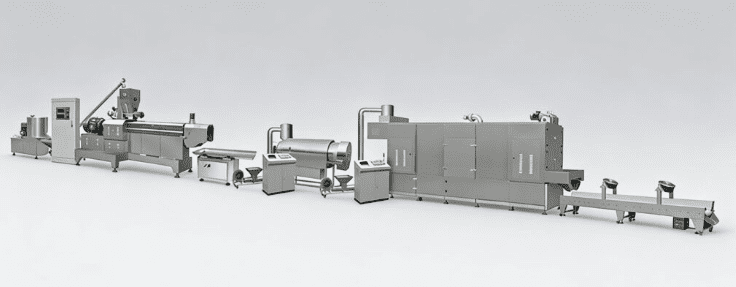
For pet food manufacturers, selecting the right drying equipment and controlling the drying process are essential to producing safe, nutritious, and high-quality dog food. So, what should you pay attention to when drying dog food? Here are the key factors to consider.
1. Control the Drying Temperature
Temperature is one of the most important factors affecting dog food drying performance. If the temperature is too low, drying may take too long, reducing production efficiency and potentially increasing the risk of microbial growth. If the temperature is too high, the outer surface may dry too quickly while the interior remains moist.
Excessive heat can also affect heat-sensitive nutrients, fats, proteins, colors, and flavors.
To achieve consistent results, manufacturers should:
- Select a suitable drying temperature based on the product formulation, size, shape, and initial moisture content.
- Avoid excessive temperatures that may cause surface hardening or product discoloration.
- Monitor the temperature in different zones of the dryer.
- Adjust the drying profile according to the actual moisture content and physical characteristics of the product.
The optimal temperature is not the same for every dog food product. It should be established through product trials and validated process testing.
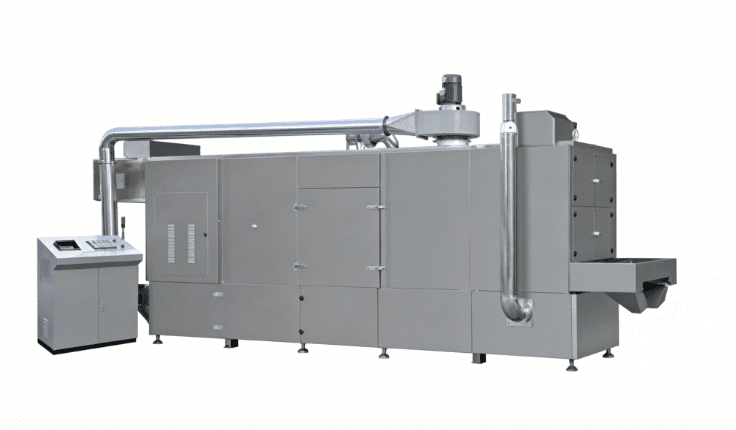
2. Maintain the Appropriate Drying Time
Drying time directly affects moisture removal, product quality, and production capacity.
If dog food is dried for too short a period, residual moisture may remain inside the product, increasing the risk of spoilage during storage. Conversely, excessive drying can make kibble too hard or brittle, increase energy consumption, and reduce production efficiency.
To control drying time effectively, manufacturers should consider:
- The size, thickness, and shape of the dog food pieces.
- The initial moisture content after extrusion or other processing.
- The temperature and airflow inside the dryer.
- The required final moisture content and water activity.
- The production line’s feed rate and residence time.
A stable conveying speed and consistent product loading help ensure that each batch receives sufficient drying treatment.
3. Control the Final Moisture Content
Final moisture content is one of the most important quality indicators for dry dog food. It affects texture, storage stability, packaging requirements, and the risk of microbial deterioration.
However, moisture content alone does not fully determine product safety. Water activity, which measures how much water is available for microbial growth and chemical reactions, should also be considered.
Manufacturers should:
- Establish a moisture specification appropriate for the product category.
- Test samples from different positions and production batches.
- Check both moisture content and water activity where appropriate.
- Avoid packaging products that have not reached their validated drying endpoint.
- Verify moisture uniformity before products enter the packaging stage.
For many conventional dry extruded dog foods, final moisture content is commonly around 8%–12%, although actual specifications depend on the formulation, product design, and applicable requirements. This range should be treated as a general reference rather than a universal safety standard.
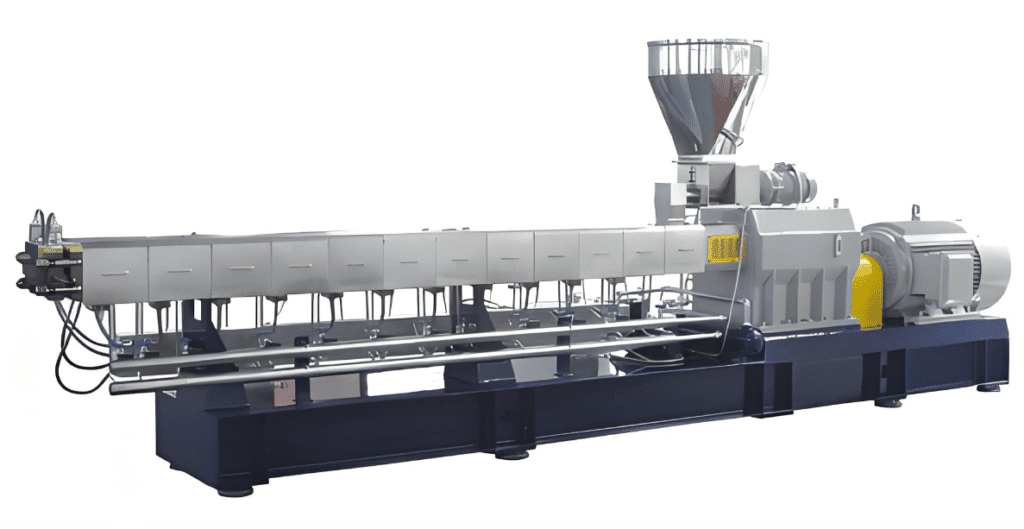
4. Ensure Uniform Airflow
Uniform airflow is essential for consistent drying. If hot air is unevenly distributed, some products may become too dry while others retain excessive moisture.
Uneven airflow can be caused by improper dryer design, overloaded conveyor belts, blocked air ducts, dirty filters, or inconsistent product distribution.
To improve drying uniformity:
- Distribute dog food evenly across the conveyor belt.
- Avoid excessive product accumulation or overlapping.
- Inspect fans, filters, ducts, and air circulation systems regularly.
- Monitor temperature and airflow at different points inside the dryer.
- Adjust the air distribution system when moisture differences appear between product samples.
A well-designed multi-pass or multi-zone drying system can help manufacturers achieve more consistent results, particularly when processing large volumes of extruded kibble.
5. Prevent Nutrient Loss and Quality Deterioration
Dog food must provide balanced nutrition while maintaining acceptable taste, aroma, texture, and appearance. Drying conditions can influence the stability of certain nutrients and the quality of fats and proteins.
Excessive heat exposure may accelerate lipid oxidation, cause undesirable color changes, and reduce the stability of some heat-sensitive vitamins. The actual effects depend on the ingredient composition, temperature, oxygen exposure, and processing time.

Manufacturers can reduce these risks by:
- Using a controlled temperature and residence-time profile.
- Avoiding unnecessary prolonged heat exposure.
- Selecting appropriate raw materials and protective packaging.
- Monitoring fat oxidation and key nutritional indicators during shelf-life testing.
- Evaluating the effects of drying on the final product’s nutritional specifications.
Some formulations may require post-drying application of fats, palatants, or heat-sensitive ingredients. In these cases, manufacturers should ensure that coating and subsequent handling do not introduce excessive moisture or compromise product stability.
6. Choose the Right Drying Equipment
Different types of dog food require different drying solutions. Equipment selection should take into account production capacity, product characteristics, energy consumption, cleaning requirements, and the desired final moisture content.
Common drying equipment includes:
Continuous belt dryers: Suitable for large-scale production of extruded dog kibble. They offer continuous operation and can provide multiple drying zones with adjustable temperature and airflow.
Multi-layer belt dryers: Help increase drying capacity while making efficient use of factory floor space. Proper airflow distribution between layers is essential.
Batch dryers: Suitable for smaller production volumes, pilot testing, or products requiring flexible processing conditions.
When selecting equipment, manufacturers should evaluate:
- Required production capacity in kilograms per hour.
- Heating method, such as electricity, steam, or gas.
- Temperature control accuracy and airflow uniformity.
- Conveyor speed and adjustable residence time.
- Food-contact material quality and hygienic design.
- Ease of cleaning, maintenance, and energy recovery.
- Compatibility with upstream extrusion and downstream cooling and packaging systems.
The best dryer is not necessarily the one with the highest heating temperature or the largest capacity. It is the one that meets product quality requirements consistently and economically.
7. Pay Attention to Hygiene and Food Safety
Dog food is intended for animal consumption, so hygienic processing is essential. Although drying reduces moisture, it should not automatically be regarded as a validated microbial kill step.
Contamination can occur through raw materials, equipment surfaces, airborne dust, personnel, or post-drying handling.
Manufacturers should implement appropriate hygiene controls, including:
- Cleaning and inspecting the dryer according to a documented sanitation schedule.
- Preventing the accumulation of food residues, grease, and dust.
- Maintaining hygienic conditions in product-contact areas.
- Controlling contamination risks after the validated heat-processing stage.
- Monitoring relevant microbial indicators and pathogens according to the product risk assessment and applicable regulations.
- Implementing a documented food safety management system, such as HACCP.
Particular attention should be paid to post-drying equipment, cooling conveyors, coating systems, storage bins, and packaging areas, where recontamination may occur.
8. Cool the Dog Food Properly After Drying
Cooling is another important step in dry dog food production. Packaging kibble while it is still too hot can cause condensation under certain temperature and humidity conditions, potentially increasing moisture and creating localized spoilage risks.
Proper cooling also helps stabilize the product before coating, handling, or packaging.
To achieve effective cooling:
- Allow sufficient cooling time before packaging.
- Use clean, appropriately controlled cooling air.
- Avoid exposing the product to humid environments that may cause moisture reabsorption.
- Monitor product temperature and ambient humidity.
- Ensure that the cooling system does not introduce dust or microbial contamination.
The target temperature should be determined by the packaging material, storage environment, and production-line requirements. Cooling performance should be verified under actual operating conditions.
9. Monitor Energy Consumption and Operating Costs
Drying is often one of the more energy-intensive operations in dog food manufacturing. Poor insulation, excessive exhaust airflow, unnecessary drying time, and inefficient heat transfer can increase operating costs.
Manufacturers can improve energy efficiency by:
- Insulating the dryer and hot-air ducts.
- Optimizing the temperature profile and airflow rate.
- Adjusting feed distribution and conveyor speed.
- Recovering waste heat where technically and economically practical.
- Maintaining fans, motors, heating elements, and heat exchangers.
- Tracking energy consumption per kilogram or tonne of finished product.
Energy optimization should never compromise moisture uniformity, hygienic conditions, or validated product safety requirements.
10. Establish a Reliable Quality Control System
A standardized quality control system helps manufacturers maintain consistent production results and identify problems before defective products reach customers.
Important quality indicators include:
- Initial and final moisture content.
- Water activity, where appropriate.
- Product temperature and drying residence time.
- Kibble size, shape, color, and texture.
- Bulk density and breakage rate.
- Nutritional specifications and fat oxidation indicators.
- Microbiological quality and shelf-life performance.
Manufacturers should record key process parameters and establish corrective actions for deviations. Regular sampling and laboratory testing help verify that the drying process remains within its validated operating limits.
It is also useful to conduct drying trials when changing the recipe, kibble dimensions, raw material composition, or production capacity. Even small formulation changes can affect moisture migration and drying behavior.
Conclusion
Drying dog food involves much more than removing moisture. It requires careful control of temperature, drying time, airflow, final moisture content, nutrient stability, hygiene, cooling, and energy consumption.
For pet food manufacturers, the most effective approach is to develop a drying process tailored to the product formulation and production requirements, validate the operating conditions, and monitor the results continuously.
By selecting suitable drying equipment and implementing a reliable quality control system, manufacturers can improve product consistency, reduce energy waste, protect nutritional quality, and produce dry dog food with better storage stability.
Ultimately, successful dog food drying depends on achieving the right balance between product safety, nutritional quality, production efficiency, and operating cost.
Add a practical drying checklistClarify the target reader and equipment scope


