1. Introduction to Fried Mini Instant Noodle Production
1.1 Market Context and Product Specifications
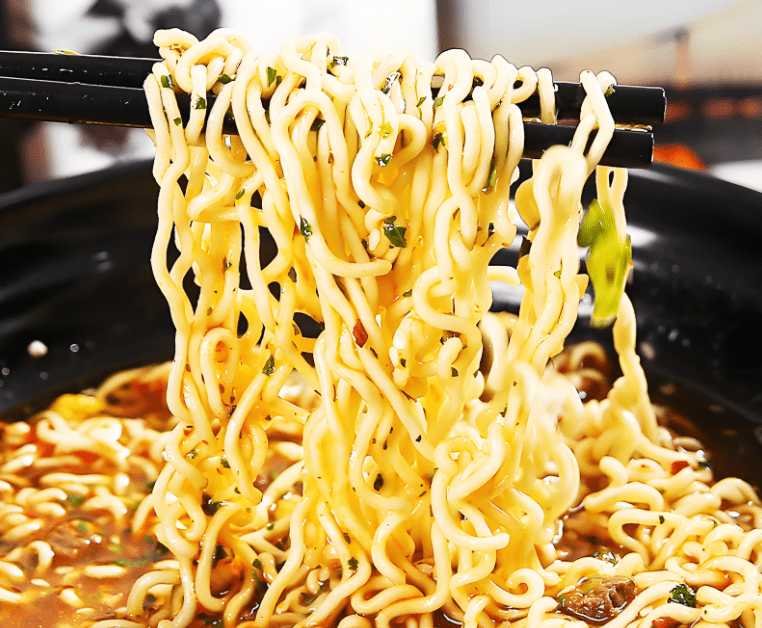
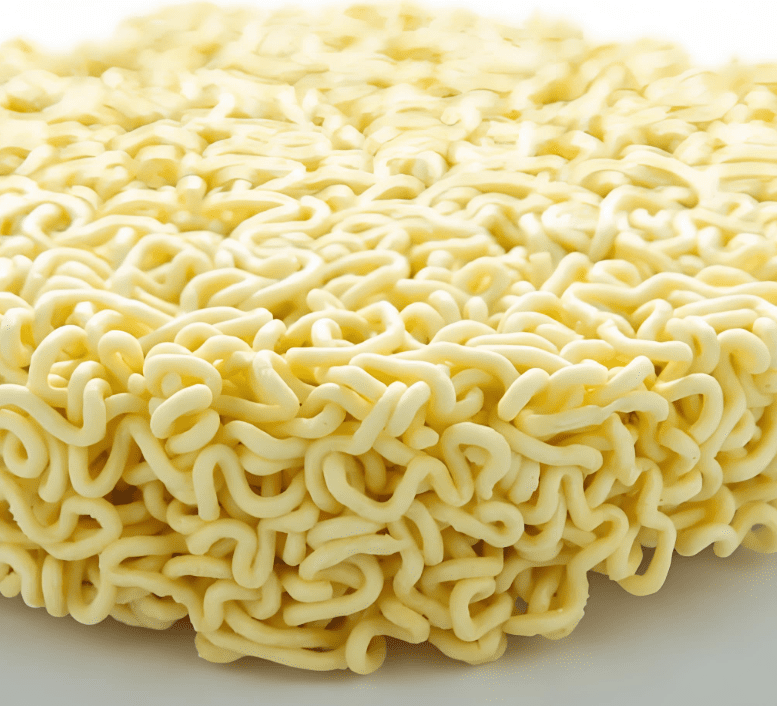
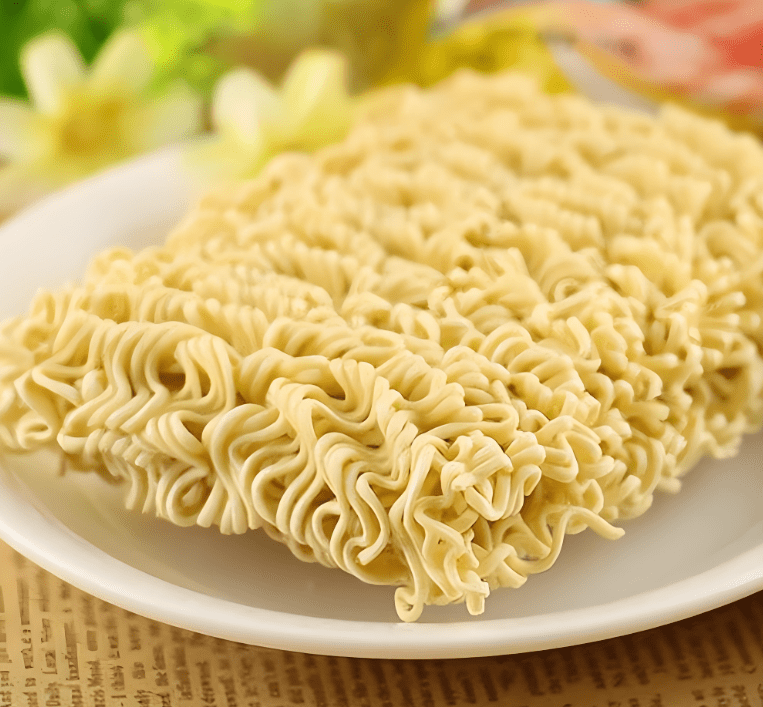
The global instant noodle market exceeds 100 billion servings annually, with mini formats gaining popularity in snack, children’s, and portion-controlled dietary segments. instant noodle machine korea Mini instant noodles are characterized by their reduced block size (generally 70-80mm diameter × 25-35mm height), faster rehydration time (2-3 minutes), and targeted seasoning profiles.
1.2 Production Process Overview
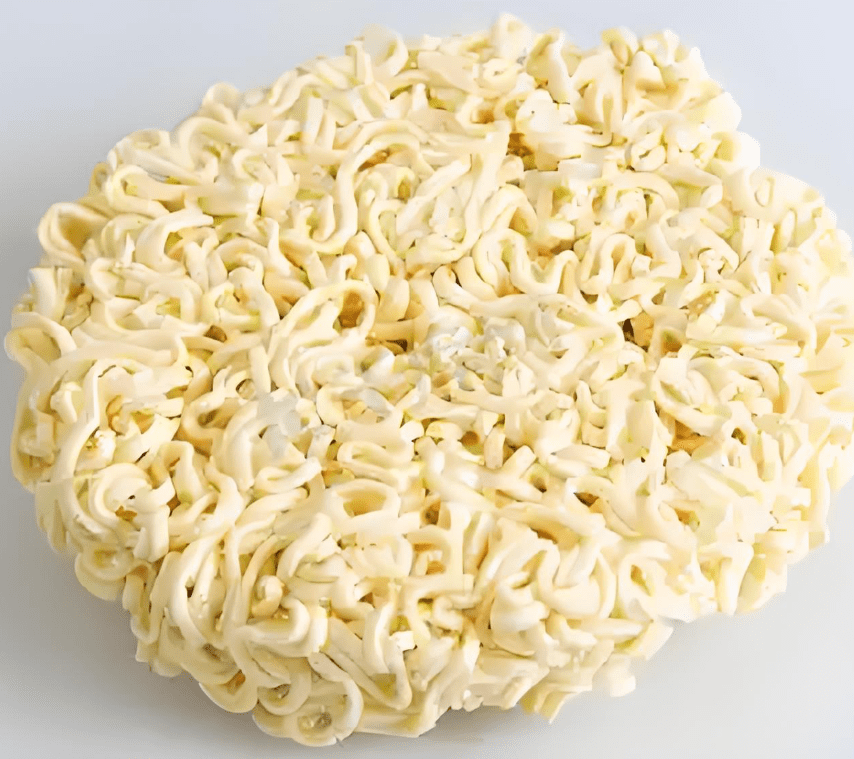
The manufacturing process for fried mini instant noodles involves eight principal stages:
- Ingredient mixing and dough preparation
- Composite sheeting and calendering
- Slitting and waving formation
- Steaming and gelatinization
- Mini-block molding and cutting
- Deep-fat frying and oil removal
- Cooling and moisture stabilization
- Seasoning application and packaging
The equipment described in this documentation covers stages 2-7 specifically, with integrated interfaces for upstream dough preparation and downstream seasoning systems.
2. Comprehensive Equipment Specifications
2.1 System Overview and Design Philosophy
The mini noodle production line is engineered as a continuous, instant noodle machine korea closed-system operation with the following design parameters:
- Production Capacity: 15,000-40,000 mini blocks per hour (adjustable)
- Block Dimensions: Customizable from 60-90mm diameter, 20-40mm height
- Power Requirements: 380V/50Hz or 460V/60Hz, three-phase, 150-250kW total
- Steam Consumption: 400-800kg/hour at 0.4-0.6MPa
- Compressed Air: 0.6-0.8MPa, 5-10m³/min
- Floor Space: 25m (L) × 4.5m (W) × 3.5m (H) minimum
- Material Contact Surfaces: 304 or 316L stainless steel, food-grade coatings
- Control System: PLC with HMI interface, recipe management, data logging
2.2 Dough Preparation and Feeding System
Although primarily focusing on frying equipment, the integrated line begins with specialized dough handling:
2.2.1 Pre-mixer Interface Hopper
- Capacity: 500-1000kg flour equivalent
- Load cells for batch weighing (accuracy ±0.5%)
- In-line moisture sensors for water addition control
- Pneumatic slide gates with proximity sensors
- CIP spray balls for automated cleaning
2.2.2 Dough Extruder/Feeder
- Twin-screw extrusion system with variable frequency drives
- Screw diameter: 200-300mm, L/D ratio 8:1 to 12:1
- Temperature-controlled jacket (5-40°C)
- Pressure monitoring (0-5MPa) with safety relief
- Output consistency: ±2% mass flow variation
3. Dough Sheeting and Reduction System
3.1 Primary Calender Unit
The initial dough mass undergoes progressive thickness reduction through a series of calendering rolls:
3.1.1 Roll Specifications
- Number of rolls: 5-7 pairs in sequence
- Roll diameters: 300mm to 450mm (increasing)
- Roll surfaces: Ground finish (Ra 0.4-0.8μm) or sand-blasted texture
- Roll materials: Chromium-plated alloy steel or hardened stainless
- Gap adjustment: 0.5-30mm with digital readout (accuracy ±0.05mm)
- Nip pressure: 10-100kN, hydraulically controlled
- Speed synchronization: Digital encoders with closed-loop control
3.1.2 Dough Sheet Characteristics Through Stages
- Initial thickness: 30-50mm
- Intermediate thicknesses: 15mm, 8mm, 4mm, 2mm
- Final sheet thickness: 0.8-1.2mm (adjustable for product type)
- Width maintenance: 600-800mm with edge guiding system
- Tension control: 50-200N with dancer roll feedback
3.2 Continuous Noodle Web Formation
3.2.1 Slitting Assembly
- Rotary slitter design with quick-change blades
- Blade materials: Japanese SK steel or equivalent
- Slit widths: 0.8-1.5mm (adjustable for mini noodles)
- Blade gap precision: ±0.01mm
- Self-sharpening mechanism with automatic indexing
- Vibration frequency: 200-400 strokes per minute
3.2.2 Waving Mechanism
The distinctive wave pattern is critical for structural integrity and oil penetration:
- Wave former design: Reciprocating comb with adjustable stroke
- Wave frequency: 60-120 waves per minute
- Wave depth: 15-30mm (adjustable)
- Noodle support: Teflon-coated conveyor with vacuum hold-down
- Wave consistency: ±5% across web width
- Pattern registration: Servo-controlled for cutting synchronization
4. Steaming and Gelatinization System
4.1 Continuous Steaming Tunnel
Proper starch gelatinization is essential for subsequent frying and rehydration:
4.1.1 Tunnel Construction
- Length: 8-15 meters (depending on capacity)
- Sectional design: 3-5 zones with individual controls
- Insulation: 100mm mineral wool with stainless cladding
- Access doors: Quick-seal with safety interlocks
- Observation windows: Tempered glass with wipers
- Condensate management: Sloped floor with drainage channels
4.1.2 Steam Injection and Control
- Steam injection methods: Perforated pipes, nozzles, or sparge tubes
- Steam quality: Dry saturated steam (>95% dryness fraction)
- Temperature range: 95-105°C (adjustable by zone)
- Relative humidity: 95-100% maintained
- Residence time: 90-180 seconds (adjustable via conveyor speed)
- Energy efficiency: Heat recovery from condensate (>60% recovery)
4.1.3 Control Parameters
- Temperature uniformity: ±2°C across tunnel cross-section
- Pressure monitoring: 0-0.1MPa gauge
- Moisture uptake: 25-35% increase (dough basis)
- Gelatinization degree: >85% starch gelatinization target
- Safety systems: Pressure relief valves, emergency steam dump
5. Mini-Block Molding and Cutting System
5.1 Specialized Mini Noodle Block Former
This critical station forms the steamed noodle mass into precise mini blocks:
5.1.1 Forming Chamber Design
- Molding principle: Compression with lateral confinement
- Block shape options: Round, square, rectangular, or custom
- Standard size: 75mm diameter × 30mm height
- Density control: 0.35-0.45g/cm³ (adjustable)
- Capacity: Up to 40,000 blocks/hour
- Quick-change molds: Tool-less mold replacement <15 minutes
5.1.2 Compression System
- Actuation: Servo-electric or hydraulic
- Compression force: 5-20kN (programmable)
- Dwell time: 0.5-3.0 seconds (adjustable)
- Pressure monitoring: Load cells with feedback control
- Ejection mechanism: Pneumatic pins with anti-stick coating
5.1.3 Cutting Mechanism
- Cutting method: Reciprocating wires or band knives
- Wire diameter: 0.3-0.8mm stainless steel
- Tension system: Constant tension with automatic compensation
- Cut quality: Clean edges without noodle pull-out
- Waste minimization: <2% trim loss
- Cutting frequency: Synchronized with former cycle
6. Core Component: Deep-Fat Frying System
6.1 Frying Tank Design and Construction
6.1.1 Tank Geometry and Materials
- Construction: Fully welded 304/316L stainless steel
- Wall thickness: 3-6mm (depending on size)
- Dimensions: 6-12m length × 1.2-2.0m width × 0.8-1.2m depth
- Capacity: 2000-8000 liters of frying oil
- Sloped bottom: 1-2% grade for sediment collection
- Multiple zones: 3-5 temperature-controlled zones
- Insulation: 50-100mm mineral wool with stainless jacket
6.1.2 Heat Transfer System
- Heating method: Direct gas firing, thermal fluid, or electric
- Heat input: 500-1500kW (depending on capacity)
- Burner efficiency: >90% for gas systems
- Thermal fluid temperature: 200-250°C (50/50 synthetic mixture)
- Heat exchange surface: 20-50m² submerged coils
- Temperature uniformity: ±2°C across frying zone
- Response time: <2 minutes for 5°C adjustment
6.1.3 Oil Circulation and Filtration
- Circulation rate: 3-5 tank volumes per hour
- Pump type: Centrifugal food-grade with mechanical seals
- Filtration system: Primary screen (20 mesh) + secondary filter (100 micron)
- Filter cycle: Continuous or batch (every 2-4 hours)
- Sediment removal: Screw conveyor or manual clean-out
- Oil turnover: Complete turnover every 8-12 hours
6.2 Product Handling Within Fryer
6.2.1 Mini Noodle Conveyance System
- Conveyor type: Stainless steel mesh belt or wire belt
- Belt width: 1.0-1.8 meters
- Mesh size: 4×4mm to 10×10mm (optimized for mini blocks)
- Drive system: Variable frequency with encoder feedback
- Tracking: Automatic edge guiding with pneumatic correction
- Immersion depth: Adjustable from 50-150mm
- Frying time: 60-120 seconds (adjustable via speed)
6.2.2 Product Flow Control
- Loading system: Precise placement from former
- Spacing: 20-40mm between blocks (adjustable)
- Turning mechanism: For even browning (optional)
- Unloading: Positive discharge with lift-and-sweep
- Oil drainage: Inclined exit section with drip-off time
6.3 Oil Management System
6.3.1 Fresh Oil Introduction
- Oil type: Palm olein, soybean, canola, or blends
- Make-up rate: 5-15% per hour (product dependent)
- Preheating: Fresh oil heated to frying temperature before introduction
- Metering: Positive displacement pump with flow control
- Addition point: Multiple injection points along tank
6.3.2 Quality Monitoring and Control
- Continuous parameters: Temperature, level, flow rate
- Oil quality sensors: Dielectric constant, color, viscosity
- Laboratory tests: FFA, peroxide value, polar compounds
- Sampling system: Automatic or manual ports
- Control strategy: Make-up based on product throughput
6.3.3 Safety Systems
- High-temperature cutoff: Automatic at 200°C
- Low-level protection: Burner shutdown at minimum level
- Fire suppression: CO₂ or foam deluge system
- Emergency drainage: Quick-dump valves to external tank
- Vapor extraction: 10-15 air changes per minute
6.4 Frying Thermodynamics and Optimization
6.4.1 Heat and Mass Transfer Analysis
- Heat transfer coefficients: 200-500 W/m²·K
- Moisture loss: 8-12% (wet basis) during frying
- Oil uptake: 15-25% (dry basis) depending on formulation
- Critical parameters: Initial moisture, oil temperature, frying time
- Evaporation rate: 50-150kg water/hour removed
6.4.2 Energy Efficiency Measures
- Exhaust heat recovery: 30-50% energy recovery potential
- Insulation efficiency: Surface temperature <50°C above ambient
- Optimal loading: 5-15kg product/m² belt area
- Night setback: Temperature maintenance at reduced level
- Load matching: Variable heat input based on product flow
7. Oil Removal and Drainage System
7.1 Primary Oil Drain Conveyor
- Length: 2-4 meters post-fryer
- Angle: 15-30° inclination
- Dwell time: 30-90 seconds
- Vibration: Optional high-frequency for enhanced drainage
- Collection trough: With oil return to main tank
- Oil recovery: 2-5% of total oil removed at this stage
7.2 Centrifugal Oil Removal System (Optional)
For reduced-oil products, additional centrifugal extraction may be employed instant noodle machine korea:

7.2.1 Basket Centrifuge Specifications
- Type: Perforated basket, vertical axis
- Capacity: 100-300kg per batch
- Speed: 300-800 RPM (adjustable)
- G-force: 50-150g
- Cycle time: 60-180 seconds (including loading/unloading)
- Oil removal: Additional 3-8% reduction
- Construction: Stainless steel with food-grade seals
7.2.2 Integration with Continuous Line
- Loading: Automatic transfer from main conveyor
- Unloading: Gentle discharge to cooling conveyor
- Oil recovery: 95%+ of removed oil returned to system
- Control: Synchronized with main line speed
8. Cooling and Stabilization System
8.1 Multi-Stage Cooling Conveyor
8.1.1 Primary Cooling Zone
- Length: 8-15 meters
- Cooling method: Ambient air or forced convection
- Temperature reduction: 180°C to 80°C
- Residence time: 5-10 minutes
- Moisture equilibration: Internal moisture redistribution
8.1.2 Secondary Cooling Zone
- Length: 10-20 meters
- Cooling method: Refrigerated air (10-15°C)
- Final temperature: 25-30°C (ambient +5°C)
- Humidity control: 40-60% RH maintained
- Airflow: Laminar flow across product bed
- Fines removal: Screening with recovery of noodle fragments
8.2 Moisture Stabilization
- Equilibrium moisture: 3-5% (depending on formulation)
- Cooling rate control: Avoids condensation or case hardening
- Quality monitoring: Infrared temperature sensors
- Final inspection: Visual or camera-based before seasoning
9. Control and Automation System
9.1 Programmable Logic Controller (PLC) Architecture
- Platform: Siemens SIMATIC, Allen-Bradley, or equivalent
- Redundancy: Hot standby for critical processes
- I/O Count: 500-2000 digital/analog points
- Network: PROFINET, EtherNet/IP, or PROFIBUS
- SCADA interface: Supervisory control and data acquisition
- Data logging: 1-year minimum storage of all process parameters
9.2 Human-Machine Interface (HMI)
- Operator stations: 3-5 touchscreen panels (15-21″)
- Visualization: Real-time process flow diagrams
- Recipe management: 100+ product recipes with secure access
- Alarm management: Priority-based with acknowledgment
- Reporting: OEE, production rates, downtime analysis
- Language support: Multiple languages for international operation
9.3 Advanced Process Control
- Predictive control: Model-based optimization of frying parameters
- Adaptive tuning: Automatic adjustment for ingredient variations
- Energy optimization: Real-time heat balance calculations
- Quality prediction: Based on process parameters
- Maintenance scheduling: Condition-based monitoring
10. Sanitation and Maintenance Systems
10.1 Clean-in-Place (CIP) System
- Coverage: Full oil system, product contact surfaces
- Cycles: Pre-rinse, caustic wash, acid wash, final rinse
- Temperatures: 40°C (rinse) to 80°C (wash)
- Chemical dosing: Proportional injection with conductivity control
- Recovery: 80%+ water and chemical recovery
- Validation: ATP testing ports for verification
10.2 Maintenance Accessibility
- Modular design: Component access without full disassembly
- Quick disconnects: For belts, guards, and covers
- Documentation: Detailed maintenance manuals with procedures
- Spare parts: Critical spares inventory recommendation
- Training: Comprehensive operator and maintenance training
11. Food Safety and Quality Assurance
11.1 Critical Control Points (CCPs)
- Dough temperature: Prevent microbial growth
- Steaming temperature/time: Ensure starch gelatinization
- Frying temperature/time: Achieve microbial kill, proper texture
- Final moisture content: Ensure shelf stability
- Oil quality: Maintain below degradation limits
11.2 Monitoring and Verification
- Metal detection: Sensitivity 1.5mm ferrous, 2.0mm non-ferrous
- Checkweighers: Accuracy ±0.5g at line speed
- Vision inspection: Color consistency, shape defects
- Oil quality: In-line sensors with laboratory correlation
- Microbiological: Environmental monitoring program
11.3 Regulatory Compliance
- Design standards: 3-A Sanitary Standards, EHEDG guidelines
- Materials: FDA, EU compliant for food contact
- Electrical: CE, UL, or equivalent certification
- Safety: ISO 12100, machine directive compliance
12. Energy and Utility Requirements
12.1 Detailed Utility Consumption (Typical 20,000 blocks/hour line)
12.1.1 Electrical Power
- Motors and drives: 80-120kW
- Control systems: 5-10kW
- Lighting and auxiliaries: 5-8kW
- Total connected load: 150-250kW
- Power factor correction: To >0.9
12.1.2 Thermal Energy
- Steamer: 250-500kW (steam equivalent)
- Fryer: 800-1500kW (depending on oil volume)
- Total thermal: 1500-2500kW
- Fuel: Natural gas (35-60m³/hour) or equivalent
12.1.3 Water and Effluent
- Process water: 2-5m³/hour (depending on CIP frequency)
- Cooling water: 5-10m³/hour (if water-cooled systems)
- Effluent: 3-8m³/hour with oil/water separation required
13. Installation and Commissioning
13.1 Site Requirements
- Floor loading: 5000kg/m² minimum
- Floor finish: Epoxy or tiled, sloped drainage
- Ceiling height: 5 meters minimum (for maintenance access)
- Ventilation: 10-15 air changes/hour in production area
- Utilities: Properly sized to point of connection
- Safety: Fire suppression, emergency stops, guard rails
13.2 Commissioning Protocol
- Pre-commissioning: Verification of installation against drawings
- Dry testing: Mechanical operation without product
- Wet testing: With water/simulated product
- Food testing: With actual ingredients, parameter optimization
- Performance testing: 72-hour continuous run at design capacity
- Training: Comprehensive operator and maintenance training
- Handover: Documentation, spare parts, final certification
14. Performance Validation and Testing
14.1 Product Quality Metrics
- Texture analysis: Hardness 40-60N, fracturability 30-50N
- Rehydration time: 2-3 minutes to edible state
- Oil content: 15-22% (dry basis) standard, <10% for reduced-fat
- Moisture content: 3-5% final, uniform distribution
- Color: L* 65-75, a* 5-15, b* 25-35 (CIELAB scale)
- Package integrity: 12+ months shelf life under proper conditions
14.2 Equipment Performance Metrics
- Overall Equipment Effectiveness (OEE): >85% target
- Availability: >95% during production periods
- Performance rate: >90% of design capacity
- Quality rate: >99% within specification
- Changeover time: <30 minutes for similar products
- Energy efficiency: <0.8kWh/kg product for frying operation
15. Technological Innovations and Future Trends
15.1 Emerging Technologies
- Vacuum frying: Reduced oil uptake, better nutrient retention
- Impulse frying: Cyclic temperature for reduced energy
- Oil rejuvenation: Advanced filtration and treatment
- AI optimization: Machine learning for parameter adjustment
- Block chain traceability: Ingredient to finished product tracking
15.2 Sustainability Initiatives
- Heat recovery: >60% of exhaust heat recoverable
- Oil extraction: For biofuel conversion
- Water recycling: 80%+ process water reuse
- Renewable energy: Solar thermal for pre-heating
- Waste reduction: <1% product loss target
The production of fried mini instant noodles requires specialized equipment that balances precision engineering with food science principles. instant noodle machine korea The comprehensive system described herein represents state-of-the-art technology for efficient, consistent production of high-quality mini noodle blocks. From dough sheeting through frying to final cooling, each component is designed to optimize product characteristics while maximizing operational efficiency and ensuring food safety.
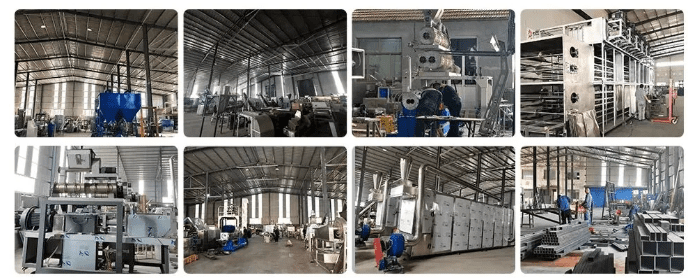
Successful implementation requires careful attention to installation, commissioning, and operator training,instant noodle machine korea but when properly executed, this equipment can deliver exceptional product consistency at competitive production costs. As consumer preferences evolve toward portion-controlled, premium instant noodle products, this specialized equipment provides manufacturers with the capability to meet market demands while maintaining operational excellence.