
Introduction
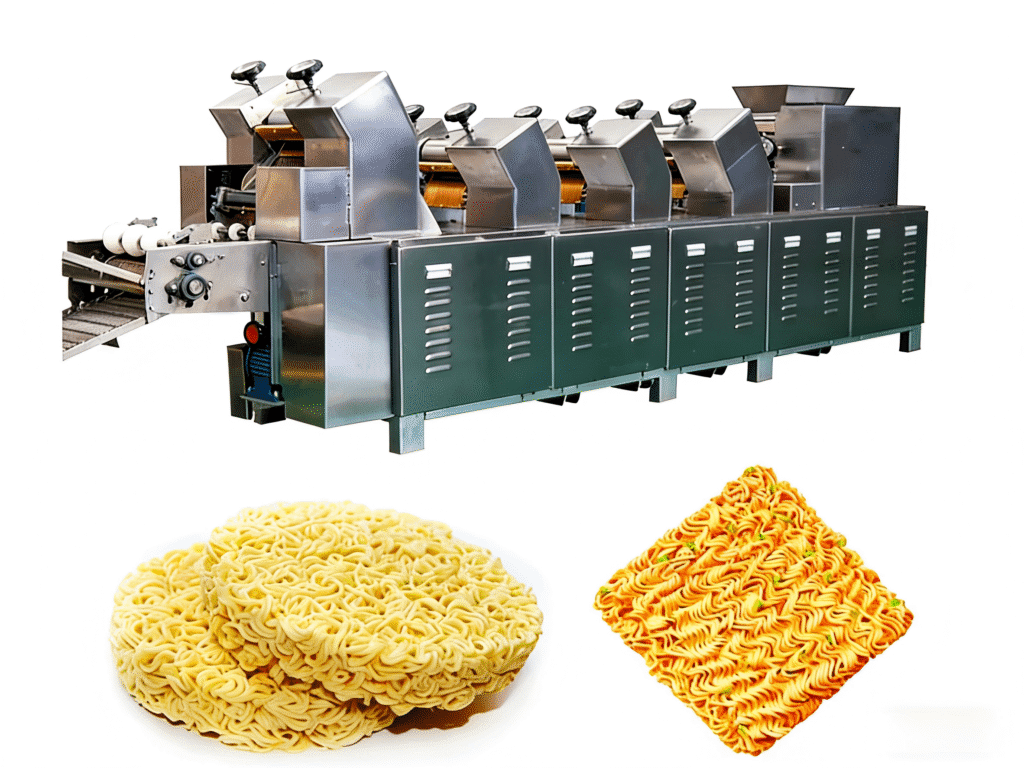
Instant noodles are one of the most popular convenience foods in the world. Instant noodle making machine They are affordable, easy to prepare, have a long shelf life when properly manufactured and packaged, and can be produced in a wide variety of flavors. These advantages make instant noodle manufacturing an attractive business opportunity for entrepreneurs, food distributors, and small food-processing companies.
However, starting a small instant noodle factory requires more than purchasing a noodle-making machine. Investors must carefully plan their production capacity, factory layout, equipment selection, raw material supply, food safety system, packaging design, labor requirements, and distribution channels.
This guide explains how to establish a small instant noodle factory from the initial business idea to commercial production. It focuses on a practical, scalable operation that can begin with a limited product range and expand as market demand increases.

1. Conduct Market Research Before Investing
The first step is to understand the market you intend to serve.
Before purchasing equipment, identify your target customers and determine which type of instant noodles has the strongest commercial potential.
1.1 Identify Your Target Market
Potential customers include:
- Supermarkets and convenience stores.
- Local grocery shops and wholesalers.
- Restaurants, hotels, and catering businesses.
- Online retailers and direct-to-consumer customers.
- Private-label brands that outsource manufacturing.
- Export distributors and regional food importers.
Each customer group has different requirements. Supermarkets may require attractive packaging, consistent product quality, barcodes, and reliable delivery. Wholesale customers may prioritize competitive prices and larger carton quantities. Private-label customers may require customized recipes and packaging.
1.2 Choose Your Product Type
A small factory should initially focus on one or two product categories rather than attempting to manufacture every type of instant noodle.
The main options include:
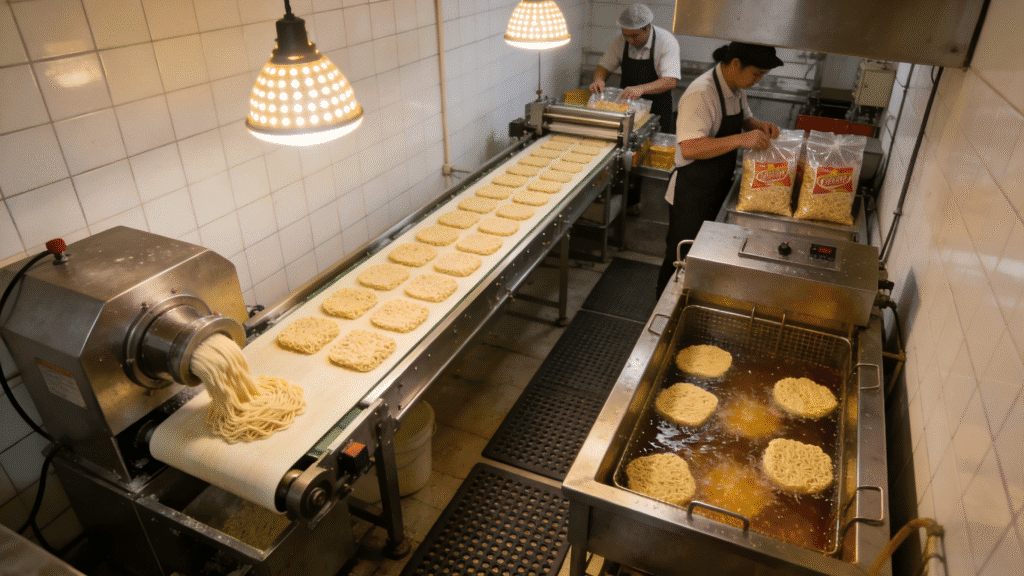
Fried instant noodles: The noodle blocks are steamed and then dehydrated in hot oil. This method generally produces noodles that rehydrate quickly and have a familiar texture.
Air-dried instant noodles: The noodles are steamed and dried using hot air. This method avoids deep-frying during production, although the final nutritional profile depends on the recipe and other ingredients.
Cup noodles: Noodle blocks and seasonings are packed into cups or bowls. This format requires suitable containers, lids, and filling and sealing equipment.
Bagged instant noodles: Noodle blocks are packed in flexible bags together with seasoning sachets. This is often a practical format for a small business because the packaging is relatively compact.
For a first-time investor, bagged instant noodles may be a sensible starting point. Cup noodles can be introduced later when sales volume justifies the additional packaging investment.
1.3 Analyze Competitors
Visit local supermarkets and wholesalers to study competing products.
Record their retail prices, package weights, flavors, ingredients, packaging styles, and country of origin. Pay attention to which products occupy the most shelf space and which price ranges are most common.
Your product needs a clear competitive advantage. This could be a lower selling price, a distinctive flavor, a premium ingredient profile, a convenient package size, or a strong local brand identity.
2. Prepare a Business Plan
A detailed business plan helps determine whether the project is financially and operationally feasible.
The plan should include the following elements.

2.1 Production Capacity
Estimate the number of packages you expect to sell each day.
For example, a small factory might target 2,000–5,000 packages per day, depending on the selected equipment and the package weight. This is an illustrative planning range, not a guaranteed machine capacity.
When comparing production lines, confirm whether the supplier’s rated output refers to theoretical machine speed or actual finished packages that meet your quality requirements.
2.2 Product Specifications
Define your intended product before requesting equipment quotations.
Important specifications include:
- Noodle weight per package.
- Package format and dimensions.
- Number and type of seasoning sachets.
- Fried or air-dried production method.
- Target shelf life.
- Number of flavors.
- Expected daily production volume.
These specifications influence machine selection, factory layout, utility requirements, packaging materials, and operating costs.
2.3 Sales and Distribution Plan
Determine how your products will reach customers.
You may sell directly to retailers, appoint regional distributors, supply restaurants, establish an online store, or manufacture products for existing brands.
Before investing heavily in production equipment, try to obtain initial customer commitments, distributor feedback, or trial orders. Manufacturing capacity is valuable only when it can be converted into profitable sales.
3. Register the Business and Obtain Required Approvals
Food manufacturing is a regulated activity. Requirements depend on the country, region, factory size, product formulation, and manufacturing method.
Before signing a long-term factory lease or ordering equipment, consult the relevant food safety authority, industrial zoning department, fire authority, and environmental regulator.
Typical requirements may include:
- Business registration and tax registration.
- Approval for food manufacturing activities.
- Factory registration or industrial-use approval, where applicable.
- Building, fire safety, and environmental permits.
- Potable water and wastewater compliance.
- Food handler training and hygiene procedures.
- Product labeling and packaging compliance.
- Food safety documentation and traceability procedures.
Do not assume that renting a commercial building automatically authorizes food production. Verify the permitted use of the premises before making a financial commitment.
4. Select a Suitable Factory Location
The factory location should support efficient production, safe food handling, and economical distribution.
A small instant noodle factory may be established in an approved industrial building or a purpose-designed food-processing facility.
4.1 Consider the Following Factors
Transportation: The site should provide convenient access for flour deliveries, packaging material shipments, and finished product distribution.
Utilities: Confirm the availability of adequate electricity, potable water, drainage, ventilation, and the fuel or energy source required by the selected equipment.
Building structure: Check the floor loading capacity, ceiling height, equipment access, ventilation, and space for maintenance.
Environmental conditions: Avoid locations with excessive dust, flooding risks, pests, strong odors, or other contamination hazards.
Expansion potential: If sales increase, you may need additional packaging machines, storage space, or another production line.
4.2 Plan the Factory Layout
The production area should follow a logical workflow, from incoming raw materials to finished products.
A practical layout may include:
- Raw material receiving and inspection area.
- Flour and ingredient warehouse.
- Ingredient weighing and mixing area.
- Dough sheeting and noodle forming area.
- Steaming and frying or drying area.
- Cooling and inspection area.
- Seasoning sachet preparation area, if manufactured in-house.
- Packaging area.
- Finished goods warehouse.
- Quality control area.
- Cleaning and sanitation facilities.
- Staff changing and handwashing facilities.
- Maintenance and utility areas.
Separate areas with different hygiene requirements as appropriate. Avoid unnecessary movement of people, waste, raw materials, and finished products through the same production routes.
5. Choose the Right Instant Noodle Production Equipment
Equipment selection is one of the most important decisions when establishing a small factory.
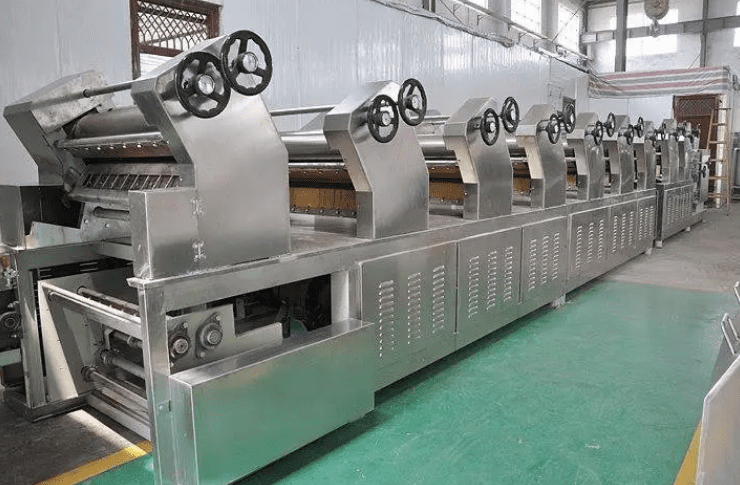
A complete production line must coordinate dough preparation, noodle forming, cooking, dehydration, cooling, and packaging. Buying only a noodle-forming machine will not provide a complete instant noodle manufacturing operation.
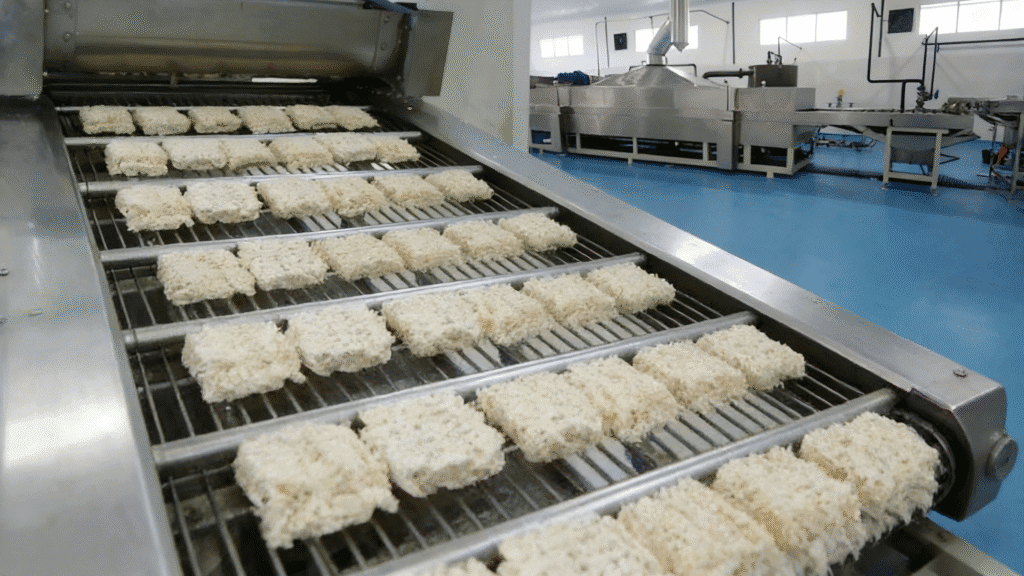
5.1 Essential Production Equipment
1. Flour mixer
The mixer combines wheat flour, water, salt, and other permitted recipe ingredients to create a uniform dough.
2. Dough resting equipment or area
A controlled resting stage allows moisture to distribute more evenly throughout the dough before further processing.
3. Compound sheeter and rolling machine
The dough is compressed into sheets and progressively reduced to the required thickness.
4. Noodle slitter and wave-forming unit
The dough sheet is cut into noodle strands. A wave-forming mechanism creates the characteristic shape of many instant noodles.
5. Continuous steaming tunnel
Steam partially cooks the noodles and helps establish their structure before dehydration.
6. Portioning and noodle-block forming machine
The continuous noodle strands are divided into portions and shaped into individual noodle blocks.
7. Dehydration system
Choose either a continuous frying system or a hot-air drying system.
For fried noodles, the line generally requires a controlled fryer, oil circulation and filtration equipment, and appropriate exhaust and fire safety systems.
For air-dried noodles, the line requires a suitable drying tunnel with controlled temperature, airflow, and residence time.
8. Cooling conveyor
The noodle blocks must cool under hygienic conditions before packaging. This reduces the risk of condensation and helps protect product quality.
9. Seasoning sachet filling machine
This machine is needed if the factory produces its own seasoning packets. Depending on the product, separate equipment may be required for dry powders, liquid sauces, or oil-based seasonings.
10. Packaging machine
The packaging system forms or handles the package, inserts the noodle block and seasoning sachets, and seals the finished product.
11. Inspection equipment
Depending on the risk assessment and applicable requirements, this may include weighing equipment, moisture testing equipment, metal detection, seal inspection tools, and oil quality testing instruments.
12. Utility equipment
A production line may also require a steam boiler or steam generator, electrical control systems, water treatment equipment, exhaust ventilation, and other supporting utilities.
The exact configuration depends on the production method, machine design, and local regulations.
5.2 Compare Suppliers Carefully
Request quotations from at least three qualified equipment manufacturers.
Compare more than the purchase price. Ask each supplier to specify:
- Guaranteed finished-product output.
- Product weight and package format used for the capacity estimate.
- Equipment dimensions and required factory space.
- Electrical power and energy consumption.
- Steam, water, and compressed-air requirements.
- Frying oil requirements, if applicable.
- Stainless steel grades and food-contact materials.
- Cleaning and maintenance procedures.
- Installation, commissioning, and operator training.
- Spare parts availability and warranty conditions.
Ask for a production demonstration using your intended recipe and product specifications whenever possible.
A lower-priced machine may become more expensive over time if it consumes more energy, produces inconsistent noodles, or requires frequent maintenance.
6. Understand the Complete Instant Noodle Manufacturing Process
A typical instant noodle production process consists of ingredient preparation, dough mixing, sheeting, cutting, steaming, portioning, dehydration, cooling, inspection, and packaging.
The precise parameters depend on the recipe, noodle dimensions, machine design, and desired texture. They should be established through product trials and validated process controls rather than copied blindly from another factory.
Step 1: Raw Material Receiving and Inspection
The principal raw material is usually wheat flour.
Other ingredients may include potable water, salt, permitted alkaline ingredients, starches, and other recipe-specific ingredients.
Seasoning ingredients may include salt, sugar, spices, dehydrated vegetables, flavoring ingredients, and other permitted components.
Upon delivery, inspect packaging integrity, supplier documentation, lot numbers, expiration or best-before information where applicable, and any relevant quality certificates.
Store materials under suitable conditions and keep them protected from moisture, pests, chemicals, and cross-contamination.
Step 2: Ingredient Weighing
Measure the ingredients according to the approved recipe.
Accurate weighing is essential for consistent dough characteristics, noodle texture, flavor, and production yield.
Use calibrated scales and maintain batch records so that every production lot can be traced back to its ingredients.
Step 3: Dough Mixing
Add the flour and other dry ingredients to the mixer. Introduce the measured liquid gradually while mixing.
The objective is to distribute moisture and ingredients evenly and develop dough with the appropriate consistency for sheeting.
Control mixing time, ingredient proportions, and dough temperature according to the validated recipe.
Step 4: Dough Resting
Allow the dough to rest for the specified time under controlled conditions.
This stage helps moisture distribute throughout the dough and can improve its workability during rolling.
The resting time should be optimized through trials because flour properties, room conditions, and formulation can affect the result.
Step 5: Dough Sheeting and Rolling
Feed the dough through the sheeting system.
The rollers progressively reduce the dough to the desired thickness while producing a relatively uniform sheet.
Control roller gaps, sheet thickness, dough temperature, and line speed. Poor control may lead to uneven noodle thickness, tearing, or inconsistent cooking characteristics.
Step 6: Cutting and Wave Formation
The dough sheet passes through cutting rollers that form individual noodle strands.
The strands may then pass through a wave-forming unit, which gives the noodles their familiar curly appearance.
Consistent strand dimensions and portioning are important for uniform steaming, dehydration, and final package weight.
Step 7: Steaming
Transfer the noodle strands through a steaming tunnel.
Steam gelatinizes part of the starch and changes the dough structure, helping the noodles retain their shape and texture.
Control steam conditions and residence time. The actual process must be validated for the formulation and equipment rather than relying on a single universal temperature or duration.
Step 8: Portioning and Noodle-Block Formation
Cut the steamed noodles into individual portions.
A forming mechanism shapes each portion into the desired noodle block, whether intended for a bag, cup, or bowl.
Check portion weight and shape regularly to maintain product consistency.
Step 9: Dehydration
This is a critical stage in the manufacture of instant noodles.
Option A: Deep frying
The noodle blocks pass through a controlled hot-oil fryer. Water evaporates rapidly, leaving a porous structure that helps the noodles rehydrate during preparation.
The fryer requires effective temperature control, oil circulation, filtration, and routine oil quality monitoring.
Option B: Hot-air drying
The noodle blocks pass through a drying tunnel where heated air removes moisture.
The drying process must achieve the required final moisture level and water activity while preserving acceptable texture, color, and rehydration performance.
Air-dried noodles may require different formulations and processing conditions from fried noodles.
For either method, the dehydration process must be validated. A particular moisture reading alone does not establish product safety or shelf stability.
Step 10: Cooling
After dehydration, allow the noodle blocks to cool under clean, controlled conditions.
Protect the product from airborne dust, insects, condensation, and contact with unclean surfaces.
Avoid packaging blocks while they are too hot, since trapped heat and moisture can adversely affect package integrity and product quality.
Step 11: Seasoning Preparation and Filling
Seasoning may be manufactured in-house or purchased from an approved seasoning supplier.
For in-house production, blend the ingredients according to a controlled formulation and use appropriate equipment to fill and seal individual sachets.
Check seasoning weight, seal integrity, ingredient identity, allergen controls, and batch traceability.
For a new factory, purchasing ready-made seasoning sachets may simplify production and reduce the initial investment in blending and sachet-filling equipment.
Step 12: Packaging
Place the noodle blocks and seasoning sachets into the selected packaging format.
The packaging machine should provide consistent filling and reliable seals. Depending on the product and packaging material, additional features may include date coding, batch coding, gas flushing, or automated package inspection.
Packaging materials must be suitable for food contact and provide the barrier properties needed to protect the noodles from moisture, oxygen, light, and physical damage as appropriate.
Step 13: Final Inspection
Inspect finished packages for:
- Correct net weight.
- Correct product and seasoning combination.
- Proper sealing.
- Accurate date and batch coding.
- Acceptable package appearance.
- Foreign matter detection where required.
- Compliance with product specifications.
Set aside any nonconforming product for investigation rather than automatically releasing it for sale.
Step 14: Cartoning and Storage
Pack finished retail packages into shipping cartons.
Store the cartons in a clean, dry, pest-controlled warehouse away from direct sunlight, excessive heat, chemicals, and strong odors.
Use a first-in, first-out or first-expired, first-out stock rotation system, as appropriate, and maintain records of production lots and shipments.
7. Develop a Reliable Noodle Recipe
A good production line cannot compensate for an unstable formulation.
Before commercial launch, work with an experienced food technologist or noodle formulation specialist to develop a recipe that matches your target price, texture, flavor, and production method.
Important formulation factors include:
Flour characteristics: Protein content and flour quality influence dough strength, elasticity, and texture.
Water addition: The quantity and distribution of water affect dough handling and noodle consistency.
Salt and alkaline ingredients: These influence flavor, color, texture, and processing behavior. Only ingredients permitted by local regulations should be used at approved levels.
Starch and other ingredients: Depending on the recipe, these may be used to adjust texture and processing performance.
Seasoning formulation: Flavor, aroma, saltiness, ingredient cost, and allergen content must be balanced.
Frying or drying behavior: The formulation must work with the chosen dehydration system.
Conduct pilot trials before finalizing the commercial recipe. Evaluate cooked texture, rehydration time, flavor, appearance, package integrity, and shelf stability.
Do not assign a commercial shelf life solely on the basis of appearance or a single moisture measurement. Establish it using appropriate product testing and documented evidence.
8. Establish a Food Safety and Quality Control System
Food safety must be built into the factory from the beginning.
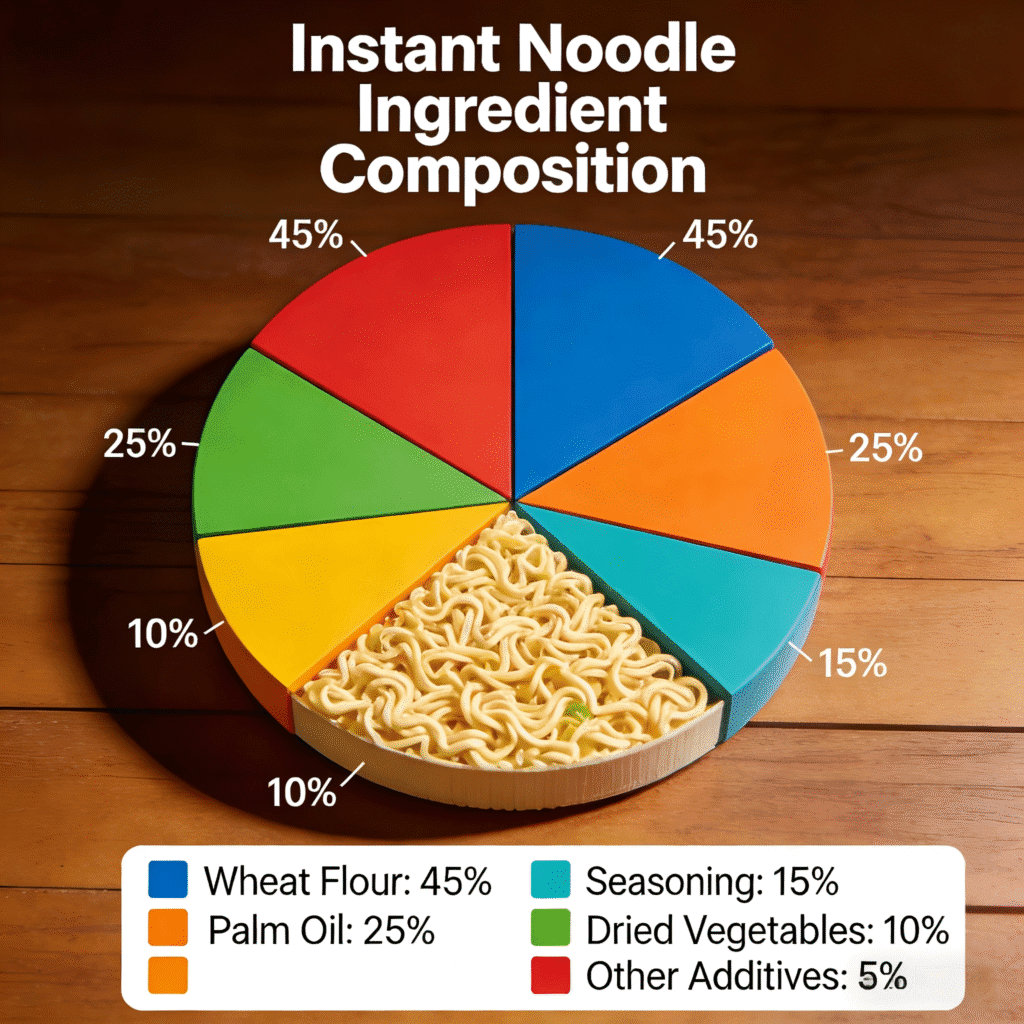
Use Good Manufacturing Practices (GMP), good hygiene practices, and a risk-based Hazard Analysis and Critical Control Point (HACCP) system appropriate to your operation. The Codex Alimentarius General Principles of Food Hygiene provides an internationally recognized framework for hygiene controls and HACCP-based food safety management.
Reference: Codex General Principles of Food Hygiene.
8.1 Incoming Material Quality Control
Approve suppliers and establish specifications for flour, oils, seasonings, packaging materials, and other ingredients.
Check relevant certificates, allergen information, material identity, and incoming quality parameters.
8.2 In-Process Quality Control
Monitor the process parameters that affect product safety and consistency.
Examples include ingredient weights, dough condition, steaming conditions, dehydration performance, frying oil quality, final moisture, and package seal integrity.
The appropriate limits must be based on applicable requirements, scientific evidence, product characteristics, and validated process studies.
8.3 Finished Product Testing
Develop a testing program based on the product risk assessment and regulatory requirements.
Possible checks include:
- Moisture content and water activity.
- Net weight.
- Sensory quality.
- Oil quality for fried noodles.
- Microbiological testing where appropriate.
- Foreign matter and packaging integrity.
- Label accuracy and allergen declaration.
- Shelf-life performance.
Use a qualified laboratory when the factory does not have the equipment or expertise to perform required tests.
8.4 Hygiene and Sanitation
Prepare written procedures for cleaning and sanitizing food-contact equipment.
Train employees in handwashing, protective clothing, personal hygiene, illness reporting, and contamination prevention.
Maintain pest control, waste management, equipment maintenance, and cleaning records.
8.5 Traceability and Product Recall
Every production batch should be traceable to its raw materials, processing records, packaging materials, and customers.
Establish a documented procedure for investigating complaints, isolating affected products, notifying the relevant parties, and conducting a product recall when necessary.
9. Design Appropriate Packaging
Packaging influences product protection, shelf life, production efficiency, and brand recognition.
For a small factory, the most common starting options are flexible bags and cup or bowl packaging.
Bag Packaging
Advantages include relatively compact storage, a wide choice of package sizes, and the possibility of using established flexible packaging suppliers.
The package must protect the noodles from moisture and other relevant environmental factors. The material structure and seal design should be selected according to the product and validated shelf-life requirements.
Cup or Bowl Packaging
Cup packaging offers convenience and can create a premium or portable product.
However, it generally requires additional container handling, lid sealing, cup or bowl storage, and appropriate filling equipment. It may also increase packaging costs and storage requirements.
Packaging Information
Depending on local law, the retail package may need to include:
- Product name.
- Ingredient list.
- Allergen declarations.
- Net weight.
- Nutrition information.
- Manufacturer or responsible business details.
- Batch identification.
- Date marking and storage instructions.
- Preparation instructions.
- Country-of-origin information, where required.
Confirm all labeling requirements before printing commercial packaging. Incorrect labels can lead to costly reprinting or product recalls.
10. Estimate the Startup Investment
There is no single investment figure suitable for every small instant noodle factory.
The total cost depends on production capacity, whether noodles are fried or air-dried, automation level, local labor costs, factory rent, energy prices, and whether seasoning and packaging are produced in-house.
Prepare a budget with the following categories.
| Investment category | Main items |
|---|---|
| Factory premises | Deposit, rent, renovation, flooring, drainage |
| Production equipment | Mixer, sheeter, cutter, steamer, fryer or dryer |
| Packaging equipment | Sachet filling, noodle packaging, sealing, coding |
| Utilities | Electricity upgrades, boiler or steam system, ventilation |
| Quality control | Scales, moisture testing, inspection equipment, laboratory services |
| Food safety | Cleaning systems, pest control, hygiene facilities |
| Initial inventory | Flour, oil, seasonings, packaging materials |
| Personnel | Recruitment, training, salaries |
| Business development | Brand design, samples, marketing, distribution |
| Working capital | Operating expenses and cash reserves |
Separate one-time investment from recurring operating costs.
Obtain written quotations for equipment, installation, transport, duties, spare parts, and commissioning. Include a contingency reserve for unexpected renovation or utility costs.
Do not invest all available capital in machinery. A factory also needs sufficient working capital to buy raw materials, pay employees, maintain equipment, and support the time between production and customer payment.
11. Calculate Production Costs and Profitability
A clear cost model helps you set a realistic selling price.
Calculate the cost of each package by including:
- Flour and other noodle ingredients.
- Frying oil or drying energy.
- Seasoning sachets.
- Retail packaging and shipping cartons.
- Direct labor.
- Electricity, water, and fuel.
- Maintenance and spare parts.
- Quality control and sanitation.
- Factory rent and administrative expenses.
- Distribution, sales commissions, and promotional costs.
Example of a Basic Cost Model
The following numbers are hypothetical and are provided only to demonstrate the calculation method.
Assume a factory produces and sells 3,000 packages per day over 26 operating days each month.
Monthly sales volume:
3,000 × 26 = 78,000 packages.
Suppose the average selling price is US$0.40 per package and the total variable production cost is US$0.25 per package.
Monthly revenue:
78,000 × US$0.40 = US$31,200.
Monthly variable costs:
78,000 × US$0.25 = US$19,500.
Monthly contribution before fixed expenses:
US$31,200 − US$19,500 = US$11,700.
If monthly fixed expenses are US$8,000, the estimated operating profit before interest, taxes, depreciation, and other excluded expenses would be US$3,700.
These figures do not represent typical industry margins or a forecast for a real factory. Actual results depend on selling prices, production yield, utilization, wastage, labor, financing, and distribution costs.
Calculate the Break-Even Point
Use this formula:
Break-even volume = Monthly fixed costs ÷ Contribution per package
If fixed expenses are US$8,000 and the contribution is US$0.15 per package:
US$8,000 ÷ US$0.15 = approximately 53,334 packages per month.
This is the volume required to cover the assumed fixed expenses, before considering any additional costs excluded from the model.
Always build a conservative financial forecast that accounts for unsold inventory, equipment downtime, customer payment delays, and fluctuations in ingredient prices.
12. Recruit and Train Your Workforce
A small factory may initially operate with a relatively compact team, but staffing needs depend on the degree of automation and the number of shifts.
Possible positions include:
Production supervisor: Coordinates the production schedule, monitors output, and ensures that operators follow the approved process.
Machine operators: Operate the mixer, sheeting system, steaming equipment, fryer or dryer, and packaging machines.
Quality control personnel: Conduct inspections, maintain records, and monitor compliance with specifications.
Warehouse personnel: Receive raw materials, manage inventory, and prepare finished goods for shipment.
Maintenance technician: Performs preventive maintenance and responds to equipment problems.
Sales and administration personnel: Handle customer relationships, purchasing, invoicing, and business operations.
At the beginning, some administrative duties may be combined. However, food safety responsibilities must remain clearly assigned, and personnel must be properly trained for their duties.
13. Plan Daily Production and Inventory
Good production planning reduces waste and helps control costs.
Before each shift, confirm the production order, required ingredients, packaging materials, machine condition, cleaning status, and staffing.
During production, monitor output, product weight, downtime, waste, and process parameters.
At the end of each shift, reconcile raw material usage, finished product quantities, rejected packages, and remaining inventory.
Maintain suitable stock levels for flour, oil, seasonings, and packaging materials. Avoid excessive inventory that may deteriorate or become obsolete, especially when package designs or recipes change.
Schedule preventive maintenance instead of waiting for equipment failures. Keep critical spare parts available and maintain clear records of machine repairs.
14. Test the Production Line Before Commercial Launch
Do not immediately begin full-scale production after installing the machines.
Use a structured commissioning and trial-production program.
Stage 1: Equipment Acceptance
Confirm that the equipment matches the purchase agreement and that the required safety devices, electrical controls, and utility connections are functioning.
Stage 2: Empty-Machine Testing
Run equipment without product where appropriate to check conveyor movement, roller alignment, control systems, emergency stops, and mechanical operation.
Stage 3: Water or Utility Testing
Test steam supply, drainage, ventilation, and other relevant utilities according to the equipment manufacturer’s instructions.
Stage 4: Pilot Production
Produce a limited quantity using the intended recipe and packaging materials.
Evaluate noodle texture, appearance, cooking performance, moisture, package weight, and sealing quality.
Stage 5: Process Adjustment
Adjust the recipe and equipment settings under controlled conditions. Document the approved operating parameters and repeat trials as necessary.
Stage 6: Food Safety Verification
Confirm that sanitation procedures, required process controls, traceability, labeling, and product testing arrangements are effective.
Stage 7: Commercial Production Approval
Begin regular production only after the product, process, equipment, and food safety system meet the defined acceptance criteria.
15. Build Your Brand and Distribution Network
Manufacturing a consistent product is only one part of building a successful instant noodle business.
You must also establish a brand that customers recognize and a distribution system that can deliver products reliably.
15.1 Develop a Clear Brand Identity
Choose a brand name, logo, color scheme, and packaging design that match your target market.
Make the product’s key selling points easy to understand. These might include a distinctive flavor, convenient preparation, attractive portion size, or a clearly defined product positioning.
Ensure that all marketing claims are truthful, substantiated, and legally permitted.
15.2 Start With a Limited Product Range
Launching too many flavors increases ingredient inventory, packaging complexity, and the risk of slow-moving stock.
Begin with a small number of well-tested products and expand according to actual sales data.
15.3 Establish Distributor Relationships
Prepare product samples, price lists, carton specifications, delivery terms, and product information sheets.
When negotiating with distributors, understand their expected margins, payment terms, return policies, delivery requirements, and minimum order quantities.
15.4 Monitor Customer Feedback
Track complaints, repeat purchases, sales volume, and product returns.
Customer feedback can reveal problems with flavor, texture, portion size, packaging, or retail pricing. Use this information to improve the product and refine the business model.
16. Common Mistakes to Avoid
New instant noodle manufacturers frequently encounter the following problems.
Buying equipment before validating demand: A high-capacity line can become a financial burden if actual sales are too low.
Choosing equipment based only on price: Low-cost machinery may have poor reliability, insufficient support, or inconsistent output.
Underestimating utility requirements: Electricity, steam, ventilation, drainage, and fuel costs can materially affect operating expenses.
Ignoring packaging performance: Weak seals or unsuitable packaging materials can shorten shelf life and damage the brand.
Failing to validate shelf life: Product stability must be demonstrated using appropriate testing rather than assumptions.
Producing too many flavors: Too many product variations increase complexity and tie up working capital.
Neglecting preventive maintenance: Unplanned downtime can disrupt production and cause missed deliveries.
Overlooking distribution costs: A product can have a reasonable factory cost but become uncompetitive after freight, distributor margins, and retail promotions.
Starting production without regulatory approval: Delays, enforcement actions, and required facility changes can create substantial financial losses.
17. A Practical 90-Day Startup Roadmap
The following is an illustrative planning schedule. Actual timelines depend on permits, construction, equipment lead times, and commissioning requirements.
Days 1–15: Market research and feasibility
- Identify target customers and competing products.
- Select the initial product type.
- Estimate demand and selling prices.
- Prepare an initial financial model.
Days 16–30: Technical planning and supplier selection
- Define product and packaging specifications.
- Request equipment quotations.
- Compare suppliers and confirm utility requirements.
- Identify possible factory premises.
Days 31–45: Regulatory and factory planning
- Confirm applicable permits and food manufacturing requirements.
- Finalize the preliminary factory layout.
- Develop the sanitation and food safety plan.
- Begin recipe development and packaging design.
Days 46–60: Procurement and preparation
- Complete equipment orders where appropriate.
- Prepare the premises and utility connections.
- Arrange ingredient and packaging suppliers.
- Recruit key production and quality personnel.
Days 61–75: Installation and training
- Install and inspect the production line.
- Train operators and maintenance personnel.
- Prepare cleaning, inspection, and production records.
- Verify safety systems and equipment functionality.
Days 76–90: Trial production and launch preparation
- Conduct pilot production.
- Refine the recipe and operating parameters.
- Complete applicable quality and shelf-life validation activities.
- Confirm labeling and packaging compliance.
- Obtain required approvals before commercial production.
This schedule should be treated as a planning framework rather than a promise that a factory can legally and technically begin commercial operations within 90 days.
Conclusion
Starting a small instant noodle factory is a project that combines food technology, equipment engineering, factory management, regulatory compliance, and commercial planning.
The most practical approach is to begin with a clearly defined target market, a limited product range, a suitable production capacity, and a well-designed manufacturing process.
Investors should carefully evaluate the complete production line, including mixing, rolling, steaming, frying or drying, cooling, inspection, and packaging. They should also establish effective food safety controls, reliable ingredient sourcing, and a realistic financial model before committing to large expenditures.
Most importantly, a successful factory should be designed around products that customers are willing to buy, rather than machinery that can produce more packages than the market can absorb.
By starting at an appropriate scale, controlling product quality, managing working capital, and expanding according to verified demand, entrepreneurs can build a more sustainable foundation for an instant noodle manufacturing business.
Further planning for your factory
To turn this general guide into a practical investment plan, the next step is to determine your expected daily output, the type of instant noodles you want to manufacture, and your available investment budget. These three factors will influence almost every equipment and factory-layout decision.


