
1. Introduction
With the rapid development of the global pet food industry, dog owners are paying increasing attention to the nutritional value, ingredient quality, digestibility, and safety of pet food. Traditional dog food products are no longer sufficient to meet the needs of all consumers. dog food extruder More pet owners are willing to choose premium dog food made with high-quality animal proteins, carefully selected ingredients, and advanced processing technologies.
This trend has created new opportunities for dog food manufacturers. However, producing premium dog food is more complicated than simply using expensive ingredients. Manufacturers must consider formula development, raw material selection, processing technology, equipment configuration, drying conditions, coating methods, and quality control.
So, how is premium dog food processed? What equipment is needed, and how can manufacturers ensure that the finished products meet high-quality standards?
This article provides a comprehensive introduction to premium dog food processing, from raw material preparation to finished product packaging.
2. What Is Premium Dog Food?

Premium dog food generally refers to products developed with carefully selected ingredients, appropriate nutritional formulations, and controlled manufacturing processes.
Compared with conventional dog food, premium products often emphasize the following characteristics:
- High-quality animal protein sources.
- Clearly defined ingredient specifications.
- Balanced protein, fat, carbohydrates, vitamins, and minerals.
- Appropriate digestibility and palatability.
- Consistent product appearance and texture.
- Strict raw material and finished-product quality control.
- Reliable packaging and storage stability.
However, premium dog food does not necessarily mean that it must contain the highest possible percentage of meat or the most expensive ingredients. The most important consideration is whether the finished product provides complete and balanced nutrition for its intended life stage and meets applicable nutritional standards.
3. Select High-Quality Raw Materials
Raw material selection is the foundation of premium dog food manufacturing.
The quality, freshness, nutritional composition, and processing characteristics of raw materials directly affect the finished product.
3.1 Animal Protein Ingredients
Protein is essential for muscle development, tissue repair, enzyme production, and many other physiological functions.
Common animal protein ingredients include:
- Fresh chicken.
- Chicken meal.
- Beef.
- Lamb.
- Fish meal.
- Salmon.
- Duck.
- Egg products.
Manufacturers should evaluate protein quality, amino acid composition, digestibility, freshness, and supplier reliability when selecting these ingredients.
Using different animal protein sources can also help manufacturers develop products for different market segments.

3.2 Grain and Carbohydrate Ingredients
Carbohydrate ingredients provide energy and influence the processing performance and texture of extruded dog food.
Common choices include:
- Rice.
- Corn.
- Wheat.
- Oats.
- Barley.
- Other suitable cereal ingredients.
Some premium formulations may also use sweet potatoes, peas, or other alternative carbohydrate sources.
The selection should depend on nutritional requirements, ingredient tolerance, formulation costs, and extrusion characteristics.
3.3 Vegetables and Functional Ingredients
Vegetables and selected functional ingredients can contribute fiber and other nutrients.
Common ingredients include carrots, pumpkin, spinach, beet pulp, and other suitable plant materials.
However, these ingredients should be incorporated according to nutritional requirements rather than simply added for marketing purposes.
3.4 Oils and Fats
Fats provide concentrated energy and essential fatty acids while contributing to the flavor and palatability of dog food.
Common sources include chicken fat, fish oil, and suitable vegetable oils.
Manufacturers should pay particular attention to fat freshness and oxidation control because rancid fats can negatively affect both product quality and palatability.
4. Develop a Scientifically Balanced Dog Food Formula
After selecting raw materials, manufacturers need to develop an appropriate nutritional formula.
A premium dog food formula should consider the dog’s age, body size, activity level, physiological condition, and nutritional requirements.
Important nutritional components include:
Protein: Provides essential amino acids for growth, muscle maintenance, and tissue repair.
Fat: Supplies energy and essential fatty acids while improving palatability.
Carbohydrates: Provide energy and influence the structure and processing characteristics of kibble.
Fiber: Supports normal digestive function and helps regulate intestinal activity.
Vitamins: Participate in various metabolic processes and support normal physiological functions.
Minerals: Important for bone development, muscle function, and other biological processes.
Essential fatty acids: Such as omega-3 and omega-6 fatty acids, which contribute to normal skin and coat health.
Manufacturers should formulate products according to recognized nutritional standards, such as AAFCO or FEDIAF guidelines, where applicable.
It is also important to conduct nutritional calculations, laboratory analysis, and appropriate feeding evaluations before commercial production.
5. Main Processing Methods for Premium Dog Food
Premium dog food can be manufactured using several processing technologies.
The most suitable method depends on product positioning, ingredient characteristics, production capacity, investment budget, and target consumers.
5.1 Extrusion Processing
Extrusion is one of the most widely used technologies for manufacturing premium dry dog food.
The process combines heat, moisture, pressure, and mechanical shear to cook and shape the raw materials.
It can produce dog food in different shapes, sizes, densities, and textures.
Advantages include:
- High production efficiency.
- Flexible product formulation.
- Various kibble shapes and sizes.
- Good potential for automated manufacturing.
- Consistent production when processing conditions are properly controlled.
5.2 Baking Processing
Baking uses controlled hot air to cook and dry prepared dog food dough.
It is commonly used for dog biscuits, baked kibble, and premium dog treats.
Baking can produce distinctive aromas and crunchy textures, dog food extruder making it suitable for manufacturers seeking differentiated products.
5.3 Freeze-Drying Processing
Freeze-drying is commonly used for premium meat-based dog food and treats.
The ingredients are frozen, and moisture is removed under vacuum through sublimation.
This technology helps preserve the original structure of many ingredients and produces lightweight products with low moisture content.
However, freeze-drying equipment requires substantial investment and energy consumption.
5.4 Air-Drying Processing
Air-drying uses controlled airflow and temperature to remove moisture from prepared ingredients.
It is commonly used for meat-based dog food and premium treats.
Manufacturers need to control temperature, humidity, airflow, and drying time to achieve uniform drying and microbiological safety.
6. Complete Processing Steps for Premium Extruded Dog Food

For manufacturers planning to produce premium dry dog food on an industrial scale, extrusion is a practical and widely adopted option.
A typical production process includes the following steps.
Step 1: Raw Material Inspection and Preparation
Before production begins, all raw materials should undergo quality inspection.
Manufacturers need to check:
- Ingredient freshness.
- Nutritional specifications.
- Moisture content.
- Foreign materials.
- Microbiological quality.
- Supplier documentation.
Only qualified ingredients should enter the production process.
Step 2: Grinding

Selected raw materials are fed into a grinding machine to achieve the required particle size.
Uniform grinding improves mixing efficiency and supports stable extrusion.
Different ingredients may require different grinding conditions depending on their physical characteristics.
For premium dog food, particle size consistency is particularly important because it can influence processing stability and final kibble texture.
Step 3: Ingredient Mixing
\
After grinding, the ingredients are transferred into a mixer.
The mixing system combines protein ingredients, grains, fiber sources, vitamins, minerals, and other components according to the formula.
Uniform mixing helps ensure that each batch has a consistent nutritional composition.
Small quantities of vitamins and minerals should be accurately weighed and distributed to prevent nutritional inconsistencies.
Step 4: Conditioning
Before extrusion, the mixed ingredients enter a conditioning system.
Steam and water are added to increase moisture and temperature.
Proper conditioning improves material flow and supports starch gelatinization and protein transformation during extrusion.
The conditioning parameters should be adjusted according to the formulation and extruder configuration.
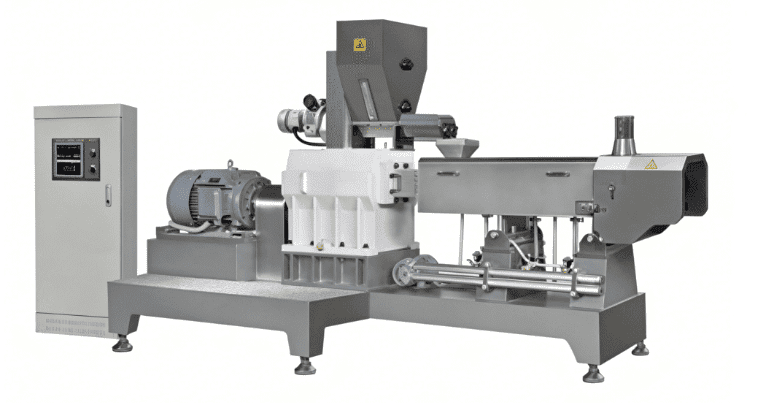
Step 5: Extrusion and Shaping
The conditioned mixture enters the extruder, where it is exposed to heat, pressure, and mechanical shear.
The material is cooked and then forced through a specially designed die.
A cutting system at the die outlet cuts the extruded material into individual kibble pieces.
Manufacturers can change the die design to produce different shapes, including:
- Round kibble.
- Square kibble.
- Triangle-shaped kibble.
- Ring-shaped kibble.
- Customized shapes.
The extrusion process should be carefully controlled to achieve appropriate cooking, expansion, density, and texture.
Step 6: Drying
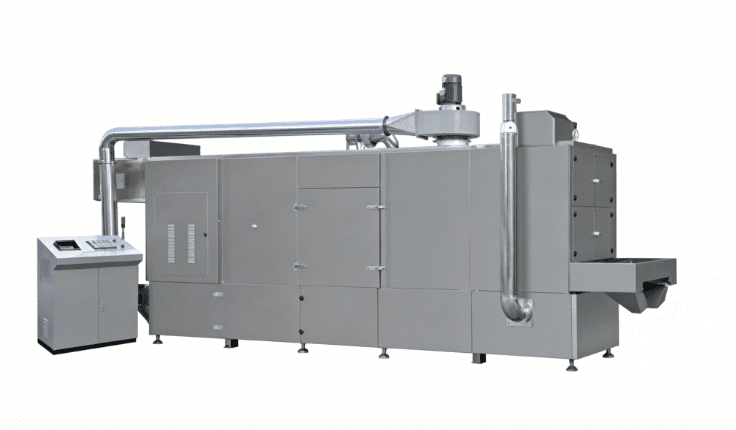
Freshly extruded dog food contains excess moisture and must be dried before coating and packaging.
The drying system uses controlled hot air to reduce moisture to the target level.
Important drying parameters include:
- Drying temperature.
- Airflow velocity.
- Drying duration.
- Product loading.
- Kibble dimensions.
- Final moisture content.
Uneven drying may cause inconsistent texture, product deformation, or reduced storage stability.
Manufacturers should validate the drying process to ensure that each batch reaches the required moisture content and water activity.
Step 7: Oil and Flavor Coating
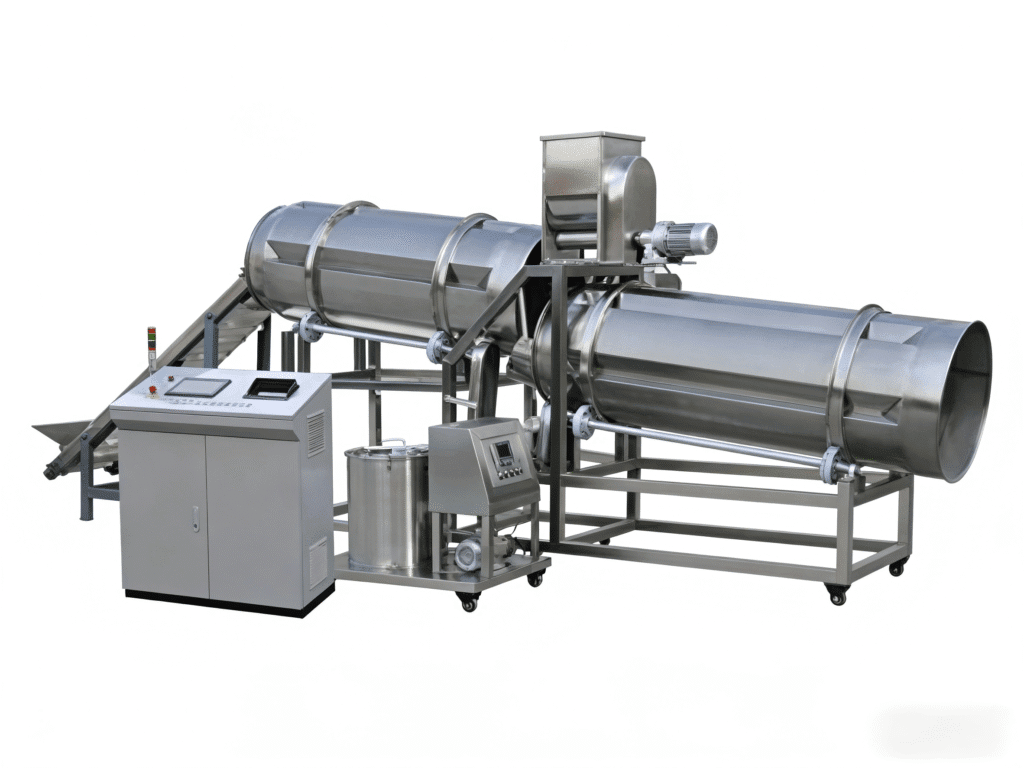
Coating is an important stage in premium dog food production.
After drying, the kibble enters a coating machine where oils, fats, and suitable palatants are evenly applied.
Common coating ingredients include chicken fat, fish oil, hydrolyzed animal protein, and other approved flavoring ingredients.
The coating process can:
- Improve product palatability.
- Enhance aroma.
- Provide additional energy.
- Help distribute certain nutritional ingredients.
- Create different product flavor profiles.
For premium products, manufacturers should pay close attention to coating uniformity and fat oxidation control.
Step 8: Cooling
After coating, the dog food should be cooled to a suitable temperature.
Cooling helps prevent condensation inside packaging and supports better product stability.
A properly designed cooling system also helps maintain consistent finished-product quality.
Step 9: Quality Inspection
Before packaging, finished dog food should undergo comprehensive quality testing.
Important inspection items include:
- Protein and fat content.
- Fiber and moisture content.
- Water activity.
- Kibble size and appearance.
- Hardness and texture.
- Fat oxidation indicators.
- Microbiological safety.
- Nutritional composition.
The finished product should meet the intended formulation specifications and applicable regulatory requirements.
Step 10: Automatic Packaging
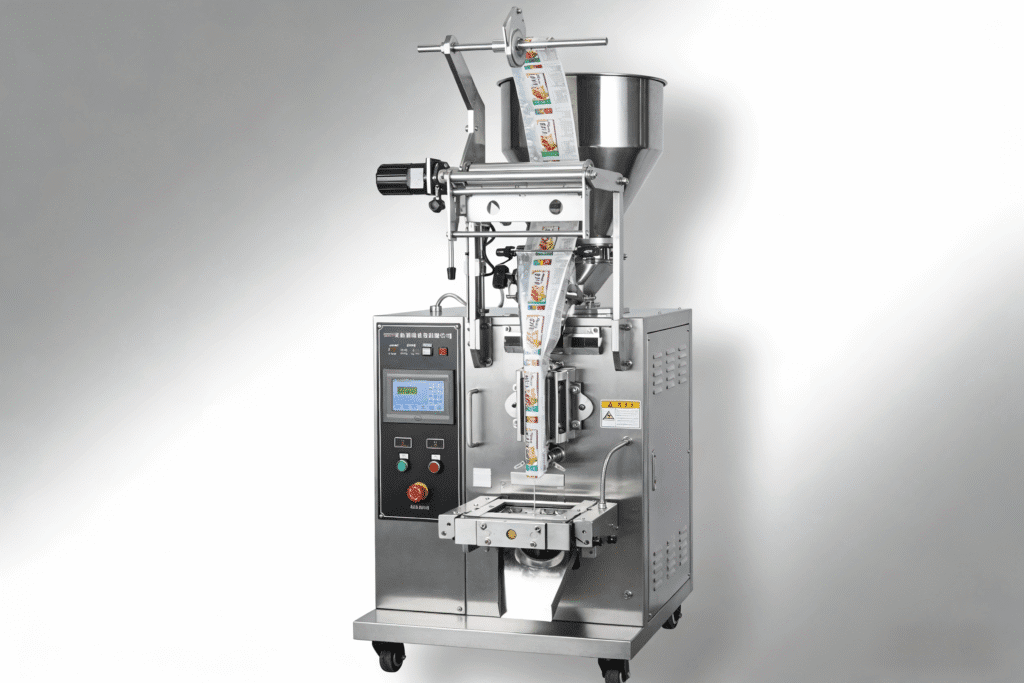
The qualified dog food is transferred to an automatic weighing and packaging system.
Suitable packaging materials should provide appropriate protection against oxygen, moisture, light, and contamination.
Manufacturers can choose different packaging sizes according to market demand, including small retail bags and large family-size packages.
Proper sealing and clear labeling help preserve product quality and provide consumers with important nutritional and feeding information.
7. How to Improve the Quality of Premium Dog Food
Producing premium dog food requires more than selecting expensive raw materials. Manufacturers must continuously improve the production process.
7.1 Improve Protein Quality
Choose reliable animal protein sources and evaluate their amino acid profiles and digestibility.
The protein formula should meet the nutritional requirements of the target dogs.
7.2 Optimize Extrusion Parameters
Control temperature, moisture, screw speed, pressure, and residence time.
Stable extrusion conditions help improve cooking uniformity and product consistency.
7.3 Protect Heat-Sensitive Nutrients
Some vitamins and other nutritional ingredients are sensitive to heat.
Manufacturers should consider their stability during processing and use appropriate formulation strategies.
Certain heat-sensitive ingredients may be added through post-extrusion coating when technically and nutritionally appropriate.
7.4 Improve Palatability
Use suitable animal fats, hydrolyzed proteins, and palatants to improve aroma and flavor.
Conduct feeding trials to evaluate actual dog acceptance rather than relying entirely on ingredient claims.
7.5 Control Drying Quality
Avoid excessive drying temperatures and uneven moisture removal.
Proper drying helps achieve the required texture and storage stability.
7.6 Strengthen Hygiene Management
Maintain clean production environments and establish effective cleaning and sanitation procedures.
Prevent cross-contamination between raw materials, processing equipment, and finished products.
8. What Equipment Is Needed to Produce Premium Dog Food?
A complete premium dry dog food production line generally includes the following equipment:
| Equipment | Main Function |
|---|---|
| Raw material cleaning system | Removes foreign materials |
| Hammer mill | Grinds raw materials |
| Powder mixer | Blends ingredients uniformly |
| Screw conveyor | Transfers materials |
| Steam conditioner | Adjusts moisture and temperature |
| Twin-screw extruder | Cooks and shapes dog food |
| Automatic cutting machine | Controls kibble size |
| Continuous dryer | Reduces moisture |
| Oil coating machine | Applies fats and oils |
| Vacuum coating machine | Improves coating distribution |
| Cooling conveyor | Cools finished kibble |
| Automatic packaging machine | Weighs and packages products |
The exact equipment configuration depends on production capacity, product formulation, factory conditions, and investment budget.
For manufacturers planning to produce several types of dog food, a flexible production line with adjustable processing parameters and interchangeable dies can provide additional production flexibility.
9. How to Ensure the Safety of Premium Dog Food
Safety is just as important as nutritional quality.
Even high-quality ingredients cannot guarantee a safe product without proper manufacturing controls.
Manufacturers should establish a comprehensive food safety management system covering the entire production process.
Key measures include:
Raw material traceability: Maintain supplier records, ingredient specifications, and batch information.
Microbiological control: Monitor potential microbial contamination and validate appropriate processing controls.
Moisture and water activity management: Ensure finished products achieve suitable storage stability.
Mycotoxin control: Evaluate grain-based ingredients for relevant mycotoxins.
Fat oxidation control: Monitor the quality of oils and fats and use suitable packaging.
Equipment sanitation: Clean and maintain production equipment regularly.
Finished-product testing: Conduct nutritional, chemical, and microbiological inspections.
A well-managed quality assurance system helps manufacturers reduce risks and build consumer confidence.
10. Investment Considerations for Starting a Premium Dog Food Factory
For entrepreneurs planning to enter the premium dog food market, factory investment requires careful planning.
Several factors should be considered.
Production Capacity
Determine the expected daily and annual output before selecting machinery.
Small-scale manufacturers may begin with a compact production line, while large factories may require fully automated equipment.
Equipment Investment
The total investment includes not only the extrusion machine but also grinding, mixing, drying, coating, cooling, packaging, and auxiliary systems.
Raw Material Supply
Establish reliable suppliers for animal proteins, grains, oils, vitamins, and minerals.
Stable supply and consistent ingredient specifications are essential for long-term production.
Factory Layout
The factory should have appropriate areas for raw material storage, processing, finished-product storage, packaging, and quality inspection.
The production layout should support hygienic material flow and reduce the risk of cross-contamination.
Market Positioning
Manufacturers should identify their target customers and determine whether they want to produce premium dry kibble, grain-free products, specialized life-stage formulas, or other differentiated products.
A clear product strategy helps determine the appropriate equipment and production technology.
11. Conclusion
Processing premium dog food is a systematic manufacturing process that combines high-quality raw materials, scientific nutritional formulation, advanced production equipment, and strict quality control.
From raw material selection and grinding to mixing, extrusion, drying, coating, cooling, and packaging, every stage influences the final product.
Among different manufacturing technologies, extrusion is particularly suitable for large-scale premium dry dog food production because of its efficiency, flexibility, and ability to produce various kibble shapes and textures.
However, high-quality dog food cannot be achieved through equipment alone. Manufacturers must also pay attention to ingredient quality, nutritional balance, digestibility, palatability, microbiological safety, and storage stability.
By investing in appropriate processing technology and continuously improving production management, manufacturers can develop competitive premium dog food products and establish a strong position in the growing global pet food market.


