
High-quality dog food is essential for maintaining dogs’ health, supporting their growth, and providing the energy they need for daily activities. As pet owners become increasingly concerned about pet nutrition, the demand for nutritious, safe, and palatable dog food continues to grow. For manufacturers, producing high-quality dog food is not simply about selecting good ingredients. It also requires scientific formula design, advanced processing technology, precise equipment control, and strict quality management.
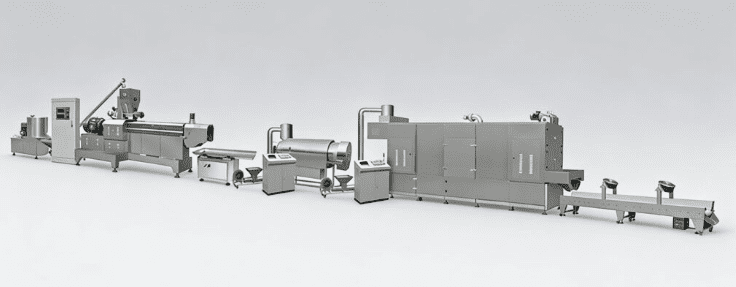
So, how can manufacturers produce high-quality dog food? This article explores the most important factors, from raw material selection to finished product packaging.
1. Select High-Quality Raw Materials
Raw materials are the foundation of dog food quality. Even with advanced production equipment, manufacturers cannot produce excellent dog food if the ingredients are poor.
Common ingredients used in dog food production include:
- Animal protein: Chicken meal, fish meal, beef meal, and other animal protein sources provide essential amino acids for muscle development and body maintenance.
- Grains: Corn, wheat, rice, and other grains provide carbohydrates and energy.
- Vegetables: Carrots, peas, and sweet potatoes can provide dietary fiber, vitamins, and minerals.
- Fats and oils: Chicken fat, fish oil, and vegetable oils supply energy and essential fatty acids.
- Vitamins and minerals: These nutrients help support healthy bones, skin, coats, and normal metabolic functions.
Manufacturers should purchase ingredients from reliable suppliers and inspect them before production. Raw materials should be checked for freshness, moisture content, nutritional composition, mold, and potential contamination.
It is also important to select ingredients according to the nutritional requirements of different dogs, including puppies, adult dogs, and senior dogs.
2. Develop a Balanced Nutritional Formula
A balanced formula is one of the most important factors determining dog food quality.
Dogs require proteins, fats, carbohydrates, vitamins, minerals, and water in appropriate proportions. Manufacturers need to formulate products according to the dog’s age, body size, activity level, and physiological condition.
Several nutritional factors deserve particular attention:
Protein content: Protein supports muscle development, tissue repair, and normal body functions. Both the quantity and digestibility of protein matter.
Fat content: Fat provides concentrated energy and helps maintain healthy skin and a shiny coat.
Carbohydrate content: Carbohydrates provide energy and can improve the processing characteristics of extruded dog food.
Dietary fiber: Appropriate fiber levels help support digestive health and normal intestinal function.
Vitamins and minerals: A complete nutritional profile requires properly balanced essential micronutrients.
Manufacturers should avoid simply increasing protein or fat levels to promote their products. Instead, the formula should meet recognized nutritional standards, such as AAFCO or FEDIAF guidelines, according to the intended market.
3. Use Appropriate Dog Food Processing Equipment
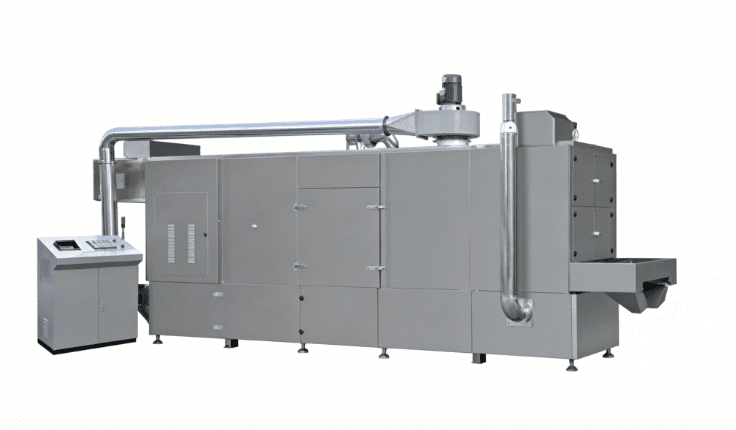
Advanced processing equipment helps manufacturers maintain consistent product quality and improve production efficiency.
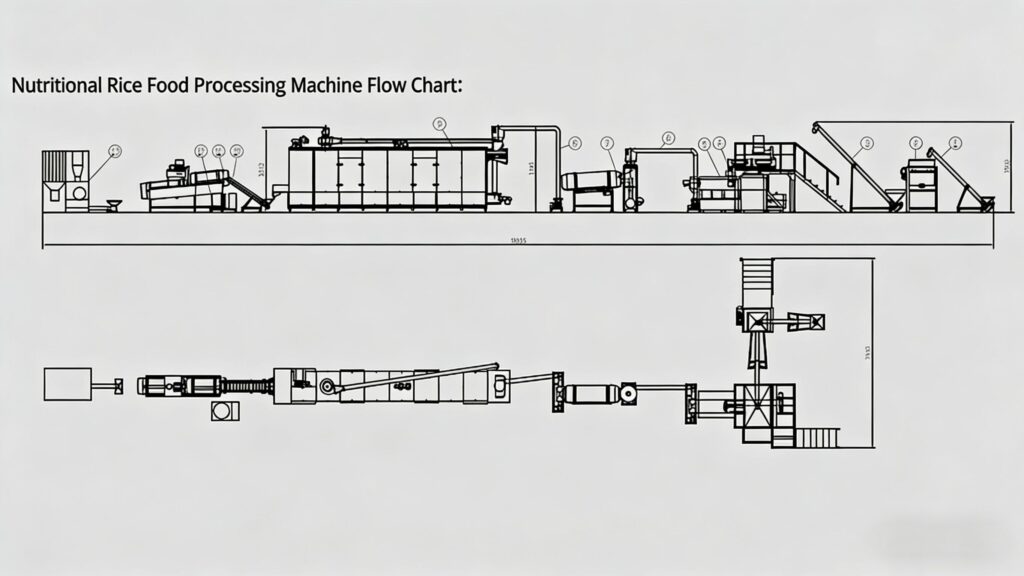
A typical dry dog food production line includes the following equipment:
- Raw material grinder: Reduces raw materials into suitable particle sizes for mixing and extrusion.
- Mixer: Blends different ingredients evenly to ensure consistent nutritional distribution.
- Conditioner: Adds steam and water to adjust the moisture and temperature of the mixture before extrusion.
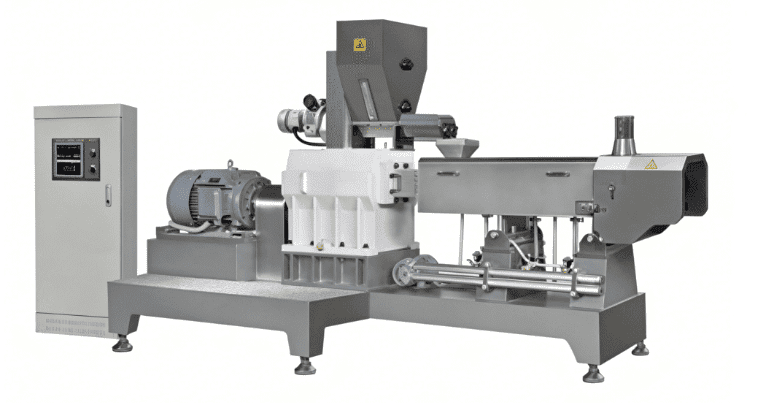
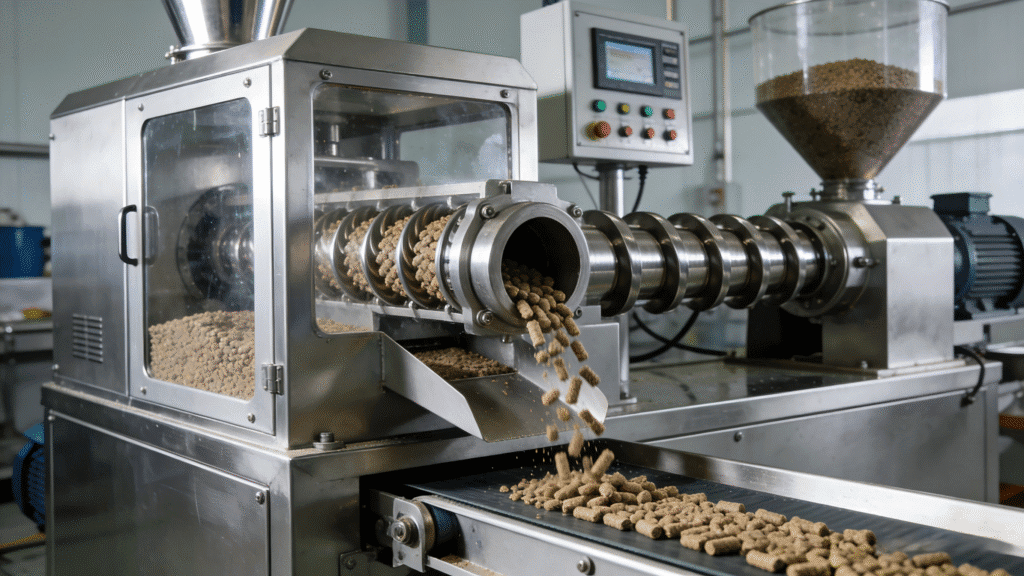
- Extruder: Uses heat, pressure, moisture, and mechanical shear to cook and shape the dog food.
- Dryer: Reduces product moisture to a suitable level for storage and packaging.
- Cooling machine: Cools the dried kibble to prevent condensation inside packaging.
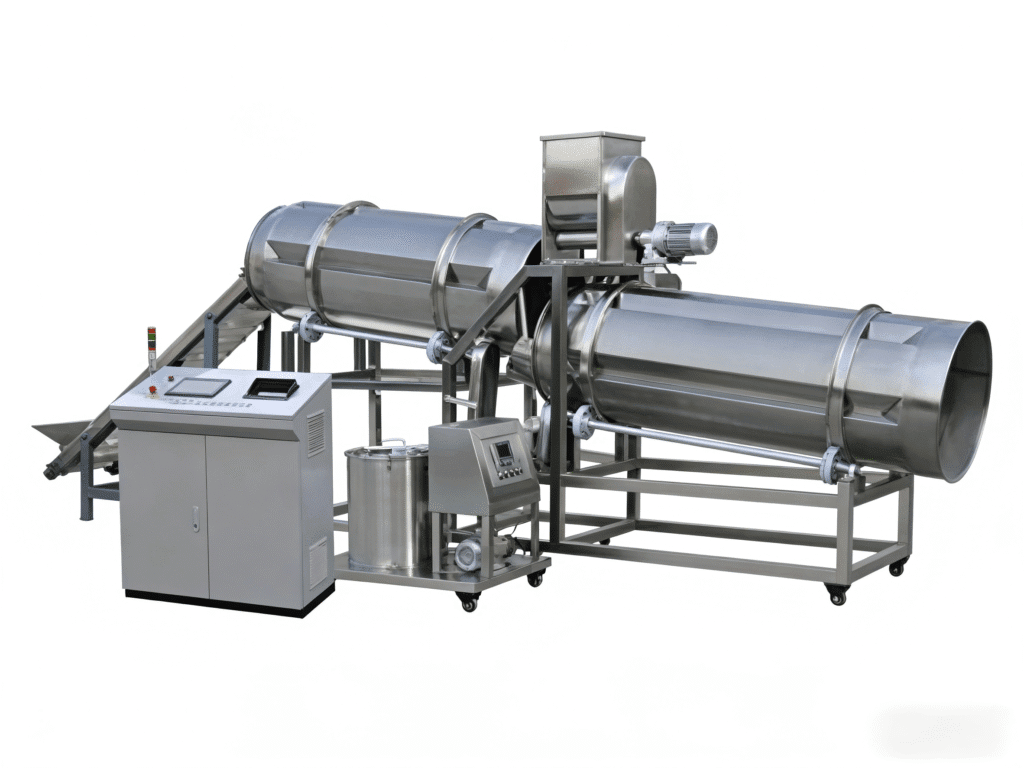
- Coating machine: Applies oils, fats, and flavor coatings to improve palatability.
- Packaging machine: Weighs and packs finished dog food into bags or other containers.
Choosing equipment with suitable capacity and configuration is essential. The production line should match the manufacturer’s target output, product specifications, and investment budget.
4. Control the Grinding and Mixing Process
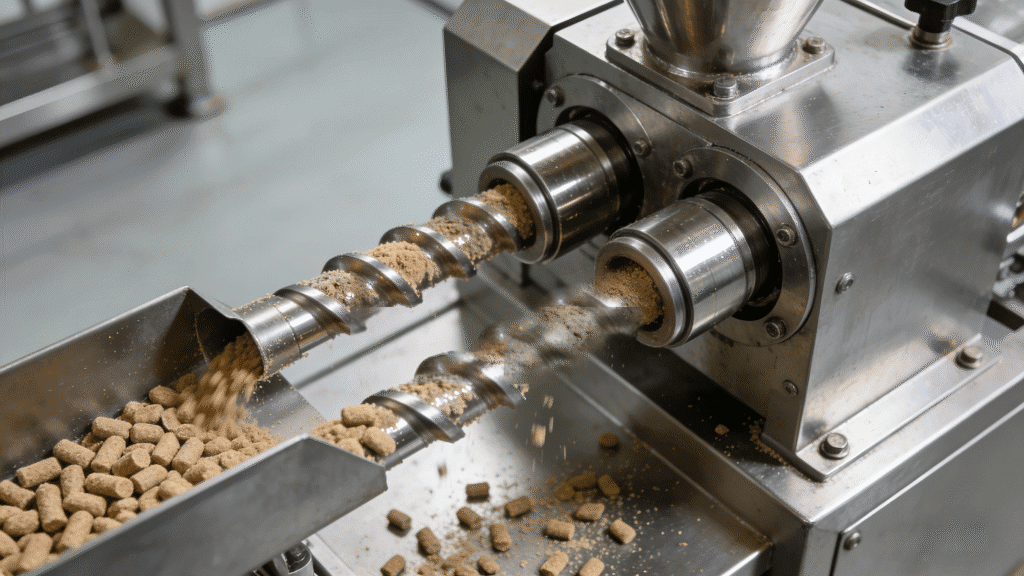
Grinding and mixing directly affect the uniformity and processing performance of dog food.
First, raw materials should be ground to an appropriate particle size. If particles are too large, the mixture may be difficult to process evenly, resulting in inconsistent kibble structure. If particles are excessively fine, energy consumption may increase and the product’s physical characteristics may be affected.
After grinding, all ingredients should be accurately weighed according to the formula and transferred into a mixer.
The mixing process should ensure that proteins, grains, fats, vitamins, minerals, and other ingredients are evenly distributed.
Poor mixing can cause nutritional differences between individual kibble pieces. Therefore, manufacturers should regularly check mixing time, ingredient proportions, and equipment performance.
5. Optimize the Extrusion Process
Extrusion is one of the most important stages in dry dog food manufacturing.
During extrusion, the mixed ingredients enter the extruder, where they are exposed to controlled heat, pressure, moisture, and mechanical shear. The material is cooked and pushed through a die to form kibble with different shapes and sizes.
Several factors influence extrusion quality:
Temperature control: Appropriate temperature settings help gelatinize starch and improve ingredient digestibility. Excessive heat may damage some heat-sensitive nutrients.
Moisture control: The moisture content of the mixture affects material flow, expansion, texture, and extrusion stability.
Screw speed: Screw speed influences mixing intensity, residence time, and mechanical energy input.
Die design: Different die openings produce different kibble shapes and sizes. Manufacturers can customize dies according to product requirements.
Feeding stability: Consistent feeding helps maintain stable pressure and product quality.
Twin-screw extruders are widely used in modern pet food production because they provide good mixing performance and flexible process control.
However, extrusion parameters should be adjusted according to the formulation and equipment specifications rather than using one fixed setting for every product.
6. Pay Attention to the Drying Process
Drying is another critical stage in producing high-quality dog food.
Freshly extruded kibble contains relatively high moisture. dog food machinery If it is not dried properly, the finished product may develop mold during storage, reducing its safety and shelf life.
The main drying considerations include:
- Drying temperature: Temperature should be suitable for the product’s size, moisture content, and formulation.
- Drying time: The drying period must be long enough to achieve the target moisture level.
- Air circulation: Uniform airflow helps prevent uneven drying.
- Product thickness: Kibble size and loading depth affect moisture removal.
- Final moisture content: Finished products should meet the manufacturer’s validated moisture and water activity specifications.
For many dry dog food products, the final moisture content is commonly around 8%–10%, although the appropriate target depends on the formulation and product design.
Manufacturers should also monitor water activity because it provides important information about microbial stability.
Overdrying should be avoided because it can increase energy consumption, cause excessive hardness, and potentially affect product quality.
7. Improve Dog Food Palatability Through Coating
Nutritional value alone does not guarantee that dogs will enjoy eating a particular product. Palatability is another important indicator of dog food quality.
After drying and cooling, manufacturers can apply appropriate oils, fats, and palatants to the kibble surface.
Common coating materials include:
- Chicken fat.
- Fish oil.
- Animal protein hydrolysates.
- Natural flavor ingredients.
- Other suitable nutritional additives.
A uniform coating improves aroma, taste, and mouthfeel. It can also increase the energy density of the finished product.
However, excessive coating may make kibble greasy, cause uneven distribution, or increase the risk of oxidation.
Therefore, manufacturers should carefully control coating temperature, spraying volume, and mixing time.
8. Strengthen Quality Control During Production
Strict quality control is necessary to ensure that every batch meets established standards.
Manufacturers should establish inspection procedures covering raw materials, intermediate products, and finished dog food.
Important quality control indicators include:
| Inspection item | Quality objective |
|---|---|
| Raw material quality | Ensure freshness and safety |
| Protein and fat content | Meet nutritional specifications |
| Moisture content | Support storage stability |
| Water activity | Control microbial growth potential |
| Kibble size and shape | Maintain product consistency |
| Hardness and texture | Meet product requirements |
| Microbiological safety | Meet applicable food safety standards |
| Oxidation stability | Maintain freshness and shelf life |
Manufacturers should also implement traceability systems to record ingredient batches, production parameters, inspection results, and packaging information.
Special attention should be paid to Salmonella control, cross-contamination prevention, and hygienic handling after the extrusion and drying stages.
9. Choose Suitable Packaging Materials
Packaging plays an important role in maintaining the quality of finished dog food.
High-quality packaging should provide good moisture resistance, oxygen protection, and sealing performance.
Common packaging options include:
- Multi-layer laminated plastic bags.
- Moisture-resistant composite bags.
- Stand-up zipper bags.
- Large-capacity industrial packaging bags.
Manufacturers should select packaging materials according to the product’s shelf life, storage conditions, and target market.
Before sealing, the dog food should be sufficiently cooled. Packaging warm kibble may cause condensation, potentially affecting product stability.
Clear labels should provide nutritional information, ingredients, feeding instructions, storage recommendations, batch numbers, and expiration dates as required by local regulations.
10. Store Finished Dog Food Properly
Even high-quality dog food can deteriorate if it is stored improperly.
Finished products should be kept in a clean, dry, well-ventilated warehouse. They should be protected from direct sunlight, excessive humidity, pests, and extreme temperatures.
Some important storage recommendations include:
- Keep packaging sealed and undamaged.
- Store products away from moisture and heat sources.
- Use a first-in, first-out inventory management system.
- Keep products off the floor and away from walls.
- Inspect stored products regularly for damaged packaging or signs of deterioration.
Proper storage helps preserve the nutritional value, aroma, texture, and safety of dog food throughout its intended shelf life.
11. Common Mistakes to Avoid When Producing Dog Food
Manufacturers may encounter several problems when establishing or operating a dog food production line.
| Common problem | Possible cause | Recommended solution |
|---|---|---|
| Uneven kibble size | Unstable feeding or cutting speed | Adjust feeding and cutter settings |
| Hard kibble | Improper moisture or extrusion conditions | Optimize formulation and extrusion parameters |
| Excessive expansion | Incorrect moisture and process settings | Adjust extrusion conditions |
| Mold during storage | Insufficient drying or poor packaging | Control moisture, water activity, and sealing |
| Poor palatability | Unsuitable formula or coating | Improve ingredients and coating formulation |
| Nutritional inconsistency | Inaccurate weighing or poor mixing | Improve batching and mixing control |
| Short shelf life | Oxidation or moisture absorption | Improve packaging and storage conditions |
Identifying these problems early helps manufacturers reduce waste, improve production efficiency, and maintain consistent quality.
12. Continuously Improve Products and Production Technology
The pet food market is constantly evolving. dog food machinery Consumers are paying more attention to ingredient quality, nutritional balance, digestibility, product safety, and specialized dietary requirements.
To remain competitive, manufacturers should continuously improve their production processes.
Some worthwhile development directions include:
- Developing grain-free or limited-ingredient formulas where nutritionally appropriate.
- Introducing different kibble shapes and sizes for different dog breeds and life stages.
- Improving protein digestibility through suitable ingredient selection and processing.
- Optimizing extrusion technology to improve product consistency.
- Developing functional formulas with scientifically supported nutritional benefits.
- Using automated production and inspection systems to improve efficiency.
Manufacturers should also conduct feeding and palatability trials where appropriate and work with qualified animal nutritionists to evaluate new formulations.
Conclusion
Producing high-quality dog food requires much more than simply mixing ingredients and processing them through an extruder. It involves careful raw material selection, balanced nutritional formulation, precise grinding and mixing, optimized extrusion, effective drying, uniform coating, strict quality inspection, and proper packaging and storage.
Every stage affects the quality of the final product. Manufacturers who pay attention to these details can produce dog food with consistent nutritional value, good palatability, stable physical characteristics, and reliable safety.
For businesses planning to enter the pet food industry, investing in suitable dog food processing equipment and establishing a standardized production system are essential steps toward long-term success.
Frequently Asked Questions (FAQs)
1. What is the most important factor in producing high-quality dog food?
There is no single determining factor. A balanced nutritional formula, safe ingredients, proper extrusion and drying conditions, and strict quality control all contribute to finished product quality.
2. What equipment is needed to produce dry dog food?
A typical production line includes a grinder, mixer, conditioner, extruder, dryer, cooler, coating machine, and packaging machine.
3. Why is extrusion important in dog food production?
Extrusion cooks the mixture, improves starch gelatinization, helps process ingredients, and forms kibble into different shapes and sizes.
4. What is the ideal moisture content of dry dog food?
Many dry dog food products have a final moisture content of approximately 8%–10%. However, the actual target should be determined through product validation and water activity testing.
5. How can manufacturers improve dog food palatability?
They can select suitable protein sources, optimize the nutritional formula, control extrusion conditions, and apply appropriate fat and palatant coatings.


