
1. Introduction
Palatability is one of the most important factors influencing the success of dog food products. Even if dog food contains high-quality ingredients and provides balanced nutrition, dogs may refuse to eat it if they do not like its smell, taste, or texture.
For dog food manufacturers, improving palatability is not only about making products more attractive to dogs. It is also an important way to increase customer satisfaction, strengthen brand competitiveness, and develop a loyal consumer base.
So, how can manufacturers improve the palatability of dog food during production? Which ingredients, processing technologies, and equipment can help make dog food more appealing?
This article introduces ten practical methods for improving dog food palatability, dog food machinery covering raw material selection, formulation design, extrusion processing, drying, coating, and quality control.
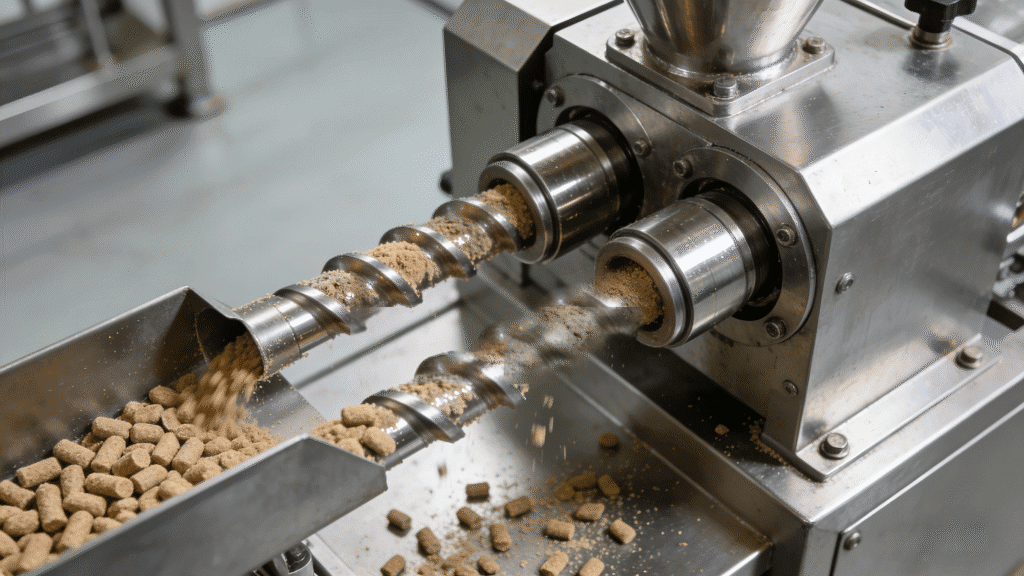
2. Choose High-Quality Animal Protein Ingredients
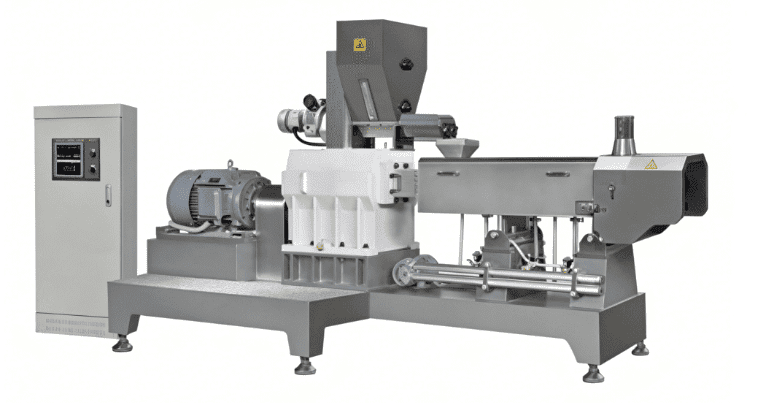
The selection of raw materials is the foundation of palatable dog food.
Dogs generally respond strongly to the aromas and flavors associated with animal-based ingredients. Therefore, using suitable animal protein sources can help improve product acceptance.
Common animal protein ingredients include:
- Chicken meal
- Beef meal
- Fish meal
- Salmon
- Duck meat
- Turkey
- Egg products
- Other suitable animal protein ingredients
Different protein sources have different aromas, flavors, and nutritional characteristics.
For example, chicken is commonly used in commercial dog food because of its relatively mild flavor and versatility. Fish ingredients can contribute distinctive aromas, while beef and duck can provide additional flavor options.
Manufacturers should select ingredients based on nutritional requirements, digestibility, freshness, and product positioning.
Using high-quality raw materials can also help reduce undesirable odors caused by oxidation, spoilage, or poor storage.
3. Optimize the Dog Food Formula
A well-designed formula plays an important role in improving dog food palatability.
Different ingredients contribute different nutritional and sensory characteristics. Manufacturers need to balance protein, fat, carbohydrates, fiber, vitamins, and minerals.
Several factors deserve particular attention.
Protein content: Appropriate animal protein ingredients can improve flavor and provide essential amino acids.
Fat content: Fat contributes to flavor, aroma, and mouthfeel. It is also an important energy source for dogs.
Carbohydrates: Ingredients such as rice, corn, and other cereals provide energy and influence extrusion performance and kibble structure.
Fiber: Appropriate fiber levels support digestive health, but excessive or poorly selected fiber may negatively affect texture and digestibility.
Nutritional balance: The formula should meet the nutritional requirements of the intended dog population rather than simply maximizing the proportion of one ingredient.
Manufacturers should conduct feeding trials and nutritional evaluations to determine whether a formula provides an appropriate balance of palatability and nutritional quality.
4. Add Natural Flavor Enhancers
Flavor enhancers are widely used in commercial dog food manufacturing.
They can help improve the aroma and taste of finished products, making them more attractive to dogs.
Common flavor-enhancing ingredients include:
- Chicken liver digest
- Hydrolyzed animal protein
- Fish protein hydrolysates
- Meat broth concentrates
- Yeast extracts
- Selected natural palatants
Hydrolyzed proteins are particularly useful because protein molecules are broken down into smaller peptides and amino acids,dog food machinery which can contribute desirable savory characteristics.
Manufacturers can apply suitable palatants during formulation or through surface coating after extrusion and drying.
However, the selection and dosage of flavor enhancers should follow supplier recommendations and applicable regulations.
5. Optimize Fat and Oil Coating

Fat and oil coating is one of the most practical ways to improve the palatability of dry dog food.
During extrusion, the raw materials are processed under heat, pressure, and mechanical shear. After extrusion and drying, the finished kibble can enter a coating machine.
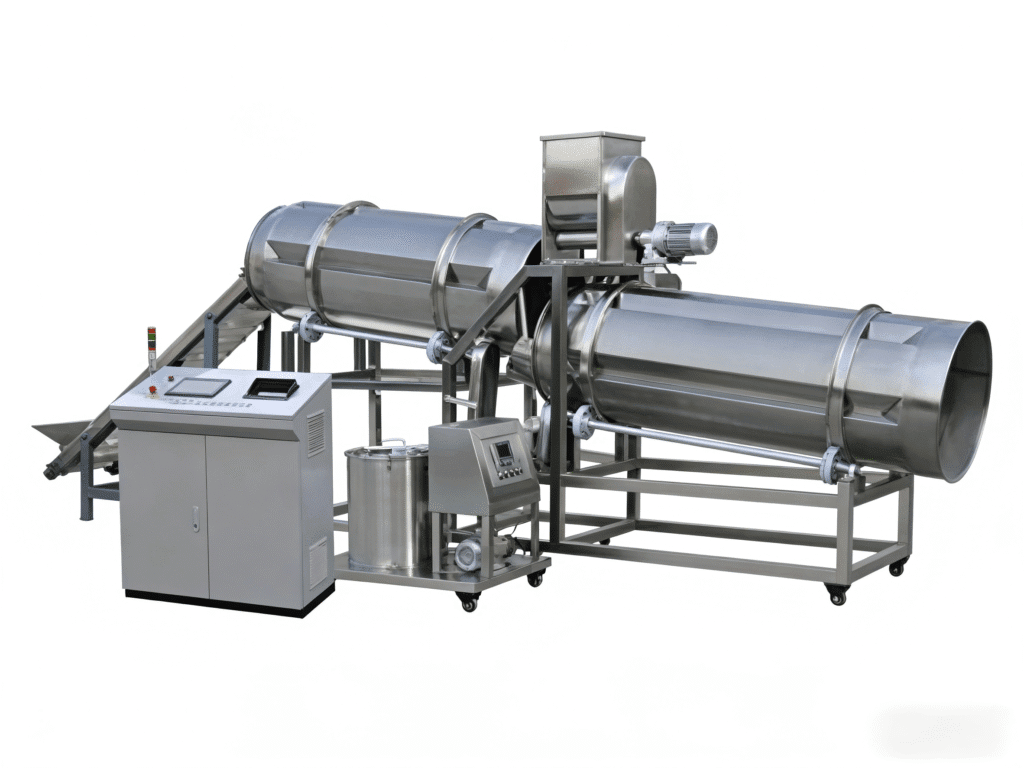
The coating system sprays or distributes selected oils and fats over the surface of the kibble.
Common coating materials include:
- Chicken fat
- Fish oil
- Other suitable animal fats
- Selected vegetable oils
The coating process offers several benefits:
- Improves the aroma and flavor of dog food.
- Enhances mouthfeel.
- Provides additional dietary energy.
- Helps distribute fat-soluble nutritional ingredients.
- Allows manufacturers to develop different flavor profiles.
However, excessive coating may make the kibble greasy, cause packaging problems, or reduce storage stability.
Therefore, manufacturers need to control coating rates and monitor fat oxidation during storage.
6. Control Extrusion Temperature and Processing Conditions
Extrusion is one of the most widely used processing methods for producing commercial dry dog food.
During extrusion, raw materials undergo heating, moisture conditioning, pressure changes, and mechanical shear.
These processing conditions influence the finished product’s texture, expansion, aroma, and digestibility.
If the extrusion temperature is too high, dog food machinery excessive thermal treatment may damage heat-sensitive nutrients and produce undesirable flavors.
If the temperature or cooking intensity is too low, the ingredients may not be adequately cooked, potentially affecting starch gelatinization and product quality.
To improve palatability, manufacturers should pay attention to:
- Barrel temperature.
- Screw speed.
- Moisture content.
- Steam addition.
- Material feeding rate.
- Residence time.
- Die pressure and product expansion.
The objective is to achieve appropriate cooking and a consistent product structure while preserving desirable ingredient characteristics.
7. Improve the Texture and Shape of Dog Food
Taste is not the only factor influencing dog food acceptance. Texture, hardness, size, and shape can also affect how easily dogs pick up and chew their food.
Different dogs may have different preferences depending on their body size, age, and feeding habits.
Manufacturers can improve product appeal by adjusting the following characteristics.
Kibble size: Smaller kibble may be more suitable for small dogs, while larger pieces may be appropriate for some medium and large dogs.
Hardness: Dog food should have a suitable texture that is neither excessively hard nor too fragile.
Expansion: Appropriate expansion can create a porous structure and influence the product’s chewing characteristics.
Shape: Round, triangular, square, and other customized shapes can help manufacturers differentiate their products.
Surface texture: A consistent surface structure can improve coating uniformity and product appearance.
Manufacturers should evaluate these characteristics through product testing and feeding trials.
8. Optimize the Drying Process
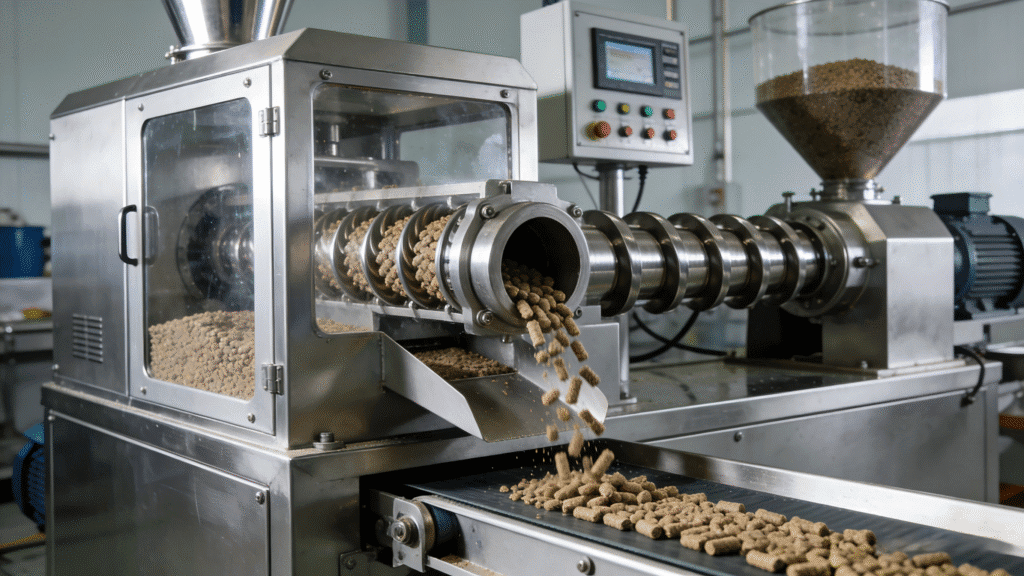
Drying is an essential stage in dry dog food manufacturing.
After extrusion, the kibble contains excess moisture and must be dried to achieve the required final moisture content and water activity.
However, improper drying can negatively affect palatability.
If the drying temperature is excessively high, the product may develop undesirable aromas or become too hard.
If drying is insufficient, the dog food may become vulnerable to microbial growth and spoilage during storage.
To improve the final product, manufacturers should:
- Control drying temperature according to the formulation.
- Maintain uniform hot-air circulation.
- Adjust drying time according to kibble size.
- Avoid excessive moisture loss.
- Monitor final moisture content and water activity.
- Cool the product properly before coating and packaging.
A well-controlled drying process helps maintain consistent texture, flavor, and storage stability.
9. Use Appropriate Flavor Coating Technologies
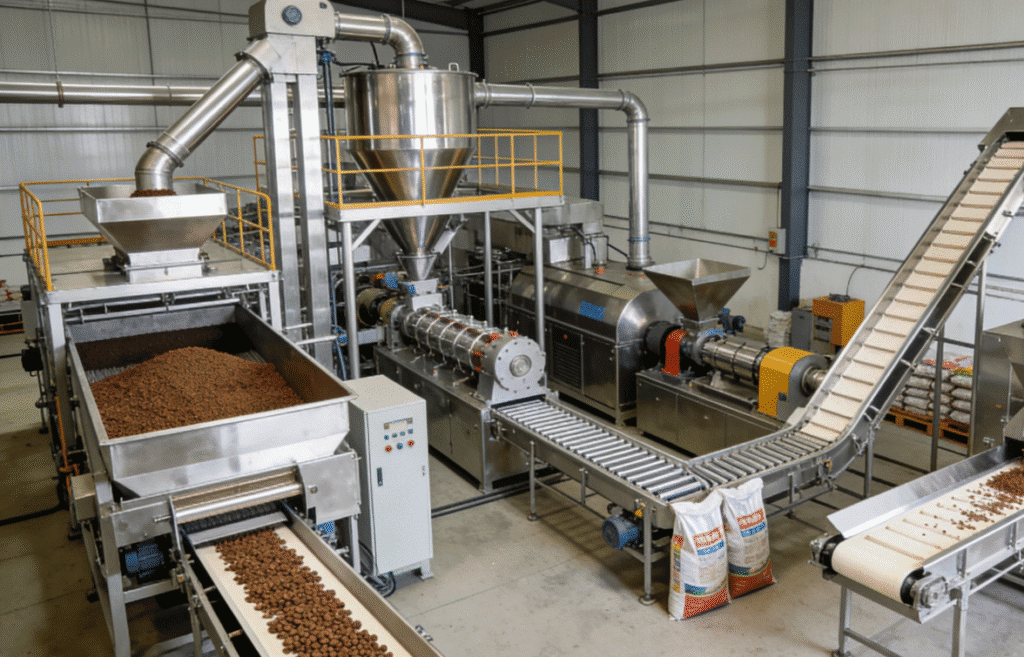
In addition to fat coating, manufacturers can use specialized coating systems to apply liquid or powdered flavor ingredients.
This is particularly useful when producing different flavors of dog food on the same production line.
For example, manufacturers may develop chicken-flavored, beef-flavored, fish-flavored, and liver-flavored products.
Common coating materials include:
- Liquid meat palatants.
- Hydrolyzed protein solutions.
- Yeast extracts.
- Suitable flavor powders.
- Nutritional oils and additives.
A uniform coating system ensures that flavoring ingredients are distributed consistently across the product surface.
Depending on the coating formulation, manufacturers may use spraying systems, rotating drums, or vacuum coating equipment.
The selected coating technology should be compatible with the physical properties of the ingredients and the required production capacity.
10. Prevent Fat Oxidation and Maintain Freshness

Even well-formulated dog food can lose its appeal if it is not stored properly.
Fat oxidation is one of the major causes of undesirable odors and flavor deterioration in dry dog food.
Exposure to oxygen, heat, light, and moisture can accelerate oxidation, particularly in products containing unsaturated fats.
Manufacturers should take the following measures:
- Select fresh and high-quality fats and oils.
- Use permitted antioxidants where appropriate.
- Control storage temperature and humidity.
- Minimize unnecessary exposure to air.
- Use packaging materials with suitable oxygen and moisture barriers.
- Seal packages properly.
- Conduct regular shelf-life and oxidation testing.
Proper packaging helps preserve the aroma, flavor, and nutritional quality of dog food throughout distribution and storage.
11. Improve Palatability Through Different Product Formulations
\
Developing different flavors and product formulations is another effective strategy for improving market appeal.
Different dogs may respond differently to specific ingredients and flavor profiles.
Manufacturers can consider developing:
Chicken-flavored dog food: A widely used formulation suitable for many commercial dry dog food products.
Beef-flavored dog food: Provides a distinctive meat flavor and can be used in premium formulations.
Fish-flavored dog food: Fish ingredients contribute characteristic aromas and can provide valuable fatty acids.
Lamb-flavored dog food: Offers another protein option for product diversification.
Mixed-meat dog food: Combines different animal protein ingredients to develop more complex flavor profiles.
However, manufacturers should avoid choosing formulas based only on flavor appeal. Nutritional completeness, ingredient safety, digestibility, and the intended dog’s dietary requirements must remain the priorities.
12. Essential Equipment for Improving Dog Food Palatability
The quality of dog food depends not only on ingredients but also on the performance of production equipment.
A well-designed production line helps manufacturers maintain stable processing conditions and consistent product quality.
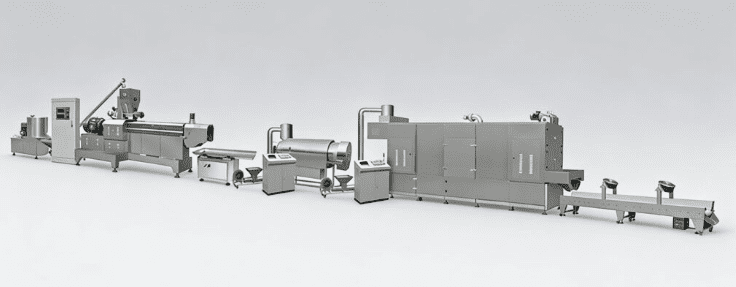
The following equipment is commonly used in extruded dry dog food production:
| Equipment | Main Function |
|---|---|
| Grinder | Produces uniform raw material particles |
| Mixer | Ensures even distribution of ingredients |
| Conditioner | Adjusts moisture and temperature |
| Twin-screw extruder | Cooks and shapes dog food |
| Cutting machine | Controls kibble dimensions |
| Dryer | Reduces excess moisture |
| Oil coating machine | Applies fats and oils |
| Flavor coating system | Adds palatants and flavor ingredients |
| Cooler | Reduces product temperature |
| Packaging machine | Protects finished products |
Among these machines, the extruder, dryer, and coating system play particularly important roles in determining the final texture, aroma, and palatability of dry dog food.
Manufacturers should select equipment according to their production capacity, formulation, and product requirements.
13. How to Evaluate Dog Food Palatability
Improving palatability requires more than simply adding flavor enhancers. Manufacturers should establish a scientific evaluation system to determine whether dogs actually prefer the finished products.
Several methods can be used.
13.1 Two-Bowl Preference Tests
In a two-bowl test, dogs are offered two different food samples at the same time.
Researchers record the amount of each sample consumed and calculate the relative preference.
This method can help manufacturers compare different formulations, flavor coatings, and processing conditions.
13.2 First-Choice Testing
Manufacturers can observe which sample a dog approaches or eats first.
First-choice behavior provides useful information about the initial attractiveness of different products.
13.3 Consumption Evaluation
The amount of food consumed over a specified period can help determine whether a product is accepted by dogs.
However, feeding tests should be properly designed, repeated, and conducted under suitable conditions.
13.4 Product Quality Testing
In addition to feeding trials, manufacturers should examine:
- Aroma and flavor consistency.
- Kibble hardness.
- Product appearance.
- Moisture content.
- Water activity.
- Fat oxidation.
- Nutritional composition.
- Microbiological safety.
Combining feeding trials with laboratory testing provides a more reliable understanding of overall product quality.
14. Conclusion
Improving dog food palatability is a comprehensive process involving raw material selection, formula optimization, extrusion technology, drying conditions, fat coating, flavor enhancement, and packaging.
For manufacturers producing commercial dry dog food, several measures can make a significant difference:
- Choose high-quality animal protein ingredients.
- Develop nutritionally balanced formulations.
- Use suitable natural palatants.
- Optimize extrusion and drying conditions.
- Apply oils and flavor coatings uniformly.
- Control kibble size, hardness, and texture.
- Prevent fat oxidation through proper storage and packaging.
- Conduct systematic palatability tests.
Among these measures, the combination of a well-designed formulation, stable extrusion processing, and effective coating technology is particularly important.
Ultimately, high-quality dog food should not only be nutritious but also appealing, safe, and consistent. By continuously improving production technology and evaluating actual feeding performance, manufacturers can develop dog food products that better satisfy dogs and their owners.


