
A twin-screw extruder is one of the most important pieces of equipment in modern food processing. It is widely used to produce extruded snacks, breakfast cereals, pet food, fish feed, textured soy protein, and many other products. During continuous production, raw material residues, starch, protein, oil, and other ingredients can gradually accumulate inside the screw barrel, screws, die head, and feeding system.
If the equipment is not cleaned properly, these residues may affect product quality, cause unpleasant odors, create hygiene risks, and even reduce the service life of the machine.
Therefore, regular cleaning is essential for maintaining the performance and hygiene of a twin-screw extruder.
So, how should you clean a twin-screw extruder correctly? This article introduces the main cleaning steps, important precautions, and maintenance tips to help manufacturers keep their equipment in good working condition.
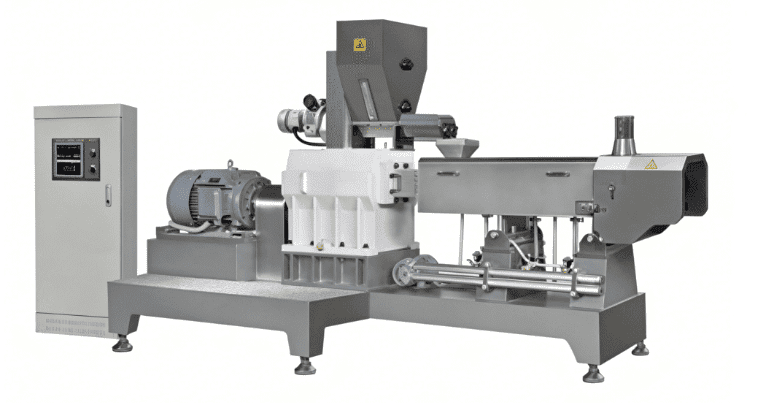
1. Why Is It Important to Clean a Twin-Screw Extruder Regularly?
Cleaning is not simply about removing visible dirt. It is an important part of food safety management and equipment maintenance.
There are several reasons why regular cleaning is necessary.
1.1 Prevent Raw Material Residue Accumulation
During extrusion, materials are subjected to heat, pressure, friction, and mechanical mixing. Some materials may stick to the screws, barrel walls, and die openings.
If these residues are not removed promptly, they may harden and become increasingly difficult to clean.
1.2 Maintain Product Quality
Old material residues can mix with newly processed ingredients, resulting in inconsistent color, flavor, texture, and appearance.
For factories producing different types of extruded products, cleaning is particularly important when changing product formulations or flavors.
1.3 Reduce Food Safety Risks
Accumulated food residues may become a source of microbial contamination, especially when moisture remains inside the equipment.
Proper cleaning and sanitation help reduce contamination risks and maintain a hygienic production environment.
1.4 Extend Equipment Service Life
Material accumulation can interfere with screw rotation, affect material flow, and increase mechanical resistance.
Regular cleaning and inspection help identify potential problems before they develop into serious equipment failures.
2. Prepare the Necessary Cleaning Tools and Materials
Before cleaning a twin-screw extruder, operators should prepare suitable cleaning tools and materials.
Common cleaning supplies include:
- Food-grade cleaning brushes.
- Non-metallic scrapers.
- Clean cloths and wipes.
- Suitable food-processing detergents.
- Clean water, where permitted by the equipment design.
- Appropriate protective gloves and safety equipment.
- Food-grade lubricants for designated lubrication points.
- Cleaning and sanitation records.
For difficult-to-remove residues, suitable cleaning agents may be used according to the equipment manufacturer’s recommendations.
Avoid using sharp metal tools or abrasive materials that could scratch the screws, barrel, or other precision components.
It is also important to understand which parts can be cleaned with water and which parts must remain dry.
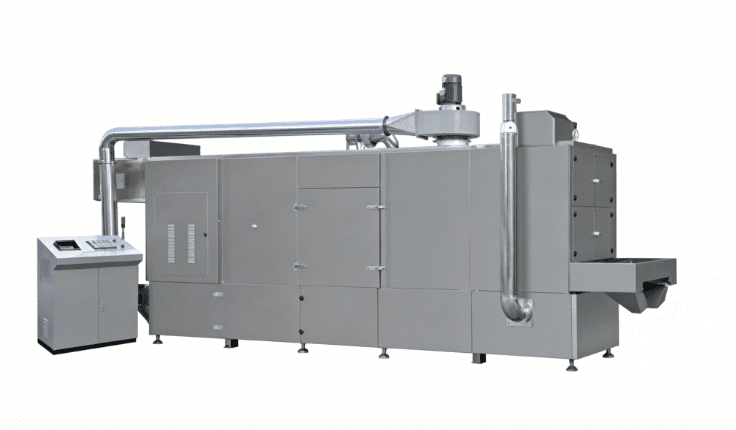
3. Shut Down the Machine and Ensure Safety
Before beginning any cleaning work, the twin-screw extruder must be shut down safely.
This is one of the most important steps because the equipment contains rotating components, high-temperature surfaces, and electrical systems.
Follow these procedures:
- Stop feeding raw materials into the machine.
- Follow the manufacturer’s shutdown procedure to clear remaining material where appropriate.
- Stop the screw drive and heating system.
- Disconnect the power supply.
- Apply lockout/tagout procedures to prevent accidental startup.
- Allow the barrel, screws, and die head to cool to a safe temperature.
- Release any remaining pressure before opening the equipment.
Operators should never attempt to clean rotating screws or remove components while the machine is running.
Proper personal protective equipment should also be worn throughout the cleaning process.
4. Clean the Feeding System
The feeding system is the first area that should be inspected and cleaned.
During production, flour, starch, powdered ingredients, and other raw materials may accumulate in the hopper, feeder, and conveying components.
The cleaning procedure generally includes:
Step 1: Empty the hopper.
Remove all remaining raw materials from the feeding hopper.
Step 2: Remove loose residues.
Use a suitable brush or vacuum designed for food-processing environments to remove accumulated powders and particles.
Step 3: Clean the feeder.
Inspect the feeding screw and surrounding surfaces. Remove any material deposits that could affect feeding accuracy.
Step 4: Inspect the connections.
Check the feeding outlet and connections to the extrusion barrel for accumulated residues.
Ensure that all components are completely dry before restarting production if water-based cleaning is permitted.
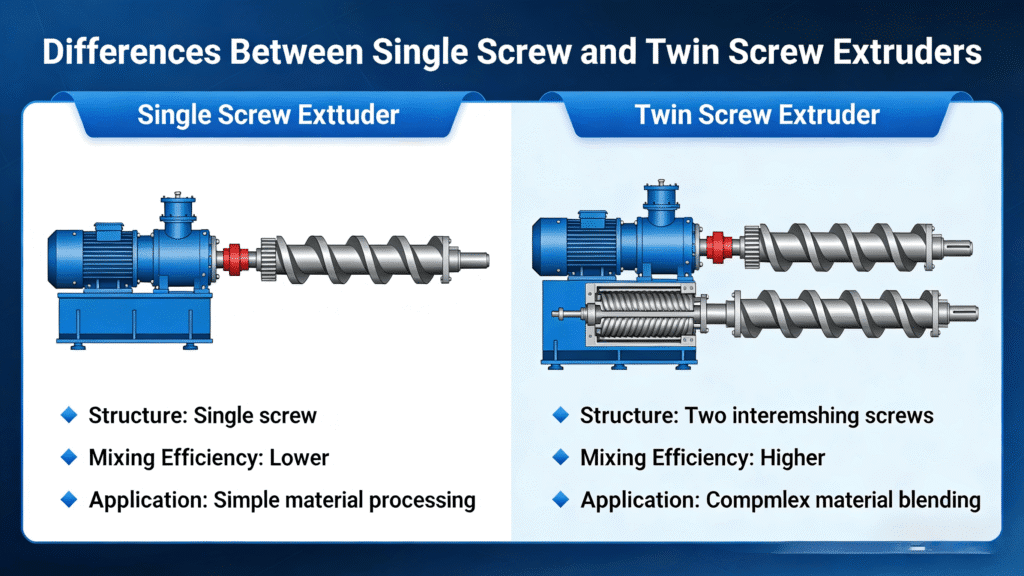
5. Clean the Twin Screws and Barrel
The screws and barrel are the core components of a twin-screw extruder. Their cleanliness directly affects material conveying, mixing, cooking, and extrusion performance.
Depending on the machine design, screws may be removable for cleaning and inspection.
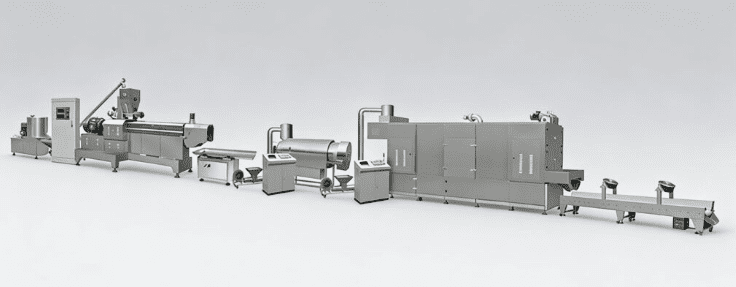
5.1 Remove the Screws According to the Manufacturer’s Instructions
If the machine design allows screw removal, operators should follow the manufacturer’s disassembly procedure.
Use the designated tools and lifting equipment when necessary.
Avoid hitting, dropping, or forcing the screws, as this may damage their surfaces or affect their alignment.
5.2 Remove Material Residues
Use suitable non-metallic scrapers and brushes to remove accumulated food residues from the screw elements.
Pay special attention to:
- Screw flights.
- Kneading blocks.
- Shaft connections.
- Gaps between screw elements.
- Areas where material tends to accumulate.
For hardened residues, use an approved cleaning method rather than applying excessive mechanical force.
5.3 Clean the Barrel Interior
After removing the screws, inspect the inner surface of the barrel.
Remove any remaining material deposits using tools approved by the manufacturer.
Check the barrel for unusual wear, scratches, corrosion, or other visible damage.
5.4 Inspect the Screws
During cleaning, carefully inspect the screw elements for wear, deformation, cracks, and other abnormalities.
If any damage is found, consult a qualified technician before restarting the machine.
6. Clean the Die Head and Molds
The die head determines the shape and size of extruded products. It is another area where material residues can accumulate.
For example, when producing puffed snacks, corn-based products, or pet food, residues may become trapped around die openings.
A suitable cleaning procedure includes:
- Remove the die head according to the manufacturer’s instructions.
- Remove loose material residues.
- Clean the die openings using suitable brushes or approved cleaning tools.
- Inspect the holes for blockages.
- Check the die surface for wear or damage.
- Dry all cleaned components thoroughly before reassembly.
Never use tools that may enlarge, deform, or scratch the die openings.
Even small changes in die geometry can influence product shape and extrusion performance.
7. Clean the Cutting System
Many twin-screw extruders are equipped with a cutting system used to produce products of different lengths and shapes.
During production, sticky materials may accumulate on the cutting blades and surrounding components.
When cleaning the cutting system:
- Disconnect the power supply completely.
- Remove accumulated product residues.
- Clean the cutting blades using suitable tools.
- Check the blade edges for wear or damage.
- Inspect the blade mounting and fastening components.
- Confirm that the cutting assembly is correctly installed before restarting.
If the blades are damaged or excessively worn, they should be replaced according to the manufacturer’s recommendations.
8. Clean the Exterior and Auxiliary Components
In addition to the main extrusion system, other equipment surfaces should also be cleaned.
These may include:
- Machine housing.
- Control panel exterior.
- Feeding conveyors.
- Product discharge areas.
- Cooling systems.
- Supporting frames.
- Surrounding floors and work surfaces.
Use a slightly damp cloth or an approved cleaning method for external surfaces.
Never spray water directly onto motors, electrical cabinets, control panels, sensors, or other sensitive electrical components.
If the extruder uses water-cooling systems, inspect the relevant pipelines and connections according to the manufacturer’s maintenance instructions.
9. Dry and Reassemble the Equipment
After cleaning, all components must be inspected and dried before reassembly.
This step is particularly important because residual moisture can cause corrosion, contamination, or problems during the next production run.
Follow these procedures:
Check component cleanliness: Confirm that all visible material residues and cleaning-agent traces have been removed.
Dry the components: Use clean, suitable drying methods to eliminate remaining moisture.
Inspect important parts: Check screws, barrel surfaces, die openings, cutting blades, and fastening components.
Reassemble correctly: Install the screws, die head, and other removable components according to the manufacturer’s instructions.
Check lubrication: Apply appropriate food-grade lubricants only to designated lubrication points.
Perform a final inspection: Make sure all tools and cleaning materials have been removed from the equipment.
Before production resumes, conduct the required startup checks and verify that the machine operates normally.
10. Important Precautions When Cleaning a Twin-Screw Extruder
Although cleaning procedures may appear straightforward, improper operation can damage the machine or create safety risks.
Manufacturers should pay attention to the following points.
Avoid Cleaning While the Machine Is Running
Never put your hands, brushes, or other tools into moving equipment.
Always shut down the machine and apply appropriate energy isolation procedures before cleaning.
Avoid Excessive Water Use
Not every component of a twin-screw extruder is waterproof.
Water entering motors, electrical systems, bearings, or other sensitive areas may cause equipment damage.
Always follow the equipment manufacturer’s cleaning requirements.
Avoid Sharp Metal Scrapers
Sharp tools may scratch the screw elements, barrel surfaces, and die openings.
Use appropriate non-metallic cleaning tools whenever possible.
Do Not Mix Cleaning Chemicals
Different cleaning chemicals may react with each other or produce harmful substances.
Follow the cleaning chemical manufacturer’s instructions and applicable workplace safety requirements.
Ensure Complete Drying
Residual water and cleaning agents may affect subsequent production.
Make sure all relevant components are clean and dry before restarting the machine.
Follow the Equipment Manual
Different twin-screw extruders have different structures and cleaning requirements.
The manufacturer’s instructions should always take priority over general cleaning recommendations.
11. How Often Should a Twin-Screw Extruder Be Cleaned?
Cleaning frequency depends on production materials, operating hours, product types, and the equipment manufacturer’s recommendations.
A practical cleaning schedule may include the following:
| Cleaning frequency | Main tasks |
|---|---|
| After each production run | Remove remaining materials and clean accessible product-contact surfaces |
| When changing product formulations | Perform appropriate cleaning to prevent cross-contact |
| Daily | Clean the feeding system, discharge area, and surrounding surfaces |
| Weekly or according to operating conditions | Inspect and clean accessible screw, die, and barrel areas as required |
| During scheduled maintenance | Conduct a more thorough inspection and cleaning of removable components |
For food factories, cleaning frequency should also be based on a documented sanitation program and the risks associated with different products.
For example, when switching between products containing different allergens, additional validated cleaning procedures may be necessary.
12. Establish a Standardized Cleaning and Maintenance System
For factories that operate twin-screw extruders regularly, establishing a standardized cleaning system can improve equipment management.
A complete system should include:
- Written cleaning procedures.
- Clearly assigned cleaning responsibilities.
- Approved cleaning tools and chemicals.
- Defined cleaning frequencies.
- Equipment inspection records.
- Cleaning verification procedures.
- Regular maintenance schedules.
- Employee training.
Operators should record the cleaning date, equipment identification, cleaning activities, inspection results, and any abnormalities.
This makes it easier to identify recurring problems and maintain consistent hygiene standards.
Conclusion
Cleaning a twin-screw extruder is an essential part of food production management. Regular and proper cleaning helps prevent material accumulation, maintain product quality, reduce contamination risks, and extend equipment service life.
The main cleaning areas include the feeding system, twin screws, barrel, die head, cutting system, and external surfaces.
Before cleaning, operators must shut down the machine, isolate all energy sources, and allow hot components to cool. During cleaning, they should use appropriate tools, avoid damaging precision components, and follow the manufacturer’s instructions.
Finally, all cleaned parts should be thoroughly inspected, dried, and correctly reassembled before production resumes.
By establishing standardized cleaning procedures and maintenance schedules, food manufacturers can keep their twin-screw extruders in good working condition and achieve more stable, efficient, and hygienic production.
Add a clear cleaning workflowSeparate dry and wet cleaning methods


