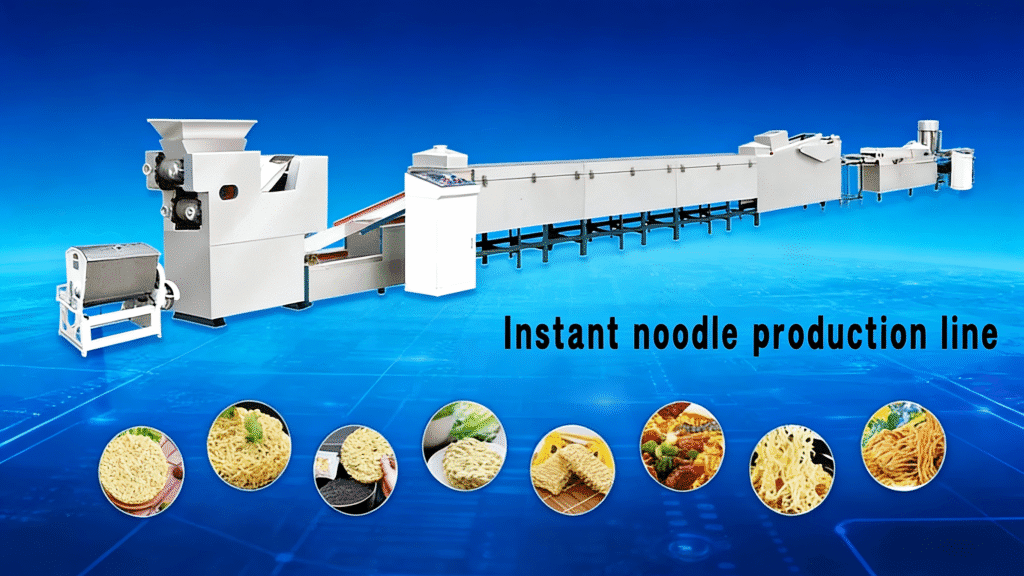
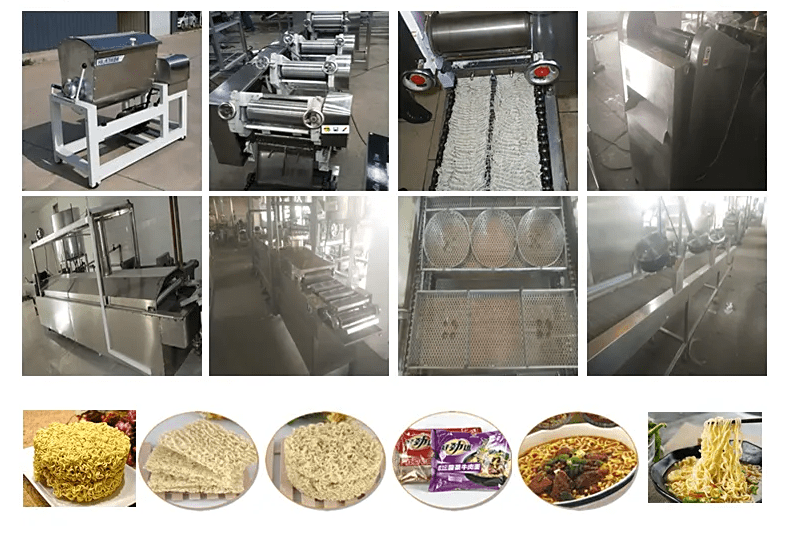
Proper cleaning of a fried instant noodle production line is not optional—it is essential for food safety, product quality, equipment longevity, and regulatory compliance. Instant noodle production line Unlike many other food processes, noodle production involves sticky dough, hot oil, steam, and starch residues, each requiring different cleaning methods.
This guide provides a systematic, step-by-step approach to cleaning each major component of a small-scale line.

Why Cleaning Matters
| Consequence of Poor Cleaning | Impact |
|---|---|
| Mold and bacterial growth | Product recalls, customer illness, legal liability |
| Rancid oil buildup | Off-flavors, reduced shelf life |
| Dried dough residue | Clogs dies and cutters, inconsistent noodle shapes |
| Cross-contamination | Allergen risks (e.g., gluten, egg, sesame) |
| Equipment corrosion | Expensive repairs, shorter machine life |
| Pest attraction | Rodents and insects in production area |
Cleaning Frequency Summary
| Component | Cleaning Frequency | Typical Time Required |
|---|---|---|
| Dough mixer | After every batch | 10–15 minutes |
| Sheeter & slitter | Every 4–8 hours (end of shift) | 20–30 minutes |
| Steamer | Daily (end of shift) | 15–20 minutes |
| Fryer | Daily (hot oil filtration) + weekly (full cleaning) | 30–60 minutes (daily), 2–3 hours (weekly) |
| Cooling conveyor | Daily | 10–15 minutes |
| Packaging machine | Daily (surfaces), weekly (internal) | 10–20 minutes |
| Entire line (deep clean) | Weekly or bi-weekly | 3–6 hours |
Part 1: Safety First – Before Any Cleaning
Required Personal Protective Equipment (PPE):
- Heat-resistant gloves (for fryer cleaning)
- Chemical-resistant gloves (for detergent handling)
- Safety goggles (to protect from splashing oil or chemicals)
- Non-slip waterproof boots
- Apron (waterproof or oil-resistant)
- Face mask (when using strong detergents)
Lockout/Tagout (LOTO) Procedure:
- Turn off the main power supply to the entire line.
- Unplug each machine or lock the circuit breaker.
- Post a visible sign: “CLEANING IN PROGRESS – DO NOT OPERATE.”
- Allow hot components (fryer, steamer) to cool to safe temperatures before touching.
Critical Temperature Safety:
| Component | Safe cleaning temperature |
|---|---|
| Fryer oil | < 60°C (140°F) – warm but not burning |
| Steamer surfaces | < 50°C (120°F) |
| All other parts | Room temperature |
Part 2: Cleaning Tools & Agents
Recommended Tools:
| Tool | Purpose |
|---|---|
| Soft nylon brushes (various sizes) | Scrubbing dough residue without scratching |
| Silicone scrapers | Removing dough from mixer bowls |
| Non-abrasive sponges | General surface cleaning |
| High-pressure water sprayer (optional) | Rinsing conveyors and tanks |
| Microfiber cloths | Drying and final polishing |
| Small brushes (toothbrush size) | Cleaning dies, slitter grooves, and crevices |
| Squeegee | Removing water from floors |
Cleaning Agents:
| Agent | Use | Concentration (Typical) |
|---|---|---|
| Food-grade detergent | Removing dough, starch, and protein residues | 1–3% in warm water |
| Degreaser (food-safe) | Removing oil buildup from fryer surfaces | As per manufacturer |
| Sanitizer (e.g., chlorine or quat) | Killing bacteria after cleaning | 50–200 ppm chlorine |
| Vinegar (acetic acid 5%) | Removing mineral scale from steamer | 1 part vinegar : 4 parts water |
| Hot water (60–70°C) | Rinsing and initial degreasing | N/A |
What NOT to Use:
- Steel wool or metal scrapers (scratch stainless steel, leading to rust)
- Household bleach (too harsh, leaves residues)
- Abrasive powders (damage seals and gaskets)
- Solvents like acetone or gasoline (fire hazard, toxic residues)
Part 3: Component-by-Component Cleaning Procedures
1. Dough Mixer
Frequency: After every batch or every 4 hours of production. Instant noodle production line
Steps:
- Remove any remaining dough from the bowl using a silicone scraper.
- Fill the mixer bowl with warm water (40–50°C) and add food-grade detergent (1–2%).
- Run the mixer for 3–5 minutes to loosen dried dough.
- Drain the water. Use a soft brush to scrub all interior surfaces, including the shaft and blades.
- Rinse thoroughly with clean water until no soap bubbles remain.
- Sanitize by spraying or wiping with a food-safe sanitizer solution.
- Leave the mixer lid open to air-dry completely before next use.
Special attention areas: Shaft seals, blade hinges, lid gaskets.
2. Sheeter (Calendar Rollers) & Slitter
Frequency: Every 8 hours (end of shift).
Steps:
- Remove any loose dough pieces from rollers and guides.
- Wipe rollers with a damp, non-abrasive cloth to remove dried dough.
- Never use water jets on the rollers—water can enter bearings and cause rust.
- For stubborn dough: Apply a small amount of warm water with a cloth, let it soften for 1–2 minutes, then wipe.
- Clean the slitter blades:
- Remove the slitter unit if possible (check your machine manual).
- Soak blades in warm soapy water for 10 minutes.
- Use a small brush to clean between each blade.
- Rinse, dry thoroughly, and reinstall.
- Lightly oil bearings and moving parts with food-grade lubricant (not cooking oil).
Special attention areas: Roller gaps, blade edges, dough guides.
3. Steamer (Pre-cooking Tunnel)
Frequency: Daily (end of shift).
Steps:
- Allow the steamer to cool below 50°C.
- Remove and empty any drip trays.
- Open inspection doors. Scrape off any cooked dough residue from the conveyor belt and walls.
- Descale the steam nozzles:
- Soak nozzle tips in a vinegar-water solution (1:4) for 15 minutes.
- Use a small brush or toothpick to clear any blocked holes.
- Wipe all interior stainless steel surfaces with a detergent-dampened cloth.
- Rinse with clean water (use a spray bottle, not a hose).
- Run the steamer empty for 2–3 minutes with doors open to dry the interior.
- Clean water filters and drain traps.
Special attention areas: Steam nozzles, conveyor belt underside, drain points.
4. Continuous Fryer (Most Critical)
The fryer requires two levels of cleaning: daily hot oil maintenance and weekly full draining and scrubbing.
Daily Cleaning (Hot Oil Filtration) – 30 minutes
Purpose: Remove loose crumbs and sediment without draining all oil.
Steps:
- Lower the oil temperature to 60°C (still fluid but safe).
- Turn off heating elements.
- Run the fryer’s built-in filtration system (if equipped):
- Pump oil through a fine mesh filter (50–100 microns).
- Collect filtered oil in a clean holding tank.
- If no built-in filter, use a portable oil filter cart or fine-mesh skimmer:
- Skim floating debris from the oil surface.
- Pump oil through a filter bag into a temporary container.
- Brush the fryer bottom to loosen settled sediment, then filter again.
- Return the filtered oil to the fryer.
- Top up with fresh oil as needed.
Weekly Deep Cleaning (Full Draining) – 2–3 hours
Purpose: Remove polymerized oil (varnish) and carbon deposits.
Steps:
- Heat oil to 60°C for fluidity, then pump or drain all oil into clean storage drums (for reuse) or waste containers.
- Allow the fryer to cool completely (< 40°C).
- Fill the fryer with hot water (70°C) and add a food-grade fryer cleaner (degreaser) at the manufacturer’s recommended concentration.
- Circulate or agitate the solution for 20–30 minutes. Use a long-handled nylon brush to scrub all interior surfaces: bottom, walls, heating elements, and conveyor chain.
- Drain the cleaning solution.
- Rinse thoroughly with clean hot water (2–3 times) until no foam or residue remains.
- Inspect heating elements: Remove any baked-on carbon with a soft brush or plastic scraper (never metal).
- Clean the fryer exhaust hood and ductwork (grease buildup is a fire hazard).
- Refill with fresh oil or the previously drained filtered oil.
Special attention areas: Heating elements, thermocouple probes, oil inlet/outlet ports, conveyor sprockets.
| Cleaning Task | Frequency | Time |
|---|---|---|
| Skim debris from surface | Every 1–2 hours | 2 minutes |
| Oil filtration (built-in system) | Daily | 30 minutes |
| Full drain and scrub | Weekly | 2–3 hours |
| Complete oil replacement | Every 40–80 hours of frying | 30 minutes |
5. Cooling Conveyor (Mesh Belt)
Frequency: Daily (end of shift).
Steps:
- Remove the mesh belt if the machine allows. Otherwise, clean in place.
- Use a soft brush and warm soapy water to scrub both sides of the belt.
- Pay special attention to where oil droplets have solidified on the mesh.
- Rinse with clean water (a spray nozzle on low pressure is ideal).
- Wipe the belt support frame and rollers.
- Allow the belt to air-dry completely before reinstalling or restarting production.
Special attention areas: Belt edge seals, roller bearings (keep dry).
6. Packaging Machine (VFFS – Vertical Form Fill Seal)
Frequency: Daily (exterior and sealing jaws), weekly (internal). Instant noodle production line
Steps:
- Daily: Wipe all exterior surfaces with a sanitizer-dampened cloth. Clean the sealing jaws with a soft brass brush or Teflon-coated cloth (do not scratch the non-stick coating).
- Daily: Remove and clean the film guides and forming tube with warm soapy water. Rinse and dry.
- Weekly: Open the electrical panel (only qualified personnel). Use compressed air to blow out dust and crumbs.
- Monthly: Check and clean the film tension sensors and photo-eye windows.
Special attention areas: Sealing jaws, date coder print head, film feed rollers.
7. Final Line-Wide Sanitizing
Frequency: At the end of each production day.
Procedure:
- After all components are cleaned and rinsed, prepare a food-grade sanitizer solution (e.g., 100 ppm chlorine or quaternary ammonium).
- Using a clean spray bottle or cloth, apply sanitizer to all product-contact surfaces.
- Allow surfaces to air-dry (do not rinse) unless the sanitizer manufacturer specifies rinsing.
- Leave all machine doors, lids, and covers open overnight to prevent moisture buildup.
Part 4: Cleaning Schedule Template
| Time | Task |
|---|---|
| Every 2 hours | Skim fryer surface, wipe sheeter rollers |
| Between batches | Rinse mixer bowl, remove dough scraps |
| End of shift (daily) | Clean all components as above (30–90 minutes total) |
| Weekly (Friday) | Deep clean fryer (drain, scrub, descale) + full line sanitizing |
| Monthly | Inspect and clean exhaust ducts, check oil quality (FFA test), lubricate bearings |
| Quarterly | Professional inspection of electrical components, replace worn seals and gaskets |
Part 5: Oil Quality Monitoring During Cleaning
When you filter or replace fryer oil, test its quality:
| Test | Acceptable Limit | Action if Exceeded |
|---|---|---|
| Free fatty acids (FFA) | < 0.5% | Replace oil |
| Total polar compounds (TPC) | < 24% | Replace oil |
| Smoke point | > 180°C | Replace oil |
| Color (visual) | Golden to light brown | Monitor; dark brown = replace |
Part 6: Common Cleaning Mistakes to Avoid
| Mistake | Consequence | Correct Approach |
|---|---|---|
| Using steel wool on stainless steel | Creates scratches → rust spots | Use nylon brushes or non-abrasive pads |
| Cleaning fryer with cold water | Thermal shock cracks heating elements | Always use warm/hot water for rinse |
| Ignoring conveyor belt underside | Mold grows on hidden side | Lift or remove belt for thorough cleaning |
| Overusing sanitizer | Chemical residue in product | Follow dilution instructions; rinse if required |
| Reassembling wet parts | Trapped moisture promotes bacteria | Air-dry completely before reassembly |
| Not recording cleaning activities | Unable to prove compliance for audits | Keep a signed cleaning log |
Part 7: Sample Cleaning Log Sheet
| Date | Component Cleaned | Method | Cleaner Used | Sanitized (Y/N) | Operator Initials | Supervisor Check |
|---|---|---|---|---|---|---|
| Mixer | Scrub + rinse | Detergent X | Y | |||
| Sheeter | Wipe | Warm water | N | |||
| Steamer | Descale + wipe | Vinegar + detergent | Y | |||
| Fryer (daily) | Filter + skim | Filtration only | N | |||
| Fryer (weekly) | Drain + scrub | Fryer cleaner | Y | |||
| Cooling conveyor | Brush + rinse | Detergent X | Y | |||
| Packaging | Wipe jaws | Sanitizer spray | Y |
Conclusion
Cleaning a small-scale fried instant noodle line is a systematic process that requires discipline, the right tools, and attention to detail. The mixer, sheeter, steamer, fryer, cooling conveyor, and packaging machine each have unique cleaning requirements. The fryer demands the most care due to oil management and fire risk.
A well-executed cleaning program delivers:
- Consistent product quality (no off-flavors or contamination)
- Longer equipment life (prevent corrosion and buildup)
- Regulatory compliance (pass health inspections)
- Lower operating costs (extend oil life, reduce repairs)
Remember: If you have time to cut corners on cleaning, you also have time to deal with product recalls, equipment failure, and failed audits. Clean properly, clean consistently, and document everything.
If you are interested in the Instant noodle making machine you can contact me , i will give you good advice and solutions .
1.Will you help us with the installation ?
Yes , We will send engineers to install and debug the equipment, and assist in training your staff.
2.Are you a factory or trading company?
We are a factory.
3.What certificate do you have?
We have ISO and CE certificate.
4.How long is the warranty period?
All of our machines have one year warranty.
5.What’s the main market of your company?
Our customers all over the world.
6.How much production capacity of your company one year?
This depends on your needs.