
The aquaculture industry has developed rapidly in recent years, creating growing demand for high-quality fish feed. Fish farmers need nutritious, digestible, and cost-effective feed to support fish growth, improve feed conversion rates, and increase farming profitability.
As a result, establishing a fish feed processing factory can be a promising business opportunity. However, starting a fish feed manufacturing business requires more than simply purchasing a production line. You need to prepare suitable raw materials, processing equipment, factory facilities, production formulas, quality control systems, and marketing strategies.
So, what preparations should you make before starting a fish feed processing business? This article provides a comprehensive guide for beginners and investors.

1. Conduct Market Research and Develop a Business Plan
Before investing in fish feed processing equipment, you should first understand the local aquaculture market.
Different fish species have different nutritional requirements and feeding habits. For example, tilapia, catfish, carp, salmon, and ornamental fish may require different feed formulas and pellet characteristics.
Your market research should focus on the following questions:
- Which fish species are commonly farmed in your target market?
- What types of fish feed are most popular?
- Do local fish farmers prefer floating or sinking pellets?
- What pellet sizes are required?
- Who are your potential customers?
- What are the prices and quality standards of competing products?
- How much fish feed can you realistically sell each month?
Based on this information, prepare a business plan covering production capacity, equipment investment, raw material costs, labor expenses, expected sales, and estimated profits.
A clear business plan helps you avoid unnecessary investment and select the right production line.
2. Choose a Suitable Factory Location
A suitable factory location can reduce transportation costs and improve production efficiency.
When selecting a site for your fish feed processing factory, consider the following factors:
- Convenient transportation for raw materials and finished products.
- Stable electricity supply.
- Sufficient water supply.
- Good ventilation and drainage.
- Adequate space for production equipment.
- Separate storage areas for raw materials and finished products.
- Compliance with local environmental and food or feed manufacturing regulations.
For a small fish feed factory, the production area should be reasonably arranged to allow smooth material movement between different processing stages.
It is also advisable to locate the factory near major aquaculture areas or feed distribution markets to reduce logistics expenses.
3. Prepare High-Quality Raw Materials
Raw materials directly determine the nutritional value, digestibility, and production cost of fish feed.
Different fish species and growth stages require different nutritional formulas. Therefore, you should establish reliable raw material supply channels before starting production.
Common raw materials used in fish feed manufacturing include:
Protein ingredients:
- Fish meal.
- Soybean meal.
- Corn gluten meal.
- Rapeseed meal.
- Other suitable plant and animal protein sources.
Energy ingredients:
- Corn flour.
- Wheat flour.
- Rice bran.
- Wheat bran.
- Other cereal-based ingredients.
Oil ingredients:
- Fish oil.
- Soybean oil.
- Other suitable vegetable oils.
Functional additives:
- Vitamins.
- Minerals.
- Amino acids.
- Enzymes.
- Antioxidants.
- Appropriate binders and other approved feed additives.
When purchasing raw materials, pay attention to protein content, moisture, freshness, contamination, and storage conditions.
You should also check for potential mycotoxins, heavy metals, pathogens, and other contaminants where relevant.
Reliable suppliers and consistent raw material quality are essential for stable production.
4. Select the Right Fish Feed Production Equipment
Choosing suitable machinery is one of the most important preparations when starting a fish feed factory.
Different production technologies are used to manufacture floating, slow-sinking, and sinking fish feed. Your equipment selection should depend on the products you intend to manufacture.
The main equipment generally includes:
1. Raw Material Grinding Machine
A hammer mill or other suitable grinding machine is used to crush raw materials into fine powder.
Uniform particle size helps improve mixing quality, extrusion performance, and pellet consistency.
2. Raw Material Mixing Machine
A feed mixer combines different ingredients according to the nutritional formula.
Uniform mixing is important to ensure that every pellet contains the required nutrients.
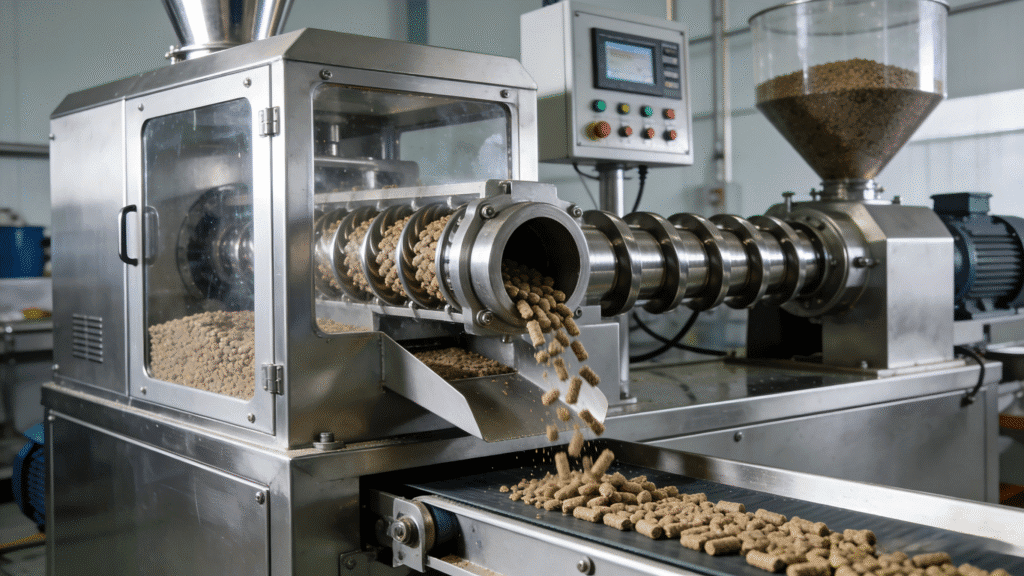
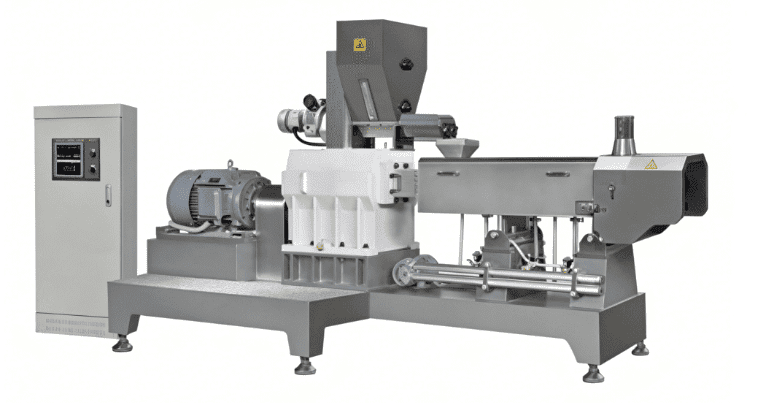
3. Fish Feed Extruder
The extruder is one of the core machines used in floating fish feed production.
It uses mechanical pressure, heat, moisture, and shearing forces to cook and shape the feed mixture.
By adjusting processing conditions and formulations, manufacturers can produce pellets with different sizes, densities, textures, and floating characteristics.
4. Fish Feed Pellet Machine
For conventional sinking fish feed, a pellet mill can be used to compress conditioned feed materials into pellets.
The equipment configuration depends on whether you plan to manufacture floating or sinking feed.
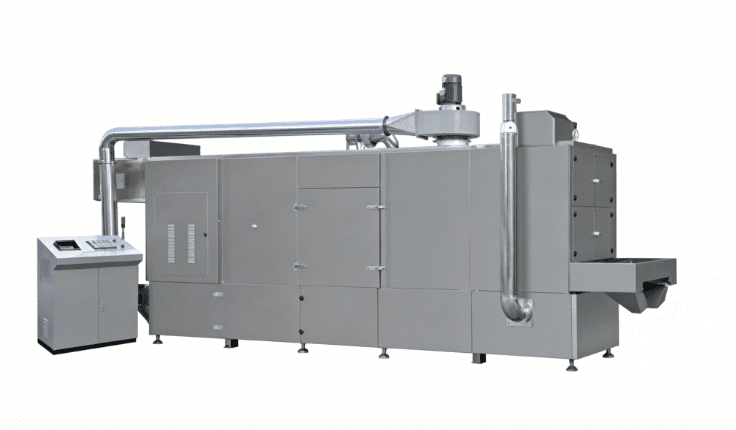
5. Fish Feed Dryer
After extrusion or pelletizing, the feed usually contains excessive moisture.
A drying machine reduces moisture to a suitable level, helping improve storage stability and reduce the risk of mold growth.
6. Oil Spraying Machine
Some fish feed products require additional oil to improve energy content and nutritional value.
An oil spraying system can apply oil evenly to the pellet surface or, where the equipment design allows, incorporate oil after drying.
7. Cooling Machine
After drying, the pellets need to be cooled to an appropriate temperature before packaging.
Cooling helps prevent condensation inside packages and improves product storage stability.
8. Screening Machine
A vibrating screen separates qualified pellets from powder, broken pellets, and oversized particles.
The separated fines may be returned to the production process when appropriate.
9. Automatic Packaging Machine
The final products are weighed and packed into bags of different specifications, such as 5 kg, 10 kg, 20 kg, or 25 kg.
Packaging equipment should provide accurate weighing and reliable sealing performance.
5. Decide Whether to Produce Floating or Sinking Fish Feed
Before purchasing equipment, you should decide which type of fish feed you want to manufacture.
Floating Fish Feed
Floating fish feed is generally produced using an extrusion process.
The high-temperature and high-pressure extrusion process causes starch gelatinization and expansion. After leaving the extruder die, the pellets can develop a porous structure that allows them to float on the water surface.
Advantages include:
- Easy observation of feeding activity.
- Convenient adjustment of feeding quantities.
- Reduced difficulty in monitoring feed consumption.
- Suitable for many surface-feeding fish species.
Sinking Fish Feed
Sinking fish feed is commonly manufactured using a pellet mill or specially configured extrusion equipment.
The pellets are formulated and processed to achieve a suitable density so that they sink in water.
Advantages include:
- Suitable for bottom-feeding fish.
- Appropriate for species with different feeding behaviors.
- Can be manufactured in different sizes and formulations.
Your product selection should be based on local fish farming practices and the feeding requirements of the target species.
6. Develop Scientific Fish Feed Formulas
A good fish feed formula is essential for producing competitive products.
Different fish species have different requirements for protein, fat, carbohydrates, vitamins, minerals, and essential amino acids.
For example, young fish generally require different nutritional formulations from adult fish. Carnivorous fish may also have different protein and energy requirements from omnivorous or herbivorous species.
When developing fish feed formulas, consider:
- Fish species.
- Growth stage.
- Required crude protein content.
- Crude fat and energy levels.
- Amino acid balance.
- Vitamin and mineral requirements.
- Feed digestibility.
- Water stability.
- Pellet size and hardness.
It is recommended to work with an aquaculture nutritionist or feed formulation specialist to develop suitable formulas.
Before mass production, conduct small-batch tests to evaluate pellet quality, water stability, floating or sinking performance, and nutritional composition.
7. Design a Reasonable Production Process
An efficient production process helps improve product quality and reduce manufacturing costs.
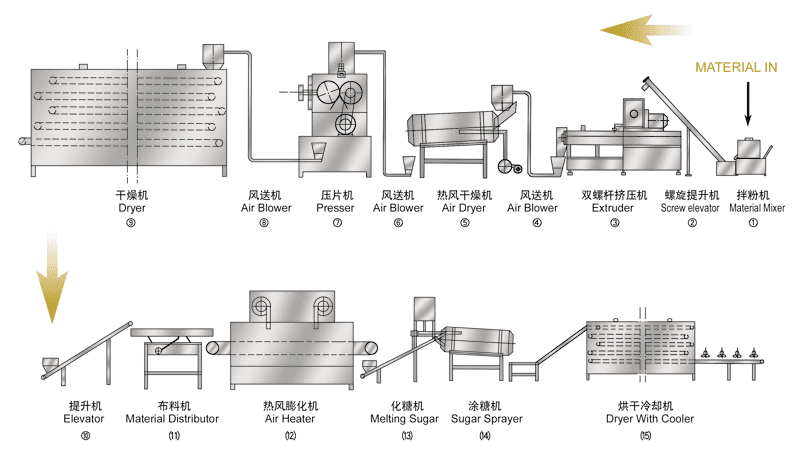
A typical floating fish feed manufacturing process includes:
Step 1: Raw Material Receiving
Receive and inspect all raw materials to ensure that they meet the required quality standards.
Step 2: Raw Material Grinding
Grind the ingredients into fine powder to improve mixing uniformity and extrusion performance.
Step 3: Ingredient Weighing and Mixing
Accurately weigh the ingredients according to the feed formula and mix them evenly.
Step 4: Conditioning
Add a controlled amount of water and steam to prepare the mixture for extrusion.
Step 5: Extrusion
Feed the conditioned mixture into the fish feed extruder to cook, expand, and shape the pellets.
Step 6: Drying
Remove excess moisture using a continuous or batch drying system.
Step 7: Cooling
Cool the dried pellets to a suitable temperature.
Step 8: Oil Spraying
Apply additional oil when required by the product formula.
Step 9: Screening
Remove powder and broken pellets to improve finished product quality.
Step 10: Packaging
Weigh and pack the qualified fish feed into suitable packaging materials.
Step 11: Finished Product Storage
Store the finished feed in a dry, cool, clean, and well-ventilated warehouse.
8. Prepare Factory Utilities and Supporting Facilities
In addition to the main processing machinery, a fish feed factory needs several supporting facilities.
These may include:
- Electrical power distribution systems.
- Steam boilers or steam generators, if required.
- Air compressors.
- Water supply and treatment systems.
- Dust collection equipment.
- Ventilation systems.
- Raw material storage silos.
- Finished product warehouses.
- Fire protection systems.
Dust control is particularly important because grinding and material handling can generate considerable amounts of airborne particles.
You should also prepare appropriate drainage, cleaning, and pest control systems to maintain a hygienic production environment.
9. Establish Quality Control and Product Testing Procedures
Quality control is essential for ensuring that fish feed meets nutritional specifications and remains safe during storage.
You should establish inspection procedures for raw materials, semi-finished products, and finished products.
Important quality indicators include:
- Crude protein content.
- Crude fat content.
- Moisture content.
- Crude fiber content.
- Ash content.
- Pellet diameter and length.
- Pellet hardness.
- Water stability.
- Floating or sinking performance.
- Microbiological safety.
- Mycotoxin and contaminant levels.
For floating fish feed, you should also test floating time and floating percentage.
For sinking fish feed, sinking speed and water stability are important evaluation indicators.
Regular testing helps maintain product consistency and builds customer confidence.
10. Obtain the Necessary Licenses and Certifications
Fish feed production is subject to feed safety and manufacturing regulations in different countries and regions.
Before starting production, you should understand the requirements of your local authorities.
Depending on your location, you may need:
- Business registration.
- Feed manufacturing licenses or registration.
- Factory approval.
- Environmental permits.
- Fire safety approval.
- Feed labeling compliance.
- Product quality testing.
- Feed safety management procedures.
You should also consider implementing HACCP-based procedures or other applicable feed safety management systems.
If you plan to export fish feed, investigate the importing country’s requirements concerning ingredients, additives, labeling, registration, and product testing.
11. Recruit and Train Production Employees
A small fish feed factory does not necessarily need a large workforce, especially if it uses an automated production line.
However, you should arrange qualified personnel for:
- Production line operation.
- Equipment maintenance.
- Quality inspection.
- Raw material purchasing.
- Warehouse management.
- Packaging.
- Sales and distribution.
Employees should receive training in machine operation, production safety, raw material handling, equipment cleaning, and quality control.
Regular maintenance is also important to prevent unexpected equipment failures.
12. Calculate Investment Costs and Production Expenses
Before starting the business, prepare a detailed investment budget.
The main investment categories include:
| Cost category | Main expenses |
|---|---|
| Factory construction | Building, renovation, flooring |
| Production equipment | Grinding, mixing, extrusion, drying, packaging |
| Raw materials | Fish meal, soybean meal, grains, additives |
| Utilities | Electricity, water, steam, fuel |
| Labor | Salaries and employee training |
| Licenses | Registration and inspections |
| Warehousing | Silos, storage systems, pallets |
| Marketing | Branding, promotion, distribution |
| Working capital | Daily operating expenses |
You should also calculate the manufacturing cost per ton of fish feed.
Important cost factors include raw materials, electricity consumption, labor, packaging, maintenance, transportation, and equipment depreciation.
A reasonable financial plan should include sufficient working capital to support daily operations and unexpected expenses.
13. Develop Marketing and Sales Channels
After completing the production preparations, you need to establish reliable sales channels.
Potential customers include:
- Commercial fish farms.
- Aquaculture cooperatives.
- Fish farming supply stores.
- Feed wholesalers.
- Agricultural distributors.
- Aquaculture equipment dealers.
You can also develop different feed products for different fish species and growth stages.
For a new fish feed brand, it is advisable to cooperate with local fish farmers and conduct feeding trials. Real production results can help demonstrate product quality and build long-term customer relationships.
Conclusion
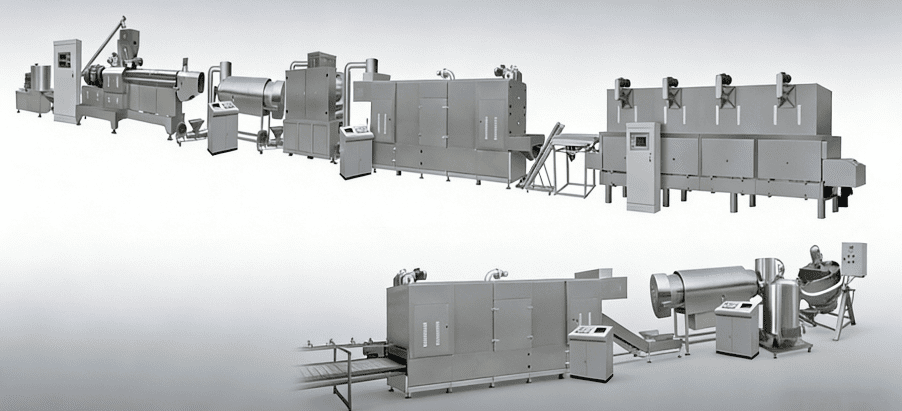
Starting a fish feed processing business requires comprehensive preparation, including market research, factory selection, raw material purchasing, equipment investment, feed formulation, production process design, and quality control.
For beginners, selecting a suitable fish feed production line is one of the most important decisions.
If your target market mainly requires floating fish feed, an extrusion production line is generally a suitable choice. If you plan to produce conventional sinking fish feed, a pelletizing production line may be more appropriate.
The best strategy is to start with a realistic production capacity, use reliable raw materials, develop scientifically balanced feed formulas, and establish strict quality control procedures.
With proper planning and effective management, a small fish feed processing factory can gradually expand its production capacity, develop its own brand, and establish a stable position in the growing aquaculture feed market.


