
Instant noodles are one of the most popular convenience foods worldwide. Their affordable price, long shelf life, convenient preparation, and diverse flavors make them attractive to consumers of different ages. As demand for convenient food continues to grow, starting a small-scale instant noodle processing business can be an interesting opportunity for entrepreneurs and food manufacturers.

However, before starting production, it is important to make adequate preparations. From market research and factory construction to equipment selection, raw material purchasing, production technology, and food safety management, every step can influence the success of the business.
So, what preparations are needed to start a small instant noodle processing factory? This article provides a practical guide to help you understand the key requirements.
1. Conduct Market Research and Determine Your Business Positioning
The first step in establishing a small instant noodle processing factory is understanding the target market.
Before purchasing equipment or renting a factory, you should investigate local consumer preferences, competitors, market demand, and potential sales channels.
Consider the following questions:
- What types of instant noodles are popular in your target market?
- Do consumers prefer fried instant noodles or non-fried instant noodles?
- What flavors are in demand?
- What price range can local consumers accept?
- Who are your main customers: supermarkets, wholesalers, restaurants, distributors, or individual consumers?
You should also decide what products your factory will manufacture.
Common instant noodle products include:
- Fried instant noodles
- Non-fried instant noodles
- Cup noodles
- Bagged instant noodles
- Small-pack instant noodles
- Different noodle shapes and flavors
For a small-scale factory, it is generally better to start with a limited product range. This makes production management easier and reduces the initial investment.
2. Prepare a Reasonable Investment Budget
Investment planning is another essential preparation.
The total investment required for a small instant noodle processing factory depends on production capacity, equipment configuration, factory size, automation level, and local construction costs.
Your budget should include the following expenses:
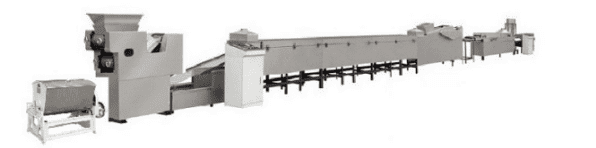
Equipment investment: Dough mixers, noodle rolling machines, cutting machines, steaming equipment, frying machines or drying machines, cooling conveyors, and packaging machines.
Factory construction: Workshop rental or purchase, floor renovation, drainage systems, ventilation, electrical installation, and water supply.
Raw materials: Wheat flour, edible oil, starch, salt, food additives where legally permitted, seasonings, and packaging materials.
Labor costs: Production operators, technicians, quality control personnel, warehouse workers, and management staff.
Operating expenses: Electricity, water, fuel, maintenance, transportation, and marketing.
It is also important to reserve sufficient working capital. A new factory may need several months to establish stable production and sales channels.
3. Choose a Suitable Factory Location
A suitable production site is important for efficient manufacturing and long-term development.
When selecting a factory location, consider the following factors:
Convenient transportation: The factory should be accessible to raw material suppliers and distribution networks. Good transportation conditions can reduce logistics costs.
Adequate space: The workshop must accommodate production equipment, raw material storage, finished product storage, packaging operations, and employee facilities.
Stable utilities: Instant noodle production requires reliable electricity, clean water, and suitable energy sources for steaming, frying, or drying.
Good drainage and ventilation: Proper drainage and ventilation help maintain a clean working environment and remove excess heat and moisture.
Food production requirements: The factory location and building layout should comply with local food manufacturing regulations, zoning requirements, and sanitation standards.
A reasonable factory layout should separate raw material handling, processing, packaging, and finished product storage to minimize cross-contamination.
4. Purchase the Necessary Instant Noodle Processing Equipment
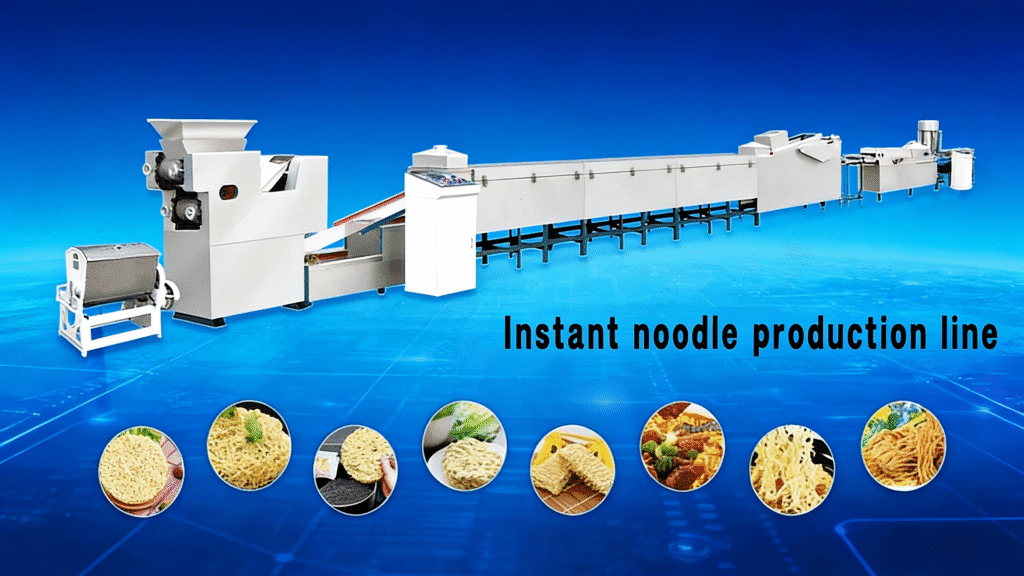
Equipment selection is one of the most important preparations when starting a small instant noodle factory.
A complete production line should cover the entire process, from raw material mixing to finished product packaging.
The main equipment generally includes:
4.1 Flour Mixing Machine
The flour mixer is used to combine wheat flour, water, salt, and other approved ingredients.
Uniform mixing helps ensure consistent dough quality and provides a good foundation for subsequent noodle processing.
4.2 Dough Resting and Conveying Equipment
After mixing, the dough needs an appropriate resting period to allow moisture to distribute more evenly.
Conveying equipment transfers the prepared dough to the rolling section.
4.3 Noodle Rolling Machine
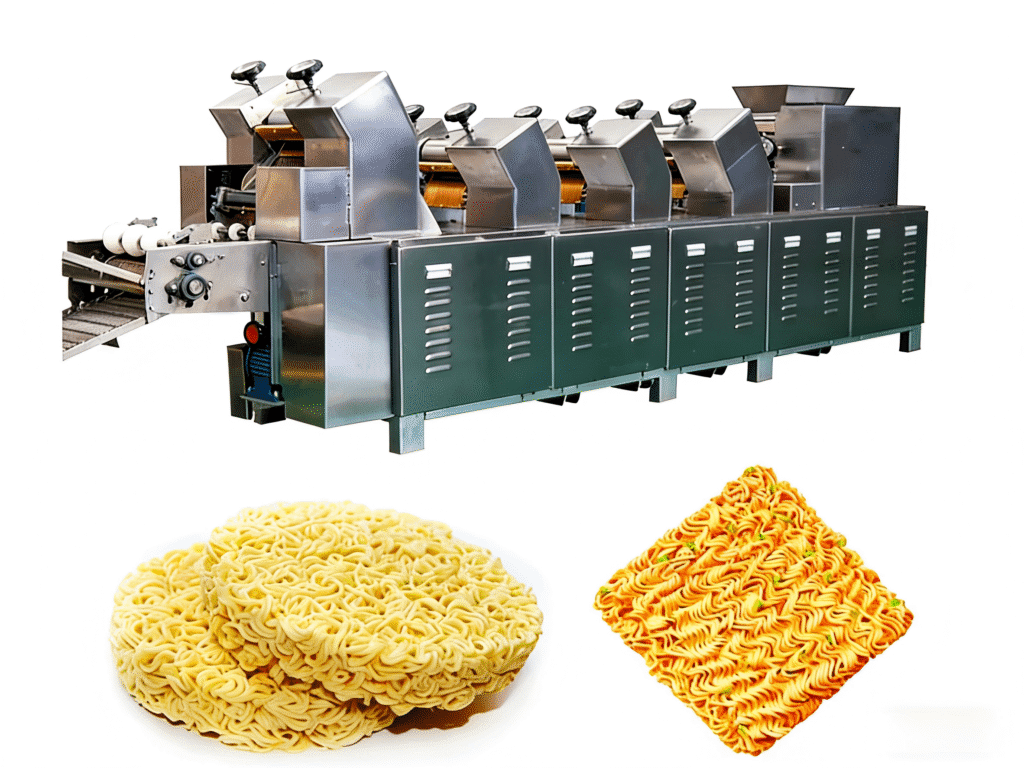
The rolling machine gradually presses the dough into thin sheets through multiple rollers.
The thickness of the noodle sheet should be controlled according to the desired product specifications.
4.4 Noodle Cutting Machine
The cutting machine cuts the rolled dough sheets into noodles of the required width.
Different cutting molds and configurations can produce noodles with different shapes and thicknesses.
4.5 Steaming Machine
The steaming machine cooks the noodles using steam, helping gelatinize the starch and establish the noodle structure.
Steaming conditions should be adjusted according to noodle thickness, moisture content, and production speed.
4.6 Frying Machine or Hot-Air Drying Machine
This is an important piece of equipment that determines whether the factory produces fried or non-fried instant noodles.
- Frying machine: Removes moisture through frying in edible oil, creating the porous structure that allows noodles to rehydrate quickly.
- Hot-air drying machine: Uses controlled hot air to remove moisture without deep frying, producing non-fried instant noodles.
The choice depends on product positioning, consumer preferences, energy costs, and investment capacity.
4.7 Cooling Conveyor
After frying or drying, noodles need to be cooled to an appropriate temperature before packaging.
Proper cooling helps prevent condensation inside packages and supports product quality.
4.8 Packaging Machine
Packaging equipment is used to pack finished noodle cakes into bags or other suitable containers.
Depending on product requirements, the packaging system may also include seasoning sachet filling, weighing, sealing, date coding, and metal detection.
When purchasing equipment, manufacturers should consider production capacity, automation level, equipment materials, energy consumption, maintenance requirements, and after-sales service.
5. Prepare High-Quality Raw Materials
Raw material quality directly affects the taste, texture, appearance, and shelf life of instant noodles.
The main raw materials include:
Wheat flour: Wheat flour is the primary ingredient. Its protein content and gluten characteristics influence dough elasticity and noodle texture.
L'eau : Water is used to adjust dough moisture. It should meet applicable drinking-water and food processing standards.
Salt: Salt improves flavor and influences dough properties.
Starch: Certain types of starch can be added to adjust noodle texture, cooking characteristics, and production performance.
Edible oil: For fried instant noodles, suitable edible oil is essential. Its quality, stability, and frying performance should be carefully monitored.
Seasonings: Seasoning powders, sauces, and flavoring ingredients provide different product varieties.
Packaging materials: Packaging materials should provide suitable moisture, oxygen, and light barriers to protect the noodles during storage and transportation.
Before purchasing raw materials in large quantities, establish reliable suppliers and conduct quality checks on incoming ingredients.
6. Develop a Standardized Production Process
Before commercial production begins, you should understand the complete instant noodle manufacturing process and establish standardized operating procedures.
A typical fried instant noodle production process includes:
- Raw material inspection and preparation.
- Flour and ingredient mixing.
- Dough resting.
- Dough rolling and sheet formation.
- Noodle cutting and shaping.
- Steaming.
- Portioning and noodle cake forming.
- Frying.
- Cooling.
- Seasoning sachet preparation.
- Packaging and sealing.
- Finished product inspection and storage.
For non-fried instant noodles, the frying stage is replaced by a suitable drying process.
Each production stage requires appropriate temperature, moisture, time, and equipment settings.
For example, insufficient steaming may result in poor starch gelatinization, while improper frying or drying conditions can affect noodle texture and rehydration performance.
Therefore, it is necessary to conduct equipment trials and product testing before beginning large-scale production.

7. Obtain Necessary Licenses and Food Safety Certifications
Food safety and regulatory compliance are essential for any instant noodle processing business.
Before production, entrepreneurs should understand the food manufacturing laws and regulations in their target market.
Depending on local requirements, preparations may include:
- Business registration.
- Food manufacturing permits or licenses.
- Factory inspection and approval.
- Food safety management procedures.
- Product labeling compliance.
- Environmental and wastewater approvals.
- Employee food hygiene training.
You should also establish a food safety management system.
Commonly used management frameworks include HACCP (Hazard Analysis and Critical Control Points) and ISO 22000 (Food Safety Management Systems).
Important quality control measures include:
- Inspecting incoming raw materials.
- Monitoring dough mixing and steaming conditions.
- Controlling frying oil quality and temperature.
- Monitoring final product moisture content.
- Checking packaging integrity.
- Conducting microbiological and chemical testing where appropriate.
- Maintaining production and traceability records.
These measures help reduce food safety risks and improve consumer confidence.
8. Design the Packaging and Brand
Packaging plays an important role in product protection, transportation, and marketing.
For small instant noodle manufacturers, packaging should be practical, attractive, and suitable for the target market.
Common packaging options include:
Individual bag packaging: Suitable for traditional instant noodles sold through supermarkets and retail stores.
Cup packaging: Convenient for consumers who want to prepare noodles directly in the container.
Bulk packaging: Suitable for wholesale customers, food service businesses, and distributors.
When designing packaging, consider the following:
- Brand name and logo.
- Product name and flavor.
- Net weight.
- Ingredient list.
- Nutrition information.
- Preparation instructions.
- Production date and shelf-life information.
- Storage conditions.
- Required allergen declarations and other legally required labeling information.
Packaging materials should be tested for compatibility with the product and should meet applicable food-contact requirements.
9. Recruit and Train Production Workers
Even a small instant noodle factory needs a team with suitable technical and operational skills.
The number of employees depends on production capacity and automation level.
Typical positions include:
- Production supervisor.
- Equipment operators.
- Raw material handlers.
- Quality control personnel.
- Packaging workers.
- Warehouse staff.
Workers should receive training in equipment operation, food hygiene, personal protective equipment, cleaning procedures, and emergency response.
Equipment operators should understand basic troubleshooting and routine maintenance to reduce unnecessary downtime.
For a new factory, it is also advisable to have an experienced technician or equipment supplier provide installation guidance and production training.
10. Conduct Equipment Testing and Trial Production
Before officially launching the factory, conduct comprehensive equipment testing and trial production.
This step helps identify problems before commercial manufacturing begins.
During trial production, pay attention to:
Dough quality: Check whether the dough has uniform moisture distribution and suitable elasticity.
Noodle thickness: Ensure that the rolling and cutting equipment produces consistent noodle dimensions.
Steaming performance: Confirm that the noodles are adequately steamed and have the required structure.
Frying or drying results: Evaluate moisture reduction, color, texture, and product uniformity.
Rehydration performance: Test how quickly the noodles soften in hot water and whether they maintain a pleasant texture.
Packaging quality: Check sealing strength, package appearance, and protection against moisture and oxygen.
It is also important to evaluate the actual production capacity, energy consumption, raw material usage, and finished product yield.
Adjust equipment parameters and production formulas until the finished products meet the required quality standards.
11. Establish Sales Channels Before Production
Producing high-quality instant noodles is only part of running a successful business. You also need effective sales channels.
For a small instant noodle factory, possible sales channels include:
- Local supermarkets and grocery stores.
- Food wholesalers and distributors.
- Restaurants and catering businesses.
- Online marketplaces.
- Convenience stores.
- Private-label manufacturing for other brands.
- Export markets, subject to applicable regulations.
Before investing heavily in production, try to identify potential customers and understand their purchasing requirements.
Offering product samples to distributors and retailers can help you collect feedback on flavor, packaging, price, and product quality.
Building long-term relationships with reliable distributors can also help stabilize sales.
12. Prepare a Long-Term Production and Maintenance Plan
After the factory begins operating, systematic management is necessary to maintain stable production.
A practical management plan should include:
- Daily equipment inspection.
- Regular cleaning and sanitation.
- Preventive maintenance.
- Raw material inventory management.
- Production scheduling.
- Product quality inspection.
- Employee training.
- Production cost accounting.
- Finished product inventory management.
For fried instant noodle production, particular attention should be paid to frying oil management. Oil quality should be monitored, and oil should be replaced according to established quality criteria and applicable regulations.
For non-fried noodles, drying temperature, airflow, and final moisture content should be carefully controlled.
Regular maintenance and process monitoring can improve production efficiency, reduce waste, and extend equipment service life.
Conclusion
Starting a small-scale instant noodle processing factory requires more than simply purchasing a production line. Entrepreneurs need to make comprehensive preparations in market research, investment planning, factory construction, equipment selection, raw material procurement, production technology, food safety, packaging, and marketing.
For beginners, starting with a suitable production capacity and a relatively simple product range is often a practical approach. Once production becomes stable and market demand increases, the factory can gradually expand its capacity and introduce additional products.
Choosing reliable instant noodle processing equipment and establishing standardized production procedures are two important foundations for long-term success. With careful planning and effective management, a small instant noodle factory can gradually develop into a competitive food manufacturing business.


