
Introduction
With the continuous development of the global pet industry, the demand for high-quality pet food is increasing. pet food extruder More and more pet owners are paying attention to the nutritional value, ingredient quality, taste, and safety of the food they provide for their pets. As a result, pet food manufacturing has become an attractive business opportunity for food processing companies and investors.
However, producing high-quality pet food involves much more than simply mixing different ingredients. Manufacturers need to select suitable raw materials, control processing parameters, choose appropriate production equipment, and establish effective quality management procedures.
So, what exactly is the pet food processing process? What machines are required to manufacture commercial pet food? This article introduces the complete production process, from raw material preparation to final packaging.
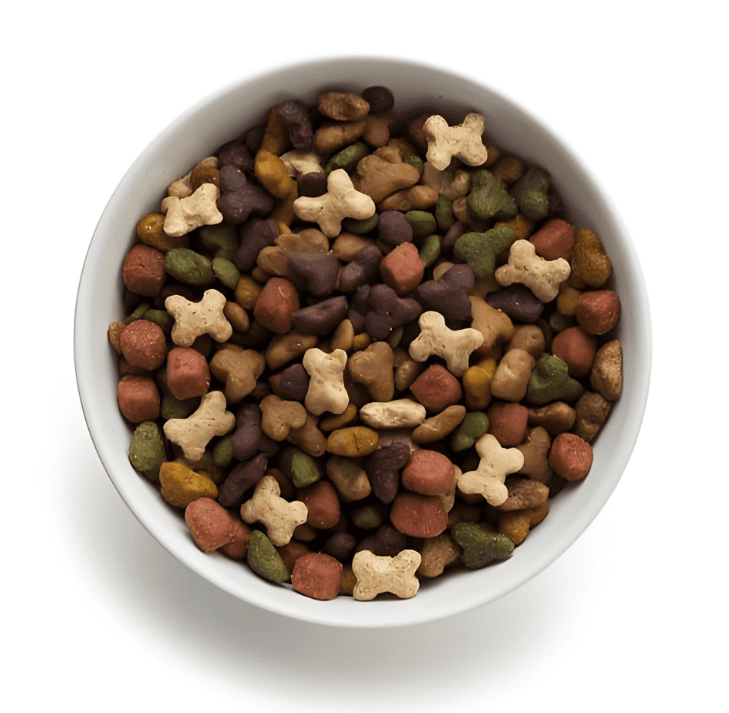
1. Raw Material Selection and Preparation
Raw material selection is the first step in pet food manufacturing and has a direct influence on the nutritional composition, flavor, texture, and quality of the final product.
Different pet food products require different ingredient combinations. Common raw materials include:
- Corn, wheat, rice, and other cereal grains.
- Soybean meal and other plant protein sources.
- Chicken meal, fish meal, and meat meal.
- Animal fats and vegetable oils.
- Vitamins and mineral premixes.
- Fiber sources and other functional ingredients.
- Approved flavoring and nutritional additives.
For example, dog food and cat food may share some basic ingredients, but their nutritional formulations are different. pet food extruder Cat food generally requires particular attention to animal-derived protein and essential nutrients such as taurine.
Before processing, manufacturers should inspect incoming materials for quality, freshness, moisture content, contamination, and storage conditions.
Raw materials should also be properly stored to prevent moisture absorption, pest infestation, oxidation, and microbial contamination.
2. Raw Material Grinding
After inspection and preparation, many dry pet food ingredients need to be ground into smaller particles.
A hammer mill or other suitable grinding machine is commonly used for this process.
The purpose of grinding is to reduce particle size and improve the uniformity of the ingredients before mixing and extrusion.
Appropriate grinding can provide several benefits:
- Improve ingredient mixing uniformity.
- Increase the surface area of raw materials.
- Improve water absorption.
- Support more consistent extrusion.
- Help produce a uniform pellet structure.
Different raw materials may require different grinding fineness levels.
If particles are too large, they may cause uneven mixing and unstable extrusion. If particles are excessively fine, energy consumption may increase, and the material may create more dust.
Therefore, manufacturers should select suitable grinding screens according to the formulation and processing requirements.
3. Ingredient Mixing
After grinding, the raw materials are transported to a mixing machine.
The mixer combines different ingredients according to a predetermined formulation to ensure that each batch has a consistent nutritional composition.
In commercial pet food production, accurate ingredient proportions are essential.
For example, a typical dry pet food formulation may include cereal ingredients, protein sources, fats, vitamins, minerals, and other nutritional additives.
The mixing process generally involves the following steps:
- Weigh each ingredient according to the formulation.
- Feed the ingredients into the mixer.
- Mix the materials until they are evenly distributed.
- Add water or liquid ingredients when required by the process.
- Transfer the mixed materials to the next processing stage.
A high-quality mixer should provide uniform mixing, stable operation, convenient discharge, and easy cleaning.
For large production lines, automatic weighing and batching systems can further improve production accuracy and reduce manual labor.
4. Conditioning and Moisture Adjustment
Before extrusion, the mixed ingredients may enter a conditioning system.
Conditioning involves adding steam, water, or other suitable liquids to adjust the moisture content and temperature of the material.
This step helps soften the raw materials and prepare them for cooking and extrusion.
Proper conditioning can:
- Improve material plasticity.
- Promote starch gelatinization.
- Improve protein digestibility.
- Reduce excessive mechanical load during extrusion.
- Support more stable product formation.
The required moisture level, conditioning temperature, and residence time depend on the formulation and the type of extruder being used.
Manufacturers should carefully control these parameters because insufficient conditioning may result in unstable extrusion, while excessive moisture may affect product expansion and increase the drying load.
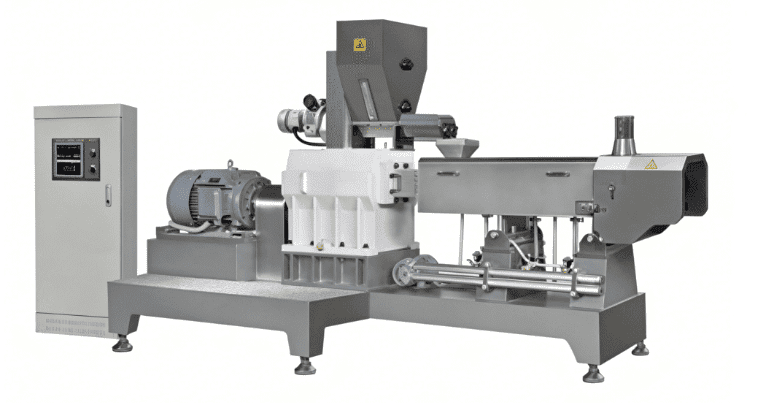
5. Pet Food Extrusion
Extrusion is one of the most important stages in modern dry pet food manufacturing.
The conditioned mixture enters an extruder, where it is exposed to heat, pressure, moisture, and mechanical shear.
As the material moves through the screw system, it undergoes cooking and structural changes. When it passes through the die under controlled conditions, the pressure drops rapidly, allowing the product to expand and form its characteristic shape.
There are two common types of extrusion equipment:
Single-screw extruder
Single-screw extruders are generally suitable for relatively straightforward formulations and certain production requirements. pet food extruder They have a comparatively simple structure and can be economical for some applications.
Twin-screw extruder
Twin-screw extruders provide greater flexibility in processing different raw materials and complex formulations. They offer better control over material mixing, conveying, and processing conditions.
By changing the extrusion die, manufacturers can produce pet food in different shapes and sizes, including:
- Round pellets.
- Small bone-shaped pieces.
- Stars.
- Rings.
- Triangular pellets.
- Customized shapes.
The final product characteristics depend on the raw material formulation, moisture content, screw configuration, temperature, pressure, and extrusion conditions.
6. Cutting and Shaping
After leaving the extrusion die, the continuous extruded material is cut into individual pieces by a rotating cutter.
The cutter speed and blade configuration determine the length and shape of the finished pellets.
By adjusting the cutting system, manufacturers can produce different pellet sizes to meet the requirements of various pets.
For example, smaller pellets may be suitable for puppies, kittens, or small breeds, while larger pellets may be designed for adult dogs or larger animals.
Consistent cutting is important because uniform pellet sizes help improve drying efficiency, packaging accuracy, and product appearance.
7. Pet Food Drying
Freshly extruded pet food usually contains considerable moisture and needs to be dried before coating and packaging.

A multi-layer belt dryer is commonly used in commercial pet food production lines.
During drying, hot air circulates through the product layer, gradually removing excess moisture from the pellets.
The main purposes of drying include:
- Reducing moisture content.
- Improving product stability.
- Developing the desired texture.
- Supporting longer storage life when combined with appropriate water activity control and packaging.
Several factors influence drying performance:
Drying temperature: The temperature must be suitable for the formulation and pellet structure. Excessive heat may damage heat-sensitive nutrients or affect product appearance.
Drying time: Larger and denser pellets generally require more time to dry than smaller products.
Air circulation: Uniform airflow helps prevent uneven drying.
Material distribution: An excessively thick product layer can prevent hot air from reaching the lower pellets.
For many conventional dry pet food products, final moisture content is commonly around 8%–10%, although the actual target depends on the product formulation, water activity, packaging, and applicable standards.
Manufacturers should use appropriate moisture and water activity testing methods to establish safe product specifications.
8. Oil Spraying and Flavor Coating
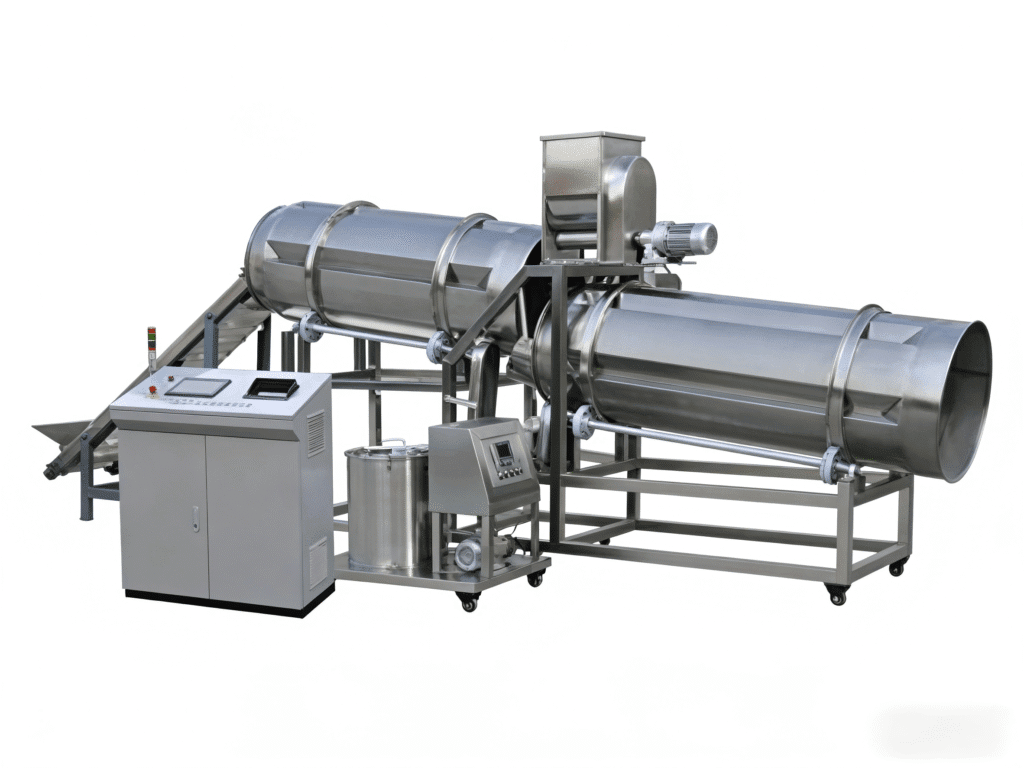
After drying, pet food can enter an oil spraying and coating machine.
During this stage, oils, fats, flavor enhancers, and other permitted ingredients are applied to the surface of the pellets.
This process is particularly important because some fats and flavors are better added after extrusion and drying to protect their quality.
Common coating ingredients include:
- Chicken fat.
- Fish oil.
- Vegetable oils.
- Meat-based palatants.
- Other approved nutritional additives.
A uniform coating helps improve palatability and allows manufacturers to develop products with different flavors and nutritional characteristics.
Depending on the production requirements, manufacturers can use a rotating coating drum or a vacuum coating system.
Vacuum coating equipment can help improve the penetration and distribution of liquid ingredients into porous pet food pellets.
The amount of coating material should be carefully controlled to avoid excessive oil accumulation, uneven distribution, and packaging problems.
9. Cooling
After coating, pet food needs to be cooled before packaging.
The coating process may increase the product temperature, and the pellets may still retain residual heat from previous processing stages.
A cooling machine uses ambient or controlled air to reduce product temperature.
Proper cooling helps:
- Stabilize the pellet structure.
- Prevent condensation inside packaging bags.
- Improve packaging performance.
- Reduce the risk of moisture-related deterioration.
- Prepare products for screening and inspection.
Cooling conditions should also be controlled to avoid exposing the finished product to excessively humid or contaminated air.
10. Screening and Quality Inspection
Before packaging, pet food usually passes through a screening system.
A vibrating screen can separate broken pellets, excessive powder, and other unwanted particles from qualified products.
This improves the appearance and consistency of the finished product.
Quality inspection is also necessary throughout the production process.
Important quality indicators include:
- Moisture content.
- Water activity.
- Pellet size and shape.
- Product density and texture.
- Nutritional composition.
- Microbiological safety.
- Foreign material contamination.
Depending on the product and market requirements, manufacturers may also conduct tests for protein, fat, fiber, ash, vitamins, minerals, and other nutritional components.
Metal detection equipment can be installed before packaging to help identify potential metal contamination.
11. Automatic Packaging
Packaging is the final stage of the pet food processing process.
After inspection, qualified pet food is transported to an automatic weighing and packaging machine.
The machine measures the required quantity, fills the packaging bags, and seals them.
Common commercial pet food packaging sizes include:
- Small packages for retail sales.
- Medium-sized bags for household use.
- Large bags for bulk sales.
- Customized packaging for distributors and wholesalers.
Packaging materials should provide suitable protection against moisture, oxygen, light, and external contamination.
Manufacturers should also ensure that labels comply with the regulations of their target markets.
Product names, ingredient lists, nutritional information, feeding instructions, net weight, batch numbers, and expiration or best-before information may all be required.
12. Storage and Transportation
After packaging, finished pet food should be stored under suitable environmental conditions.
A clean, dry, well-ventilated warehouse helps protect products from moisture, pests, and contamination.
Manufacturers should pay attention to the following points:
- Keep finished products away from direct sunlight.
- Avoid storing pet food in humid environments.
- Maintain appropriate warehouse temperatures.
- Use pallets to prevent direct contact between packaging and the floor.
- Apply first-in, first-out inventory management.
- Maintain batch records for product traceability.
During transportation, packaging should be protected from damage, moisture, and excessive heat.
Proper storage and transportation help maintain product quality throughout the distribution process.
13. What Equipment Is Needed for a Complete Pet Food Production Line?
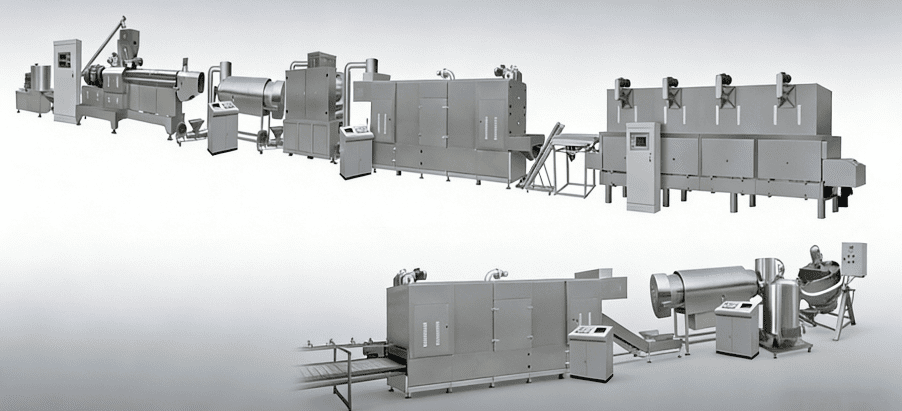
A commercial pet food production line requires several machines working together.
The main equipment configuration generally includes:
| Equipment | Main Function |
|---|---|
| Hammer mill | Grinding raw materials |
| Mélangeur | Mixing different ingredients |
| Conditioner | Adjusting moisture and temperature |
| Extrudeuse | Cooking and shaping pet food |
| Cutter | Cutting pellets into different sizes |
| Dryer | Removing excess moisture |
| Coating machine | Applying oils and flavor ingredients |
| Machine de refroidissement | Reducing product temperature |
| Vibrating screen | Removing broken pellets and powder |
| Metal detector | Detecting potential metal contamination |
| Packaging machine | Weighing, filling, and sealing bags |
The exact equipment configuration depends on the product type, production capacity, formulation, and factory budget.
For example, a small pet food factory may choose a compact semi-automatic production line, while a large manufacturer may require an integrated automatic system with continuous material handling and centralized control.
14. Important Factors Affecting Pet Food Processing Quality
Even with advanced processing equipment, manufacturers must carefully control several factors to achieve consistent product quality.
Raw material quality
Fresh, properly stored, and traceable ingredients provide the foundation for high-quality pet food.
Nutritional formulation
Different animals have different nutritional requirements. Dog food and cat food formulations should be developed according to their respective nutritional needs and applicable standards.
Extrusion parameters
Temperature, moisture, pressure, and screw speed influence cooking performance, pellet expansion, texture, and digestibility.
Drying conditions
Uneven or excessive drying can negatively affect product quality and energy efficiency.
Coating uniformity
Uneven oil and flavor application may result in inconsistent palatability and product appearance.
Hygiene management
Cleaning, sanitation, pest control, and contamination prevention should be incorporated into the entire production process.
Manufacturers should establish standardized operating procedures and quality control checkpoints at every stage.
15. How to Improve Pet Food Production Efficiency
For commercial manufacturers, improving production efficiency is important for reducing costs and increasing profitability.
Here are several practical strategies:
- Choose appropriately sized equipment: Match the capacity of the grinder, mixer, extruder, dryer, and packaging machine to avoid production bottlenecks.
- Automate raw material handling: Automatic weighing, feeding, and conveying systems can reduce manual operations and improve ingredient consistency.
- Optimize extrusion parameters: Proper temperature and moisture control can improve production stability and reduce material waste.
- Improve drying efficiency: Optimize hot air circulation, conveyor speed, and insulation to reduce energy consumption.
- Use efficient coating systems: Uniform coating can reduce ingredient waste and improve finished product consistency.
- Establish regular maintenance schedules: Preventive maintenance helps reduce equipment breakdowns and unexpected downtime.
- Monitor production data: Recording temperature, moisture, output, and energy consumption makes it easier to identify problems and improve operating efficiency.
Conclusion
The pet food processing process involves multiple stages, including raw material selection, grinding, mixing, conditioning, extrusion, cutting, drying, coating, cooling, screening, packaging, and storage.
Each stage plays an important role in determining the nutritional quality, appearance, texture, safety, and storage stability of the finished product.
For manufacturers planning to enter the pet food industry, choosing suitable processing equipment and establishing a scientific production process are essential steps toward building a successful business.
A well-designed pet food production line can improve manufacturing efficiency, reduce labor costs, maintain consistent product quality, and support the production of different pet food formulations and shapes.
By combining high-quality raw materials, appropriate processing technology, reliable machinery, and strict quality management, manufacturers can produce competitive pet food products and meet the growing demands of the global pet food market.


