
Dévoiler le Mystère: Un Plongée Profonde dans le Processus de Production Commerciale de Nourriture pour Animaux
Introduction
For millions of pet owners around the world, the act of pouring kibble into a bowl or opening a can of wet food is a daily ritual of care and affection. We trust that the products we buy, often from prominent brands with appealing packaging and marketing claims, provide complete and balanced nutrition for our canine and feline companions. But have you ever stopped to wonder what truly goes into making that uniform, dry kibble or that pâté-style loaf? pet food making machine The journey from raw, often unappealing ingredients to the shelf-stable, nutritionally formulated food in your pantry is a complex saga of modern food science, industrial engineering, and rigorous safety protocols.
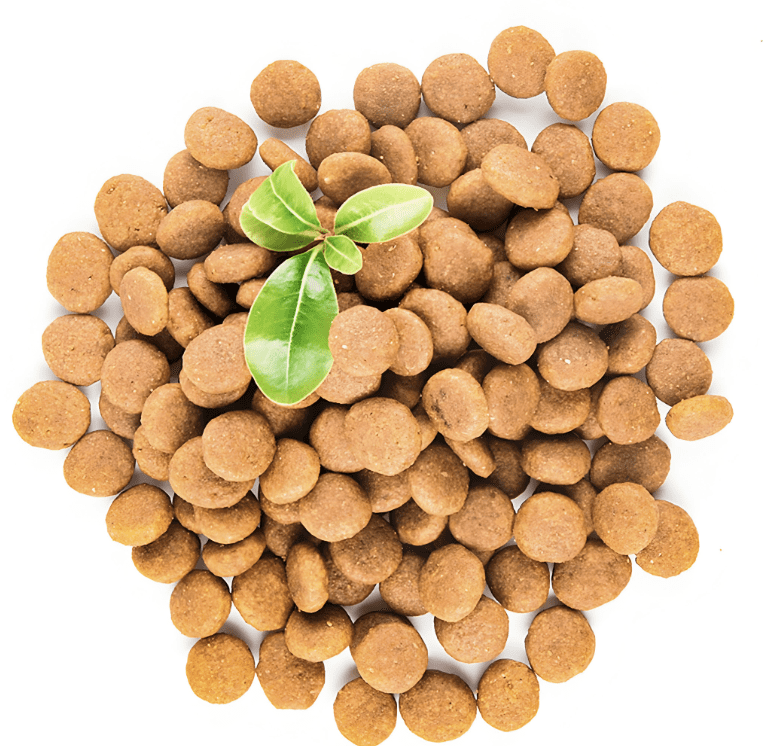
This article aims to pull back the curtain on the commercial pet food industry. We will embark on a detailed exploration of the entire production process, from ingredient sourcing and nutritional formulation to the specific manufacturing techniques for dry, wet, and semi-moist foods. We will decode the language of pet food labels, pet food making machine examine the critical role of quality control and safety, and delve into the emerging trends and controversies that are shaping the future of what we feed our pets. By understanding the “how” and “why” behind pet food production, we can make more informed choices and become better advocates for the health of our animal family members.
Part 1: The Foundation – Ingredients and Formulation
Before a single machine is activated, the most critical phase of pet food production begins on computers and in laboratories. This is the domain of pet nutritionists, food scientists, and formulators.
1.1 The Philosophy of Formulation: Meeting Nutritional Standards
Commercial pet foods are not haphazard mixtures of ingredients. They are scientifically designed to meet specific nutritional profiles. In the United States, the Association of American Feed Control Officials (AAFCO) sets the standards for what constitutes a “complete and balanced” diet for pets at various life stages (e.g., growth, adult maintenance, gestation/lactation). Similar regulatory bodies exist in other regions, such as the European Pet Food Industry Federation (FEDIAF) in Europe.
A formulation is a precise recipe that details every ingredient and its quantity. The primary goal is to achieve the guaranteed analysis—the minimum percentages of crude protein and fat, and the maximum percentages of crude fiber and moisture, as seen on the label. However, the formulation goes much deeper, ensuring optimal levels of essential amino acids pet food making machine (like taurine for cats, which is critical for heart and eye health), fatty acids, vitamins, and minerals.
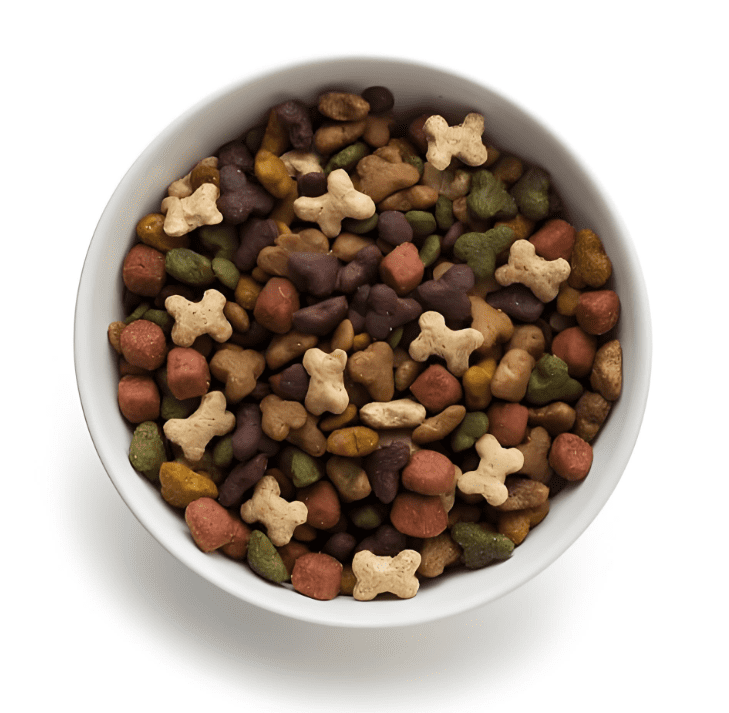
Formulations are created using sophisticated software that contains extensive databases of the nutritional composition of thousands of ingredients. The nutritionist must balance cost, availability, palatability (taste), digestibility, and functional properties (how the ingredient behaves during processing) to create a final product that is nutritious, safe, affordable, and appealing to both pets and their owners.
1.2 Deconstructing the Ingredient Deck
Pet food ingredients can be broadly categorized into several groups:
- Protein Sources: This is the cornerstone of the diet. Sources can be highly variable and include:
- Animal-Based: Muscle meat (e.g., chicken, beef, lamb), organ meats (highly nutritious “offal” like liver, kidney, heart), poultry by-product meal (ground, rendered, clean parts of carcasses like heads, feet, undeveloped eggs), meat meals (rendered tissue from mammals, with water and fat removed), and fish meal. The term “meal” indicates a concentrated protein powder.
- Plant-Based: Soybean meal, corn gluten meal, and pea protein are common plant-based protein concentrates used to boost protein percentages and provide certain amino acids.
- Carbohydrate Sources: While cats are obligate carnivores and dogs have limited carbohydrate requirements, carbs are a cost-effective source of energy and serve important functional roles in processing, especially for dry food. Common sources include:
- Cereals: Corn, wheat, rice, barley, and oats. These provide starch, which is crucial for the extrusion process in kibble manufacturing.
- Potatoes & Legumes: Whole potatoes, sweet potatoes, peas, lentils, and chickpeas have become increasingly popular, particularly in “grain-free” formulas.
- Fat Sources: Fats are a dense source of energy and are essential for the absorption of fat-soluble vitamins (A, D, E, K). They are also the primary carrier of flavor, pet food making machine making the food palatable. Common fats include chicken fat, beef tallow, fish oil (a source of Omega-3 fatty acids), and vegetable oils like sunflower or flaxseed oil.
- Fiber Sources: Fiber aids in digestive health and stool quality. Sources include beet pulp, cellulose, rice bran, and chicory root.
- Vitamin and Mineral Premixes: To ensure the diet is “complete and balanced,” a precise blend of synthetic vitamins (e.g., A, E, B-complex) and minerals (e.g., calcium phosphate, zinc sulfate, potassium chloride) is added. This is non-negotiable, as the natural ingredients alone cannot reliably provide all micronutrients in the correct amounts and ratios.
- Additifs : This category includes:
- Preservatives: To prevent rancidity. Natural options include mixed tocopherols (Vitamin E) and rosemary extract. Synthetic preservatives like BHA and BHT are less common now due to consumer demand.
- Flavor Enhancers: Digests, which are materials treated with enzymes or heat to break down proteins and create highly palatable broths, are often sprayed onto the finished product.
- Functional Additives: Probiotics (for gut health), glucosamine and chondroitin (for joint health), and antioxidants like Vitamin C may be added for specific health benefits.
1.3 The Rendering Process: A Critical Pre-Processing Step
A significant portion of the animal-based ingredients in pet food, particularly the protein meals, undergoes a process called rendering before they ever reach the pet food manufacturing plant. Rendering is a cooking and drying process that serves two vital purposes: it sterilizes raw animal tissues and separates fat from protein and bone.
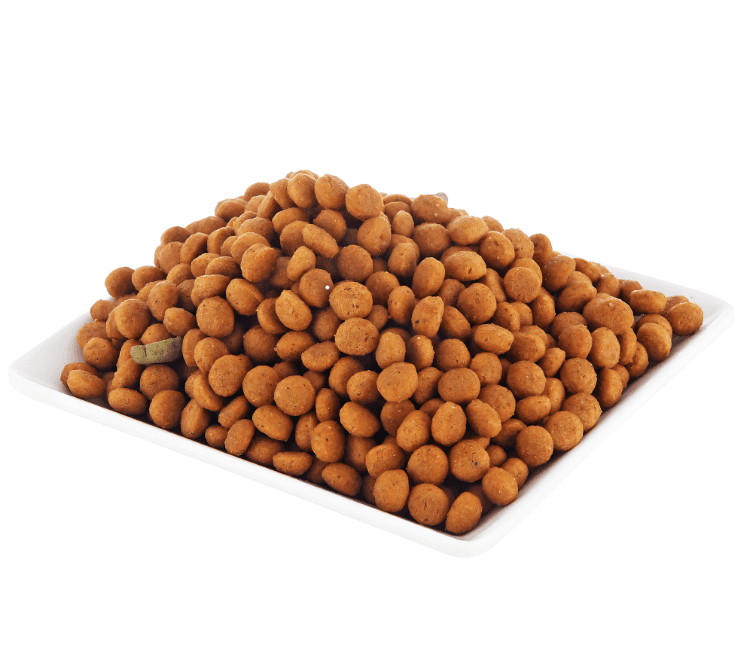
The process involves grinding the raw materials and then cooking them at high temperatures (typically between 115°C and 145°C / 240°F and 290°F) for a sustained period. This destroys pathogens and evaporates water. The cooked material is then pressed to remove the tallow or grease (animal fat), and the remaining solid, dry material is ground into a uniform powder—this is the “meal” you see on the ingredient list, such as “chicken by-product meal” or “meat and bone meal.”
Rendering is a sustainable practice, as it reclaims valuable nutrients from parts of the animal not typically consumed by humans. However, the quality of the raw materials going into the renderer can vary significantly, which is a point of contention and scrutiny within the industry.
Part 2: The Manufacturing Processes – A Plant Tour
The heart of pet food production is the manufacturing facility. While recipes differ, the core mechanical processes are well-established. We will explore the three main types: dry kibble, wet canned food, and semi-moist food.
2.1 The Dry Food (Kibble) Production Line: The Art of Extrusion
The creation of kibble is a fascinating example of food engineering. The dominant technology is extrusion, a high-temperature, short-time cooking process.
- Step 1: Grinding and Weighing
The journey begins in the warehouse where raw ingredients are stored. Dry ingredients like grains, meals, and vitamin premixes are stored in silos, while fresh or frozen meats are kept in refrigerated areas. Ingredients are precisely weighed according to the formulation and transported to the initial processing area. - Step 2: Grinding
The dry ingredients are passed through a hammer mill or similar grinder. This reduces them to a fine, uniform powder or meal. The goal is to create a consistent particle size, which is crucial for the next stage—mixing and cooking. Consistent particle size ensures even hydration and cooking. - Step 3: Mixing
The ground dry ingredients are transferred into a large, industrial ribbon mixer. Here, they are blended thoroughly to create a homogenous dry mix. Any liquid fats or fresh meats that are part of the initial blend are typically added at this stage. The mixture, now called “mash,” must be perfectly uniform to ensure every piece of final kibble has the same nutritional composition. - Step 4: Conditioning
The dry mash is then moved into a conditioner—a large, steam-jacketed cylinder with a screw conveyor. Here, live steam and hot water are injected into the powder. This hydrates the mixture, typically to a moisture level of 20-30%, and begins the cooking process, gelatinizing the starch. Starch gelatinization is vital; it makes the starch digestible and transforms the mash into a pliable, thermoplastic dough that can be shaped. The conditioning stage typically lasts for a few minutes at temperatures around 80-100°C (175-212°F). - Step 5: Extrusion – The Heart of the Process
The hot, cooked dough is then forced into the extruder, the most critical machine in the line. An extruder consists of a long, hardened steel barrel with a single or twin screw(s) rotating inside. The screw(s) convey the dough down the barrel, which is subject to intense heat, pressure, and shear force.- The Screw: As the screw rotates, it compresses the dough, generating immense friction and heat. Additional steam can be injected directly into the barrel to further cook the mixture. The pressure inside the barrel can reach several hundred pounds per square inch (psi).
- The Die: At the end of the barrel is a metal plate called a die, with precisely machined holes. The shape of these holes determines the shape of the kibble—stars, bones, triangles, etc. As the superheated, pressurized dough is forced through these small holes, it instantly expands or “puffs” due to the sudden drop in pressure, much like popcorn popping. This expansion is what gives kibble its characteristic airy, porous texture.
- Step 6: Drying
The newly formed, expanded kibble is now soft and has a high moisture content (around 20-25%). To become shelf-stable, this moisture must be reduced to around 8-12%. The kibble is conveyed through a multi-pass dryer, often a large, oven-like machine where hot air is circulated for 15-20 minutes. The temperature and time are carefully controlled to avoid burning or over-drying, which can destroy heat-sensitive nutrients. - Step 7: Coating (Enrobing)
After drying, the kibble is hard and relatively bland. To increase palatability and add back essential fats and fat-soluble vitamins lost during the high-heat processes, a coating is applied. The kibble passes through a rotating drum, often called a fat tumbler or enrober, where a fine mist of liquid fat, digests, and flavor enhancers is sprayed onto it. The tumbling action ensures an even coating on every piece. - Step 8: Cooling and Packaging
The hot, coated kibble must be cooled to near ambient temperature to prevent condensation and spoilage inside the bag. This is done in a cooling dryer, which blows cool air over the product. Finally, the finished kibble is transported to packaging machines, where it is weighed and poured into bags. The bags are flushed with inert gases like nitrogen to displace oxygen, which helps preserve freshness and prevent oxidative rancidity of the fats. The bags are then sealed, coded, and palletized for distribution.
2.2 The Wet Food Production Line: The Science of Sterilization
Wet food production, primarily for cans and pouches,pet food making machine follows a different path, focusing on thermal sterilization to achieve shelf stability.
- Step 1: Ingredient Preparation and Weighing
The process for wet food starts with the preparation of individual components. Fresh or frozen meats are ground. Grains or other carbohydrates like rice or potatoes are pre-cooked. Vegetables are washed and chopped. Gelling agents like carrageenan or guar gum are prepared. All ingredients are meticulously weighed according to the recipe. - Step 2: Mixing and Blending
The ground meat, cooked grains, vitamins, minerals, and water (or broth) are combined in a large, industrial mixer. For pâté-style foods, this mixture is blended into a very fine, homogenous emulsion or slurry. For chunks-in-gravy or flakes, the meat components may be handled more gently to maintain distinct pieces. - Step 3: Filling
The mixed product is pumped to filling machines. Empty cans or pouches are fed into the machine. For cans, a precise amount of the food is deposited into each one. For chunk-style foods, the “chunks” and the “gravy” may be added in separate steps. The filling is done rapidly, but great care is taken to ensure the correct headspace—the empty area at the top of the container. This headspace is crucial for creating vacuum and preventing the can from deforming during the retort process. - Step 4: Seaming/Sealing
After filling, the cans move to a seaming machine. Here, a lid is placed on top and crimped onto the can body with a double seam, creating an airtight seal. This is a critical control point; a faulty seam will compromise the sterility of the entire product. For pouches, the top is heat-sealed. - Step 5: Thermal Processing (Retorting)
This is the most critical step for safety in wet food production. The sealed cans or pouches are loaded into large, industrial pressure cookers called retorts. They are subjected to steam under high pressure and temperature (typically 115-125°C / 240-260°F) for a predetermined time. This intense heat treatment destroys all microorganisms, including bacteria, molds, yeasts, and their spores (most notably Clostridium botulinum, which causes botulism). The time and temperature are scientifically calculated based on the product’s formulation, consistency, and container size to ensure commercial sterility while minimizing nutrient degradation. - Step 6: Cooling and Labeling
After the cooking cycle is complete, the retort is cooled, often by spraying with cool water. The cans are cooled under pressure to prevent them from bursting. Once safe to handle, they are dried, labeled, and packed into cardboard cases for shipping. The entire process results in a product with a moisture content of around 75-78%, which is shelf-stable for years.
2.3 Semi-Moist Food Production
Semi-moist foods, which have a moisture content between 15-30%, occupy a middle ground. They are soft and chewy but do not require refrigeration. This is achieved not by drying, but by formulating the product to control water activity (a_w). Water activity is a measure of the free water available for microbial growth. By adding humectants like sugar, salt, propylene glycol (now largely phased out in cat food due to safety concerns), and glycerin, the free water is bound, making it unavailable for spoilage organisms. The production often involves a mixing and forming process, pet food making machine similar to extrusion, followed by packaging in airtight containers to maintain moisture and softness.
Part 3: Quality, Safety, and Regulation
The production of pet food is a highly regulated and monitored industry. Safety and quality are paramount.
3.1 The Role of Regulation
In the U.S., pet food is regulated at both the federal and state levels. The Center for Veterinary Medicine (CVM), a branch of the Food and Drug Administration (FDA), oversees animal food, including pet food. They enforce regulations concerning ingredient definitions, labeling, and safety (e.g., preventing contamination with pathogens, mycotoxins, or drug residues). Individual states also enforce their own regulations, which are often based on AAFCO models. In Europe, FEDIAF provides nutritional guidelines, and the European Union has its own strict regulations on pet food safety and labeling.
3.2 Hazard Analysis and Critical Control Points (HACCP)
Modern pet food plants operate under HACCP plans. This is a systematic, preventive approach to food safety. It involves:
- Conducting a hazard analysis (biological, chemical, physical).
- Identifying Critical Control Points (CCPs)—steps in the process where control can be applied to prevent or eliminate a hazard.
- Establishing critical limits for each CCP (e.g., “the retort must reach 121°C for 15 minutes”).
- Monitoring procedures for each CCP.
- Corrective actions if a deviation occurs.
- Verification procedures to confirm the HACCP plan is working.
- Record-keeping.
Examples of CCPs in a kibble line include the conditioning and extrusion steps (for pathogen kill) and the final packaging (for seal integrity). In a canning line, the retort process is a definitive CCP.
3.3 Quality Control (QC) and Laboratory Testing
QC is an ongoing process. Raw ingredients are tested upon arrival for parameters like protein and fat content, moisture, and the presence of contaminants (e.g., Salmonella, aflatoxins). In-process samples are taken during production to check for things like dough consistency, pet food making machine kibble size, and moisture. Finished products are tested to ensure they meet the guaranteed analysis and are free from microbial contamination. This rigorous testing ensures consistency and safety from batch to batch.
Part 4: The Evolving Landscape and Consumer Scrutiny
The pet food industry is dynamic and constantly responding to scientific advancements and consumer demands. This has led to both innovation and debate.

4.1 Emerging Trends
- Humanization of Pet Food: Pet owners are increasingly seeking foods that mirror human food trends—organic, non-GMO, “holistic,” and with “human-grade” ingredients.
- Novel Proteins and Limited Ingredients: The rise in food allergies and sensitivities has driven demand for diets featuring novel protein sources (e.g., kangaroo, venison, duck, insect) and limited ingredient lists.
- Fresh and Minimally Processed Foods: A growing segment of the market is moving towards refrigerated or frozen raw (BARF), gently cooked, and freeze-dried diets, which proponents argue are less processed and more “natural.”
- Functional Foods and Personalization: Foods are now marketed with added functional benefits for specific health concerns: joint health, skin and coat health, urinary tract health, and weight management. The concept of personalized nutrition, based on a pet’s breed, age, activity level, or even DNA, is also gaining traction.
4.2 Controversies and Challenges
- The “Grain-Free” and DCM Debate: The most significant recent controversy involves a potential link between certain “grain-free” diets—those high in legumes (peas, lentils, chickpeas) and potatoes—and the development of Dilated Cardiomyopathy (DCM) in dogs, a serious heart condition. The FDA has been investigating this link since 2018, highlighting that the science of pet nutrition is still evolving and that simply following trends can have unintended consequences.
- By-Products vs. Whole Meats: The use of “by-products” is often vilified in marketing by some brands. However, as defined by AAFCO, by-products are highly nutritious organ meats and tissues. The debate often centers on perceived quality versus actual nutritional value.
- The Raw Food Debate: Proponents of raw diets claim benefits like shinier coats, cleaner teeth, and higher energy. However, major veterinary organizations like the American Veterinary Medical Association (AVMA) and the FDA discourage raw diets due to the significant risks of bacterial contamination (Salmonella, E. coli, Listeria) for both pets and the humans in the household, as well as the potential for nutritional imbalances.
- Sustainability and Ethics: As consumers become more environmentally conscious, they are questioning the ecological pawprint of pet food, particularly the use of animal ingredients. This has spurred interest in alternative proteins, including insect-based and even lab-cultured meat for pets.
The production of commercial pet food is a remarkable fusion of agricultural supply chains, nutritional science, and sophisticated industrial engineering. From the rendering of animal tissues into consistent protein meals to the physics of extrusion and the precise lethality of retort sterilization, every step is designed to create a safe, nutritious, and stable product on a massive scale.
While the industry is not without its challenges and controversies, the level of science, regulation, and control involved is far greater than most consumers realize. The move towards transparency, driven by educated and concerned pet owners, is pushing the industry to be better—to provide clearer labeling, to invest in deeper nutritional research, and to innovate in ways that genuinely benefit animal health.
As a pet owner, the most powerful tool you have is knowledge. pet food making machine Understanding what goes into that bag or can empowers you to look beyond marketing claims, read labels critically, consult with your veterinarian, and make the most informed choice possible for the unique nutritional needs of your beloved companion. The bowl of food you set down each day is the result of a complex, global journey—a journey that is continually being refined in the pursuit of healthier, happier pets.
References & Further Reading:
- Association of American Feed Control Officials (AAFCO). Official Publication.
- European Pet Food Industry Federation (FEDIAF). Nutritional Guidelines for Complete and Complementary Pet Food for Cats and Dogs.
- U.S. Food and Drug Administration, Center for Veterinary Medicine. “Pet Food.”
- Hand, M.S., Thatcher, C.D., Remillard, R.L., Roudebush, P., & Novotny, B.J. (Eds.). (2010). Small Animal Clinical Nutrition (5th ed.). Mark Morris Institute.
- Food and Drug Administration’s Investigation into Potential Link Between Certain Diets and Canine Dilated Cardiomyopathy. (Ongoing, updates available on FDA website).
- American Veterinary Medical Association (AVMA). “Raw or Undercooked Animal-Source Protein in Cat and Dog Diets.”