
The Science and Technology of Fortified Rice Production: A Comprehensive Guide
Rice fortification represents one of the most significant public health interventions of the 21st century, addressing micronutrient deficiencies that affect approximately two billion people worldwide. fortified rice machine market This comprehensive technical guide examines the complete production chain of fortified rice, from nutrient selection to quality assurance, spanning over 6000 words of detailed process analysis. We explore the fundamental principles, technological approaches, manufacturing methodologies, and quality control systems required to produce nutritionally enhanced rice that maintains sensory characteristics acceptable to diverse consumer populations. The document covers extrusion, coating, and dusting technologies; nutrient stability considerations; packaging requirements; and regulatory frameworks governing this essential food security intervention. This guide serves as both a technical manual for production engineers and a strategic document for public health officials and food industry stakeholders committed to addressing hidden hunger through food fortification.
1. Introduction: The Global Imperative for Rice Fortification
Rice constitutes the staple food for more than half the world’s population, providing approximately 20% of global caloric intake. In many developing regions, rice accounts for 60-70% of daily calorie consumption, yet polished white rice—while energy-dense—is inherently deficient in essential micronutrients. fortified rice machine market The milling process removes the nutrient-rich bran and germ layers, stripping away up to 80% of vitamin B1, 90% of vitamin B6, 67% of vitamin B3, 60% of iron, and virtually all dietary fiber and essential fatty acids.
The consequences of this nutritional deficit are profound and widespread, constituting what the World Health Organization terms “hidden hunger.” Iron deficiency anemia affects approximately 1.2 billion people globally, impairing cognitive development in children and reducing work productivity in adults by 15-20%. Vitamin A deficiency blinds 250,000-500,000 children annually, half of whom die within a year of losing their sight. Folate deficiency causes approximately 300,000 severe birth defects each year. These deficiencies are particularly prevalent among rice-dependent populations in Asia, Africa, and Latin America.
Rice fortification addresses this public health challenge by restoring essential micronutrients to levels that can prevent deficiency diseases while maintaining the sensory qualities that make rice culturally acceptable. Unlike supplementation programs that require behavior change, fortified rice integrates seamlessly into existing dietary patterns, offering a sustainable, cost-effective solution to micronutrient malnutrition.
2. Micronutrient Selection and Premix Formulation
The foundation of effective rice fortification lies in selecting appropriate nutrient forms and developing stable, bioavailable premixes.
2.1. Core Nutrient Requirements
Effective rice fortification programs typically focus on nutrients most commonly deficient in rice-consuming populations:
- Iron Compounds (the most challenging nutrient to fortify):
- Electrolytic Iron Powder: Inexpensive and stable but with low bioavailability (30-50% relative to ferrous sulfate). Particle size is critical—typically 5-15 μm for proper blending.
- Ferrous Fumarate: Moderate bioavailability (65-80% relative to ferrous sulfate) with acceptable stability and minimal sensory impact.
- Microencapsulated Ferrous Sulfate: Higher bioavailability (>85%) with improved stability through lipid or phosphate coatings.
- NaFeEDTA: Excellent bioavailability (2-3 times higher than ferrous sulfate) and stability but higher cost. Particularly effective in high-phytate diets.
- Lipid-coated Iron Particles: Newer technology providing both stability and bioavailability with minimal sensory impact.
- Vitamin A:
- Retinyl Palmitate: Standard form, requiring antioxidant protection (typically vitamin E and BHT).
- Microencapsulated Vitamin A: Stabilized in modified starch or gum arabic matrices to prevent oxidation.
- β-carotene: Provitamin A alternative, more stable but with lower conversion efficiency.
- B Vitamins:
- Thiamine Mononitrate (B1): Preferred over hydrochloride for stability.
- Riboflavin (B2): Intrinsically stable but can cause yellow discoloration at high concentrations.
- Niacinamide (B3): Stable, colorless form.
- Folic Acid (B9): Requires protection from light and oxidation; particle size reduction improves distribution.
- Cyanocobalamin (B12): Light-sensitive; requires careful handling and packaging.
- Zinc:
- Zinc Oxide: Most common, inexpensive, and stable with moderate bioavailability.
- Zinc Sulfate: Higher bioavailability but can cause rancidity in fortified kernels.
2.2. Premix Development Principles
A successful premix must address multiple technical challenges:
- Nutrient-Nutrient Interactions: Preventing deleterious interactions (e.g., iron catalyzing vitamin A oxidation) through encapsulation, pH adjustment, or spatial separation in the premix matrix.
- Particle Size Distribution: Achieving homogeneity requires micronization of nutrients to match rice flour particle size (typically 150-250 μm for extrusion). Laser diffraction analysis ensures 90% of particles fall within the target range.
- Density Matching: Nutrient premix density should approximate rice (1.4-1.6 g/cm³) to prevent segregation during blending and transportation. Silicon dioxide or rice flour carriers adjust density.
- Flow Characteristics: Premixes must exhibit excellent flow properties (Carr Index <20, Hausner Ratio <1.25) for accurate dosing. Anti-caking agents (1-2% silicon dioxide) prevent aggregation in humid conditions.
- Stability Matrix Development: Incorporating antioxidants (0.1-0.5% tocopherols), chelating agents (0.05% EDTA), and oxygen scavengers in the premix formulation to extend shelf life.
3. Fortified Rice Kernel Production Technologies
Three primary technologies dominate fortified rice production, each with distinct advantages and limitations.
3.1. Hot Extrusion Technology (Most Common Method)
Hot extrusion produces simulated rice kernels that blend seamlessly with natural rice.
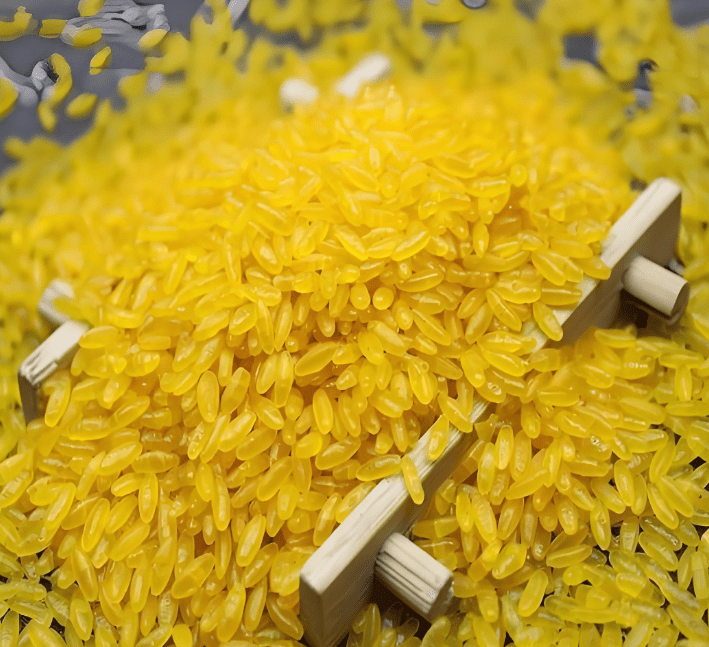
3.1.1. Process Overview
- Raw Material Preparation: Rice flour (80-100 mesh) is blended with nutrient premix (1-3% of total weight) in high-shear mixers for 15-20 minutes.
- Conditioning: The mixture is transferred to preconditioners where steam injection raises moisture to 28-32% and temperature to 80-90°C, initiating starch gelatinization.
- Extrusion: The conditioned mass enters a twin-screw extruder with specialized rice kernel die:
- Screw Configuration: Progressively increasing compression ratio (1:1 to 3:1) builds pressure to 30-40 bar.
- Temperature Profile: Four zones: feeding (50°C), mixing (90°C), cooking (110-130°C), and metering (100°C).
- Die Design: Multiple rice-shaped cavities (3-5 mm length, 1.5-2 mm width) with precise land length (2-3 mm) to shape kernels.
- Cutting: Rotating knives at die face cut extrudate at 200-400 RPM to create kernel lengths.
- Drying: Multi-pass dryers reduce moisture from 30% to 12-14% in three stages:
- Stage 1: 90°C, 10 minutes (rapid surface drying)
- Stage 2: 80°C, 15 minutes (moisture equilibration)
- Stage 3: 60°C, 20 minutes (final moisture stabilization)
- Cooling and Polishing: Ambient air cooling followed by gentle polishing to remove extruder “tails” and create natural kernel appearance.
3.1.2. Quality Parameters for Extruded Kernels
- Sinkability: >90% kernels sink in water (density >1.2 g/cm³)
- Cooking Time: Matches natural rice (12-20 minutes)
- Texture: Similar bite characteristics to natural rice
- Color Difference: ΔE <3.0 compared to natural rice
- Nutrient Retention: >80% after extrusion and drying
3.2. Cold Extrusion Technology
Cold extrusion operates below starch gelatinization temperature, preserving heat-sensitive nutrients.
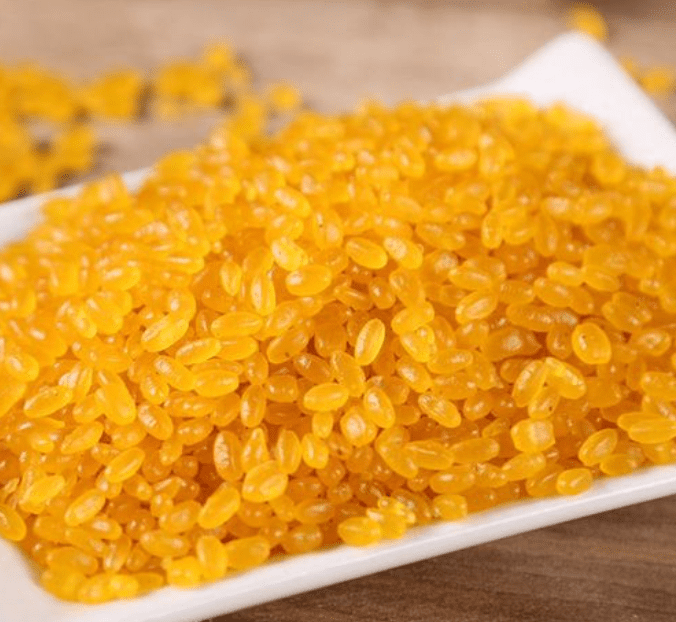
3.2.1. Process Characteristics
- Temperature: <70°C throughout process
- Moisture: 30-35% dough moisture
- Binding Agents: Food-grade binders (guar gum, xanthan at 0.2-0.5%) replace starch gelatinization
- Post-Extrusion Drying: Longer, lower temperature drying (50-60°C for 60-90 minutes)
- Advantages: Higher retention of heat-sensitive nutrients (vitamins, lysine)
- Limitations: Softer texture, higher production cost, shorter shelf life
3.3. Coating Technology
Coating applies nutrient layers to natural rice grains.
3.3.1. Layering Process
- Rice Pre-treatment: Cleaning and grading to uniform size; optional surface roughening (abrasion milling).
- Primary Coating: Rice enters rotating drum (8-12 RPM, 10° inclination); nutrient suspension (containing binder) applied via spray nozzles:
- Binder Systems: Food-grade gums (1-3% solution), modified starches, or edible polymers.
- Application Rate: 5-10% coating weight gain.
- Drying: Fluidized bed drying at 60-70°C for 15-20 minutes.
- Sealing Coating: Outer layer of edible coating (zein, shellac, or cellulose derivatives) to prevent nutrient loss during washing.
- Polishing: Light polishing to restore natural appearance.
3.3.2. Technical Challenges
- Nutrient Leaching: 20-40% nutrient loss during rinsing/washing unless sealed
- Adhesion: Achieving uniform coating on smooth rice surface
- Cost: Higher production cost than extrusion methods
3.4. Dusting Technology
Simplest method involving surface adherence of micronized nutrients.
3.4.1. Application Method
- Rice Conditioning: Slight dampening (0.5-1% moisture increase) to create sticky surface.
- Dusting Chamber: Rice falls through chamber with nutrient powder curtain.
- Adhesive Application: Fine mist of edible oil or gum solution (0.1-0.3%) improves adhesion.
- Tumbling: Gentle tumbling in mixing drum for 5-10 minutes.
- Limitations: Poor wash retention, uneven distribution, visible powder residue.
4. Blending Technology and Homogeneity Assurance
Critical to fortification success is achieving uniform nutrient distribution at the 1:100 to 1:200 ratio (fortified kernels:natural rice).
4.1. Blending System Design
4.1.1. Batch Blending Systems
- Double-Cone Blenders: 500-2000 kg capacity, optimal for 15-20 minute blending cycles.
- Ribbon Blenders: Horizontal design with counter-rotating ribbons, excellent for fragile kernels.
- Validation Protocol: Minimum 10 batches tested for homogeneity with coefficient of variation <5% for all nutrients.
4.1.2. Continuous Blending Systems
- Gravimetric Blenders: Loss-in-weight feeders for both components (accuracy ±0.5%).
- Inline Mixers: Continuous motion mixers with residence time of 2-3 minutes.
- Control Systems: PLC with feedback loops from NIR analyzers for real-time adjustment.
4.2. Segregation Prevention
Even perfect blending can be undone by segregation during handling:
- Particle Size Matching: Fortified kernels must match natural rice in size distribution (2.0-2.5 mm width, 5-7 mm length).
- Density Control: Target density of 1.4-1.5 g/cm³ for both components.
- Surface Characteristics: Similar surface texture and electrostatic properties.
- Handling Protocol: Minimize free-fall distances; use mass-flow rather than funnel-flow bins; avoid excessive vibration during transportation.
5. Nutrient Stability and Retention Optimization
Nutrient degradation represents the greatest technical challenge in rice fortification.
5.1. Degradation Pathways and Protection Strategies
5.1.1. Vitamin A Stability
- Primary Degradant: Oxidation catalyzed by light, heat, and metals.
- Protection Strategies:
- Microencapsulation in modified starch matrix (10-20 μm capsules)
- Oxygen scavengers in packaging (iron-based sachets)
- Light-blocking packaging (orange or foil-lined bags)
- Antioxidant systems (0.2% mixed tocopherols + 0.1% ascorbyl palmitate)
- Shelf Life Target: >80% retention at 6 months under tropical conditions (30°C, 65% RH).
5.1.2. Iron Stability and Interactions
- Color Changes: Iron can catalyze Maillard browning and fat oxidation.
- Minimization Strategies:
- Use of less reactive iron forms (ferrous fumarate > ferrous sulfate)
- Encapsulation with hydrogenated vegetable oil coatings (10-15% coating weight)
- pH adjustment of premix to neutral (6.5-7.5)
- Separation from reactive components in premix matrix
5.1.3. B Vitamin Stability
- Thiamine: Degrades at pH >6 and in sulfite-containing environments.
- Riboflavin: Light-sensitive; requires opaque packaging.
- Folic Acid: Oxidizes in presence of iron and copper ions.
- Stability Matrix: Separate compartments in premix for incompatible nutrients.
5.2. Cooking and Washing Retention
Consumer preparation methods significantly impact delivered nutrients:
- Washing Losses: Uncoated fortified kernels lose 20-50% water-soluble vitamins.
- Solution: Edible coatings resistant to cold water but permeable during cooking.
- Cooking Methods: Different traditional methods affect retention:
- Absorption Method (most common): 80-95% retention of sealed nutrients.
- Excess Water Method (common in South Asia): 50-70% retention.
- Rinsing Before Cooking: Additional 10-30% loss of unsealed nutrients.
- Fortification Level Adjustments: Over-fortification by 20-30% compensates for preparation losses while remaining within safe upper limits.
6. Quality Assurance and Analytical Control
Robust quality systems ensure consistent nutrient delivery and product safety.
6.1. In-Process Control Points
- Raw Material Inspection:
- Rice flour: particle size, moisture (<12%), ash content
- Premix: Certificate of Analysis for each batch; identity confirmation via FTIR
- Extrusion/Coating Parameters:
- Temperature profiles (±2°C tolerance)
- Moisture content at each stage (±1%)
- Kernel dimensions (sampling every 30 minutes)
- Blending Homogeneity:
- Composite sampling from 10 points in blender
- Rapid test for tracer nutrient (riboflavin under UV light)
- Statistical process control charts for key nutrients
6.2. Finished Product Testing
- Nutritional Analysis:
- Iron: AAS or ICP-MS (minimum monthly; at least 80% of declared value)
- Vitamin A: HPLC with fluorescence detection (protected from light)
- B Vitamins: Microbiological assay or HPLC
- Zinc: Atomic absorption spectroscopy
- Physical Testing:
- Kernel Proportion: Manual separation or image analysis (1:100 ±5%)
- Cooking Test: 12-minute boil, evaluate texture and integrity
- Color Measurement: Spectrophotometer with CIE Lab system
- Wash Test: Agitation in water for 2 minutes, analyze leachate nutrients
- Sensory Evaluation:
- Triangle tests with 30+ panelists (no significant difference from natural rice)
- Cooked rice evaluation for appearance, aroma, texture, and flavor
6.3. Stability Monitoring
Accelerated shelf-life testing protocol:
- Conditions: 37°C ±1°C, 75% RH ±3%
- Sampling Points: 0, 1, 2, 3, 6 months
- Acceptance Criteria: ≥80% retention of all nutrients at 6 months
- Real-Time Monitoring: Storage under actual conditions with quarterly testing
7. Packaging and Storage Requirements
Appropriate packaging is critical to maintaining nutrient stability and product integrity.
7.1. Packaging Material Specifications
- Moisture Barrier: Water vapor transmission rate <5 g/m²/day at 38°C/90%RH.
- Oxygen Barrier: Oxygen transmission rate <50 cc/m²/day for polyethylene; <1 cc/m²/day for laminated foil bags.
- Light Protection: Opaque materials or metallized layers (≥0.5 OD at 450 nm).
- Physical Protection: Puncture resistance >400g; seal strength >3 N/15mm.
7.2. Packaging Formats
- Retail Bags (1-5 kg):
- Multi-layer structure: BOPP/MPET/PE or PET/Aluminum foil/PE
- Nitrogen flushing to <3% residual oxygen
- Oxygen scavenger sachets for premium products
- Bulk Bags (25-50 kg):
- Woven PP with PE liner (200-250 g/m²)
- Moisture barrier >95%
- UV inhibitors for outdoor storage
- Institutional Packaging (10-20 kg):
- Laminated paper bags with PE lining
- Easy-open/reseal features for food service
7.3. Storage and Distribution
- Warehouse Conditions: <25°C, <65% RH, no direct sunlight
- Stock Rotation: First-expired-first-out (FEFO) with maximum 12-month shelf life
- Transportation: Protection from rain and excessive heat; avoid floor contact during shipping
8. Regulatory Compliance and Standards
Rice fortification operates within strict regulatory frameworks.
8.1. International Standards
- Codex Alimentarius (CXS 178-1991):
- Defines food grade nutrients
- Establishes labeling requirements
- Provides general principles for addition of essential nutrients
- WHO/FAO Guidelines:
- Recommended nutrient levels based on population needs
- Technical specifications for premixes
- Monitoring and evaluation frameworks
8.2. National Regulations
Variations exist but generally include:
- Mandatory Nutrients: Often iron, folic acid, vitamin A, thiamine
- Fortification Levels: Typically 40-60 mg iron/kg rice; 750-1500 μg RE vitamin A/kg
- Tolerance Ranges: Usually 80-120% of declared value
- Labeling Requirements: Fortified designation, nutrient list, preparation advice
- Quality Mark Certification: Third-party audit systems (e.g., NSF, SGS)
8.3. Safety Considerations
- Upper Limits: Ensure fortification levels remain below tolerable upper intake levels (ULs)
- Allergen Control: Premix facilities must avoid cross-contamination with major allergens
- Heavy Metals: Regular testing for arsenic, lead, cadmium (especially important for rice-based products)
- Microbiological Standards: <10,000 TPC/g; absence of Salmonella, E. coli, Staphylococcus aureus
9. Economic Considerations and Implementation Models
Sustainable fortification requires economically viable models.
9.1. Cost Structure Analysis
- Capital Investment: $500,000-$2,000,000 for complete production line (10-20 MT/day capacity)
- Operating Costs:
- Premix: $150-300 per MT of rice
- Processing: $20-50 per MT (energy, labor, maintenance)
- Packaging: $50-100 per MT
- Quality Control: $10-20 per MT
- Total Cost Impact: $230-470 per MT (2-5% of retail price)
9.2. Implementation Models
- Government-Led Programs:
- Public distribution systems (India, Philippines)
- School feeding programs
- Subsidies for fortification costs
- Commercial Market Models:
- Branded fortified rice products
- Corporate social responsibility initiatives
- Retail partnerships
- Public-Private Partnerships:
- Technical assistance to millers
- Quality assurance systems
- Consumer education campaigns
9.3. Cost-Benefit Analysis
Studies demonstrate significant returns:
- Cognitive Benefits: $3-17 return per $1 invested (iron and iodine)
- Productivity Gains: 5-20% increase in work capacity from reduced anemia
- Healthcare Savings: Reduced treatment costs for deficiency diseases
- Economic Growth: 2-3% GDP increase estimated from eliminating micronutrient deficiencies
10. Future Directions and Innovations
The field of rice fortification continues to evolve with technological advances.
10.1. Emerging Technologies
- Nano-encapsulation: Lipid or protein-based nanoparticles (<200 nm) for enhanced stability and bioavailability.
- Biofortification Integration: Combining conventional fortification with biofortified rice (e.g., Golden Rice with β-carotene).
- Smart Packaging: Time-temperature indicators, freshness sensors, and QR codes for traceability.
- Continuous Process Monitoring: Real-time NIR for nutrient concentration and homogeneity.
- Novel Nutrient Forms: Amino acid chelates, liposomal delivery systems, and co-crystallization technologies.
10.2. Nutritional Enhancements
- Complete Protein: Addition of lysine and other limiting amino acids.
- Dietary Fiber: Incorporation of resistant starch or soluble fiber.
- Omega-3 Fatty Acids: Microencapsulated fish or algal oils.
- Prebiotics: Inulin or FOS for gut health benefits.
- Additional Micronutrients: Vitamin D, vitamin E, selenium based on regional deficiencies.
10.3. Sustainability Considerations
- Energy Efficiency: Reduced thermal processes, waste heat recovery.
- Water Conservation: Closed-loop systems for extrusion processes.
- Waste Valorization: Utilization of by-products for animal feed or bioenergy.
- Circular Economy: Recyclable or biodegradable packaging materials.
- Carbon Footprint Reduction: Renewable energy integration and logistics optimization.
Rice fortification represents a proven, scalable intervention to address micronutrient malnutrition affecting billions worldwide. The technical complexity of producing fortified rice that is both nutritionally effective and sensorially acceptable requires sophisticated understanding of food science, engineering, and quality management. From the selection of bioavailable nutrient forms to the design of packaging that preserves stability, each step in the production chain must be meticulously controlled.
The technologies described in this guide—particularly hot extrusion for kernel production and advanced blending systems for homogeneity—have matured to the point where large-scale implementation is feasible and cost-effective. When combined with robust quality assurance, appropriate packaging, and supportive regulatory frameworks, fortified rice can deliver essential nutrients to vulnerable populations without requiring changes to dietary habits.
As the global community works toward the Sustainable Development Goals, particularly SDG 2 (Zero Hunger) and SDG 3 (Good Health and Well-being), rice fortification stands as one of the most practical tools available. The continued innovation in nutrient delivery systems, process efficiency, and implementation models promises to enhance both the reach and effectiveness of this vital public health intervention.
The production of fortified rice is more than a technical process—it is a humanitarian enterprise. Each kilogram produced represents a step toward reducing cognitive impairment in children, improving maternal health, and enhancing economic productivity. By mastering the science and technology outlined in this document, producers contribute not only to their commercial success but to the fundamental wellbeing of rice-consuming populations worldwide.
References
- World Health Organization. (2018). Guideline: Fortification of rice with vitamins and minerals as a public health strategy.
- Food and Agriculture Organization. (2020). Rice fortification: A practical manual for its implementation.
- Global Alliance for Improved Nutrition. (2019). The Technical Specification for Rice Fortification.
- Codex Alimentarius Commission. (2019). Codex Standard for Fortified Rice.
- Hoffpauer, D. W., & Wright, S. L. (2019). Rice Fortification in the 21st Century. Cereal Foods World.
- Peil, A., et al. (2020). Stability of micronutrients in fortified rice. Journal of Food Composition and Analysis.
- Thankachan, P., et al. (2021). Effectiveness of rice fortification with iron and vitamins. American Journal of Clinical Nutrition.
- Machinery Manufacturers Technical Documentation: Bühler, Clextral, GEA, Hosokawa.