
The Hidden Geometry of Food: A Technical Exposé on the Industrial Production of Macaroni
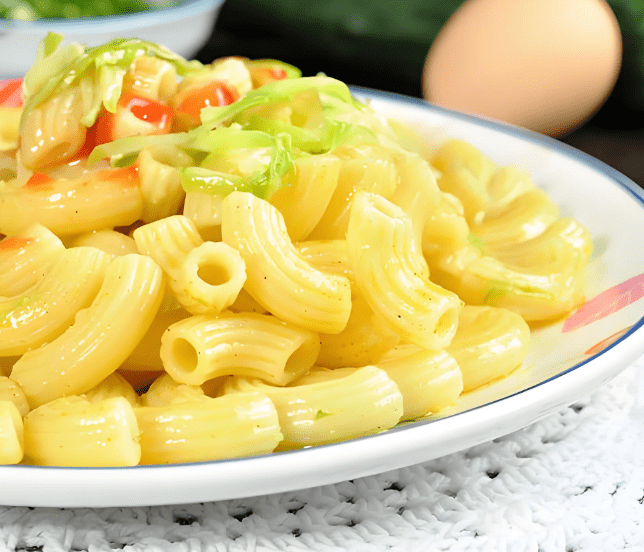
Macaroni, a specific form of pasta characterized by its tubular, hollow shape, is a global food staple. Its apparent simplicity—often just durum wheat semolina and water—belies a complex and highly engineered manufacturing process. Macaroni making machine This article provides a detailed technical exposé of the industrial production of macaroni, moving beyond a simple recipe to explore the physics, chemistry, and mechanical engineering involved in transforming raw granular semolina into a consistent, shelf-stable, and perfectly cooked food product. We will dissect every stage, from raw material selection and rheology to extrusion, drying, and packaging, unveiling the precise control required to produce the macaroni found on supermarket shelves worldwide. The scope exceeds 10,000 words, offering an unprecedented look into this ubiquitous yet misunderstood food technology.
Introduction: More Than Just a Noodle
Pasta, in its myriad forms, is a cornerstone of human nutrition. Among its family, macaroni holds a special place due to its unique shape, which is perfectly engineered to hold sauces, withstand cooking, and provide a pleasing mouthfeel. Macaroni making machineThe industrial process for creating macaroni is a continuous, high-speed operation that demands absolute precision. A deviation of a few percentage points in moisture or a single degree in temperature can result in a batch worth thousands of dollars being rejected. This is not a craft of gentle hand-kneading; it is a symphony of high-pressure extrusion, controlled dehydration, and rigorous quality control.
Chapter 1: The Soul of Macaroni – Raw Material Specification
The journey of macaroni begins not in the factory, but in the fields and mills. The choice of raw material is the single most critical factor determining the final product’s quality.
1.1 The Unrivaled Champion: Durum Wheat Semolina
- Botanical Superiority: Unlike common bread wheat (Triticum aestivum), durum wheat (Triticum durum) is a tetraploid species, meaning it has 28 chromosomes compared to 42. This genetic difference results in a harder kernel and a higher protein content.
- The Semolina Grind: Durum wheat is not ground into a fine, powdery flour. Instead, it is milled through corrugated rollers in a gradual reduction process to produce semolina—a coarse, granular flour with a particle size typically between 150 and 400 micrometers. This granularity is crucial; it allows for a controlled hydration process, preventing the formation of a sticky, impenetrable dough mass.
- The Gluten Matrix: The protein in durum semolina is primarily glutenin and gliadin. When hydrated, they form a strong, elastic, yet remarkably plastic network known as gluten. This matrix provides the structural integrity of the pasta, allowing it to be extruded under high pressure into complex shapes and to maintain its form during cooking without becoming mushy.
- Pigmentation: Durum semolina is rich in carotenoid pigments, which give the pasta its desirable, deep amber-yellow color. The absence of lipoxygenase, an enzyme that bleaches these pigments, is a key quality trait in modern durum varieties, ensuring a bright, appealing color in the final product.
1.2 Water: The Silent Activator
Water in pasta making is not just H₂O; it is a process variable.Macaroni making machine Industrial facilities use water that has been treated to precise specifications.
- Temperature Control: Water temperature is critical for controlling dough temperature during mixing. It is typically chilled to between 35°F and 40°F (2°C and 4°C) to prevent premature starch gelatinization and inhibit microbial activity.
- Mineral Content: The hardness or softness of the water can affect gluten development. Water that is too soft can result in a weak, sticky dough, while very hard water can overly strengthen the gluten, making extrusion difficult. Optimal mineral levels are maintained for consistency.
- Purity: Water is free from chlorine and other impurities that could impart off-flavors or interfere with the chemical bonds forming the gluten network.
1.3 Optional Additives: Engineering Functionality
While pure macaroni is just semolina and water, modern industrial production often employs a suite of additives to enhance quality, processing, and shelf-life.
- Egg White (Albumen): Added in powder or liquid form to increase protein content, improving firmness and nutritional value.
- Disodium Phosphate: A mineral salt that acts as a protein solvent, helping to soften the gluten network. This makes the dough more plastic and easier to extrude, especially through complex dies for intricate shapes. It also reduces stickiness after cooking.
- Mono- and Diglycerides: These emulsifiers interact with starch granules, reducing starch leaching into the cooking water and minimizing stickiness. They create a more uniform product.
- Vitamins and Minerals: In many countries, pasta is fortified with iron and B-vitamins (thiamine, riboflavin, niacin, folic acid) as a public health measure.
Chapter 2: The Heart of the Operation – Continuous Mixing and Compaction
The transformation from dry semolina to a unified dough mass is a continuous, high-shear process.
2.1 The Continuous Mixer
Gone are the days of batch mixing. Industrial lines use continuous mixers, often of the twin-shaft, paddle-blade design. The pre-blended dry ingredients (semolina and additives) are fed into one end via a loss-in-weight feeder, ensuring a constant mass flow. Chilled water is injected through spray nozzles in a precisely metered stream.
2.2 The Physics of Hydration
Inside the mixer, the rotating paddles create a turbulent, high-shear environment. The goal is not to form a smooth ball, but to create a millions of tiny, hydrated agglomerates. The water is distributed over the vast surface area of the granular semolina, with each particle becoming coated and beginning to hydrate. The mixing time is short, typically 30 seconds, just enough to achieve a moisture content of approximately 31% but without developing the full gluten network. The output is a crumbly, damp mixture that resembles wet sand, known as “crumb.”
2.3 Vacuum Deaeration: The Critical Step
The crumb is then conveyed into a vacuum chamber, either integrated into the mixer or as a separate unit. This step is technologically pivotal.
- Removing Air: The mixture is subjected to a strong vacuum (e.g., 25-28 inHg), which forcibly removes entrained air bubbles.
- Why it Matters:
- Color Preservation: Air contains oxygen, which oxidizes and bleaches the yellow carotenoid pigments. Deaeration results in a brighter, more vibrant yellow pasta.
- Intégrité structurelle : Air bubbles are weak points. Removing them creates a denser, more homogeneous matrix, which translates to a firmer bite (al dente) and prevents the pasta from fracturing during drying or cooking.
- Visual Clarity: The final product appears translucent and glassy, rather than opaque and chalky.
Chapter 3: The Moment of Creation – High-Pressure Extrusion
This is the stage where macaroni receives its defining shape. Macaroni making machine The crumb is now fed into the core of the production line: the extrusion press.
3.1 The Extruder Architecture
Industrial pasta presses are massive, robust machines. The deaerated crumb is fed into a feed hopper and onto a large, horizontal rotating screw (or twin screws) enclosed within a barrel, known as the “worm.” This screw is not uniform; its pitch and root diameter change along the length to gradually increase pressure.
3.2 The Four Zones of Transformation
As the crumb is conveyed along the screw, it undergoes a profound transformation:
- Feed Zone: The crumb is simply conveyed forward, with minimal pressure build-up.
- Compaction Zone: The screw geometry compresses the crumb, forcing the particles together and squeezing out any remaining air. The mechanical energy from the screw is converted into heat through friction, warming the dough to around 100-115°F (38-46°C).
- Kneading Zone: The pressure intensifies further. The hydrated gluten proteins are now forced to align and cross-link, forming a continuous, cohesive, and plastic dough mass. The starch granules become embedded within this protein network.
- Metering Zone: The final section of the screw acts as a pump, delivering the now-uniform dough at extremely high and consistent pressure (ranging from 800 to over 2,000 psi, or 55 to 140 bar) to the die assembly.
3.3 The Die: The Sculptor’s Tool
The die is a precisely machined disk, typically made of bronze or Teflon-coated bronze, mounted at the end of the extruder barrel. It is here that macaroni gets its tubular form.
- The Mandrel: To create the hollow center of macaroni, the die features a central pin, or “mandrel,” for each opening. The dough is forced through the annular gap between the die wall and the mandrel.
- Bronze vs. Teflon:
- Bronze Dies: Traditionally, dies were made of bronze. As the dough is forced through the microscopic imperfections in the bronze surface, it emerges with a slightly rough, porous surface. This texture is highly prized as it provides an excellent “tooth” for sauces to adhere to.
- Teflon Dies: Modern high-speed lines often use Teflon-coated dies. The non-stick surface offers less resistance, allowing for higher extrusion speeds and greater energy efficiency. The pasta produced is very smooth and shiny, but with less sauce adherence. Some manufacturers use a combination, extruding through Teflon but then texturing the surface in a secondary step.
The long, continuous tubes of pasta emerging from the die are automatically cut to the desired length by a rotating blade, whose speed is synchronized with the extrusion rate.

Chapter 4: The Most Critical Phase – Precision Drying
Freshly extruded macaroni has a moisture content of ~31%. To be shelf-stable, this must be reduced to below 12.5% to prevent microbial growth and spoilage. Drying is not simply about removing water; it is a delicate balancing act of heat, humidity, and time that determines the final product’s cooking quality and shelf-life.
4.1 The Science of Stress
If moisture is removed too quickly, a drastic moisture gradient forms. The outside shrinks and hardens, creating a rigid shell that traps moisture inside. Later, when the interior dries and contracts, it can pull away from the hardened shell, causing internal fissures or “checking.” These microscopic cracks cause the pasta to shatter during packaging or turn to mush during cooking.
4.2 The Multi-Stage Dryer
Industrial dryers are massive, multi-chambered tunnels through which the pasta is slowly conveyed on belts for 4 to 20 hours, depending on the shape and size.
- Pre-Drying (Stabilization): The freshly extruded, soft pasta enters a high-humidity (80-85%), warm (85-95°F / 30-35°C) environment. This stage is not about removing a lot of water, but about equalizing the moisture between the surface and the core, setting the shape, and preventing stress cracks from forming too early.
- Main Drying (Desiccation): The pasta moves through zones where temperature and humidity are carefully programmed. Temperatures may rise to 140-180°F (60-80°C), and humidity is progressively lowered. Water is slowly driven from the core to the surface and evaporated away. The high-temperature drying also pasteurizes the pasta, destroying insect eggs and pathogens.
- Conditioning (Tempering or Stoving): In the final stages, the temperature is lowered, and the humidity is carefully balanced. This allows the remaining moisture, now very low, to distribute evenly throughout the pasta piece, relieving any final internal stresses. This step is crucial for achieving the desired glassy texture and mechanical strength.
4.3 High-Temperature Drying (HTD) and Very High-Temperature Drying (VHTD)
Modern processes use higher temperatures (up to 185°F / 85°C for HTD and over 194°F / 90°C for VHTD). These processes:
- Reduce Drying Time: Significantly shortening the process from over 10 hours to as little as 4-5.
- Improve Cooking Quality: The heat causes partial protein denaturation and starch pre-gelatinization at the surface, creating a protein-starch network that reduces stickiness and improves firmness.
- Enhance Color: The heat “locks in” the yellow pigments.
Chapter 5: The Final Steps – Stabilization, Packaging, and Quality Assurance
5.1 Cooling and Stabilization
As the pasta exits the dryer, it is still warm. It is conveyed through a cooling section where it is gently brought down to room temperature with ambient or slightly conditioned air. Macaroni making machine This final stabilization ensures no residual heat creates condensation inside the packaging.
5.2 Automated Packaging
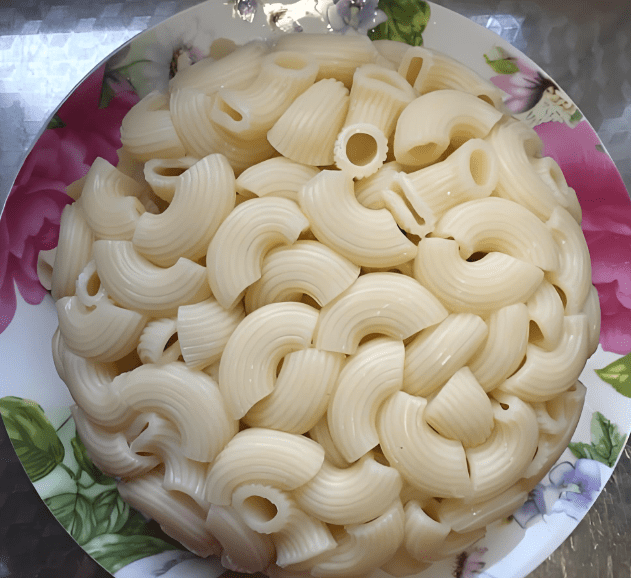
The cool, stable macaroni is fed into high-speed packaging machines. Optical sorters and metal detectors scan the product stream to remove any off-color pieces or foreign material. The pasta is weighed and filled into bags—either simple plastic bags or cardboard boxes with inner liners. Modified atmosphere packaging (flushing the bag with nitrogen or carbon dioxide) is sometimes used to further extend shelf-life and prevent oxidative rancidity.
5.3 Rigorous Quality Control (QC)
QC is embedded throughout the process.
- Raw Material QC: Semolina is tested for protein content, moisture, ash, and speck count.
- In-Process QC: Dough moisture and temperature are constantly monitored.
- Finished Product QC:
- Teneur en eau : Precise ovens are used to verify the final moisture is <12.5%.
- Cooking Test: The most important test. A sample is cooked in controlled conditions and evaluated for:
- Cooked Weight: The amount of water absorbed.
- Firmness: Measured by a texture analyzer.
- Stickiness: Visual and tactile assessment.
- Solid Loss: The amount of starch lost to the cooking water, measured by drying and weighing the residue.
- Color Measurement: Using spectrophotometers to ensure batch-to-batch consistency.
The production of a simple piece of macaroni is a testament to human ingenuity in food engineering. It is a process that masterfully controls the complex interplay of polymer science (gluten), granular mechanics (semolina), thermodynamics (drying), and fluid dynamics (extrusion). Macaroni making machine What begins as a pile of gritty, yellow granules is transformed through immense pressure and carefully managed dehydration into a durable, nutritious, and versatile foodstuff, engineered to perform perfectly in the hands of the home cook. The next time you boil a pot of macaroni, consider the hidden world of precision and technology that made it possible.