
The Canine Kitchen: How an Extruder Transforms Raw Ingredients into Kibble
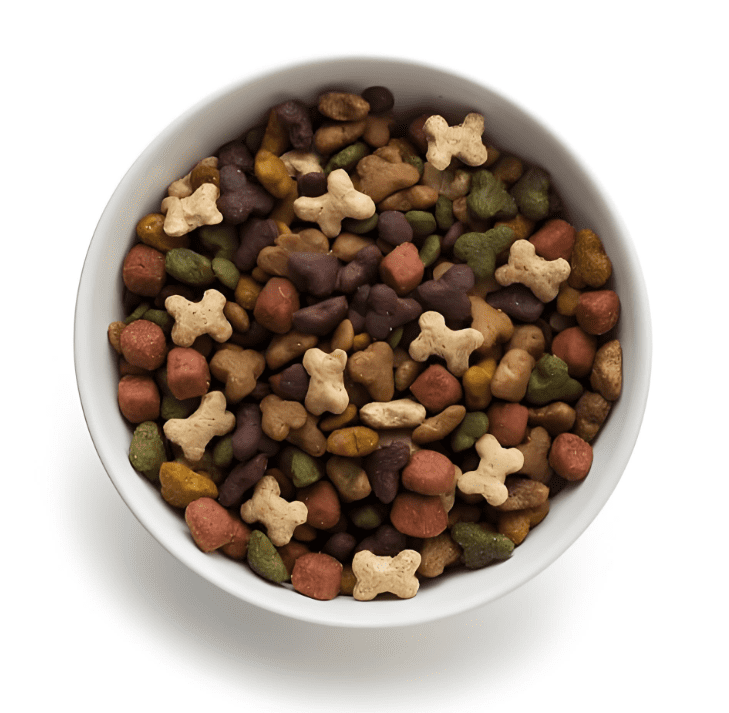
If you’ve ever looked at a piece of dry dog food, or kibble, you might have wondered how it gets its distinct shape, texture, and consistency. dog food extruder The answer lies in a remarkable piece of industrial engineering called the extrudeuse. This machine is the heart of dry pet food production, transforming a slurry of raw ingredients into the uniform, shelf-stable pellets we recognize as kibble.
Here is a step-by-step breakdown of the dog food extrusion process.
Step 1: Recipe and Ingredient Selection
The process begins with a precise nutritional formula developed by pet nutritionists. Common ingredients include:
- Protein Sources: Meat meals (e.g., chicken meal, fish meal), fresh meats, and plant-based proteins.
- Carbohydrates: Grains like corn, wheat, or rice, or grain-free alternatives like potatoes, peas, or lentils.
- Fats, Vitamins, and Minerals: Added to ensure a complete and balanced diet.
Step 2: Grinding and Weighing
All solid ingredients are first ground into a fine meal or flour. This is a critical step as a consistent particle size ensures uniform mixing and a smooth extrusion process. dog food extruder The ingredients are then precisely weighed according to the recipe and transferred to a mixer.
Step 3: Mixing
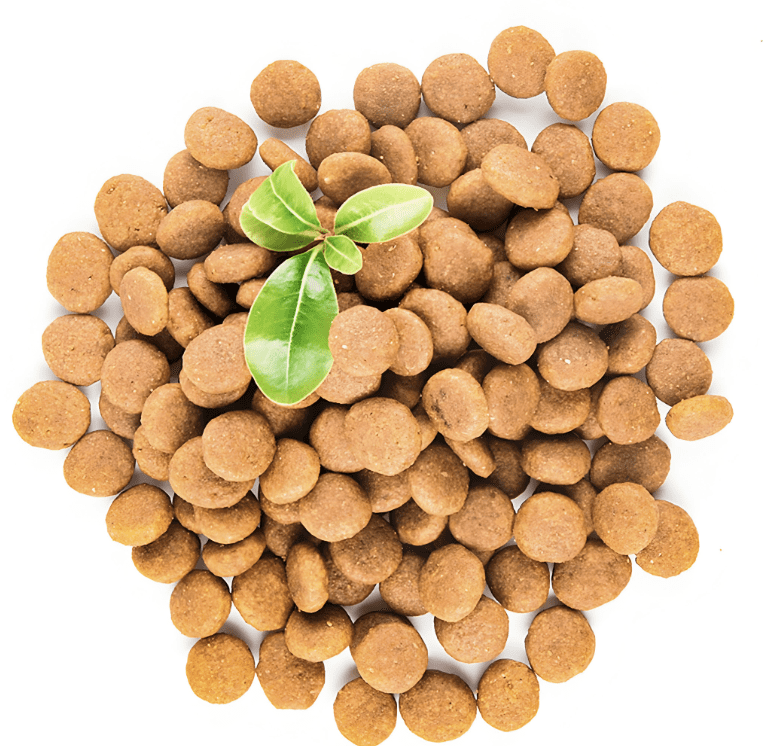
The ground ingredients are blended together with water, steam, and sometimes liquid fats or broths in a large, industrial mixer. This creates a thick, uniform dough. The addition of water and heat at this stage begins the cooking process and prepares the starches for gelatinization.
Step 4: The Extrusion Cooker
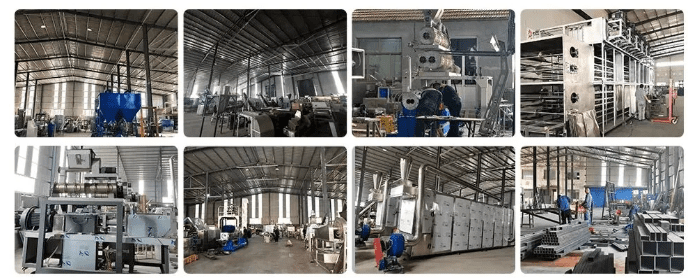
This is the core of the entire operation. The dough is fed into the extruder, which is essentially a large, long barrel with a rotating screw inside.
- Conditionnement : As the dough moves through the barrel, it is subjected to intense heat, high pressure, and continuous mechanical shear from the screw.
- Gelatinization: Under these extreme conditions, the starches in the mixture gelatinize. This means they break down and absorb water, becoming digestible and acting as a binder that will hold the kibble together.
- Protein Denaturation: The proteins in the recipe also denature, or unravel, which makes them more digestible for dogs and helps destroy harmful bacteria.
Step 5: Shaping the Kibble
At the end of the extruder barrel is a metal plate called a mourir. This die has precisely cut holes that determine the final shape and size of the kibble—whether it’s bones, stars, or circles. As the hot, pressurized dough is forced through these holes, it expands rapidly and is sliced to the desired length by a rotating knife on the outside of the die.
Step 6: Drying and Cooling
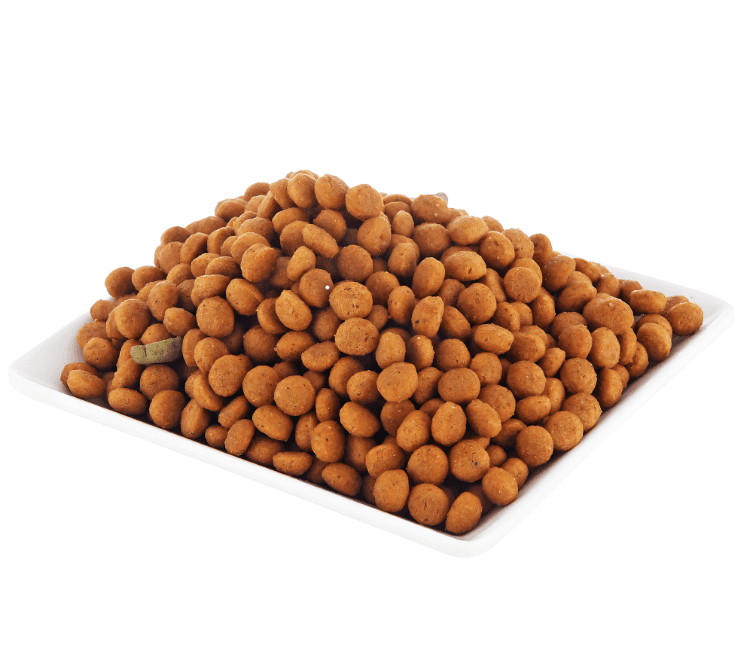
The newly formed kibble is soft and moist. It is immediately transferred to a multi-pass dryer, where hot air is blown over it to remove the majority of the moisture, making it shelf-stable. After drying, the kibble is cooled to room temperature to prevent condensation and mold growth in the packaging.
Step 7: Coating (Enrobing)
Once cool and dry, the kibble enters a drum coater, often called an “enrober.” Here, a fine mist of palatants (flavor enhancers like powdered meat broths) and digest (sprayed fats and oils) is applied. This coating is crucial because the high-temperature extrusion process can diminish natural flavors. The coating makes the food highly appealing to dogs and adds essential fatty acids back into the formula.
Step 8: Packaging
The finished kibble is conveyed to automated packaging machines, where it is weighed and sealed into bags. To preserve freshness and prevent the fats from going rancid, dog food extruder the bags are often flushed with inert gases like nitrogen before sealing, which displaces oxygen.
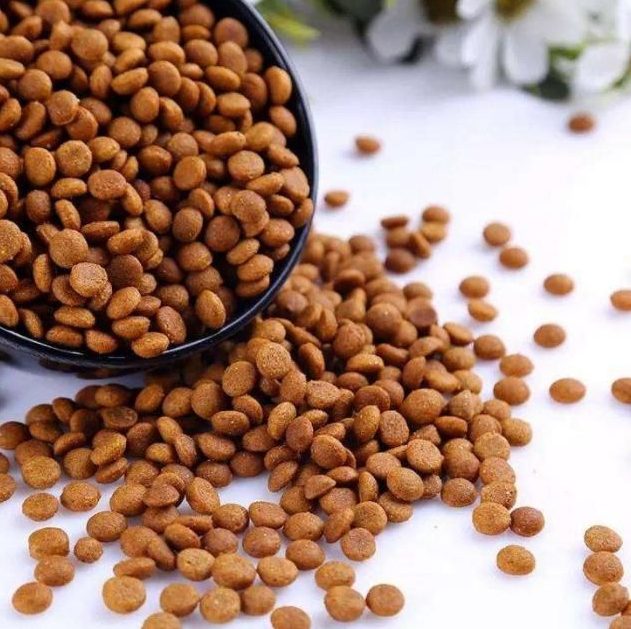
In Summary:
The extruder is a marvel of food technology. It efficiently cooks, shapes, and texturizes raw ingredients in a single, continuous process. This method not only creates a consistent, dog food extruder convenient, and shelf-stable product but also ensures that the nutrients are highly digestible for our canine companions. The next time you pour a bowl of kibble, you can appreciate the complex science and engineering that went into making each and every piece.