
The Bitter Truth in Your Bowl: An Exposé of the Breakfast Cereal Corn Flake Manufacturing Process
For generations, the cheerful, sunshiny box of corn flakes has been an icon of the wholesome, quick, and nutritious breakfast. Marketed with images of radiant health, athletic vitality, and family unity, it has secured a place on kitchen tables worldwide. corn flakes making machine However, a profound disconnect exists between the marketing narrative and the manufacturing reality. This article is a comprehensive investigation into the industrial processing of corn flakes. It will deconstruct the multi-stage journey of a simple corn kernel into a flake, revealing the extensive mechanical, thermal, and chemical interventions that strip away natural nutrition, introduce potentially harmful substances, and create a hyper-palatable, sugar-laden product. corn flakes making machine We will delve into the specifics of ingredient sourcing, the high-temperature cooking and extrusion processes, the application of vitamin and mineral coatings, the science of flavor engineering, and the sophisticated packaging and marketing strategies that sustain the product’s health halo. This exposé aims to empower consumers with the knowledge to see beyond the box and understand the true nature of the modern breakfast cereal.

1. Introduction: The Genesis of a Global Phenomenon
The story of corn flakes begins, paradoxically, in a sanitarium. In the late 19th century, Dr. John Harvey Kellogg and his brother, Will Keith Kellogg, at the Battle Creek Sanitarium in Michigan, were seeking a bland, vegetarian food that would curb patients’ masturbatory habits and dyspepsia. Their accidental creation of wheat flakes, and later corn flakes, was intended as a health food. The original product was made of just corn, water, and salt, and was so plain that Will Keith Kellogg later added sugar to make it palatable to the masses, leading to a rift between the brothers and the birth of the Kellogg’s company.
This historical context is crucial. The product has journeyed from a strict, therapeutic health food to a mass-market commodity. The modern manufacturing process is a testament not to nutritional science, but to food engineering, scale economics, and marketing prowess. The “wholesome” image is a carefully managed relic of its origins, obscuring a reality dominated by profit margins and shelf-life requirements.
2. The Raw Material: Not Just an Ear of Corn
The journey begins not with sweet corn on the cob, but with field corn (or dent corn), a starchy, hard, and largely inedible variety primarily grown for animal feed and industrial uses.
- GMO Dominance: The vast majority of field corn grown in the United States, the world’s largest producer, is genetically modified. The most common traits are herbicide tolerance (e.g., Roundup Ready) and insect resistance (e.g., Bt corn). While the food safety of GMOs is widely endorsed by major scientific bodies, the environmental impact of the associated monoculture farming and herbicide use is a significant concern. corn flakes making machine The corn used in flakes is often a blend from various sources, with its GMO status rarely highlighted on the final box.
- The Milling Process: Creating Grits: The corn kernels are first cleaned and then subjected to a process called dry milling. The goal is to remove the hull (bran) and the germ (the oily, nutrient-rich embryo) to isolate the starchy endosperm. The germ is removed primarily because its high fat content would cause the flakes to become rancid quickly, shortening shelf life. This de-germing step, while crucial for stability, eliminates a significant portion of the corn’s natural vitamins, minerals, healthy fats, and fiber. The endosperm is then ground into a coarse particle known as a corn grit.
This is the first major nutritional compromise: the whole grain is disassembled, and its most nutritious components are discarded or sold off as by-products for animal feed. The primary ingredient becomes a refined, predominantly starchy powder.
3. The Cooking Process: The Giant Pressure Cooker
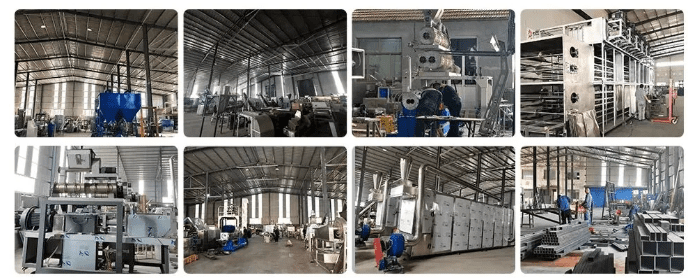
The corn grits are then transported to massive, continuous cookers. This is not like cooking porridge on a stovetop; it is an industrial high-pressure, high-temperature process.
- The Slurry: The grits are mixed with water, salt, sugar (or corn syrup), and malt flavoring to create a slurry. The addition of sugar at this early stage is critical; it penetrates the grits, ensuring sweetness is baked into the very structure of the flake, not just coated on the outside.
- Malt Flavoring: Malt, typically from barley, is added primarily for its enzymatic properties (to break down some starch into simpler sugars for browning) and its distinctive, warm, slightly sweet flavor. It is a key component of the “classic” corn flake taste.
- High-Pressure Steam Cooking: The slurry is fed into a massive, rotating pressure cooker, often called a “batch cooker.” Inside, it is subjected to live steam at high pressure, reaching temperatures of 100-125°C (212-257°F) for one to two hours. The combination of heat, moisture, and pressure completely gelatinizes the starch, meaning the starch granules swell, burst, and absorb water, transforming the gritty slurry into a viscous, semi-translucent, cooked mass with the consistency of dough.
- The “Cooker Jam”: At the end of this cycle, the material is a hot, sticky, and dense lump. To get it out, the pressure is violently released, causing the mass to “explode” out of the cooker. This process, called “jet blowing,” begins the process of creating the porous structure that will later become the crisp flake.
This stage is about transformation and preservation. The intense heat and moisture ensure that any natural enzymes or microorganisms are destroyed, but it also further degrades any heat-sensitive vitamins that may have survived the milling process.
4. The Delumping and Drying: From Mass to Pellets
The hot, gummy mass from the cooker is far from flake-ready. corn flakes making machine It is full of lumps and has an inconsistent moisture content.
- Delumping: The mass is forced through a machine with oscillating paddles or through a coarse screen to break it down into smaller, more uniform pieces.
- Tempering and Drying: The delumped material, still containing about 30-40% moisture, is then conveyed to a long, slow-moving conveyor belt inside a drying tunnel. Here, it is cooled and dried for several hours. The goal is not to make it brittle, but to reduce the moisture content to a uniform 20-25% and to allow the moisture to distribute evenly throughout the material. This slow cooling and drying process is critical for the starch to partially retrograde, or re-crystallize, which is essential for achieving the right final texture. At this stage, the product is known as “cooker pellets” or “grits.” These are hard, semi-transparent, and glassy kernels.
5. The Flaking: The Birth of a Shape
The cooker pellets are now ready to be transformed into the iconic flat flakes. This is done using a flaking mill.
- Conditionnement : The pellets are first “conditioned” by adding a small amount of steam or water to soften their surface slightly, making them more pliable.
- The Mighty Rolls: The conditioned pellets are then fed between two massive, counter-rotating steel rolls. These rolls are precisely machined and cooled to a specific temperature. The gap between them is infinitesimally small—often less than a millimeter. As each pellet is squeezed through this gap, it is flattened into a thin, characteristic flake.
- The Importance of the Roll: The pressure of the rolls creates the flake’s final density and thickness. The cooling of the rolls is crucial; if the rolls were hot, the flakes would stick to the surface and wrap around them, creating a tangled mess instead of individual flakes.
6. The Toasting: Crisping, Browning, and Sterilizing
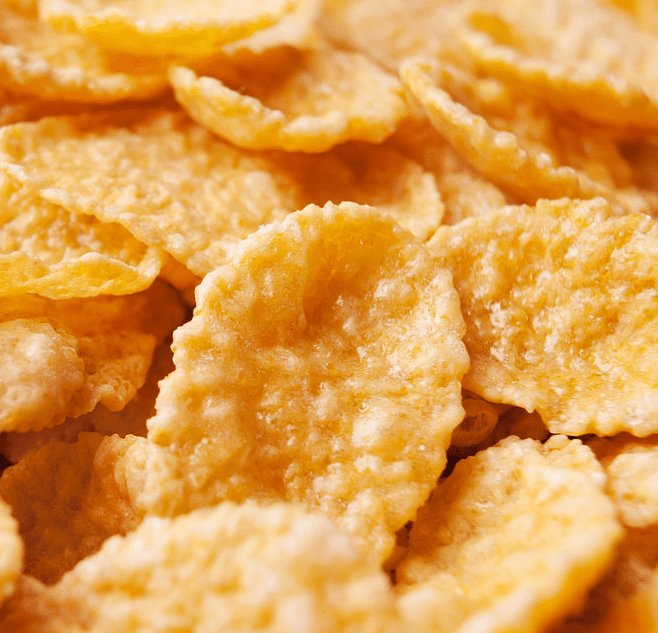
The flattened flakes are now soft, malleable, and still contain too much moisture. The toasting process accomplishes three things: it dries them, it crisps them, and it creates the desired golden-brown color and toasted flavor.

- The Toasting Oven: The flakes are conveyed through a long, gas-fired toasting oven. The temperature inside is typically between 300-350°C (570-660°F). The residence time is short, only 60-90 seconds.
- The Physics of Puffing: The intense, rapid heat causes the residual moisture inside the flake to instantly turn into steam. This steam attempts to escape, puffing up the flake and creating its final light, crisp texture. The high temperature also induces the Maillard reaction—a chemical reaction between amino acids and reducing sugars—which is responsible for the development of the brown color and the complex, roasted, nutty flavors associated with toasted grains.
- Final Moisture Control: The toasting reduces the moisture content to a very low level, typically 1-3%. This is critical for shelf stability, as it makes the product inhospitable to microbial growth and ensures the crispness that consumers expect.
It is important to note that at these high temperatures, any remaining delicate, heat-sensitive nutrients are thoroughly destroyed. The flake that emerges is essentially a starchy, crispy matrix with little intrinsic nutritional value beyond calories.
7. The Coating and Fortification: The Illusion of Health
This is perhaps the most critical stage from a marketing and nutritional perspective. The plain, toasted flake is bland and nutritionally barren. corn flakes making machine The following steps create the “health” profile advertised on the box.
- The Sugar Coating (Enrobbing): For many varieties, the first coating is a sugar slurry. The flakes are tumbled in a revolving drum while a fine mist of a liquid sugar solution (often sucrose, or more cheaply, high-fructose corn syrup) is sprayed onto them. As the hot flakes cool, the syrup hardens into a thin, glossy, crunchy coating. This is how “Frosted Flakes” and similar products are created. This process can dramatically increase the sugar content, sometimes making sugar the second, or even first, ingredient by weight.
- The Vitamin and Mineral Spray (Fortification): Because the natural vitamins and minerals were stripped away during milling and destroyed during cooking and toasting, they must be added back. This is the process of fortification. A synthetic mixture of vitamins (e.g., B vitamins like niacin, B6, riboflavin, thiamin, and folic acid) and minerals (primarily iron) is dissolved into a liquid and sprayed onto the flakes in a similar drum. This spray often also contains gums or stabilizers to help the vitamins adhere.
- The “Health Halo” Deconstructed: This fortification process is the foundation of the “good source of vitamins and minerals” claim. It allows marketers to highlight specific nutrients on the front of the box. However, nutritionists argue that this is a reductionist approach to health. It ignores the synergistic effect of the full spectrum of phytonutrients, fiber, and healthy fats that are present in the whole grain but are absent in the refined, reconstituted product. You are not eating a nutritious whole grain; you are eating a refined carbohydrate dusted with a multivitamin.
8. Flavor Engineering: The Science of Addiction
While plain corn flakes rely on the toasted malt flavor, many modern varieties are flavor-packed. This is the domain of food science and flavor chemistry.
- Natural and Artificial Flavors: The term “natural flavor” is a legal definition that can mean the flavor was derived from a natural source, but through intense processing. “Artificial flavors” are chemically synthesized compounds that mimic natural flavors. These flavors are developed in laboratories to be highly potent and appealing. They are designed to create a specific, consistent taste experience with every bite, something a whole food cannot always guarantee.
- The Bliss Point: Food scientists work to find the “bliss point” for their products—the precise combination of sugar, salt, and fat that maximizes palatability and makes it virtually irresistible to stop eating. The crispy texture, which provides an auditory and tactile sensation (the “crunch”), further enhances this hedonic experience, encouraging overconsumption.
9. Packaging: The Final Seal of Deception
The packaging process is not just functional; it is the final act of branding.
- The Liner: To maintain their crispness, the flakes are packaged in a plastic bag inside the cardboard box. This bag is often made from a multi-layer polymer with a wax or foil layer that provides a barrier against moisture and oxygen.
- Emballage sous atmosphère modifiée (MAP) : In some high-end processes, the air inside the bag is flushed out and replaced with an inert gas like nitrogen. This prevents oxidative rancidity (of any residual fats) and slows staling, further extending the product’s shelf life to a year or more.
- The Box as a Billboard: The cardboard box serves as the primary marketing tool. It is adorned with vibrant colors, charismatic mascots, and strategic health claims. Terms like “Whole Grain” (which may be technically true if the bran and germ were added back, but often they are not), “Good Source of Fiber” (often isolated, added fibers like inulin), and “Contains 8 Essential Vitamins & Minerals” dominate the design, creating a powerful health halo that influences purchasing decisions at the point of sale.
10. The Nutritional and Health Implications
The cumulative effect of this processing pipeline is a food product with a specific and concerning nutritional profile.
- High Glycemic Index (GI): The extensive processing—milling, cooking, flaking, toasting—pre-digests the starch, making it very easy for the body to break down into glucose. This leads to a rapid spike in blood sugar and insulin levels. A consistent diet of high-GI foods is linked to an increased risk of type 2 diabetes, obesity, and heart disease.
- The Sugar Problem: Even beyond the frosted varieties, many “healthy” corn flakes contain significant added sugar. Starting the day with a high-sugar meal can set off a cycle of cravings and energy crashes throughout the day.
- Low Satiety: Despite the “fortified” claims, these cereals are often low in protein and fiber, the two key nutrients that promote a feeling of fullness. This can lead to overconsumption at breakfast or snacking shortly after.
- The Illusion of Wholesomeness: The greatest public health impact may be the misperception. Parents serve this to their children believing it is a healthy choice, while in reality, it is little more than a dessert masquerading as a balanced meal.
11. Conclusion: A Choice of Conscience and Consciousness
The modern corn flake is a marvel of food engineering, a product designed for scale, stability, and profitability. corn flakes making machine It is a testament to our ability to transform a hardy, indigestible grain into a uniform, crispy, and long-lasting commodity. However, this engineering comes at a cost—a cost to nutritional integrity, to metabolic health, and to consumer transparency.
The cheerful box, a fixture of morning routines for over a century, contains a reality far removed from Dr. Kellogg’s sanitarium original or the idyllic farms depicted on its packaging. It is a product born from pressure cookers, steel rollers, and flavor labs.
As consumers, the power lies in informed choice. Understanding that “fortified” does not equal “whole,” and that a health claim on the front of the box is often a distraction from the ingredient list on the back, is the first step. The true, wholesome breakfast likely resides not in a colorful cardboard box, but in the simple, less-processed foods that have sustained humans for millennia: whole fruits, eggs, plain yogurt, and truly whole grains like oatmeal, which require the one thing industrial food seeks to eliminate: a little more time and preparation. The real crunch we should be seeking is not from a flake, but from an apple or a carrot, a sound that signifies real, unprocessed food.