
1. Introduction
As the global pet industry continues to grow, dog owners are paying increasing attention to the quality, nutritional value, safety, and digestibility of pet food. Dogs are no longer fed simply to satisfy their hunger. Instead, owners want balanced nutrition that supports healthy growth, strong bones, a shiny coat, good digestion, and overall well-being.
For dog food manufacturers, producing high-quality dog food is therefore an important way to improve product competitiveness and build customer trust. However, making premium dog food requires more than selecting good ingredients. It involves scientific formula design, precise ingredient processing, advanced extrusion technology, proper drying, effective coating, and strict quality control.
So, how can manufacturers produce high-quality dog food? This article explains the essential ingredients, production processes, equipment, and quality control measures involved in modern dog food manufacturing.
2. Choose High-Quality Raw Materials
Raw materials are the foundation of high-quality dog food. Even with advanced production equipment, poor-quality ingredients cannot produce a nutritious and safe final product.
Manufacturers should select ingredients according to the nutritional requirements of dogs at different life stages, including puppies, adult dogs, and senior dogs.
2.1 Animal Protein Sources
Protein is one of the most important nutrients in dog food. It supports muscle development, tissue repair, immune function, and normal body growth.
Common animal protein ingredients include:
- Chicken meal
- Fish meal
- Beef meal
- Turkey meal
- Dried eggs
- Other approved animal protein ingredients
Animal proteins generally provide essential amino acids that dogs need. Manufacturers should pay attention to protein digestibility, freshness, processing history, and supplier reliability rather than evaluating ingredients only by their crude protein content.
2.2 Grains and Carbohydrate Sources
Carbohydrates provide energy and help create the desired structure and texture of extruded dog food.
Common carbohydrate sources include:
- Corn
- Wheat
- Rice
- Sorghum
- Oats
- Barley
These ingredients also contribute starch, which plays an important role in the extrusion process. When starch is properly gelatinized under controlled temperature, moisture, and pressure, it helps dog food achieve a stable structure and desirable texture.
2.3 Fats and Oils
Fat is an important energy source and helps improve the palatability of dog food. It also supplies essential fatty acids that support healthy skin and coat condition.
Common fat sources include chicken fat, fish oil, and other suitable vegetable oils.
The amount and type of fat should be carefully controlled according to the product formula. Excessive fat may affect product stability, while insufficient fat may reduce palatability and nutritional value.
2.4 Vitamins and Minerals
Vitamins and minerals are essential for maintaining normal physiological functions.
Typical nutritional additives include:
- Vitamin A, D, and E
- B-complex vitamins
- Calcium
- Phosphorus
- Zinc
- Iron
- Copper
- Selenium
The formula should provide an appropriate balance of nutrients rather than simply adding large quantities of individual vitamins and minerals.
2.5 Fiber and Functional Ingredients
Fiber supports digestive health and helps regulate intestinal movement.
Ingredients such as beet pulp, vegetable fiber, and certain cereal fibers can be included in dog food formulas.
Depending on the product positioning, manufacturers may also incorporate appropriate prebiotics, probiotics, and other functional ingredients. Their suitability, processing stability, and permitted usage levels should be evaluated carefully.
3. Develop a Scientifically Balanced Dog Food Formula
Choosing high-quality ingredients is only the first step. A scientifically balanced formula determines whether the final product can meet dogs’ nutritional requirements.
Different dogs have different nutritional needs.
For example:
- Puppy food should support rapid growth and development.
- Adult dog food should maintain body condition and daily energy requirements.
- Senior dog food may require adjustments to energy density, protein quality, and other nutrients.
- Active working dogs may need higher energy intake.
- Weight-management products should carefully control calorie density.
When developing a formula, manufacturers should consider the following factors:
Protein content: Ensure adequate high-quality protein and essential amino acids.
Fat content: Provide sufficient energy and essential fatty acids.
Calcium and phosphorus: Maintain an appropriate balance to support bone health.
Vitamin and mineral levels: Meet the nutritional requirements of the intended target population.
Digestibility: Select ingredients and processing conditions that support nutrient availability.
Palatability: Make the product attractive to dogs in terms of aroma, taste, and texture.
Professional nutritionists should formulate products according to recognized nutritional standards, such as AAFCO nutrient profiles or FEDIAF nutritional guidelines, as applicable to the target market.
Laboratory analysis and feeding trials, where appropriate, can help verify nutritional adequacy.
4. Use Advanced Dog Food Extrusion Technology
8
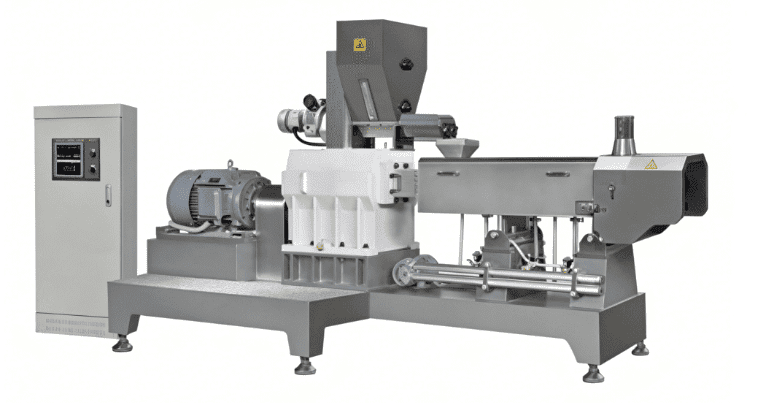
Extrusion is one of the most widely used technologies for manufacturing dry dog food. It combines mixing, heating, moisture conditioning, mechanical shear, and pressure to transform raw ingredients into shaped kibble.
The extrusion process has a significant influence on the texture, expansion, digestibility, and appearance of dog food.
A modern dog food extrusion system generally includes a feeding system, conditioner, extruder, forming die, and cutting device.
4.1 Raw Material Grinding
Before mixing, large raw materials such as corn, wheat, and other grains need to be ground into a suitable particle size.
A hammer mill is commonly used for this operation.
Uniform grinding helps ingredients mix evenly and improves the consistency of the extrusion process. Excessively coarse particles may cause uneven cooking and poor product structure.
4.2 Ingredient Mixing
After grinding, different ingredients are weighed according to the formula and transferred into a mixer.
The purpose of mixing is to distribute proteins, starches, fats, minerals, and other ingredients evenly.
Uniform mixing is particularly important because inconsistent ingredient distribution may result in differences in nutritional composition and product quality between individual batches.
4.3 Conditioning

The mixed ingredients enter a conditioner, where water and steam are added to increase moisture and temperature.
Conditioning helps soften the raw materials and prepare starches and proteins for extrusion cooking.
The moisture content, temperature, and conditioning time must be adjusted according to the formula and equipment configuration.
Proper conditioning can improve extrusion stability, reduce unnecessary mechanical load, and contribute to consistent kibble quality.
4.4 Extrusion Cooking

The conditioned mixture enters the extruder, where rotating screws convey, compress, mix, and cook the material.
Under controlled temperature, pressure, moisture, and mechanical shear, starch gelatinization and protein structural changes take place.
When the material passes through the die, the sudden pressure reduction allows moisture to flash into steam, causing the product to expand and form its characteristic porous structure.
The shape of the final dog food depends largely on the die design and cutting system.
By changing the molds and processing parameters, manufacturers can produce different kibble shapes, including:
- Round dog food
- Square dog food
- Bone-shaped dog food
- Ring-shaped dog food
- Fish-shaped dog food
- Customized kibble shapes
Stable extrusion conditions help ensure uniform size, density, expansion, and texture.
5. Control the Drying Process Carefully

Drying is one of the most important stages in producing high-quality dry dog food.
Freshly extruded kibble contains relatively high moisture and cannot be packaged directly. If moisture remains excessive, the product may become vulnerable to microbial growth, deterioration, and reduced shelf life.
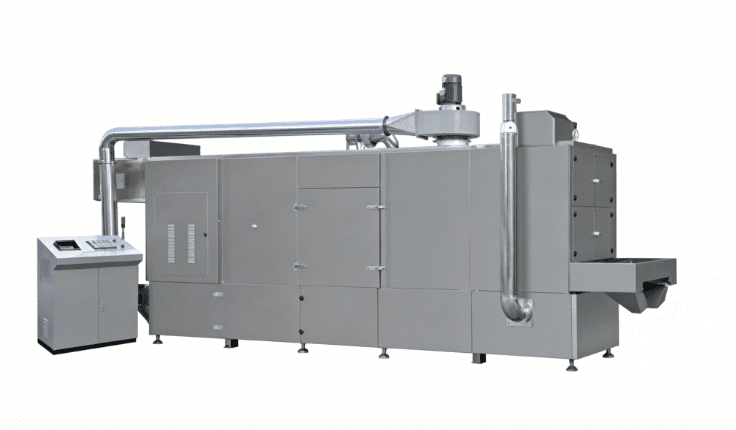
A commercial dog food production line generally uses a multi-layer belt dryer or another suitable industrial drying system.
Important Drying Considerations
1. Control drying temperature
Drying temperature should be adjusted according to kibble size, initial moisture, formula, and equipment design. Excessively high temperatures may cause surface hardening, uneven moisture distribution, or unnecessary nutrient degradation.
2. Control drying time
The drying time should be long enough to achieve the target moisture content throughout the product. Large kibble generally requires different drying conditions from small kibble.
3. Maintain uniform airflow
Hot air should circulate evenly throughout the drying chamber. Uneven airflow can cause inconsistent drying, with some products becoming too dry while others retain excessive moisture.
4. Monitor final moisture content
The finished product should meet the manufacturer’s validated moisture specification and applicable food safety requirements.
5. Allow appropriate cooling
After drying, dog food should be cooled before coating and packaging. Packaging products while they are still hot may cause condensation and affect storage stability.
Proper drying improves product stability, maintains kibble structure, and helps extend shelf life.
6. Improve Palatability Through Oil and Flavor Coating
Even if dog food contains balanced nutrition, dogs may refuse to eat it if the taste and aroma are not attractive.
Therefore, coating is an important step in improving the palatability of dry dog food.
After drying and cooling, kibble can enter a coating machine, where suitable fats, oils, palatants, and other approved ingredients are applied to the product surface.
Common coating ingredients include:
- Chicken fat
- Fish oil
- Animal protein hydrolysates
- Approved flavor enhancers
- Certain nutritional additives
A vacuum coating machine can help distribute liquid ingredients more uniformly throughout the kibble.
The coating process should be carefully controlled to avoid excessive oil application, uneven distribution, and surface stickiness.
Proper coating can improve aroma, taste, energy density, and consumer acceptance.
7. Maintain Strict Quality Control Throughout Production
High-quality dog food is not achieved through one piece of equipment or one processing stage. It requires consistent quality control from raw material purchasing to finished product packaging.
Manufacturers should establish a complete quality management system.
7.1 Raw Material Inspection
Before production, incoming materials should be inspected for:
- Appearance and odor
- Moisture content
- Nutritional composition
- Microbiological quality
- Contaminants and mycotoxins
- Supplier documentation and traceability
Raw materials that fail established acceptance criteria should not enter production.
7.2 Monitor Production Parameters
During processing, operators should regularly monitor:
- Grinding particle size
- Ingredient mixing uniformity
- Conditioning temperature and moisture
- Extrusion temperature and pressure
- Screw speed and feeding rate
- Product expansion and density
- Drying temperature and final moisture
- Coating uniformity
Recording these parameters makes it easier to identify production problems and maintain consistent product quality.
7.3 Finished Product Testing
Finished dog food should undergo appropriate laboratory testing before being released to the market.
Important testing indicators include:
| Testing item | Purpose |
|---|---|
| Crude protein | Evaluate protein content |
| Crude fat | Evaluate fat content |
| Crude fiber | Evaluate fiber content |
| Moisture | Assess storage stability |
| Ash | Evaluate total mineral residue |
| Calcium and phosphorus | Check mineral composition |
| Microbiological indicators | Evaluate food safety |
| Oxidative stability | Assess fat deterioration |
| Physical properties | Check kibble size, hardness, and appearance |
Depending on the target market, manufacturers should also test for relevant pathogens, heavy metals, mycotoxins, and other contaminants.
A complete batch testing and traceability system helps ensure that every finished product meets the established quality specifications.
8. Choose the Right Dog Food Production Equipment
10
Advanced equipment is essential for maintaining production efficiency and product consistency.
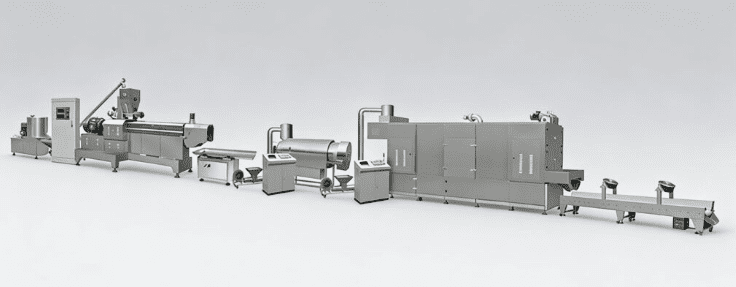
A complete dry dog food production line generally consists of the following machines:
| Equipment | Main function |
|---|---|
| Raw material grinder | Grinds grains and other ingredients |
| Mélangeur | Blends ingredients uniformly |
| Conditioner | Adds steam and moisture |
| Dog food extruder | Cooks and forms kibble |
| Dryer | Reduces product moisture |
| Machine de refroidissement | Cools finished kibble |
| Coating machine | Applies fats and palatants |
| Screening machine | Removes fines and broken pieces |
| Packaging machine | Weighs and packs finished products |
Manufacturers can choose different equipment configurations according to their production capacity, investment budget, product types, and factory space.
For small-scale manufacturers, a compact production line may be a practical starting point. Medium- and large-scale factories may require automated conveying, centralized control systems, and higher-capacity processing equipment.
When selecting equipment, it is important to consider not only the purchase price but also processing performance, energy consumption, maintenance requirements, spare parts availability, and after-sales technical support.
9. Common Mistakes to Avoid When Producing Dog Food
Even with a complete production line, improper operation can reduce product quality.
Here are several common mistakes manufacturers should avoid.
1. Using low-quality raw materials
Poor-quality ingredients may introduce nutritional deficiencies, contaminants, or inconsistent processing characteristics.
2. Ignoring formula balance
A high protein percentage does not automatically mean high-quality dog food. The complete nutritional profile must meet the needs of the target dogs.
3. Inconsistent grinding and mixing
Uneven particle sizes and inadequate mixing can lead to inconsistent extrusion and nutritional distribution.
4. Improper extrusion parameters
Incorrect moisture, temperature, pressure, or screw speed may result in poor expansion, uneven texture, and unstable product quality.
5. Inadequate drying
Excessive residual moisture can shorten shelf life and increase microbial risks.
6. Excessive coating
Too much oil or flavoring may cause sticky products, packaging problems, and reduced storage stability.
7. Poor packaging
Packaging materials should provide appropriate moisture, oxygen, and light barriers. Inadequate sealing may cause oxidation, moisture absorption, and product deterioration.
Avoiding these mistakes can significantly improve production consistency and reduce unnecessary manufacturing losses.
10. Proper Packaging and Storage
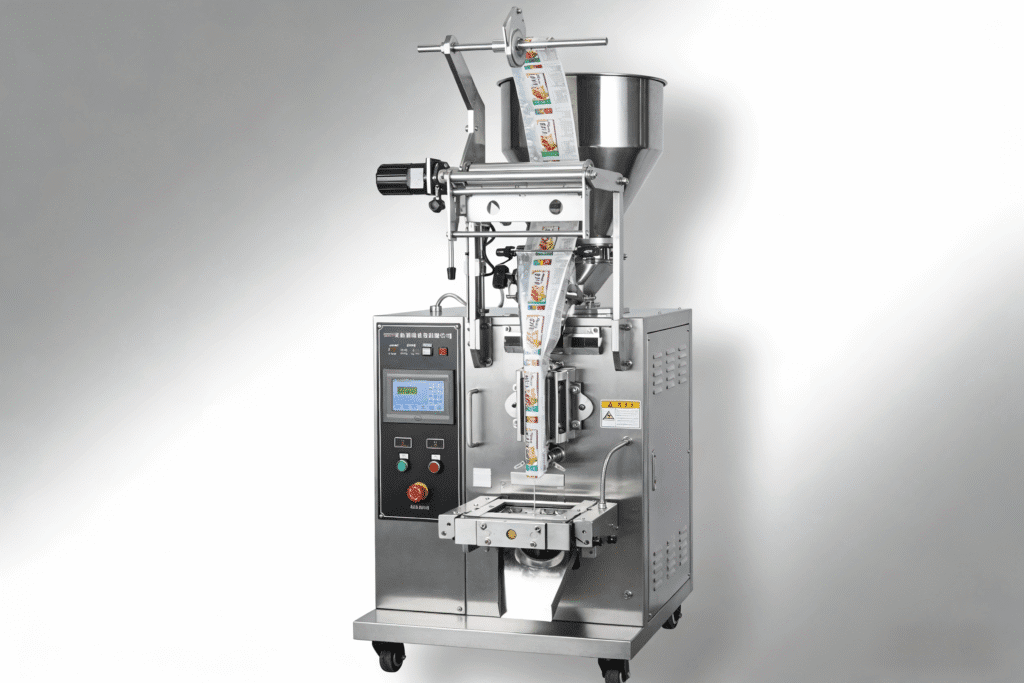
Packaging is the final stage of dog food production, but it plays an important role in preserving product quality.
Dry dog food should be packed in clean, food-grade packaging materials with suitable moisture and oxygen barrier properties.
Common packaging formats include:
- Small retail bags
- Medium-sized stand-up pouches
- Large dog food bags
- Bulk packaging for commercial distribution
Packaging should be properly sealed to prevent moisture absorption and oxygen exposure.
Manufacturers should also include essential product information on the label, such as:
- Product name and intended life stage
- Ingredient list
- Guaranteed nutritional analysis
- Feeding instructions
- Net weight
- Manufacturing date and expiration date
- Storage recommendations
- Manufacturer information
- Batch identification
Finished products should be stored in a cool, dry, clean, and well-ventilated warehouse. They should be protected from direct sunlight, excessive humidity, pests, and chemical contamination.
A first-in, first-out inventory system can help prevent products from remaining in storage for too long.
11. How to Improve the Quality of Dog Food Continuously
Producing a good batch of dog food is not the ultimate goal. Manufacturers need to maintain consistent quality over long-term production.
The following strategies can help achieve continuous improvement.
Optimize the Formula
Regularly evaluate ingredient quality, nutritional composition, palatability, and production costs. Formula adjustments should be supported by nutritional analysis rather than simply replacing expensive ingredients with cheaper alternatives.
Upgrade Production Technology
Modern extrusion systems and automated production equipment can improve processing stability, reduce manual errors, and increase production efficiency.
Improve Energy Efficiency
Optimize steam consumption, dryer airflow, heat recovery, and equipment operation to reduce energy costs without compromising product safety or quality.
Strengthen Employee Training
Operators should understand equipment operation, production parameters, hygiene requirements, and troubleshooting procedures.
Establish a Reliable Quality Management System
Implement documented procedures for raw material inspection, production monitoring, sanitation, laboratory testing, product release, and traceability.
These measures help manufacturers build a reliable production system and strengthen their competitiveness in the pet food market.
12. Conclusion
Producing high-quality dog food requires a combination of premium raw materials, scientifically balanced formulas, advanced extrusion technology, precise drying, effective coating, and strict quality control.
Every production stage contributes to the final product. From ingredient selection and grinding to extrusion, drying, cooling, coating, and packaging, manufacturers must carefully control processing conditions to achieve consistent nutritional value, good palatability, stable kibble structure, and reliable shelf life.
For businesses planning to enter the pet food industry, investing in a suitable dog food production line is an important step. By selecting the right equipment, optimizing processing parameters, and establishing a comprehensive quality management system, manufacturers can produce dog food that meets market requirements and earns the trust of pet owners.
Ultimately, the key to making high-quality dog food is not simply producing attractive kibble. It is delivering safe, nutritious, digestible, and consistent products that support dogs’ long-term health.


