
The Unique Challenge of Filling Puffed Rice Products
Puffed rice cakes present special filling challenges due to their delicate, porous, and brittle structure. Unlike denser baked goods, their airy matrix requires specialized techniques to introduce fillings without compromising texture or structural integrity.
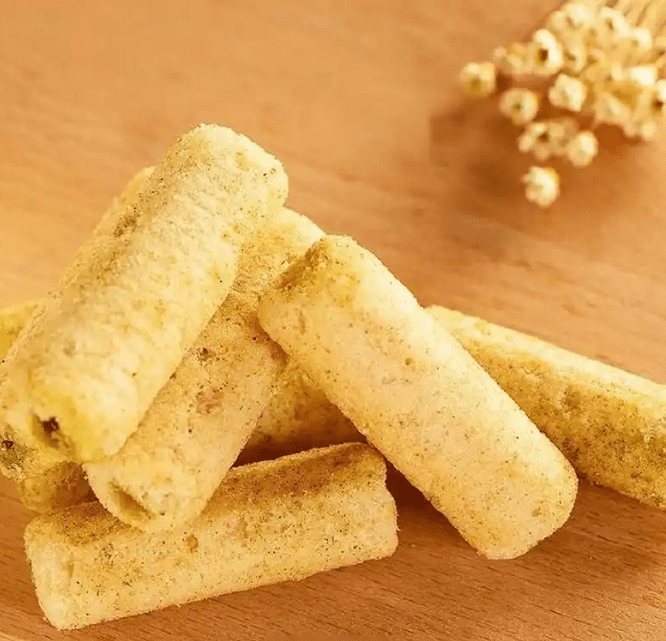
Primary Filling Methods for Puffed Rice Cakes
1. Injection Filling (Most Common for Cream/Soft Centers)
This is the predominant method for mass-produced filled rice cakes with creamy centers (chocolate, peanut butter, fruit creams).
Process Steps:
- Precision Positioning: Puffed rice cakes move along a conveyor belt to a filling station where they are precisely aligned.
- Needle Penetration: Multiple thin, hollow needles (usually 3-5) simultaneously penetrate the rice cake from the bottom or side.
- Needle diameter: 1-2mm to minimize structural damage
- Penetration depth: Carefully controlled to reach center without piercing opposite side
- Pressure-Controlled Injection: The filling material (maintained at specific viscosity) is injected under controlled pressure (typically 2-5 bar).
- Key Consideration: Pressure must be high enough to distribute filling but low enough to prevent cake rupture
- Volume Control: Precise volumetric pumps deliver consistent filling amounts (usually 15-30% of product weight)
- Needle Retraction & Seal: As needles retract, the porous structure of the rice cake naturally “closes” around the injection points. Some manufacturers apply a light edible adhesive or use heat to seal entry points.
2. Sandwich/Assembled Method
For layered fillings or when using solid/chunky fillings.
Process Steps:
- Precision Slicing: Rice cakes are sliced horizontally into two even halves using fine wire cutters or ultrasonic blades.
- Filling Application: A measured amount of filling is deposited on the bottom half.
- For spreadable fillings: Rotary screen printing or stencil methods
- For discrete pieces: Precision placement systems
- Lid Placement: The top half is carefully aligned and placed over the filling.
- Bonding: Light pressure or edible adhesive seals the halves. Some products undergo brief microwave exposure to slightly melt chocolate-based fillings for natural adhesion.
3. Vacuum Impregnation (For Liquid or Syrup Fillings)
Used when thorough penetration is desired.

Process Steps:
- Vacuum Chamber Placement: Rice cakes enter a sealed chamber.
- Air Removal: Air is extracted from the rice cakes’ porous structure (200-400 mbar vacuum).
- Filling Introduction: The filling material is introduced into the chamber under controlled conditions.
- Pressure Restoration: Atmospheric pressure is restored, forcing filling into the pores.
- Drainage & Surface Cleaning: Excess surface filling is removed via centrifugation or air knives.
Critical Technical Considerations
Filling Formulation
- Viscosity Control: Fillings must have precise rheological properties
- Too thin: Leakage through pores
- Too thick: Incomplete distribution or structural damage during injection
- Temperature Management: Chocolate-based fillings require precise tempering; fruit fillings may need pectin or gum stabilization
- Activity Matching: Water activity (a_w) of filling must match rice cake to prevent moisture migration
Equipment Specifications
- Needle Design: Tapered tips, specialized coatings (PTFE) to reduce friction
- Filling Heads: Multi-port systems for even distribution
- Vision Systems: Camera inspection for proper alignment and quality control
- Weight Verification: In-line checkweighers ensure filling accuracy (±0.5g tolerance typical)
Quality Control Challenges & Solutions
| Challenge | Solution |
|---|---|
| Cake breakage during injection | Optimize needle speed, use support fixtures, adjust cake moisture content |
| Filling leakage | Control filling viscosity, use sealing techniques, optimize injection pressure |
| Incomplete filling | Adjust needle placement, modify filling rheology, consider vacuum assistance |
| Moisture migration | Match water activity, use moisture barriers in formulation |
| Structural collapse | Reinforce cake structure with binding agents, control puffing parameters |
Innovations in Rice Cake Filling
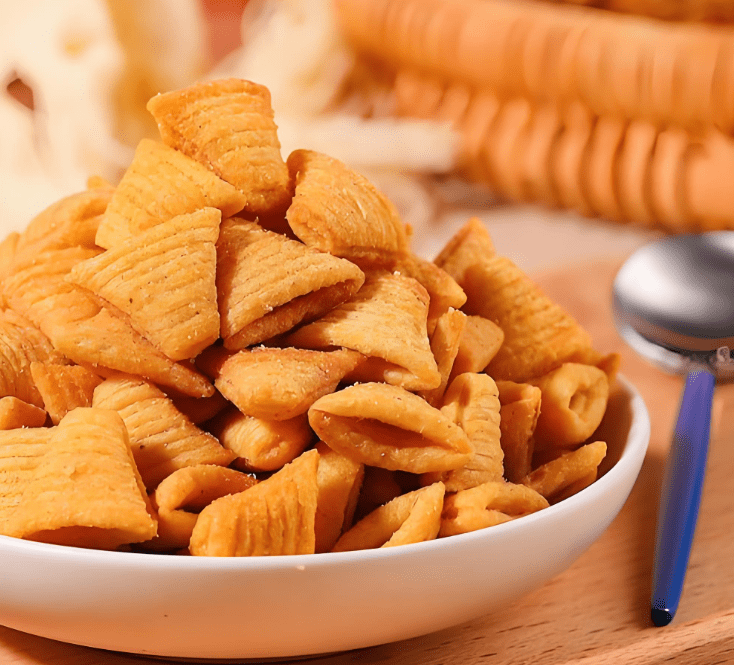
- Multi-Zone Fillings: Sequential injection of different fillings (e.g., chocolate center surrounded by peanut butter)
- Micro-Encapsulated Ingredients: Flavor bursts or functional ingredients in encapsulated form within fillings
- Co-Injection Systems: Simultaneous injection of filling and inert gas to create aerated centers
- Ultrasonic Sealing: Using ultrasonic vibrations to seal injection points without additional adhesives
Comparison of Methods
| Method | Best For | Filling Content | Advantages | Limitations |
|---|---|---|---|---|
| Injection | Creamy, smooth centers | 15-30% | High speed, minimal handling, good weight control | Limited to pumpable fillings, potential for leakage |
| Sandwich | Chunky, layered fillings | 20-40% | Versatile filling types, visual appeal | More handling, potential for misalignment, shorter shelf-life |
| Vacuum | Liquid infusion | 10-25% | Even distribution, good for flavored liquids | Equipment intensive, limited to low-viscosity fillings |
Conclusion
Filling puffed rice cakes represents a sophisticated balancing act between introducing appealing centers and maintaining the delicate crispy structure that defines these products. Modern manufacturing employs precision engineering, specialized formulations, and rigorous process controls to create consistently filled rice cakes. The choice of filling method depends on the desired product characteristics, filling type, production scale, and shelf-life requirements. As consumer demand for filled snacks grows, continued innovation in this area focuses on increasing filling percentages while maintaining structural integrity and expanding the range of possible filling textures and flavors.