
Extruded filled rice crackers are popular snack foods known for their crispy texture, attractive shapes, and delicious fillings. They typically consist of a crunchy outer shell made from rice flour, corn flour, or other cereal ingredients, combined with a flavorful filling such as chocolate, cheese, peanut butter, cream, or savory seasoning paste.
With the development of food extrusion technology, manufacturers can produce filled rice crackers in various shapes, sizes, flavors, and textures. But how are these snacks made? What equipment is required, and what are the key processing steps? This article explains the complete production process of extruded filled rice crackers.
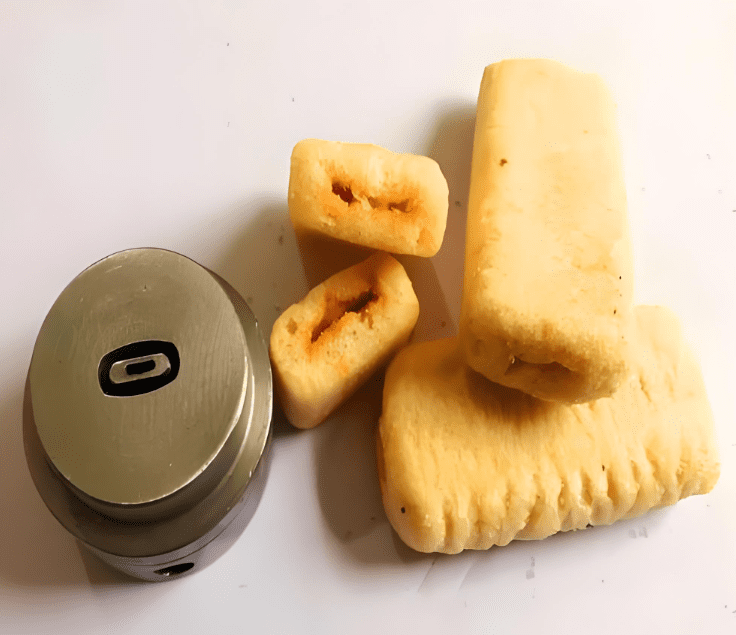
1. Raw Material Preparation
The first step in producing extruded filled rice crackers is preparing the raw materials. The quality and proportions of the ingredients directly influence the final product’s texture, expansion, taste, and nutritional characteristics.
Common raw materials include:
- Rice flour: The main ingredient, providing a smooth structure and crispy texture.
- Corn flour: Helps improve expansion and contributes to the flavor.
- Wheat flour or starch: Adjusts the dough’s structure and processing properties.
- Vegetable oil: Improves the texture and mouthfeel.
- Sugar and salt: Enhance the overall flavor.
- L'eau : Adjusts the moisture content of the mixture.
- Food additives: Depending on the formulation, emulsifiers and other permitted processing ingredients may be used.
Before production, raw materials should be inspected, weighed, and screened to remove impurities. Accurate ingredient proportions help ensure consistent product quality.
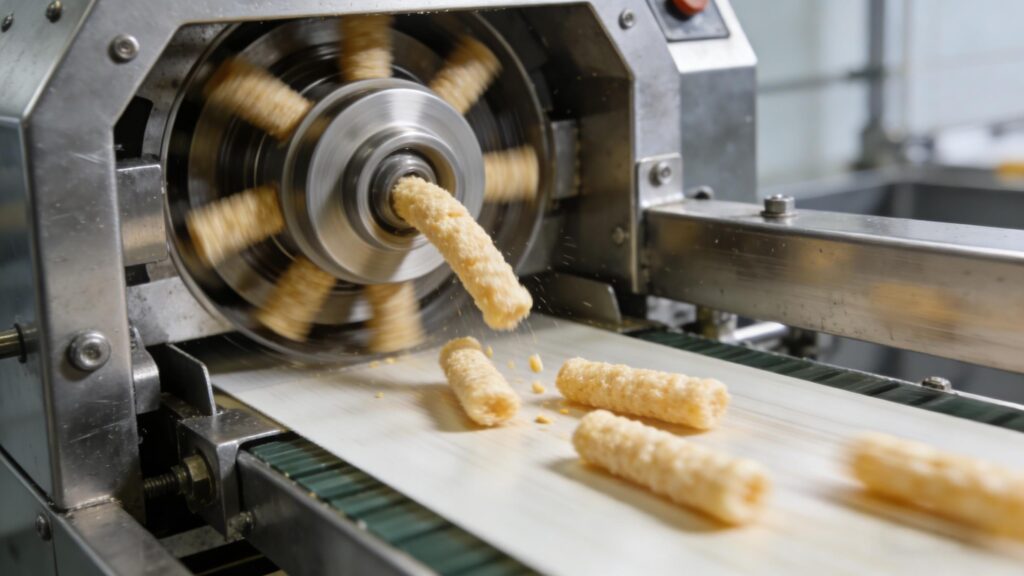
2. Mixing and Dough Preparation
After preparing the raw materials, the ingredients are transferred into a mixer.
Rice flour, corn flour, starch, and other dry ingredients are first mixed evenly. Water and other liquid ingredients are then added gradually to achieve the required moisture content.
The purpose of mixing is to distribute moisture and ingredients uniformly throughout the mixture. A consistent mixture helps prevent uneven expansion, irregular shapes, and product defects during extrusion.
The moisture content of the dough must be carefully controlled. If the mixture is too dry, it may cause unstable extrusion and poor product expansion. If it contains too much moisture, the finished crackers may have a dense structure and require longer drying time.
3. Extrusion and Outer Shell Formation
Extrusion is one of the most important stages in filled rice cracker production.
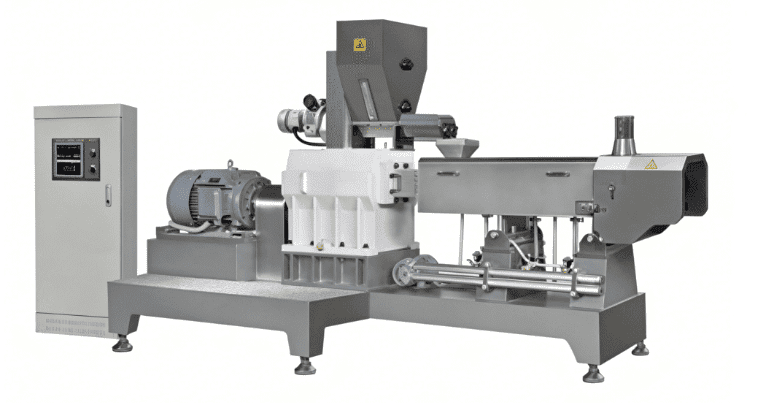
The prepared mixture is transported into an extruder, where mechanical pressure, heat, and shear forces transform the raw materials into a plasticized dough.
Inside the extruder, the ingredients are mixed, compressed, heated, and cooked. The dough is then pushed through a specially designed extrusion die.
For filled rice crackers, a co-extrusion system is commonly used. It consists of an outer-shell material supply system and an inner-filling supply system.
During co-extrusion, the outer dough forms a continuous tube or shell, while the filling material is injected into the center. This allows manufacturers to produce products with different filling ratios and shapes.
The extrusion die determines the initial product shape, while the extrusion parameters influence the structure and quality of the outer shell.
4. Filling Preparation and Injection
The filling is another important factor affecting the taste and commercial value of filled rice crackers.
Depending on the target product, manufacturers can choose different fillings, including:
- Chocolate cream
- Peanut butter
- Cheese filling
- Milk-flavored cream
- Fruit-flavored filling
- Savory fillings
The filling should have suitable viscosity and flow properties to ensure stable delivery through the injection system.
During production, the filling is pumped into the center of the extruded outer shell through a specialized filling nozzle.
The filling flow rate must be coordinated with the extrusion speed. If the filling quantity is too high, the outer shell may become thin or rupture. If the filling quantity is too low, the finished product may not have the desired filled structure.
Proper adjustment of the filling system helps achieve uniform filling distribution and consistent product quality.
5. Cutting and Shaping
After co-extrusion, the continuous filled product is cut into individual pieces using an automatic cutting device.
Manufacturers can adjust the cutting length according to product specifications and market requirements.
Different extrusion dies and cutting systems can produce various shapes, such as:
- Cylindrical filled rice crackers
- Pillow-shaped rice crackers
- Short tubular snacks
- Round filled snacks
- Customized geometric shapes
The cutting process should be synchronized with extrusion speed to ensure consistent product dimensions and minimize deformation.
6. Drying Process
Freshly extruded filled rice crackers generally contain more moisture than the finished product. Therefore, drying is necessary to achieve the desired crispness and storage stability.
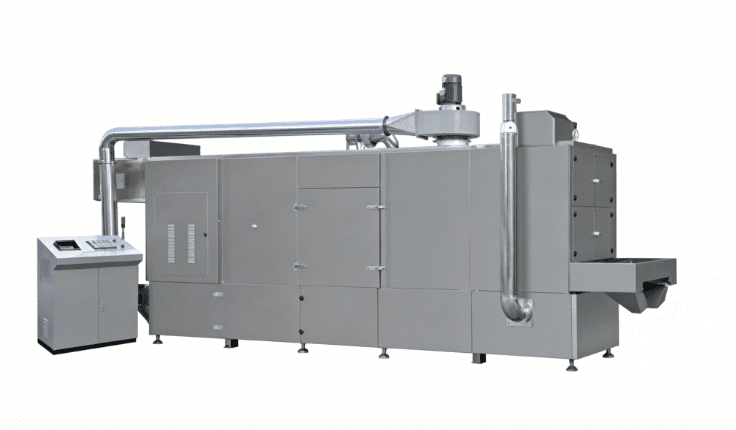
The products are transported into a continuous drying oven or multi-layer conveyor dryer.
During drying, hot air removes excess moisture from the outer shell. Temperature, drying time, airflow, and product loading density must be controlled carefully.
Several factors should be considered:
Drying temperature: Excessively high temperatures may cause surface cracking, deformation, or damage to heat-sensitive fillings.
Drying time: Insufficient drying can result in a soft texture and poor storage stability, while excessive drying may cause undesirable color changes or texture defects.
Airflow: Uniform hot-air circulation helps ensure consistent moisture removal throughout the product batch.
The appropriate drying conditions depend on the product formulation, filling type, dimensions, and equipment configuration.
7. Baking or Puffing Treatment
Depending on the product formulation and production technology, an additional baking or puffing stage may be used.
Some filled rice crackers are expanded during extrusion, while others undergo further heat treatment to develop a lighter and crispier texture.
During this stage, the product structure becomes more porous, and its final texture and flavor characteristics develop.
Manufacturers must select suitable processing conditions to avoid excessive expansion, shell rupture, or filling leakage.
Not every filled rice cracker requires a separate baking stage. The specific process depends on the chosen production technology.
8. Seasoning and Flavor Enhancement
After drying and cooling, some filled rice crackers undergo additional seasoning treatment.
A seasoning drum or coating machine can be used to distribute powdered seasonings, oil-based flavors, or other permitted flavoring ingredients evenly over the product surface.
Popular flavors include:
- Barbecue
- Cheese
- Spicy
- Seaweed
- Tomato
- Sour cream and onion
- Salted egg yolk
The amount of seasoning should be controlled carefully to maintain a balanced flavor without making the outer shell excessively oily or affecting its crispness.
9. Cooling and Quality Inspection
Before packaging, the finished products should be cooled to an appropriate temperature.
Packaging products while they are still hot may cause condensation inside the package, potentially affecting crispness and shelf life.
After cooling, manufacturers should conduct quality inspections.
Important inspection points include:
- Product shape and size
- Outer shell thickness
- Filling distribution
- Texture and crispness
- Color and appearance
- Moisture content
- Flavor and aroma
- Microbiological safety
Products with broken shells, uneven filling, abnormal shapes, or other defects should be separated from qualified products.
Regular quality inspections help maintain consistent production standards.
10. Packaging and Storage
Packaging is the final stage of filled rice cracker production.
Automatic weighing and packaging machines can measure the required quantity and pack the finished products into bags.
Common packaging materials include laminated plastic films with suitable moisture and oxygen barrier properties.
Good packaging helps protect the snacks against moisture absorption, oxidation, contamination, and physical damage during transportation.
For better storage stability, manufacturers should ensure that the products are sufficiently cooled and meet the required moisture specifications before packaging.
The finished products should be stored in a clean, dry, cool environment, away from direct sunlight and excessive humidity.
11. What Equipment Is Needed for Extruded Filled Rice Cracker Production?
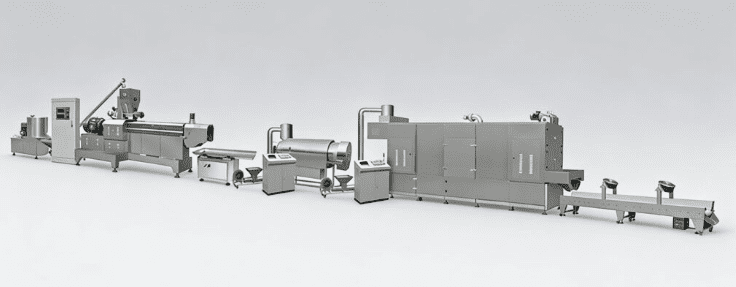
A complete production line usually includes the following equipment:
- Raw material mixer: Mixes rice flour, corn flour, starch, and other ingredients.
- Feeding system: Delivers the prepared mixture into the extrusion equipment.
- Extruder: Cooks and forms the outer shell material.
- Filling system: Prepares and supplies the filling material.
- Co-extrusion machine: Combines the outer shell and inner filling.
- Automatic cutting machine: Cuts the continuous extruded product into individual pieces.
- Drying machine: Removes excess moisture and develops the desired texture.
- Seasoning machine: Applies flavoring ingredients to the product surface.
- Cooling conveyor: Reduces product temperature before packaging.
- Automatic packaging machine: Weighs and packages the finished snacks.
The actual equipment configuration depends on the product design, production capacity, filling characteristics, and required level of automation.
12. Key Factors Affecting the Quality of Filled Rice Crackers
Although the production process may appear straightforward, several factors determine the quality of the finished product.
1. Raw material formulation
The ratio of rice flour, corn flour, starch, and other ingredients influences expansion, crispness, and structural strength.
2. Extrusion parameters
Temperature, screw speed, pressure, and moisture content affect cooking quality and product formation.
3. Filling viscosity
The filling must have suitable flow characteristics to ensure smooth injection and uniform distribution.
4. Shell thickness
The outer shell must be strong enough to contain the filling while remaining light and crispy.
5. Drying conditions
Proper drying is essential for achieving the target moisture content, crispness, and storage stability.
6. Packaging quality
Moisture-resistant packaging helps preserve the product’s texture and prevent quality deterioration.
Conclusion
Extruded filled rice cracker production combines ingredient preparation, mixing, extrusion, filling injection, cutting, drying, seasoning, cooling, and packaging. Each processing stage plays an important role in determining the final product’s appearance, taste, texture, and quality.
With a properly designed co-extrusion production line, manufacturers can produce filled rice crackers in different shapes, sizes, and flavors while maintaining stable production efficiency.
For businesses planning to enter the filled rice cracker market, selecting suitable extrusion and filling equipment, developing a reliable product formulation, and controlling processing parameters are essential steps toward successful production.


