
Abstract: Bread crumbs are a versatile food ingredient whose quality depends heavily on the interplay between formulation, baking, and comminution. This paper examines the key processing stages—dough preparation, baking, drying, and grinding—and evaluates how variations in these stages determine the final product’s texture, oil absorption, and color. Particular attention is given to the distinction between Japanese-style and American-style crumbs, the role of drying methods, and emerging strategies for reducing oil uptake.
1. Introduction
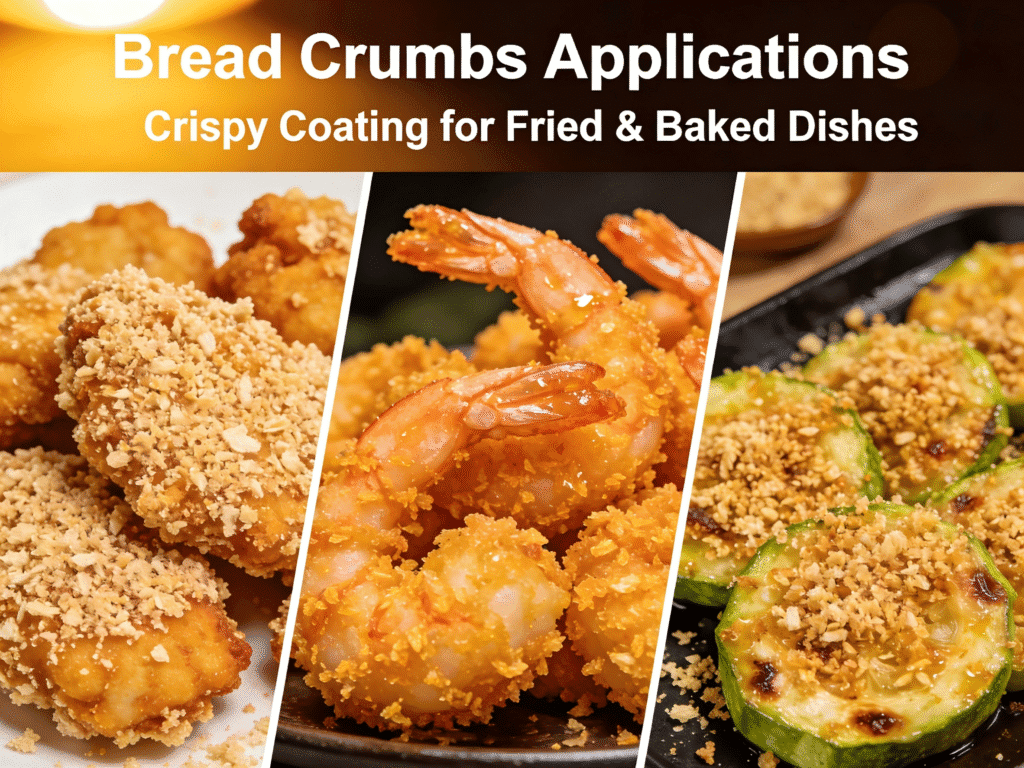
Bread crumbs are produced in two principal styles that differ markedly in morphology and function. Japanese-style crumbs (panko) are characterized by elongated, needle-like particles with a porous, airy structure that delivers exceptional crispness and low oil retention during frying. American-style crumbs, by contrast, are finer, denser, and more uniform, serving primarily as a binder or a light coating. The processing route selected—especially dough hydration, baking method, and grinding severity—dictates which style emerges and how well it performs in end-use applications.
2. Dough Preparation and Formulation
The foundation of crumb quality is the dough system. A patent describing industrial bread crumb manufacture specifies distinct protocols for each style . For American crumbs, wheat flour is mixed with a low percentage of yeast and water for 5 to 8 minutes, then extruded into a sheet approximately 25 mm thick. Japanese-style crumbs require a longer mix (8–12 minutes) and a much thinner sheet (approximately 6 mm), with a higher yeast proportion to promote expansion during baking. The thinner sheet, combined with a relaxation conveyor that induces rippling, creates the undulating structure that later yields the characteristic flaky panko texture.
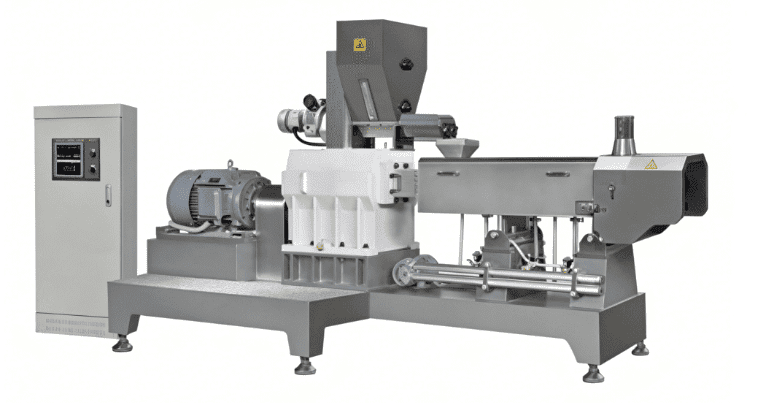
Formulation innovations have targeted functionality beyond texture. A 2025 study optimized a low-oil-absorption crumb using whole wheat flour (60%) and kelp powder (5%), with high-temperature and high-pressure pretreatment of the flour significantly reducing the oil absorption rate of the fried product to 36.15%, a 35.40% reduction compared with commercial counterparts . Fermentation conditions were standardized at 28 °C for 60 min (first proof) and 32 °C for 60 min (second proof), followed by baking at 190 °C for 25 min. This illustrates how ingredient pretreatment can alter the structural properties of the final crumb in ways that directly address consumer health concerns.
3. Baking and Drying
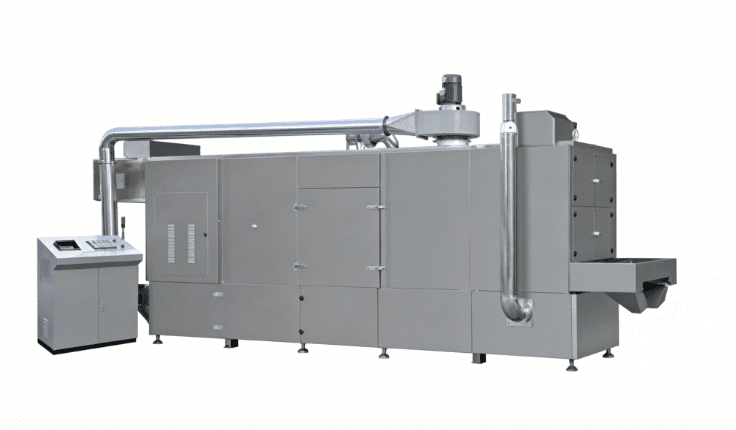
Baking transforms the dough sheet into a rigid, brittle matrix suitable for grinding. The conventional approach uses convection heating, but radio frequency (RF) assistance has been explored as a means of shortening residence time and reducing energy costs . In the RF-assisted process, the dough sheet passes through a 40 MHz field before or alongside convection baking, accelerating internal moisture migration and structural setting.
Drying is arguably the most energy-intensive and quality-determining step. Fluidized bed drying is the industrial standard, but comparative studies have evaluated alternatives. Freeze drying, static bed drying at 105 °C, and fluidized bed drying were compared for their effects on volatile retention during crumb production . The results indicated that volatilization, rather than chemical degradation, was the primary mechanism of flavor loss, with recovery of added volatiles ranging from only 2% to 10% depending on the compound’s hydrophobicity and vapor pressure. This finding has practical implications for the production of flavored crumbs: unless volatiles are encapsulated or added post-drying, substantial losses are inevitable.
Infrared-assisted microwave drying has also been investigated as a rapid alternative . Drying time reductions of 96.8–98.6% were achieved compared with conventional drying, with color values comparable to conventionally dried samples when microwave power was moderate. However, infrared-only drying produced higher color difference values (ΔE), suggesting that a combination approach offers the best balance of speed and appearance.
4. Grinding and Particle Size Distribution
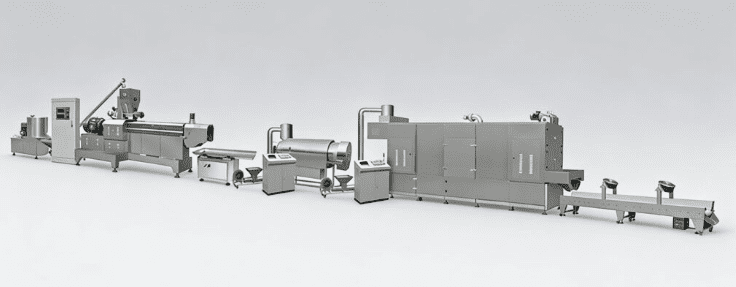
The comminution stage determines the final particle morphology. After baking, the sheet is fed into shredders or conical mills. For Japanese-style crumbs, fine screens are used to produce the elongated, light particles; for American-style crumbs, coarser screens yield a denser, more granular product . The timing of grinding relative to cooling also matters: Japanese-style bread is typically cooled for 2 hours before grinding to allow the structure to set, whereas American-style crumbs can be ground while still warm.
Particle size distribution directly affects coating performance. A broader distribution with a mix of fine and coarse particles tends to produce a more irregular, crunchy crust, while a narrow distribution yields a uniform appearance. The porosity of individual particles, however, may be more important than size alone for oil absorption, as the internal void structure governs capillary uptake during frying.
5. Strategies for Oil Reduction
The oil absorption of fried breaded products has become a central concern. Beyond the whole wheat and kelp formulation noted above, researchers have explored food additives that modify the crumb’s internal structure. Carboxymethyl cellulose sodium (CMC-Na) at 1.5% addition reduced the oil absorption rate of bread crumbs from 19.80% to 11.39% while simultaneously increasing crispness from 21,405 g/s to 33,978 g/s . The proposed mechanism involves CMC-Na interfering with gluten network formation, creating a more closed, less permeable microstructure that limits oil ingress during frying.
These findings point to a broader principle: oil absorption is not merely a surface phenomenon but is governed by the crumb’s internal architecture. Processing decisions that densify the structure—higher extrusion pressure, longer baking, finer grinding—tend to reduce oil uptake but may compromise the light, crispy texture that defines premium panko. The challenge for processors is to navigate this trade-off without resorting to additives that may complicate labeling.
6. Conclusion
Bread crumb processing is a sequence of interdependent decisions, each of which constrains the next. The choice between Japanese and American styles is effectively made at the extrusion and baking stages, long before grinding. Drying method influences flavor retention and color as much as it does shelf stability. And the pursuit of lower oil absorption must be reconciled with the textural expectations that make bread crumbs valuable in the first place. Future work is likely to focus on pretreatments—thermal, enzymatic, or formulation-based—that modify the crumb’s microstructure before frying, rather than attempting to correct oil uptake after the fact.


