
Analyse complète de la ligne de production de nouilles instantanées à petite échelle
1.1 Industry Context and Market Positioning
Instant noodles represent one of the most significant innovations in modern food technology, with global consumption exceeding 100 billion servings annually. Small-scale production facilities, typically defined by output capacities between 1,000 and 5,000 packages per hour, serve crucial market niches including regional brands, private label manufacturing, specialty products, and emerging market entry points. These operations balance artisanal quality control with industrial efficiency, Instant noodle making machine offering flexibility that large-scale multinational facilities cannot match.

The resurgence of small-scale noodle manufacturing correlates with several global trends: the rise of craft food movements, increasing demand for regional flavors, Instant noodle making machine supply chain localization, and lower barrier-to-market entry for entrepreneurial ventures. Unlike their industrial counterparts, small-scale lines can implement rapid recipe changes, accommodate seasonal ingredients, and maintain higher ingredient quality standards.

1.2 Defining Characteristics of Small-Scale Operations
Small instant noodle production lines exhibit distinct characteristics that differentiate them from medium and large-scale facilities:
Physical Footprint and Layout:
- Total floor space requirement: 200-500 m²
- Linear production flow design minimizing cross-traffic
- Ceiling height minimum: 4.5 meters for equipment clearance
- Zoned areas: raw material reception, processing, cooking, drying/frying, cooling, packaging, and storage
- Typically single-story layout with material flow from receiving to shipping
Economic Parameters:
- Initial investment: $150,000-$500,000 depending on automation level
- Break-even production: 40-60% of maximum capacity
- Labor requirement: 3-8 operators per shift
- Energy consumption: 50-150 kWh with steam requirements of 200-500 kg/h
- ROI period: 2-4 years under optimal market conditions
Production Flexibility:
- Quick changeover between product types (1-2 hours)
- Batch sizes as small as 100-200 kg feasible
- Accommodation of multiple noodle types: steamed, fried, air-dried, non-fried
- Package format versatility: cup, bowl, packet, bulk
1.3 Regulatory and Quality Framework
Small-scale operations must navigate complex regulatory landscapes while maintaining competitive quality standards:
Food Safety Certifications Required:
- HACCP (Hazard Analysis Critical Control Points) implementation
- GMP (Good Manufacturing Practices) compliance
- Local food regulatory authority licensing
- Allergen control program certification
- Sanitation Standard Operating Procedures (SSOPs)
Quality Benchmarks:
- Moisture content: ≤10% for fried noodles, ≤14% for non-fried
- Acid value: ≤1.8 mg KOH/g oil in fried noodles
- Peroxide value: ≤0.25 meq/kg in final product
- Microbial standards: Total plate count <10,000 CFU/g, coliforms <10 CFU/g
- Cooking time: 3-5 minutes to achieve optimal texture
Chapter 2: Raw Material Specifications and Handling
2.1 Flour Selection and Specifications
Wheat flour constitutes 70-85% of instant noodle formulations, with specifications critically impacting final product quality:
Premium Wheat Flour Requirements:
- Protein content: 11.5-13.5% (dry basis)
- Wet gluten: 32-36%
- Ash content: ≤0.55%
- Moisture: 14.0±0.5%
- Falling number: 250-350 seconds
- Farinograph characteristics:
- Water absorption: 60-64%
- Development time: 3.0-4.5 minutes
- Stability: ≥4.5 minutes
- Degree of softening: 40-60 FU
Flour Treatment and Blending:
Small-scale operations often employ specialized flour treatments:
- Natural oxidation aging (14-21 days storage under controlled conditions)
- Bleaching agents (benzoyl peroxide ≤75 ppm where permitted)
- Maturing agents (ascorbic acid 50-100 ppm)
- Enzyme supplementation (amylase, protease, xylanase for texture modification)
- Composite blends incorporating 5-15% alternative flours (buckwheat, rice, quinoa)
2.2 Water Treatment System
Water quality profoundly influences noodle texture, shelf life, and processing characteristics:
Comprehensive Water Specifications:
- Hardness: 40-60 mg/L as CaCO₃ (softened water preferred)
- pH: 6.5-7.2
- Chloride: <50 mg/L
- Total dissolved solids: <100 mg/L
- Microbial count: 0 CFU/100mL
- Temperature control: 20±2°C throughout production
Treatment System Configuration:
- Primary filtration: 10-20 micron sediment filters
- Carbon filtration: Activated carbon for chlorine/organic removal
- Water softening: Ion exchange resin systems
- Reverse osmosis: For critical mineral control
- UV sterilization: Final microbial control
- Temperature conditioning: Plate heat exchangers
2.3 Specialty Ingredients and Functional Additives
Alkaline Salts (Kansui):
Traditional alkaline salts modify pH, texture, and flavor:
- Sodium carbonate (Na₂CO₃): 0.3-0.5% of flour weight
- Potassium carbonate (K₂CO₃): 0.2-0.4% of flour weight
- Sodium phosphate variants for specific texture modification
- Natural alkaline water extracts (bamboo ash, plant ash) for premium products
Texture Modifiers and Stabilizers:
- Guar gum: 0.1-0.3% for improved dough handling
- Xanthan gum: 0.05-0.15% for freeze-thaw stability
- Modified starches: 2-5% for specific mouthfeel characteristics
- Wheat gluten: 1-3% for protein supplementation
- Egg white powder: 1-2% for premium products
Nutritional Enhancement:
- Vitamin premixes: B-complex, iron, zinc
- Protein isolates: Soy, pea, whey
- Dietary fiber: Inulin, oat fiber, resistant starch
- Mineral fortification: Calcium, magnesium, selenium
Flavor Components:
- Hydrolyzed vegetable protein: 0.5-1.5%
- Yeast extracts: 0.3-0.8%
- Mushroom powder: 0.5-1.0%
- Seaweed extracts: 0.1-0.3%
- Fermented seasoning pastes
2.4 Raw Material Storage and Handling Protocols
Flour Silo and Handling System:
Small-scale operations typically utilize bagged flour with automated handling:
- Tote bag capacity: 500-1000 kg
- Pneumatic conveying systems with filter receivers
- Flour tempering to 20-25°C before processing
- In-line sieving and metal detection
- Moisture conditioning if required
Liquid Ingredient Management:
- Brine preparation tanks with proportional dosing
- Alkaline solution preparation with pH monitoring
- Refrigerated storage for perishable liquids
- Automated temperature and concentration controls
Quality Assurance Testing:
- Incoming material certificates of analysis
- Rapid testing: moisture, protein, falling number
- Microbiological screening: Salmonella, E. coli, Listeria
- Mycotoxin screening: aflatoxin, deoxynivalenol
- Heavy metal analysis: lead, cadmium, arsenic
Chapter 3: Dough Preparation Technology
3.1 Dough Mixing Principles and Physics
Water Absorption Dynamics:
Dough mixing represents a complex physicochemical process where water distribution occurs through:
- Capillary action in flour particles
- Hydrogen bonding with protein and starch
- Solvation of soluble components
- Hydration of gluten-forming proteins
Optimal Hydration Parameters:
- Total water addition: 28-35% of flour weight
- Temperature-controlled water: 20-25°C
- Phased water addition for controlled hydration
- Vacuum mixing at -0.07 to -0.09 MPa to eliminate air bubbles
Gluten Development Mechanism:
During mixing, gluten proteins (gliadin and glutenin) undergo:
- Hydration and swelling
- Disulfide bond formation and exchange
- Polymerization into viscoelastic networks
- Alignment and orientation under shear forces
3.2 Mixing Equipment Configuration
Horizontal Double-Arm Mixer Specifications:
- Capacity: 50-100 kg per batch
- Mixing time: 15-20 minutes per batch
- Power: 7.5-15 kW motor
- Speed: 35-40 rpm (fast), 20-25 rpm (slow)
- Vacuum capability: 90% vacuum level
- Jacketed bowl for temperature control
- Programmable logic controller with recipe memory
Advanced Features for Small-Scale Operations:
- Load cells for precise ingredient weighing
- Automatic ingredient dosing systems
- In-line moisture measurement
- Temperature sensors with feedback control
- Data logging for quality tracking
- CIP (Clean-in-Place) capability
3.3 Mixing Process Optimization
Stage 1: Dry Blending (1-2 minutes)
- Uniform distribution of dry ingredients
- Prevention of ingredient clumping
- Pre-hydration of hydrocolloids
Stage 2: Liquid Incorporation (3-5 minutes)
- Controlled addition of brine/alkaline solution
- Initial hydration of flour particles
- Formation of discontinuous gluten network
Stage 3: Main Mixing (8-12 minutes)
- Complete gluten development
- Temperature monitoring (target: 28-32°C)
- Energy input measurement: 8-12 Wh/kg
Stage 4: Dough Resting (3-5 minutes)
- Stress relaxation in gluten network
- Moisture equilibrium throughout dough
- Temperature stabilization
Critical Control Parameters:
- Final dough temperature: ≤32°C
- Dough moisture content: 30-33%
- Dough consistency: 500-600 BU (Brabender Units)
- Particle size distribution: 4-8 mm crumb structure
- Color measurement: L* 85-90, b* 8-12
Chapter 4: Sheeting and Lamination Technology
4.1 Dough Sheet Formation Physics
Compaction and Orientation Phenomena:
The sheeting process transforms crumbly dough into coherent sheets through:
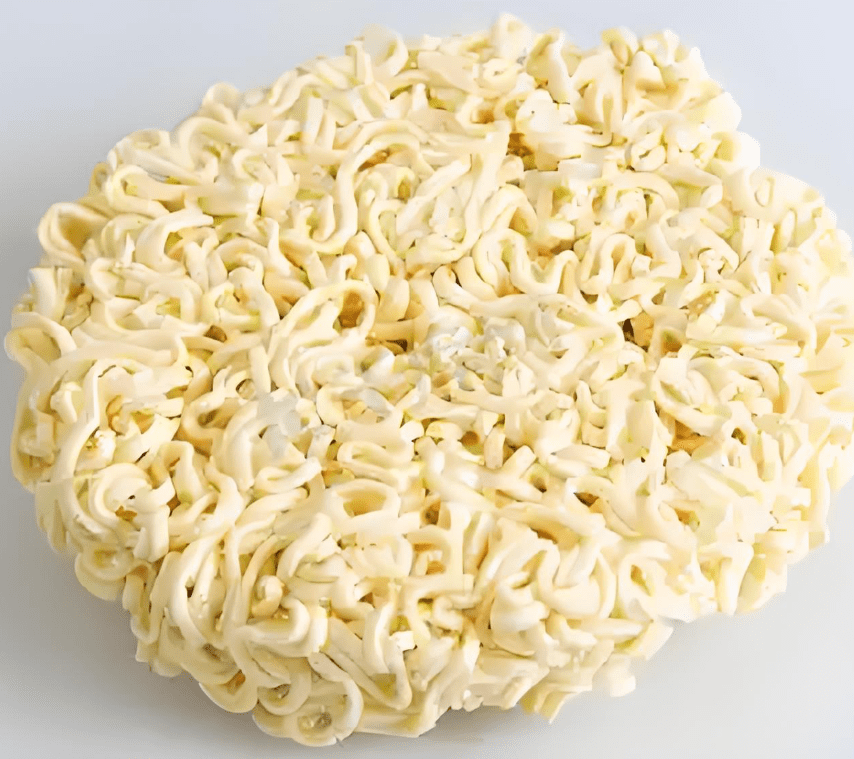
- Progressive reduction in thickness
- Alignment of gluten strands in machine direction
- Elimination of air pockets
- Development of laminated structure
Rheological Considerations:
Dough behaves as a viscoelastic Bingham plastic during sheeting:
- Yield stress: 3-5 kPa
- Elastic modulus: 20-50 kPa
- Viscosity: 10⁴-10⁵ Pa·s
- Stress relaxation time: 30-60 seconds
4.2 Sheeting Line Configuration
Compound Sheeter Design:
- Two initial sheeting rolls converging at 45°
- Individual roll diameters: 200-250 mm
- Roll surface: Precision ground with specified roughness
- Gap adjustment: Manual or motorized, 0.1 mm precision
- Scraper blades for clean roll surfaces
- Dough guide systems for edge control
Progressive Reduction Sheeters:
- Typically 5-6 reduction stages
- Roll speeds: 5-15 m/min progressively increasing
- Reduction ratios: 30-50% per stage
- Tension control between stations
- Web width: 300-500 mm
Advanced Control Systems:
- Laser thickness measurement
- Automatic gap adjustment
- Dough temperature monitoring
- Moisture content measurement via NIR
- Tension control with dancer rolls
4.3 Sheeting Process Parameters
Optimal Reduction Schedule:
| Stage | Roll Gap (mm) | Sheet Thickness (mm) | Reduction (%) | Roll Speed (m/min) | Nip Pressure (kN/m) |
|---|---|---|---|---|---|
| Composite | 8.0-10.0 | 8.0-10.0 | – | 5-6 | 1-2 |
| 1st Reduction | 4.0-5.0 | 4.0-5.0 | 45-55 | 6-7 | 3-5 |
| 2nd Reduction | 2.2-2.8 | 2.2-2.8 | 40-48 | 7-8 | 5-8 |
| 3rd Reduction | 1.2-1.5 | 1.2-1.5 | 42-50 | 8-10 | 8-12 |
| 4th Reduction | 0.7-0.9 | 0.7-0.9 | 38-45 | 10-12 | 10-15 |
| 5th Reduction | 0.4-0.5 | 0.4-0.5 | 40-50 | 12-14 | 12-18 |
| Final Sheet | 0.8-1.2* | 0.8-1.2* | – | 15-18 | – |
*For cutting; multiple sheets may be combined
Quality Indicators During Sheeting:
- Sheet uniformity: ±0.05 mm thickness variation
- Edge integrity: minimal tearing or feathering
- Surface quality: smooth, glossy appearance
- Temperature: 30-35°C maximum
- Moisture distribution: uniform across web
4.4 Slitting and Cutting Technology
Noodle Strand Formation:
- Rotary cutting rolls with precision-ground blades
- Blade thickness: 0.8-1.2 mm
- Cutting width: 1.0-1.5 mm for standard noodles
- Wave formation mechanism (for wavy noodles):
- Differential speed cutting rolls
- Guided forming combs
- Controlled relaxation after cutting
Specialty Noodle Configurations:
- Udon-style: 2.5-3.5 mm width
- Thin noodles: 0.6-0.8 mm width
- Ribbon noodles: 3.0-5.0 mm width
- Curly noodles: Special forming attachments
Cutting System Maintenance:
- Blade sharpening schedule: every 40-80 operating hours
- Alignment verification: daily
- Lubrication: food-grade lubricants at designated points
- Sanitation: complete disassembly for cleaning every 24 hours
Chapter 5: Steaming Process Engineering
5.1 Starch Gelatinization Science
Molecular Transformations During Steaming:
The steaming process initiates critical physicochemical changes:
Starch Granule Behavior:
- Water absorption: 30-40% weight increase
- Swelling initiation at 55-65°C
- Crystalline melting: 60-70°C
- Complete gelatinization: 85-90°C
- Amylose leaching and network formation
Protein Modifications:
- Gluten protein denaturation: 70-80°C
- Disulfide bond rearrangement
- Protein network strengthening
- Maillard reaction initiation
5.2 Steaming Tunnel Design
Continuous Steaming Tunnel Specifications:
- Length: 8-12 meters for small-scale operations
- Width: 0.8-1.2 meters
- Belt material: Stainless steel wire mesh (2-3 mm openings)
- Belt speed: 0.5-2.0 m/min (adjustable)
- Steam injection: Multiple zone control
- Condensate management: Tilted design with drainage
- Insulation: 50-75 mm mineral wool or polyurethane
- Observation ports: Tempered glass with lighting
Steam Generation and Distribution:
- Boiler capacity: 200-500 kg/h steam at 0.6-0.8 MPa
- Pressure reduction to 0.15-0.25 MPa at tunnel inlet
- Perforated steam distribution pipes along tunnel length
- Zone control: pre-heat, main steam, post-steam sections
- Temperature uniformity: ±2°C across belt width
5.3 Steaming Process Optimization
Three-Zone Steaming Profile:
Zone 1: Pre-Conditioning (2-3 meters)
- Temperature: 60-70°C
- Relative humidity: 95-98%
- Residence time: 60-90 seconds
- Purpose: Surface moisture adjustment and pre-heating
Zone 2: Active Gelatinization (4-6 meters)
- Temperature: 98-102°C
- Relative humidity: 100% saturated steam
- Residence time: 120-180 seconds
- Purpose: Complete starch gelatinization
Zone 3: Post-Steaming (2-3 meters)
- Temperature: 90-95°C
- Relative humidity: 95-98%
- Residence time: 60-90 seconds
- Purpose: Moisture equilibration and surface drying
Critical Quality Parameters:
- Gelatinization degree: ≥85% target
- Noodle temperature exiting steamer: 90-95°C
- Moisture content increase: 6-8 percentage points
- Surface stickiness control: limited to <5% surface coverage
- Color development: ΔE of 2-4 units from raw noodles
5.4 Process Monitoring and Control
Real-Time Monitoring Systems:
- Infrared temperature sensors every 2 meters
- Moisture measurement via NIR at tunnel exit
- Steam flow meters with feedback control
- Belt speed encoders with synchronization
- Video monitoring for noodle bed condition
Automated Control Loops:
- Steam pressure regulation per zone
- Belt speed adjustment based on moisture feedback
- Condensate level control
- Emergency shut-off systems
- Data logging for HACCP documentation
Chapter 6: Frying Technology and Alternatives
6.1 Deep-Frying Process Fundamentals
Heat and Mass Transfer Phenomena:
Frying represents simultaneous heat transfer and moisture removal:
Moisture Evaporation Dynamics:
- Initial surface water evaporation (0-30 seconds)
- Crust formation and moisture barrier development
- Internal moisture migration to surface
- Final moisture target: 3-5% in fried noodles
Oil Absorption Mechanisms:
- Surface oil adhesion during removal
- Capillary action into porous structure
- Entrapment in voids left by evaporated water
- Total oil content: 15-22% in final product
6.2 Fryer System Design
Continuous Frying System Components:
- Fryer tank dimensions: 4-6 m length × 0.8-1.0 m width × 0.5-0.7 m depth
- Oil volume: 800-1500 liters
- Heating system: Direct gas firing or electric elements
- Temperature control: 150-165°C with ±2°C precision
- Conveyor system: Stainless steel mesh or slatted belt
- Frying time: 60-90 seconds
- Oil circulation: 4-6 turnovers per hour
- Fume extraction: 1500-2500 m³/h capacity
Oil Management Systems:
- Filtration system: Rotary drum filter or plate filter
- Oil turnover rate: 8-12 hours for complete replacement
- Free fatty acid monitoring: <0.5% target
- Polar compounds measurement: <24% maximum
- Antioxidant dosing systems
6.3 Frying Process Parameters
Optimal Frying Conditions:
- Oil temperature: 155±5°C
- Noodle temperature entering fryer: 90-95°C
- Frying time: 70±10 seconds
- Oil turnover: 10-15% fresh oil addition per hour
- Noodle bed depth: 20-40 mm
- Bubble formation monitoring: uniform small bubbles indicating proper frying
Product Quality Correlations:
- Color development: L* 65-75, a* 5-8, b* 25-35
- Texture parameters: Hardness 300-500 g, Springiness 0.6-0.8
- Oil uptake: 18±2%
- Moisture content: 4±1%
- Acrylamide formation: <500 µg/kg
6.4 Non-Fried Noodle Technology
Hot Air Drying Systems:
- Multi-stage drying tunnels
- Temperature profile: 70-90-70°C gradient
- Air velocity: 2-4 m/s
- Drying time: 30-45 minutes
- Final moisture: 10-12%
- Energy consumption: 0.8-1.2 kWh/kg product
Microwave-Assisted Drying:
- Combined hot air and microwave drying
- Microwave power: 5-10 kW
- Drying time reduction: 50-60%
- Improved texture and rehydration
- Higher investment but better product quality
Oil Spraying Alternatives:
- Post-drying oil application: 3-5% oil addition
- Palm oil or rice bran oil application
- Antioxidant incorporation in oil spray
- Reduced total oil content: 8-12%
Chapter 7: Cooling and Stabilization
7.1 Post-Frying/Cooking Cooling Requirements
Thermodynamic Considerations:
Rapid cooling prevents quality degradation through:
- Crystallization of amylose-lipid complexes
- Retrogradation control of starch
- Oil migration minimization
- Moisture equilibration
- Structural stabilization
7.2 Cooling System Design
Multi-Stage Cooling Tunnel:
- Total length: 6-10 meters
- Cooling time: 8-12 minutes
- Temperature reduction: 130°C to 35°C
- Belt material: Food-grade plastic or stainless steel
- Air handling: 4-6 air exchange zones
Zone 1: Initial Quenching (2-3 meters)
- Air temperature: 20-25°C
- Air velocity: 3-5 m/s
- Direction: Cross-flow
- Purpose: Rapid surface cooling
Zone 2: Equilibrium Cooling (3-4 meters)
- Air temperature: 15-20°C
- Air velocity: 2-3 m/s
- Direction: Counter-current
- Purpose: Core temperature reduction
Zone 3: Final Conditioning (2-3 meters)
- Air temperature: 20-22°C
- Air velocity: 1-2 m/s
- Direction: Laminar flow
- Purpose: Temperature stabilization and moisture equilibration
7.3 Quality Parameters After Cooling
Critical Specifications:
- Final product temperature: ≤35°C
- Moisture distribution: uniform, no wet spots
- Oil migration: <0.5% surface oil increase during cooling
- Structural integrity: minimal breakage (<3%)
- Aw (water activity): 0.3-0.4 for fried, 0.5-0.6 for non-fried
Monitoring Systems:
- Infrared temperature sensors at multiple points
- Moisture measurement via capacitance or NIR
- Oil content monitoring via periodic sampling
- Breakage detection via vibration sensors
- Weight checking for consistency
Chapter 8: Seasoning Application Technology
8.1 Seasoning Formulation Science
Powder Seasoning Composition:
- Base: Salt (40-60%)
- Flavor enhancers: MSG, I+G, yeast extracts (15-25%)
- Sweeteners: Sugar, dextrose, maltodextrin (10-20%)
- Spices and herbs: Custom blends (5-15%)
- Anti-caking agents: Silicon dioxide, calcium silicate (0.5-1.5%)
- Flavor oils: Encapsulated or spray-dried (2-5%)
Liquid Seasoning Systems:
- Soy sauce base: Brewed or hydrolyzed
- Oil-based flavors: Chili oil, sesame oil, infused oils
- Liquid smoke: For barbecue flavors
- Vinegar solutions: For sour profiles
- Thickened sauces: Starch-modified systems
8.2 Application Methods
Powder Application Systems:
- Rotary drum powder applicators
- Vibration-assisted powder distribution
- Electrostatic powder charging for adherence
- Multi-nozzle spray systems for liquid-powder combination
- Application rate: 5-12% of noodle weight
Liquid Application Technology:
- Spray nozzles: Hydraulic or pneumatic atomization
- Roller application systems for controlled coating
- Oil mist generation for even distribution
- Temperature control: 40-60°C for viscosity management
- Application rate: 2-4% of noodle weight
Integrated Seasoning Systems:
- Sequential application: liquid then powder
- Combination applicators: simultaneous liquid and powder
- Tumbling drums for uniform distribution
- Loss reduction systems: powder recovery and recycling
- Precision dosing: ±0.5% accuracy
8.3 Quality Control in Seasoning
Application Uniformity:
- Coefficient of variation: <8% for powder distribution
- Color consistency: ΔE <2 across batches
- Flavor intensity: Sensory panel evaluation
- Salt distribution: Sodium analysis at multiple points
- Moisture addition: <0.5% increase from liquid seasonings
Stability Considerations:
- Moisture barrier properties of seasoning
- Antioxidant incorporation for oil stability
- Flavor encapsulation for extended shelf life
- Hygroscopicity control to prevent clumping
- Microbial stability: Aw <0.6 for dry seasoning blends
Chapter 9: Packaging Systems and Technology
9.1 Primary Packaging Materials
Film Structures and Properties:
- Multi-layer laminates: PET/AL/PE, OPP/MPET/PE
- Oxygen transmission rate: <0.5 cc/m²/day
- Water vapor transmission rate: <0.5 g/m²/day
- Light barrier: >95% opacity or metallization
- Seal strength: >3 N/15mm
- Thickness: 70-100 microns
Cup and Bowl Materials:
- Polypropylene cups: 180-250 micron thickness
- Paperboard composites with PE coating
- Aluminum foil lidding materials
- Double-seal systems for liquid seasoning cups
9.2 Packaging Machine Configurations
Form-Fill-Seal Systems for Packets:
- Vertical form-fill-seal machines for pillow packs
- Speed: 40-80 packages per minute
- Weight range: 60-120 grams
- Gas flushing capability for extended shelf life
- Check-weighers with feedback control
- Metal detection integrated into line
Cup/Bowl Filling Systems:
- Multi-station rotary filling machines
- Sequential filling: noodles, dry seasoning, liquid/oil packets
- Lid application with tamper-evident features
- Cartoning systems for multi-packs
- Case packing automation
9.3 Packaging Process Parameters
Critical Control Points:
- Seal temperature: 160-180°C for poly films
- Dwell time: 0.5-1.0 seconds
- Seal pressure: 0.3-0.5 MPa
- Gas flush: Nitrogen or CO₂/N₂ mixtures
- Residual oxygen: <2% for fried noodles, <3% for non-fried
- Package integrity testing: Pressure decay or vacuum methods
Quality Assurance Protocols:
- Visual inspection: 100% for seal integrity
- Leak testing: Random sampling with vacuum tests
- Weight control: Every package with automatic rejection
- Coding verification: Date/lot code legibility
- Metal detection: Sensitivity 1.5mm ferrous, 2.0mm non-ferrous
9.4 Secondary Packaging
Cartoning Systems:
- Automatic carton erection and loading
- Speed synchronization with primary packaging
- Multi-packing configurations: 3-packs, 5-packs, etc.
- Outer labeling and price marking
- Barcode verification systems
Case Packing and Palletizing:
- Automatic case erectors
- Pattern formation for optimal cube utilization
- Palletizing robots or automatic palletizers
- Stretch wrapping with tension control
- Load stability testing for shipping
Chapter 10: Quality Assurance and Control Systems
10.1 Raw Material Testing Protocols
Incoming Inspection Procedures:
- Sampling plans: ANSI/ASQ Z1.4 standards
- Physical testing: Color, odor, particle size
- Chemical analysis: Proximate composition
- Microbiological screening: APC, coliforms, pathogens
- Mycotoxin testing: Aflatoxin, ochratoxin, DON
- Heavy metal analysis: Pb, Cd, As, Hg
Supplier Qualification:
- Audit schedules: Annual for critical suppliers
- Performance metrics: On-time delivery, defect rates
- Certifications required: ISO 22000, GMP, Kosher/Halal
- Traceability systems: One-up, one-down documentation
10.2 In-Process Quality Control
Critical Control Point Monitoring:
- Dough mixing: Temperature, moisture, development time
- Sheeting: Thickness uniformity, gluten development
- Steaming: Gelatinization degree, moisture increase
- Frying/Drying: Oil quality, final moisture, color
- Cooling: Final temperature, oil migration
- Seasoning: Application uniformity, Aw
- Packaging: Seal integrity, gas flush, weight
Statistical Process Control:
- Control charts for key parameters Instant noodle making machine
- Process capability analysis (Cp, Cpk)
- Gauge R&R studies for measurement systems
- Trend analysis for predictive maintenance
10.3 Finished Product Testing
Comprehensive Quality Assessment:
- Physical attributes: Color, size, shape, breakage
- Cooking characteristics: Rehydration time, texture, broth clarity
- Sensory evaluation: Trained panel analysis
- Nutritional analysis: Proximate composition, vitamins, minerals
- Shelf life testing: Accelerated and real-time studies
- Packaging performance: Compression, vibration, transport testing
Microbiological Standards:
- Total plate count: <10,000 CFU/g
- Coliforms: <10 CFU/g
- Escherichia coli: Absent in 1g
- Salmonella: Absent in 25g
- Staphylococcus aureus: <100 CFU/g
- Yeast and mold: <100 CFU/g
10.4 Laboratory Requirements
Basic Laboratory Setup:
- Physical testing: Texture analyzer, colorimeter, moisture analyzer
- Chemical analysis: pH meter, titration equipment, spectrophotometer
- Microscopy: Light microscope for starch gelatinization assessment
- Cooking equipment: Standardized cooking pots and timers
- Sensory evaluation: Controlled booths with standardized lighting
Advanced Analytical Capabilities:
- HPLC for mycotoxins and vitamins
- GC for oil quality and flavor analysis
- NIR for rapid composition analysis
- Rheometer for dough and texture characterization
- Water activity meter for shelf life prediction
Chapter 11: Sanitation and Food Safety
11.1 Sanitation Program Design
Master Sanitation Schedule:
- Daily cleaning procedures: Equipment surfaces, floors, utensils
- Weekly tasks: Equipment disassembly and deep cleaning
- Monthly activities: Overhead structures, ventilation systems
- Quarterly procedures: Major equipment overhaul and sanitization
- Validation methods: ATP swabs, microbiological testing
Cleaning Chemical Management:
- Alkaline cleaners: For protein and fat removal
- Acid cleaners: For mineral deposit removal
- Sanitizers: Chlorine, quaternary ammonium, peracetic acid
- Concentration monitoring: Titration or test strips
- Chemical storage: Segregated, labeled, secured areas
11.2 Allergen Control Program
Risk Assessment and Management:
- Allergen identification: Wheat, soy, eggs, seafood derivatives
- Segregation procedures: Dedicated equipment or thorough cleaning
- Scheduling: Allergen-containing products at end of production runs
- Labeling verification: 100% check of allergen declarations
- Training: Allergen awareness for all employees
Validation Procedures:
- Surface testing for allergen residues Instant noodle making machine
- First product verification after cleaning
- Immunoassay test kits for specific allergens
- Documentation of control measures
11.3 Pest Control Systems
Integrated Pest Management:
- Exclusion methods: Air curtains, door seals, screened openings
- Monitoring: Pheromone traps, insect light traps, glue boards
- Treatment: Targeted applications, bait stations, fumigation
- Documentation: Service records, trend analysis, corrective actions
Facility Design Considerations:
- Exterior landscaping: Minimal vegetation near building
- Waste management: Covered containers, frequent removal
- Building maintenance: Sealed cracks, proper drainage
- Receiving area protection: Air doors, positive pressure
Chapter 12: Maintenance and Engineering
12.1 Preventive Maintenance Program
Equipment-Specific Maintenance Schedules:
Mixer Maintenance:
- Daily: Lubrication checks, belt tension, safety switches
- Weekly: Seal inspection, bearing temperature checks
- Monthly: Gearbox oil change, motor inspection
- Quarterly: Complete disassembly and inspection
Sheeter Maintenance:
- Daily: Roll cleaning, gap verification, blade inspection
- Weekly: Bearing lubrication, alignment checks
- Monthly: Drive system inspection, replacement of worn parts
- Annually: Complete overhaul, roll re-grinding
Fryer Maintenance:
- Daily: Oil filtration, temperature calibration, conveyor inspection
- Weekly: Heating element inspection, pump maintenance
- Monthly: Exhaust system cleaning, safety valve testing
- Quarterly: Complete oil change, tank inspection
12.2 Spare Parts Management
Critical Spare Parts Inventory:
- Mixer: Seals, bearings, mixing arms
- Sheeter: Cutting blades, roll bearings, drive belts
- Fryer: Heating elements, pumps, temperature sensors
- Packaging: Seal jaws, film guides, servo motors
- Common parts: Motors, drives, bearings, seals
Inventory Optimization:
- Minimum/maximum levels based on lead times
- ABC analysis for prioritization
- Vendor-managed inventory options
- Cross-training for part fabrication where possible
12.3 Energy Management
Energy Consumption Analysis:
- Steam generation: 40-50% of total energy
- Frying/drying: 25-35% of total energy
- Motors and drives: 15-20% of total energy
- Lighting and HVAC: 5-10% of total energy
Efficiency Improvements:
- Heat recovery from fryer exhaust
- Steam trap maintenance and optimization
- Variable frequency drives on pumps and fans
- High-efficiency motors and lighting
- Insulation upgrades on heated equipment
Chapter 13: Production Planning and Management
13.1 Production Scheduling
Capacity Planning:
- Theoretical capacity: Equipment maximum rates
- Effective capacity: Accounting for changeovers, cleaning
- Actual output: Based on historical performance
- Efficiency metrics: OEE (Overall Equipment Effectiveness)
Scheduling Considerations:
- Product sequencing to minimize changeover time
- Raw material availability and shelf life
- Seasonality and demand patterns
- Maintenance windows and sanitation requirements
13.2 Labor Management
Staffing Requirements:
- Mixing operator: 1 per shift
- Sheeting/cutting operator: 1 per shift
- Frying/drying operator: 1 per shift
- Packaging operator: 1-2 per shift
- Quality control technician: 0.5 per shift (shared)
- Maintenance technician: 0.5 per shift (shared)
- Supervisor: 1 per shift for 2+ lines
Training Programs:
- Standard operating procedures for all positions
- Food safety training: HACCP, GMP, allergen control
- Equipment operation and safety training
- Cross-training for operational flexibility
- Continuous improvement and problem-solving skills
13.3 Cost Control and Optimization
Cost Structure Analysis:
- Raw materials: 60-70% of total cost
- Labor: 10-15% of total cost
- Energy: 5-10% of total cost
- Packaging: 10-15% of total cost
- Overhead: 5-10% of total cost
Optimization Strategies:
- Yield improvement programs
- Energy consumption reduction
- Waste minimization and recycling
- Inventory reduction through JIT principles
- Preventive maintenance to reduce downtime
Chapter 14: Environmental Considerations
14.1 Waste Management
Solid Waste Streams:
- Raw material packaging: Cardboard, bags, containers
- Process waste: Dough trimmings, broken noodles, oil filtration media
- Packaging waste: Film trim, rejected packages
- General waste: Office waste, cleaning materials
Management Strategies:
- Recycling programs for cardboard, plastics, metals
- Composting of organic waste where possible
- Waste-to-energy options for combustible materials
- Landfill reduction targets and monitoring
14.2 Water Management
Water Usage Optimization:
- Closed-loop cooling systems
- Water reuse for non-product contact applications
- Rainwater harvesting for cleaning and sanitation
- Flow reduction through spray nozzle optimization
Wastewater Treatment:
- Oil separation systems for fryer cleaning water
- pH adjustment for alkaline cleaning solutions
- BOD reduction through proper waste handling
- Compliance with local discharge regulations
14.3 Air Emissions Control
Fume Management:
- Fryer exhaust filtration systems
- Thermal oxidizers for odor control
- Regular maintenance of ventilation systems
- Monitoring of particulate emissions
Greenhouse Gas Reduction:
- Energy efficiency improvements
- Renewable energy options
- Carbon footprint calculation and reduction targets
- Sustainable sourcing of raw materials
Chapter 15: Future Trends and Innovations
15.1 Technological Advancements
Automation and Industry 4.0:
- IoT sensors for real-time monitoring
- Predictive maintenance using AI algorithms
- Digital twins for process optimization
- Blockchain for supply chain transparency
Product Innovation:
- Health-focused formulations: Low-sodium, high-fiber, added protein
- Ethnic and regional flavor expansion Instant noodle making machine
- Premium ingredients and artisanal positioning
- Sustainable and plant-based formulations
15.2 Sustainability Initiatives
Circular Economy Approaches:
- By-product utilization: Bran for fiber, oil for biodiesel
- Water recycling and zero-liquid discharge systems
- Renewable energy integration
- Biodegradable packaging developments
Supply Chain Sustainability:
- Sustainable palm oil and other raw materials
- Carbon-neutral logistics options
- Ethical sourcing certifications
- Local sourcing to reduce food miles
15.3 Market Development
Consumer Trends:
- Clean label and natural ingredient demand
- Convenience and premiumization balance
- Health and wellness focus
- Experience-driven consumption patterns
Distribution Evolution:
- Direct-to-consumer e-commerce models
- Subscription services for regular delivery
- Foodservice customization options
- International market expansion strategies
This comprehensive 15-chapter examination of small-scale instant noodle production details the intricate balance between artisanal craftsmanship and industrial efficiency that defines successful small-scale operations. Instant noodle making machine From raw material selection to final packaging, each stage requires precise control and understanding of both food science principles and practical engineering considerations.
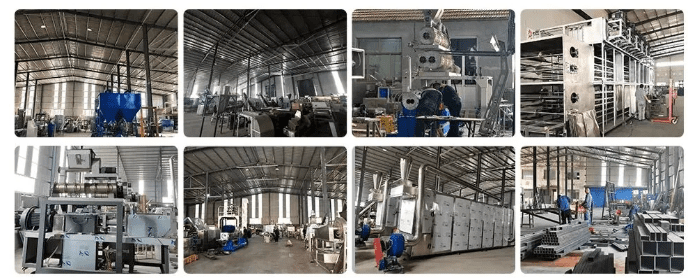
Small-scale production offers unique advantages in today’s food landscape: agility in responding to market trends, ability to produce specialized products, Instant noodle making machine and closer connection to local consumers. However, it also demands excellence in all operational aspects to compete effectively with larger producers.
The future of small-scale instant noodle production lies in embracing technology while maintaining quality, pursuing sustainability while ensuring profitability, and innovating while respecting traditional craftsmanship that consumers increasingly value. Those operations that successfully navigate these complexities will continue to thrive in the dynamic global food marketplace.