
Extruded foods represent a significant segment of the modern food industry, encompassing everything from breakfast cereals and snacks to pet food and meat alternatives. snacks machinery Their unique properties stem directly from the extrusion process itself—a high-temperature, short-time (HTST) continuous cooking and shaping method. Here are the defining characteristics of extruded foods.
1. Versatile Texture & Structure
Extrusion cooking enables precise control over a product’s texture and internal structure.
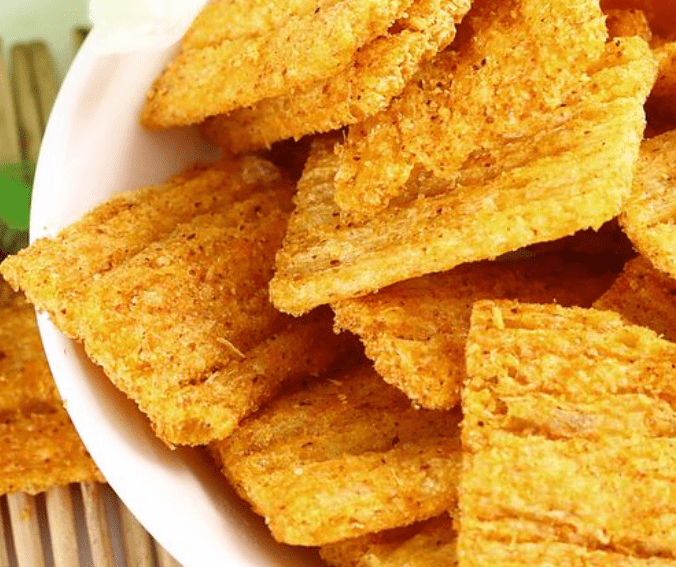
- Expansion & Porosity: When the hot, pressurized melt exits the die, sudden pressure drop causes rapid moisture vaporization, creating a light, airy, and crispy or crunchy texture (e.g., puffed snacks, cereal flakes).
- Density Control: By adjusting process parameters (moisture, temperature, screw speed), manufacturers can produce dense, non-expanded products (like pasta or protein bars) or highly expanded, porous items (like cheese puffs).
- Layered or Fibrous Texture: Specific screw designs and cooling dies can align proteins or starches to create fibrous, meat-like textures in plant-based products or layered snacks.
2. High Digestibility & Nutritional Flexibility
The extrusion process modifies raw ingredients in ways that affect nutrition.
- Starch Gelatinization: Heat and shear break down starch granules, snacks machinery improving digestibility and nutrient availability.
- Anti-Nutrient Reduction: It deactivates many natural enzyme inhibitors and anti-nutritional factors (e.g., in legumes and grains), enhancing the nutritional profile.
- Fortification Capability: Nutrients, proteins, fibers, or functional ingredients can be uniformly mixed into the melt, allowing for easy enrichment (e.g., vitamin-fortified cereals, high-fiber snacks).
3. Shelf Stability & Safety
Extruded foods are inherently stable and safe for extended storage.
- Low Moisture Content: Most expanded extrudates have very low water activity (aw < 0.6), inhibiting microbial growth and extending shelf life without refrigeration.
- Thermal Sterilization: The high temperatures (often 120–180°C) during extrusion effectively pasteurize the mix, reducing microbial and enzymatic spoilage risks.
- Intégrité structurelle : The dry, crisp matrix resists physical damage during transport and handling.
4. Distinct Sensory Properties
The process creates unique sensory experiences.
- Toasted Flavors & Aromas: The Maillard reaction and caramelization during cooking generate characteristic roasted, nutty, or toasted notes (e.g., in corn curls or breakfast cereals).
- Flavor Carrying Capacity: The porous structure of expanded products allows for effective adhesion and absorption of seasonings, oils, and powdered flavors.
- Mouthfeel Variety: Products range from dissolving quickly (certain infant cereals) to providing sustained crunch (snack pellets).
5. Functional & Shape Diversity
Extrusion offers remarkable design freedom.
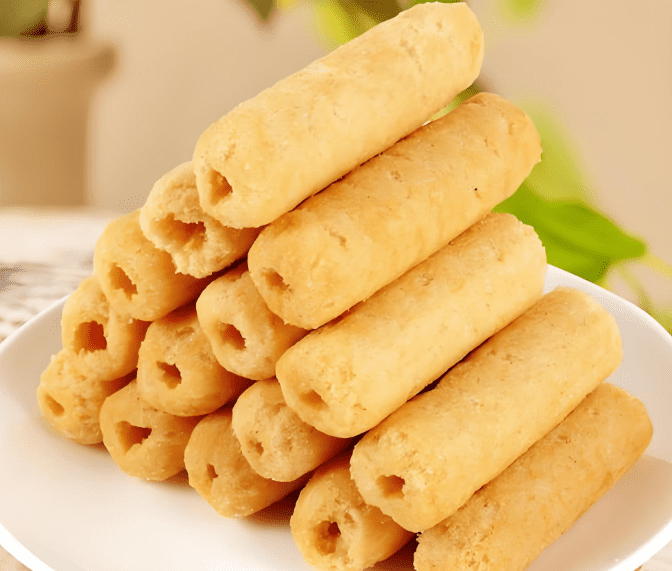
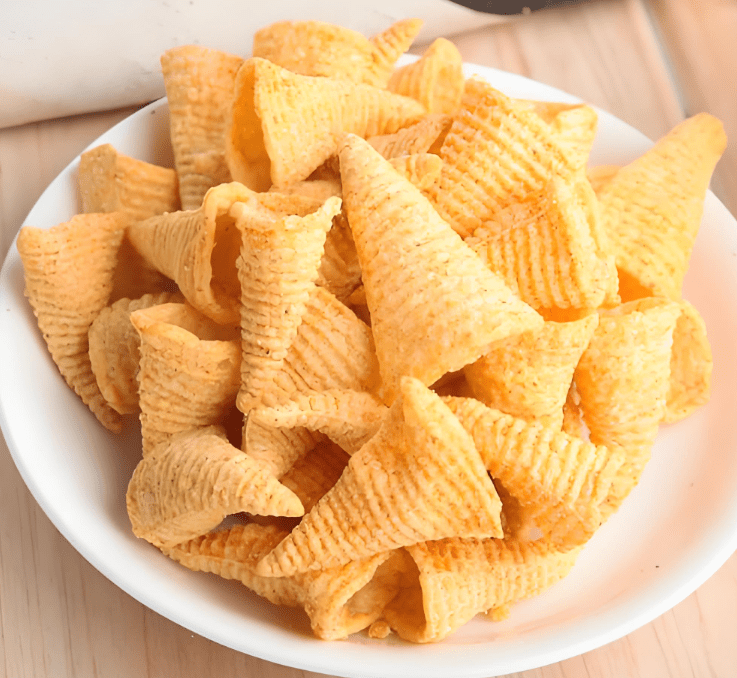
- Complex Geometries: By changing the die plate, snacks machinery products can be made into rings, stars, tubes, sheets, or intricate 3D shapes—limited only by die design.
- Co-extrusion Possibilities: Multiple ingredients can be extruded simultaneously to create filled products (e.g., snack tubes with cheese centers) or multi-layered structures.
- Tailored Functionality: Ingredients can be pre-processed (e.g., pre-cooked flours, instant powders) or texturized (e.g., soy protein chunks) for specific culinary applications.
6. Processing Efficiency & Sustainability
Extrusion is a highly efficient continuous process.
- High Throughput: It enables large-scale, automated production with consistent output, reducing labor and energy per unit.
- Reduced Waste: Precise control and continuous operation minimize product loss. Off-spec material can often be recycled back into the process.
- Water & Energy Efficiency: Compared to some batch cooking methods, extrusion often uses less water and, due to its short cooking time, can be energy-efficient.
Key Considerations & Limitations
While advantageous, extrusion has certain trade-offs:
- Heat-Sensitive Nutrients: High temperatures can degrade some vitamins (e.g., vitamin C, thiamine) or heat-labile phytonutrients unless added post-process.
- Limited Ingredient Suitability: Ingredients very high in fat, sugar, or fiber can disrupt expansion and texture, requiring recipe optimization.
- Capital Intensity: Setting up an extrusion line requires significant initial investment in specialized equipment.
Conclusion
Extruded foods are defined by their engineered textures, extended shelf stability, nutritional adaptability, and shape versatility. The extrusion process efficiently transforms raw agricultural materials into safe, convenient, and appealing products. While sometimes associated with highly processed snacks, the technology also enables the creation of nutritious, functional foods—from infant cereals to plant-based meat alternatives. Understanding these characteristics helps in appreciating both the innovation behind extruded foods and their role in global food systems.