
An Inside Look at the Industrial Production of Bread Crumbs
Bread crumbs are widely used in the food industry for coating, frying, and texture enhancement. To consumers, they appear simple and natural—just dried and ground bread. However, the industrial production of bread crumbs is far more standardized and mechanized than many people realize. This article reveals the real processing steps behind commercial bread crumb manufacturing.
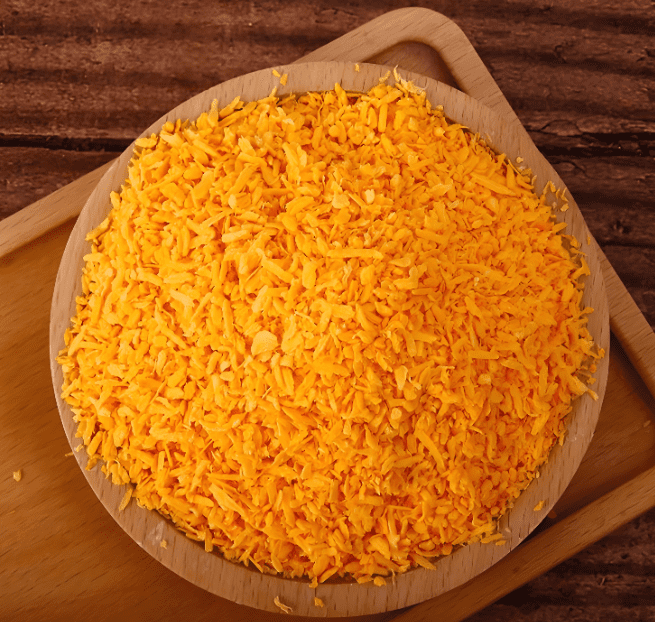
1. Raw Material Selection: Not Always Fresh Bread
Contrary to common belief, industrial bread crumbs are not always made from freshly baked bread intended for direct consumption. In many factories, bread crumbs are produced from:
- Purpose-made bread loaves baked specifically for crumb production
- Surplus or off-spec bread that does not meet retail standards
- Bread formulated with low moisture and uniform structure to improve yield
The formulation is often optimized for processing efficiency rather than taste, since the final product is used as an ingredient, not eaten alone.
2. Baking: Designed for Structure, Not Flavor
The bread used for crumbs is baked under controlled industrial conditions. The goal is to achieve:
- A uniform internal crumb structure
- Low residual moisture
- Minimal crust formation
Flavor development, which is important in artisanal bread, is a secondary concern here. Short fermentation times and standardized recipes are commonly used to ensure consistency and high throughput.
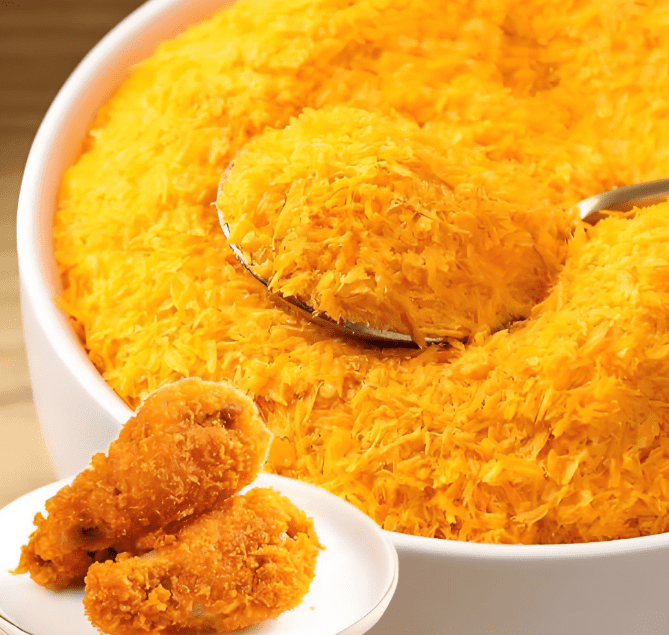
3. Drying: Artificial and Accelerated
After baking, the bread is not simply air-dried. Instead, it undergoes industrial drying using hot-air ovens or continuous tunnel dryers. This step rapidly reduces moisture content to improve shelf life and grinding performance.
While effective, aggressive drying can:
- Reduce natural bread aroma
- Alter color
- Increase brittleness
This explains why some commercial bread crumbs lack the flavor depth of homemade versions.
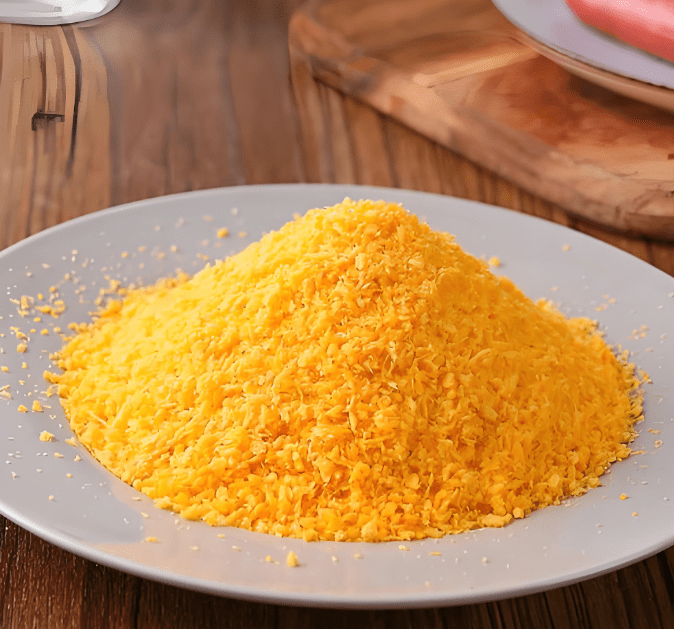
4. Grinding and Size Control
Once dried, the bread is mechanically crushed and ground. Industrial mills and crushers produce crumbs of various sizes, from fine powder to coarse flakes. Sieving systems separate particles to achieve uniform granulation.
Different crumb sizes are tailored for specific applications, such as:
- Fine crumbs for binding and fillers
- Coarse crumbs for crispy coatings
- Specialized shapes for fried foods
5. Coloring and Additives
One of the least-known aspects of bread crumb production is the use of additives. To meet market expectations, some manufacturers may add:
- Food coloring to enhance golden appearance
- Seasonings or flavor enhancers
- Anti-caking agents to improve flowability
Although these additives are usually permitted by food regulations, they mean that commercial bread crumbs are not always as “simple” as consumers assume.
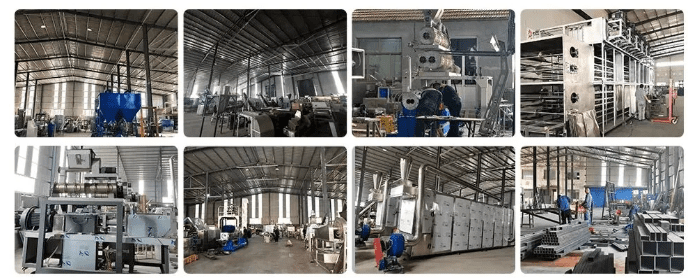
6. Packaging and Shelf Life Extension
Finally, bread crumbs are packed in moisture-proof packaging under hygienic conditions. Low moisture content and, in some cases, modified atmosphere packaging allow bread crumbs to remain stable for long periods.
The long shelf life of industrial bread crumbs is the result of controlled processing—not natural preservation.

Conclusion
The production of bread crumbs is a highly industrialized process focused on efficiency, consistency, and shelf stability. While commercial bread crumbs are safe and convenient, they differ significantly from homemade versions in terms of raw materials, processing methods, and flavor complexity. Understanding this process helps consumers and food professionals make more informed choices about the ingredients they use.