
Starting a small instant noodle processing factory can be an attractive business opportunity for entrepreneurs who want to enter the food manufacturing industry. Instant noodles are popular worldwide because they are affordable, convenient, easy to prepare, and have a relatively long shelf life. However, establishing a successful instant noodle factory requires careful planning, suitable equipment, reliable raw materials, and an effective production strategy.
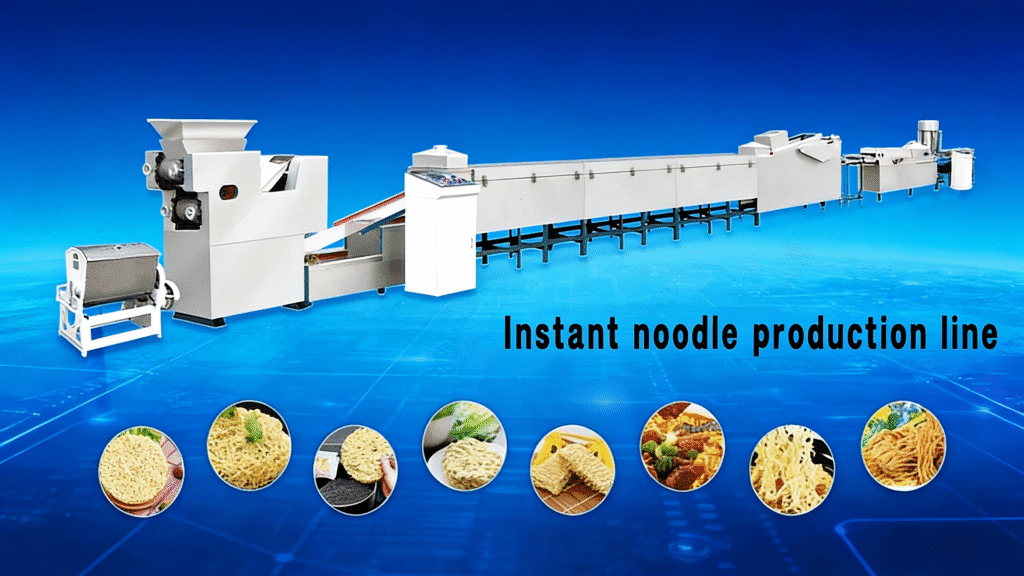
If you are planning to start a small instant noodle manufacturing business, there are several important preparations you should complete before starting production.
1. Conduct Market Research and Develop a Business Plan
The first step is to understand the market and identify your potential customers. Before investing in equipment or renting a factory, you should investigate local consumer demand and market competition.
Important questions include:
- What types of instant noodles are popular in your target market?
- Do customers prefer fried noodles or non-fried noodles?
- What flavors are most popular, such as beef, chicken, seafood, or spicy flavors?
- What packaging sizes and price ranges do consumers prefer?
- Who are your main competitors?
- Will you sell through supermarkets, wholesalers, distributors, restaurants, or online platforms?
Based on your research, prepare a detailed business plan covering investment costs, production capacity, product positioning, expected sales, operating expenses, and estimated profitability.
A clear business plan will help you control investment risks and establish realistic business goals.
2. Choose a Suitable Factory Location
Choosing the right factory location is another important preparation.
A small instant noodle processing factory does not necessarily require a large industrial building, but it must have enough space for production, storage, packaging, and employee activities.
When selecting a location, consider the following factors:
- Convenient transportation for raw materials and finished products.
- Stable electricity and sufficient water supply.
- Good drainage and ventilation systems.
- Sufficient space for production equipment.
- Easy access for employees and delivery vehicles.
- Compliance with local food manufacturing and environmental regulations.
The factory should also have separate areas for raw material storage, dough preparation, noodle processing, drying or frying, cooling, packaging, and finished product storage.
A well-organized production layout can improve efficiency and reduce the risk of cross-contamination.
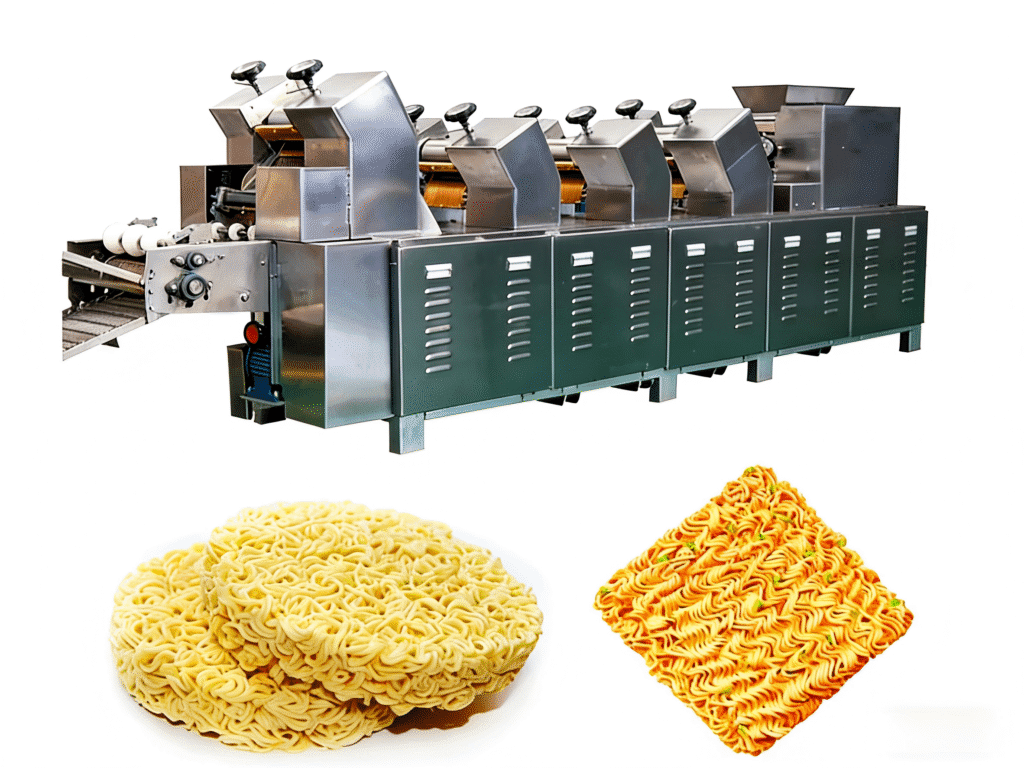
3. Prepare the Required Production Equipment
Equipment selection directly affects product quality, production efficiency, and investment costs.
For a small instant noodle factory, you can choose a semi-automatic or fully automatic production line depending on your budget and production requirements.
The main equipment generally includes:
1. Flour Mixing Machine
This machine mixes wheat flour, water, salt, and other ingredients to produce uniform dough.
2. Dough Resting and Conveying Equipment
The dough needs sufficient resting time to develop suitable elasticity and improve processing performance.
3. Noodle Rolling Machine
The dough is gradually rolled into thin sheets with the required thickness.
4. Noodle Cutting Machine
The dough sheets are cut into noodle strands of the desired width and shape.
5. Steaming Machine
Fresh noodle strands are steamed to gelatinize the starch and improve the texture of the finished noodles.
6. Frying Machine or Hot-Air Drying Machine
There are two common production methods:
- Fried instant noodles: The steamed noodles are fried in hot oil to remove moisture and create a porous structure.
- Non-fried instant noodles: The steamed noodles are dried using hot air to reduce moisture without deep frying.
7. Cooling Conveyor
After frying or drying, the noodles need to be cooled before packaging.
8. Automatic Packaging Machine
The noodles are packed into individual bags or containers, together with seasoning packets when required.
Depending on your production requirements, you may also need flour sieving machines, seasoning mixers, weighing machines, metal detectors, and date-coding equipment.
4. Purchase High-Quality Raw Materials
Raw materials have a significant influence on the taste, texture, appearance, and production cost of instant noodles.
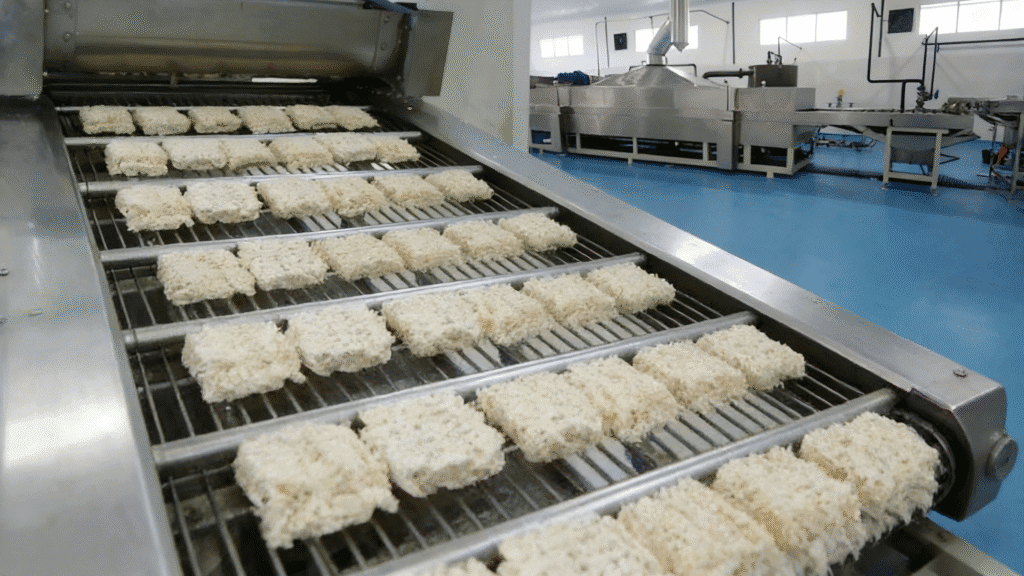
The main ingredients include:
- Wheat flour: The primary ingredient used to produce noodle dough.
- Water: Used to adjust dough moisture and consistency.
- Salt: Improves flavor and affects dough properties.
- Alkaline salts: Help improve noodle color, elasticity, and texture.
- Edible oil: Required for fried instant noodle production.
- Seasonings: Include salt, sugar, spices, flavorings, and other ingredients.
- Packaging materials: Such as food-grade plastic films, seasoning sachets, and cartons.
You should establish relationships with reliable suppliers and ensure that all ingredients meet applicable food safety standards.
It is also important to establish incoming material inspection procedures to check quality, specifications, expiration dates, and storage conditions.
5. Develop Product Formulas and Flavors
Before mass production, you need to develop recipes that match your target customers’ preferences.
Different markets may have different demands. For example, some consumers prefer spicy noodles, while others prefer chicken, beef, seafood, or vegetable flavors.
You should conduct small-scale production tests to adjust:
- Flour selection and formulation.
- Water addition ratio.
- Salt and alkaline salt content.
- Noodle thickness and width.
- Steaming temperature and time.
- Frying or drying temperature.
- Seasoning composition.
- Final moisture content and texture.
It is recommended to produce several samples and conduct taste tests before deciding on your final product formulas.
You should also evaluate the rehydration time, noodle elasticity, flavor consistency, and overall eating experience.
6. Obtain Business Licenses and Food Production Permits
Food manufacturing is subject to strict regulations in most countries and regions.
Before starting production, you should understand the legal requirements in your local market.
Depending on local regulations, you may need:
- Business registration.
- Food manufacturing permits or registration.
- Food safety management procedures.
- Factory inspection and approval.
- Environmental protection approval.
- Fire safety inspection.
- Product labeling compliance.
- Employee health and hygiene requirements.
You should also establish a food safety management system based on applicable standards, such as HACCP or ISO 22000.
These preparations help ensure that your products meet legal requirements and can be sold through formal distribution channels.
7. Design a Reasonable Production Process
An efficient production process is essential for maintaining consistent quality and reducing manufacturing costs.
A typical instant noodle manufacturing process includes:
Step 1: Raw Material Preparation
Inspect and prepare wheat flour, water, salt, alkaline salts, and other ingredients.
Step 2: Dough Mixing
Mix the ingredients evenly to form dough with suitable moisture and consistency.
Step 3: Dough Resting
Allow the dough to rest so that moisture can distribute evenly and the gluten structure can develop.
Step 4: Dough Rolling
Pass the dough through multiple rollers to gradually form thin and uniform sheets.
Step 5: Noodle Cutting
Cut the dough sheets into noodle strands with the required width and thickness.
Step 6: Steaming
Steam the noodles to gelatinize starch and establish the basic noodle structure.
Step 7: Frying or Hot-Air Drying
Remove moisture through deep frying or hot-air drying, depending on the product type.
Step 8: Cooling
Cool the noodles to a suitable temperature before packaging.
Step 9: Seasoning and Packaging
Prepare seasoning sachets, weigh the noodles, and pack the products using suitable packaging equipment.
Step 10: Quality Inspection and Storage
Inspect finished products for weight, appearance, sealing quality, moisture content, and other relevant quality indicators before storage and distribution.
8. Recruit and Train Production Employees
Even a small instant noodle factory needs qualified employees to operate equipment and maintain production quality.
Depending on the production line’s automation level, you may need:
- Production operators.
- Equipment technicians.
- Quality control personnel.
- Packaging workers.
- Warehouse employees.
- Sales and administrative staff.
Employees should receive training in equipment operation, food hygiene, cleaning procedures, workplace safety, and emergency handling.
Regular equipment maintenance training is also important because unexpected machine failures can interrupt production and increase operating costs.
9. Establish Quality Control and Food Safety Procedures
Product quality is directly related to customer satisfaction and brand reputation.
You should establish quality inspection procedures throughout the entire production process.
Important inspection points include:
- Raw material quality.
- Dough moisture and consistency.
- Noodle thickness and shape.
- Steaming conditions.
- Frying or drying temperature.
- Finished product moisture content.
- Oil quality for fried noodles.
- Packaging sealing performance.
- Net weight and labeling accuracy.
- Microbiological safety and shelf-life stability.
Finished products should be tested and stored under appropriate conditions to determine their actual shelf life.
You should never rely solely on assumptions when determining expiration dates.
10. Calculate the Initial Investment and Operating Costs
Budget planning is essential when establishing a small instant noodle factory.
Your investment will depend on production capacity, equipment automation, factory size, and local construction costs.
The main expenses generally include:
| Investment category | Main expenses |
|---|---|
| Factory | Rent, renovation, drainage, ventilation |
| Equipment | Mixing, rolling, steaming, frying or drying, packaging |
| Raw materials | Flour, oil, seasonings, packaging materials |
| Labor | Employee salaries and training |
| Utilities | Electricity, water, fuel |
| Licenses | Registration, inspections, certifications |
| Marketing | Branding, advertising, distribution |
| Working capital | Daily operations and inventory |
Besides the initial investment, you should reserve sufficient working capital to cover several months of operating expenses.
You should also calculate the production cost per package, including raw materials, labor, electricity, packaging, maintenance, and transportation.
This will help you establish competitive selling prices and estimate your break-even point.
11. Prepare Product Packaging and Branding
Packaging is not only used to protect instant noodles but also plays an important role in attracting consumers.
Good packaging should provide:
- Protection against moisture and contamination.
- Reliable sealing performance.
- Clear product information.
- Attractive visual design.
- Appropriate storage instructions.
- Accurate ingredient and allergen declarations.
- Production dates and expiration information.
You can start with simple packaging designs and gradually develop your own brand as sales increase.
For a small factory, it is often better to begin with a limited number of popular flavors rather than launching too many products at once.
12. Develop Sales Channels Before Mass Production
Having production equipment does not guarantee business success. You also need reliable sales channels.
Before starting mass production, consider establishing relationships with:
- Local supermarkets.
- Grocery stores.
- Food wholesalers.
- Regional distributors.
- Restaurants and food service companies.
- Online shopping platforms.
- Private-label food brands.
You can initially focus on a small geographical market to test consumer demand and collect customer feedback.
Once your products achieve stable sales, you can gradually increase production capacity and expand into additional markets.

Conclusion
Starting a small instant noodle processing factory requires much more than purchasing a production line. Entrepreneurs need to prepare a complete business plan, select a suitable factory location, purchase appropriate machinery, secure reliable raw materials, develop competitive product formulas, obtain necessary permits, and establish effective quality control procedures.
For beginners, starting with a small semi-automatic instant noodle production line can be a practical choice. It allows entrepreneurs to control initial investment costs, understand the manufacturing process, and test market demand before expanding.
The most important principle is to start with a realistic production capacity, focus on product quality, control manufacturing costs, and build reliable sales channels.
With proper preparation and effective management, a small instant noodle processing factory can gradually develop into a profitable and sustainable food manufacturing business.


