
The Alchemy of Crisp: A Master Technologist’s Guide to the Six Pillars of World-Class Corn Flake Production
Introduction: Beyond the Breakfast Bowl
The corn flake, a seemingly simple artefact of puffed and toasted grain, is a monument to food science and culinary precision. To the untrained eye, it is a humble breakfast staple. To the food technologist, it is the final expression of a complex interplay of physics, chemistry, and engineering.corn flakes machine Achieving a perfect corn flake—one that is consistently crisp, flavorful, golden, and structurally sound—is a pursuit that separates mass-market commodities from truly exceptional products.
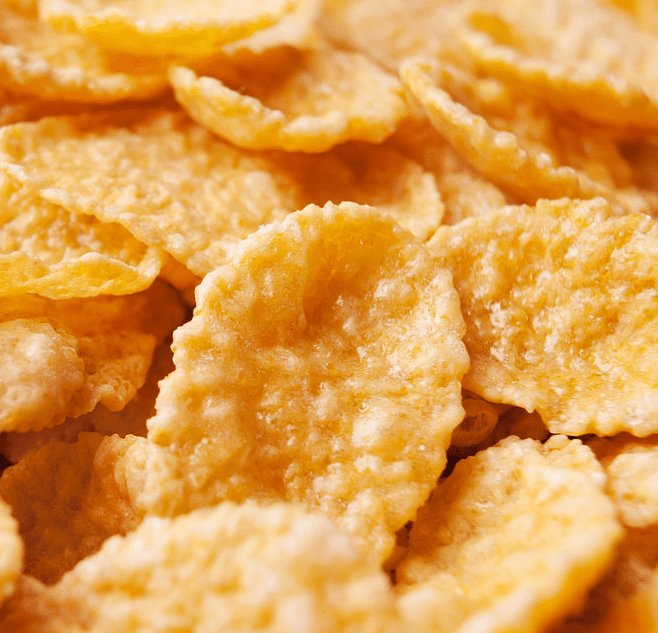
This guide distills this pursuit into six fundamental pillars. Mastering these elements is not a linear process but a holistic one, where each pillar supports and influences the others. From the selection of the kernel to the final seal of the packaging, we will embark on a detailed exploration of how to transform raw grain into a breakfast icon. This is not merely a set of instructions; it is a philosophy of quality, a deep dive into the alchemy of crisp.
Pillar One: The Raw Material – The Genetic and Qualitative Foundation
The journey to a perfect corn flake begins not in the factory, but in the field. The choice of raw material is the most critical decision a manufacturer will make, as it sets the absolute ceiling for potential quality. Compromising here is a failure that cannot be rectified in later stages.
1.1. The Right Corn: Not All Maize is Created Equal
The ubiquitous yellow corn flake is almost universally made from dent corn (Zea mays indentata), specifically a hard endosperm variety. corn flakes machineThis is not the sweet corn consumed on the cob. Dent corn is chosen for its high starch content and specific kernel structure.
- The Hull (Pericarp): This is the outer layer. A slightly thicker, more resilient hull is often desirable as it aids in the efficient separation during milling and contributes to the final flake’s subtle fibrous texture.
- The Germ: The embryo of the kernel, rich in oils and nutrients. While nutritionally valuable, the germ is the enemy of shelf life due to its high lipid content, which rapidly oxidizes and causes rancidity. Its efficient removal is paramount.
- The Endosperm: This is the star of the show, constituting about 80% of the kernel. It is composed of hard, vitreous endosperm and soft, floury endosperm. The ratio is crucial.
- Vitreous Endosperm: Hard, translucent, and packed with a protein matrix embedding starch granules. It provides structural integrity.
- Floury Endosperm: Soft, opaque, and starchy, it fractures easily.
For premium flakes, a high proportion of vitreous endosperm is preferred. This creates a denser, stronger grit that absorbs moisture more uniformly during cooking and results in a flake with a more robust, satisfying “crunch” rather than a fragile “shatter.” Kernels are graded for this characteristic using a simple light-box test; a kernel with high vitreosity will appear mostly translucent.
1.2. Milling Mastery: The Creation of the Perfect Grit
The goal of milling is to isolate the endosperm in the form of pure, uniformly-sized flaking grits. This is a multi-stage process of de-germing and gradual reduction.
- Tempering: The cleaned corn is first conditioned with steam or water. This loosens the hull and makes the germ more pliable, preventing it from shattering and dispersing oil throughout the endosperm.
- De-Germing: The tempered corn passes through Beall de-germinators, which use abrasion and impact to cleanly separate the hull and germ from the endosperm.corn flakes machine Efficiency here is measured by the low fat content of the resulting grits (<1% is a benchmark). Any remaining germ particles will appear as dark, bitter-tasting specks in the final flake and will catalyze oxidative rancidity.
- Grading and Sizing: The fractured endosperm is sifted through a series of screens and aspirated to remove any remaining hull (bran) pieces. The resulting product is the flaking grit—a coarse, granular piece of pure endosperm, typically sized between 3.5 to 6 millimeters. Uniformity of size is non-negotiable. Variable grit sizes will cook at different rates, leading to a batch with under-cooked (hard, dense) and over-cooked (dark, bitter) flakes coexisting.
1.3. Sourcing and Supply Chain Integrity
A master manufacturer does not simply buy “corn grits” on a spot market. They establish direct relationships with growers or cooperatives, specifying the exact hybrid, growing conditions, and harvest protocols. They implement rigorous incoming inspection protocols, testing for:

- Contenido de humedad: Must be low (ideally <14%) to prevent microbial growth and ensure stable milling.
- Test Weight: A measure of density, indicating kernel plumpness and maturity.
- Extraneous Matter: Levels of foreign material must be virtually zero.
- Detección de micotoxinas: Ensuring the absence of aflatoxins and other fungal metabolites is a critical food safety checkpoint.
In essence, Pillar One is about respect for the raw material. You cannot build a cathedral with rubble, and you cannot craft a world-class corn flake from inferior, inconsistent grits.
Pillar Two: The Cooking & Flavor Infusion – The Transformation of a Grit
This is where the inert, starchy grit is transformed into a plastic, malleable dough piece. This is a step of profound chemical change, and its control is the heart of the process.
2.1. The Pressure Cooker: A Vessel of Transformation
The grits are not simply boiled; they are pressure-cooked in a rotating drum, often a batch cooker, under precisely controlled conditions.
- The Slurry and the Recipe: The grits are mixed with water, salt, sugar (or corn syrup), and malted barley syrup. The moisture content at this stage is critical, typically brought to around 20-25%. The sugar is not just for sweetness; it contributes to Maillard browning later and acts as a flavor carrier. The malt syrup is pivotal: its enzymes (diastase) break down some starches into simpler sugars (maltose), which not only sweetens but, crucially, provides the reducing sugars needed for the Maillard reaction during toasting.
- The Triad of Time, Temperature, and Pressure: A typical cook might last 60-120 minutes at temperatures of 100-125°C (212-257°F) under significant steam pressure. This combination is what achieves full starch gelatinization. The starch granules, which are semi-crystalline, swell, absorb water, and lose their molecular structure, bursting and forming a viscous, continuous gel. The heat and moisture also plasticize the proteins.
- The “Cooker Jam”: The result is a mass that is no longer a collection of individual grits but a single, semi-translucent, caramel-colored, and intensely hot dough lump. The release of pressure at the end of the cycle (“jet blowing”) is a violent event that helps to delump the mass and begins the process of creating a porous structure.
2.2. Flavor Development in the Cooker
The cooker is not just a textural transformer; it is the primary stage for foundational flavor development. The Maillard reaction begins here, albeit slowly, creating the first notes of nuttiness and toast. corn flakes machine The malt flavor permeates the entire matrix, establishing the classic, signature corn flake taste profile. The balance of the recipe here—the salt-to-sugar ratio, the intensity of the malt—defines the baseline flavor that all subsequent steps will build upon. An error in formulation at this stage is irreversible.

Pillar Three: The Delumping & Drying – The Quest for Moisture Equilibrium
Emerging from the cooker, the product is a sticky, inconsistent mass, utterly unfit for flaking. The processes of delumping and drying are about achieving structural and hydrological uniformity.
3.1. Delumping: Forcing Consistency
The cooker jam is forced through oscillating paddles or a coarse screen. This is a mechanical, almost brutal, process designed to break the mass down into individual, pre-flake particles known as “cooker pellets” or “grits.” corn flakes machine The goal is to create a uniform feedstock for the flaking rolls. Any large lumps that remain will not flake properly and will become hard, burnt fragments.
3.2. Tempering and Drying: The Art of Patient Equilibrium
This is one of the most overlooked yet critical stages. The delumped pellets, with a moisture content of 20-30%, are conveyed to a tempering bin or a slow-moving dryer. This is a low-heat, long-duration process (several hours).
- The Goal: The goal is not to make the pellets bone-dry, but to achieve two things:
- Moisture Uniformity: To allow moisture to migrate from the wetter interior of each pellet to the drier exterior, creating an even distribution throughout every single piece.
- Starch Retrogradation: As the cooked starch cools slowly, the amylose molecules begin to re-associate and re-crystallize. This process, called retrogradation, is vital for creating a firm, leathery pellet that can withstand the immense pressure of the flaking rolls without disintegrating. A pellet that is too wet will stick to the rolls; a pellet that is too dry or has not been properly tempered will shatter.
The perfect pellet is cool to the touch, firm, yet pliable, with a hard, glassy appearance. It is a piece of cooked corn dough in its most stable and flake-ready state.
Pillar Four: The Flaking & Toasting – The Creation of Form and Crisp
This is the dramatic climax of the process, where form and texture are born in a matter of seconds.
4.1. The Flaking Mill: The Birth of a Flake
The conditioned pellets are fed between two massive, precision-machined, chilled steel rolls rotating in opposite directions.
- The Gap: The gap between these rolls is infinitesimally small, often measured in thousandths of an inch (e.g., 0.008-0.012 inches). This precise gap determines the final thickness and density of the flake. A wider gap yields a denser, harder flake; a narrower gap creates a thinner, more delicate one.
- The Pressure: The immense pressure of the rolls instantly flattens the pellet, shearing the internal structure and creating the flat, wide form. The cooling of the rolls is essential to prevent the starchy, sugary pellet from sticking to the metal surface.
- The “Flake”: What emerges is a soft, malleable, and moist piece of dough that is now recognizably a corn flake in shape. Its final crispness is yet to be realized.
4.2. The Toasting Oven: The Theater of Color and Crunch
The soft flakes enter a long, gas-fired toasting oven, typically operating at 300-350°C (570-660°F). The residence time is brief, often less than 90 seconds, but the transformation is radical.
- The Puff: The intense, radiant heat causes the residual moisture inside the flake to flash into steam. The pressure of this expanding steam puffs up the flake, creating the delicate, porous, honeycombed internal structure that is the source of its crispness. The flake expands in volume, becoming light and airy.
- The Maillard Reaction and Caramelization: This is where the magic of color and flavor reaches its peak. The high heat drives the Maillard reaction between the amino acids and the reducing sugars created during the malting stage, producing a complex array of flavor compounds and the beautiful golden-brown color. Simultaneously, caramelization of the sugars adds sweeter, more robust notes.
- Final Moisture Removal: The toasting reduces the moisture content to a final value of 1-3%. This low water activity is what guarantees the crisp texture and makes the product microbiologically stable. The flake that exits the oven is now the finished physical product: crisp, golden, and flavorful.
Pillar Five: The Coating & Fortification – The Enhancement of Nutrition and Flavor
The plain, toasted flake is a blank, if tasty, canvas. This stage is about adding value, both nutritional and sensorial.
5.1. The Vitamin and Mineral Spray (Fortification)
Because the milling process removes the nutrient-rich germ and bran, and the high-heat processing destroys many native vitamins, the flakes are nutritionally barren at this point. Fortification is not an option but a responsibility.
- The Process: A precise mixture of water-soluble vitamins (B vitamins: Niacin, B6, Riboflavin, Thiamin, Folic Acid) and a mineral suspension (typically reduced iron) is prepared. This solution is sprayed onto the tumbling flakes in a revolving drum. corn flakes machine A thin layer of a food-grade binder (like a gum) may be included in the spray to ensure adhesion.
- Precision and Stability: The formulation of this vitamin mix is a science in itself, accounting for potential losses during storage and ensuring the stability of the often-sensitive vitamins. This step is what allows the “Good Source of Vitamins and Iron” claim, a key consumer expectation.
5.2. The Sugar and Flavor Enrobing
For varieties like Frosted Flakes, this is a critical step. A supersaturated sugar syrup is finely misted onto the flakes in a similar coating drum.
- The Science of the Coating: The hot flakes cause the water in the syrup to evaporate almost instantly, leaving behind a thin, glassy, crystalline layer of sugar. The particle size of the sugar in the syrup, the temperature of the flakes, and the tumbling action must be perfectly synchronized to achieve a uniform, non-sticky, and brilliantly white coating that doesn’t flake off.
- Flavor Delivery: This syrup can also be the carrier for other flavors, though the core corn-and-malt profile should always remain the foundation.
Pillar Six: The Packaging – The Guardian of Freshness
A perfect corn flake is a ephemeral creation. Its two greatest enemies are moisture and oxygen. Without a world-class package, all prior work is for naught.
6.1. The Barrier Package: A Fortress Against the Elements
The primary package is a flexible plastic bag inside the cardboard carton. This is not a simple polyethylene bag. It is a sophisticated, multi-layered laminate structure, often including:
- Biaxially Oriented Polypropylene (BOPP): For strength and clarity.
- Metallized Film or Aluminum Foil: Provides an exceptional barrier against moisture vapor and oxygen.
- Polyethylene (PE): The sealant layer.
The Water Vapor Transmission Rate (WVTR) and Oxygen Transmission Rate (OTR) of this film are specified to be exceptionally low, ensuring a shelf life of often 12 months or more without the product becoming stale or rancid.
6.2. Modified Atmosphere Packaging (MAP)
For the ultimate in preservation, many manufacturers use MAP. The air inside the bag, which contains oxygen, is evacuated and replaced with an inert gas, usually nitrogen. Nitrogen does not support oxidation, thus preventing the slow development of off-flavors (rancidity) and further protecting the delicate vitamins and toasted flavors.
6.3. The Carton: The Silent Salesman
The outer carton serves multiple purposes: it provides physical protection, displays crucial marketing and nutritional information, and, through its vibrant graphics and brand iconography, forms the emotional connection with the consumer. It is the final piece of the puzzle, the public face of the five pillars of technical excellence that preceded it.
Conclusion: The Symphony of Six Pillars
Producing a world-class corn flake is a symphony, not a solo performance. Each of these six pillars—Raw Material, Cooking, Delumping/Drying, Flaking/Toasting, Coating, and Packaging—must be executed with scientific precision and artistic sensibility. corn flakes machine They are deeply interconnected: the quality of the grit (Pillar 1) dictates the cooking parameters (Pillar 2); the efficiency of the drying (Pillar 3) determines the success of the flaking (Pillar 4); and the integrity of the packaging (Pillar 6) defends the perfection achieved in all the previous steps.
Mastering this process is a continuous pursuit of excellence. It requires respect for the ingredient, a deep understanding of food chemistry and physics, and an unwavering commitment to consistency. The result, that perfect, golden, crisp flake in the morning bowl, is a testament to the fact that within the simplest of foods can reside the most profound complexity.