
The selection between single-screw and twin-screw extruders is one of the most critical decisions facing food manufacturers today. As the global food extrusion market continues its steady growth—forecasted to reach $110.7 billion by 2030 —understanding the operational and economic implications of this choice has never been more vital. While single-screw extruders remain a workhorse for many traditional applications, the industry is witnessing a definitive shift toward twin-screw systems, driven by demand for product complexity, ingredient flexibility, and process precision .
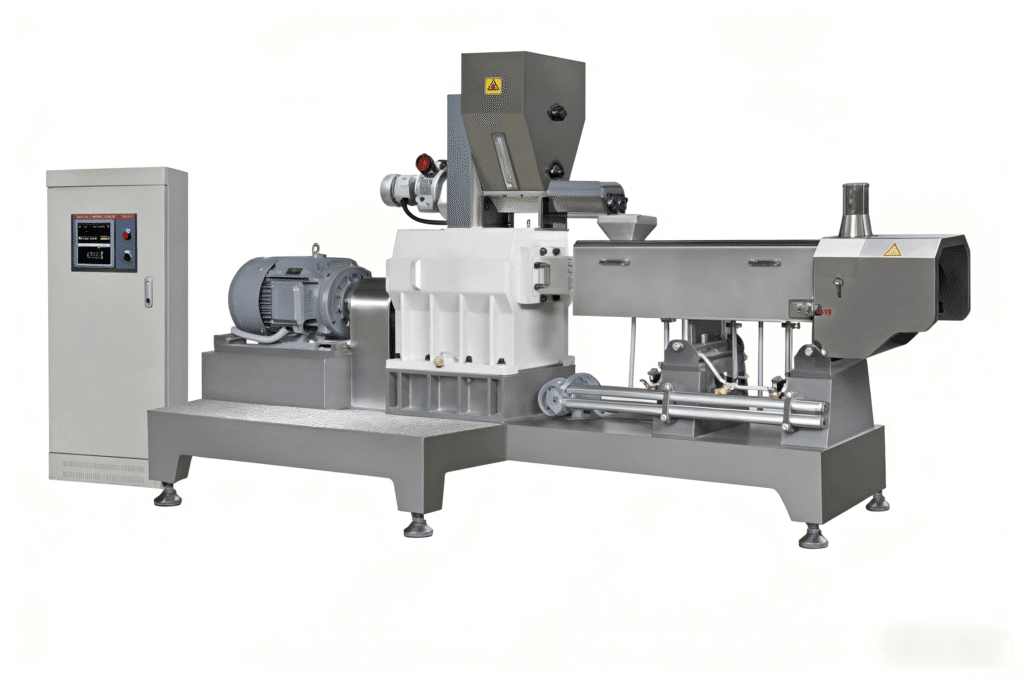
This article provides a comprehensive guide for modern food industry professionals to evaluate these two technologies, examining their working principles, application suitability, and long-term strategic value.
The Fundamental Mechanical Difference
At its core, the distinction between these two technologies lies in their material conveyance and mixing mechanisms.
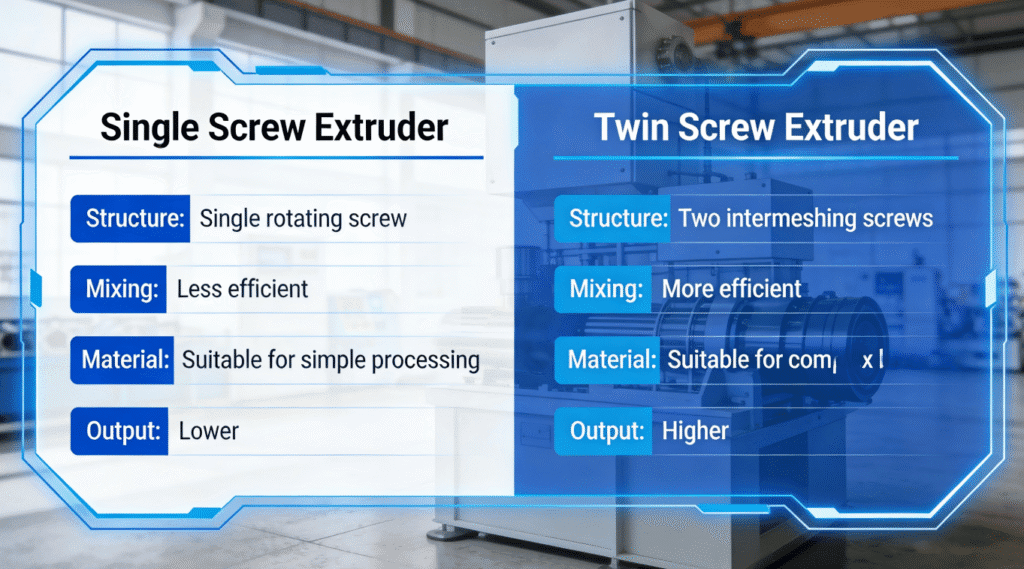
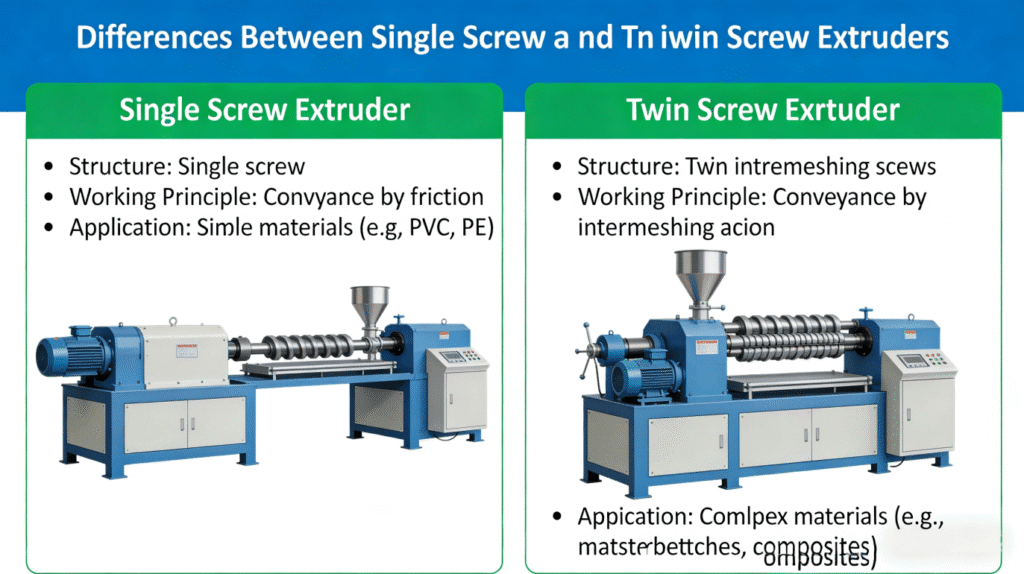
Single-screw extruders operate on a relatively simple principle. A single rotating screw fits snugly within a grooved barrel. The material is conveyed forward through drag flow and mechanical friction between the product, the screw, and the barrel wall. This simplicity translates to lower capital costs (typically 30-50% less than twin-screw systems) and easier maintenance . However, this design also means that the machine”s performance is highly dependent on the feed material”s properties. If the ingredient matrix slips inside the barrel rather than gripping it, conveyance efficiency plummets.
Twin-screw extruders, particularly the co-rotating, intermeshing type dominant in food processing, utilize a positive pumping mechanism. The two screws self-wipe each other, forcing material forward regardless of its slip characteristics . This design creates a “figure-8” passage where the screws mechanically displace the product, offering vastly superior control over residence time distribution, shear stress, and heat transfer.
Comparative Analysis: Application and Performance
The decision matrix for choosing between these systems has evolved. While cost was once the primary differentiator, performance parameters now dictate the choice based on product portfolio.
Raw Material Flexibility
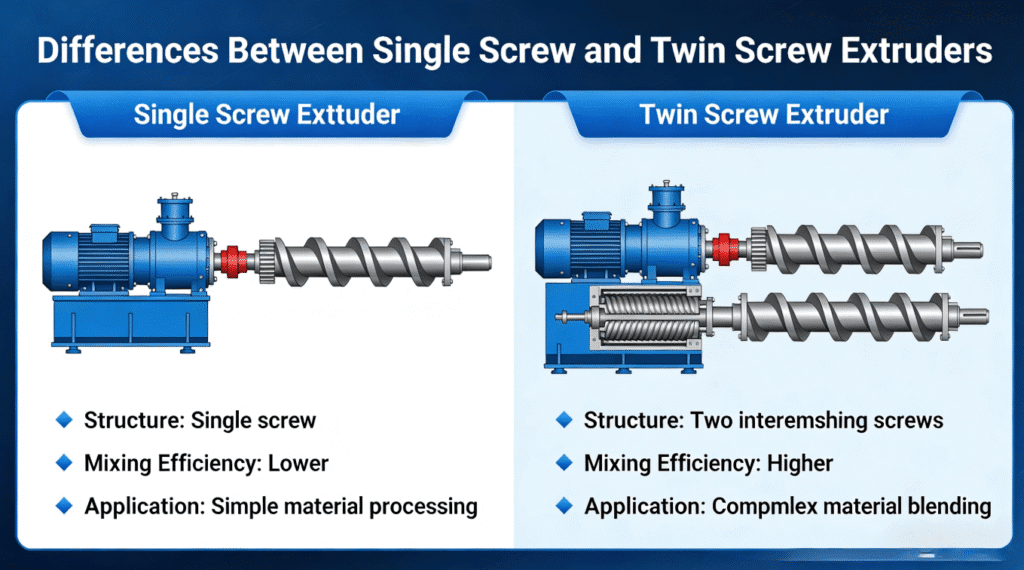
Twin-screw extruders handle virtually any ingredient matrix—from high-fat formulations to high-protein, sticky doughs—with ease . They can process oily seeds, fresh meat, and hygroscopic materials that would cause a single-screw system to stall or surge. Jenni Harrington of Bühler notes that “with twin-screw systems, it”s easy to modify these extruders to get what you need,” whereas single-screw systems often require larger particle sizes for consistent intake .
In contrast, single-screw extruders excel with free-flowing, granular materials with consistent bulk densities, such as corn grits for direct-expanded snacks or soybean meal for basic texturizing .
Mixing and Shear Control
The modular nature of twin-screw barrels allows processors to place specific kneading blocks and reverse screw elements at precise locations along the shaft. This enables “tailored shear”—high shear for starch gelatinization in one zone, followed by low shear for gentle ingredient incorporation downstream . As noted by Reading Bakery Systems, twin screws manage dough flow and heat ingredients appropriately, particularly for challenging alternative proteins .
Single-screw systems offer limited mixing intensity, relying primarily on the melt pool within the screw channel for homogenization . This makes them suitable for less-complex, less-viscous doughs where over-working the mix is a concern .
Hygiene and Sanitation
Modern food safety standards demand exceptional cleanability. Leistritz”s recent innovations in “Hygienic Design” (HD) extruders highlight how twin-screw platforms now feature swing-open barrels and wash-in-place (WiP) capabilities, allowing complete access to screws for sanitation and visual inspection . This design prevents harborage points and reduces cross-contamination risks between product changeovers. While single-screw designs are mechanically simpler to disassemble, their deep, blind screw channels can be more difficult to thoroughly clean of sticky residues.
Strategic Selection: Mapping Technology to Product Portfolio
The choice often comes down to a manufacturer”s current product mix and future innovation roadmap.
When to Choose Single-Screw Extrusion
Single-screw extruders remain the economically prudent choice for dedicated, high-volume production lines with limited product variation. They are ideal for:
- Basic Animal Feeds and Aquafeed: Where the goal is starch gelatinization and pathogen reduction (e.g., salmonella elimination in poultry feed) .
- Pet Food Production: For kibble where shape variations are minimal and recipes are stable over long production runs.
- Simple Corn- or Potato-Based Snacks: Where expansion relies on the natural properties of the starch and the recipe does not require the incorporation of wet or sticky inclusions .
Ottevanger”s AL-Series exemplifies this, offering robust, continuous operation with low wear-part costs—a critical factor for feed mills operating 24/7 .
When to Invest in Twin-Screw Extrusion
Twin-screw technology is the enabler of innovation. It is the preferred choice for manufacturers seeking to capture premium market segments:
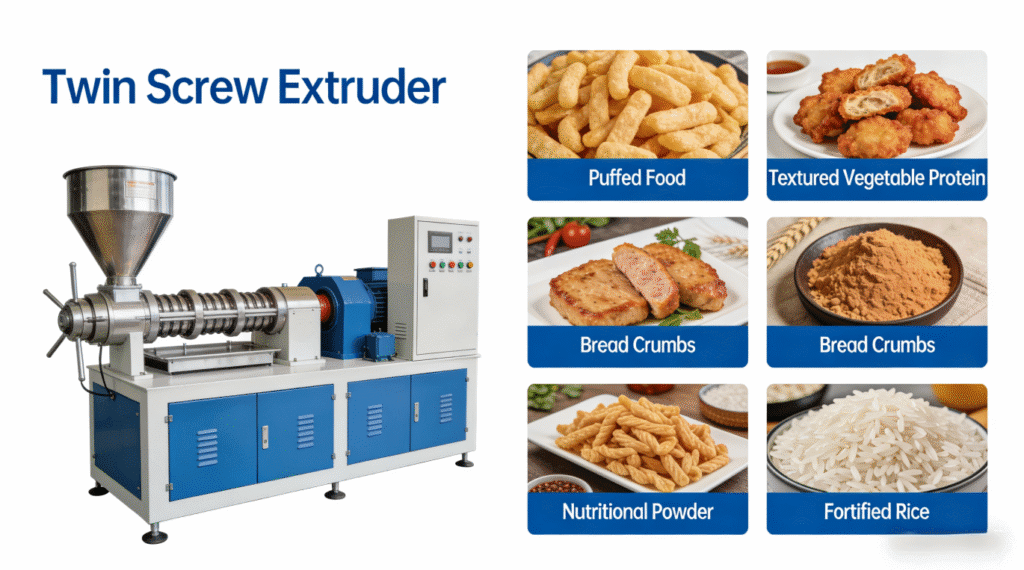
- Plant-Based Meat Analogs: High-moisture extrusion (HME) for fibrous, meat-like textures is virtually impossible on single-screw systems. Clextral”s work with mycoprotein, soy, and pea protein demonstrates the need for precise thermal and shear control to create alignable protein structures .
- High-Protein and Functional Snacks: As the snack industry moves toward grain-free, gluten-free, and high-protein offerings, twin-screw systems manage the non-traditional rheology of these ingredients without blockage .
- Filled and Co-Extruded Products: The stability and pressure control of twin-screw systems allow for the simultaneous injection of fillings (e.g., chocolate, cheese, fruit purees) into a continuous cereal matrix .
- R&D and Pilot Plants: For companies developing new products, lab-scale twin-screw extruders offer the ability to scale parameters linearly to production. They allow for iterative testing with minimal material waste, handling the wide range of viscosities required for advanced formulation work .
Economic Considerations Beyond the Price Tag
While a twin-screw extruder commands a higher initial investment, the total cost of ownership must factor in operational versatility.
- Downtime and Changeover: Twin-screw systems offer faster recipe changeovers. Clextral”s hybrid lines can switch between low-moisture TVP and high-moisture HME with minimal downtime, maximizing production uptime .
- Waste Reduction: Advanced twin-screw controls, such as FAMSUN”s automatic start-up and shut-down sequences, can reduce start-up waste by up to 70%, directly impacting the bottom line .
- Energy Efficiency: Modern twin-screw designs with synchronous motor technology (like Leistritz”s ZSE MAXX-HD) optimize energy consumption per kilogram of output, narrowing the operational cost gap with single-screw systems .
Conclusion
The decision between single-screw and twin-screw extrusion is no longer simply a matter of budget; it is a strategic declaration of a company”s market direction. For manufacturers focused on commoditized, high-volume production with stable recipes, the single-screw extruder offers unbeatable mechanical simplicity and return on investment.
However, for those navigating the future of food—characterized by alternative proteins, upcycled ingredients, and personalized nutrition—the twin-screw extruder is the indispensable tool. Its ability to decouple processing outcomes from ingredient variability provides the control necessary to innovate with confidence. As the lines between snacks, meals, and nutritional supplements continue to blur, the flexibility of twin-screw technology positions manufacturers to capture emerging trends without being constrained by their equipment.
Faq
Can we visit your factory ?
Yes , wlecome to our factory at any time , you can contact me .
1.Will you help us with the installation ?
Yes , We will send engineers to install and debug the equipment, and assist in training your staff.
2.Are you a factory or trading company?
We are a factory.
3.What certificate do you have?
We have ISO and CE certificate.
4.How long is the warranty period?
All of our machines have one year warranty.
5.What’s the main market of your company?
Our customers all over the world.
6.How much production capacity of your company one year?
This depends on your needs.