
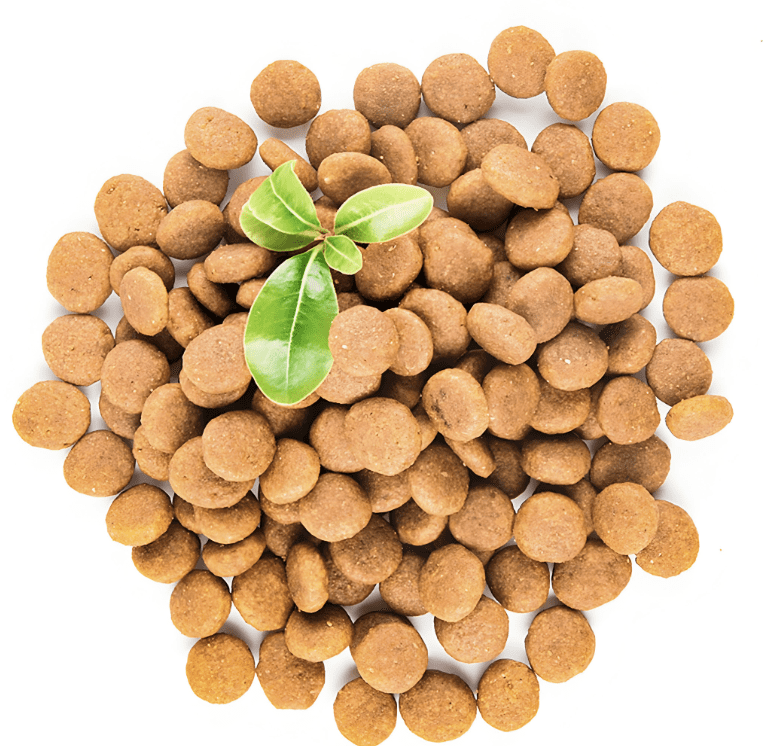
The bag of crunchy, nutritious kibble that satisfies your dog or cat is the end result of a highly engineered and precisely controlled industrial process. Pet food making machine Modern pet food manufacturing, particularly for dry extruded foods, is a marvel of efficiency and food science. It transforms a variety of raw ingredients—meats, grains, vitamins, and minerals—into a shelf-stable, balanced, and palatable meal. This article walks through the primary operational steps that turn these ingredients into the kibble your pet loves.
Step 1: Receiving and Grinding Raw Materials
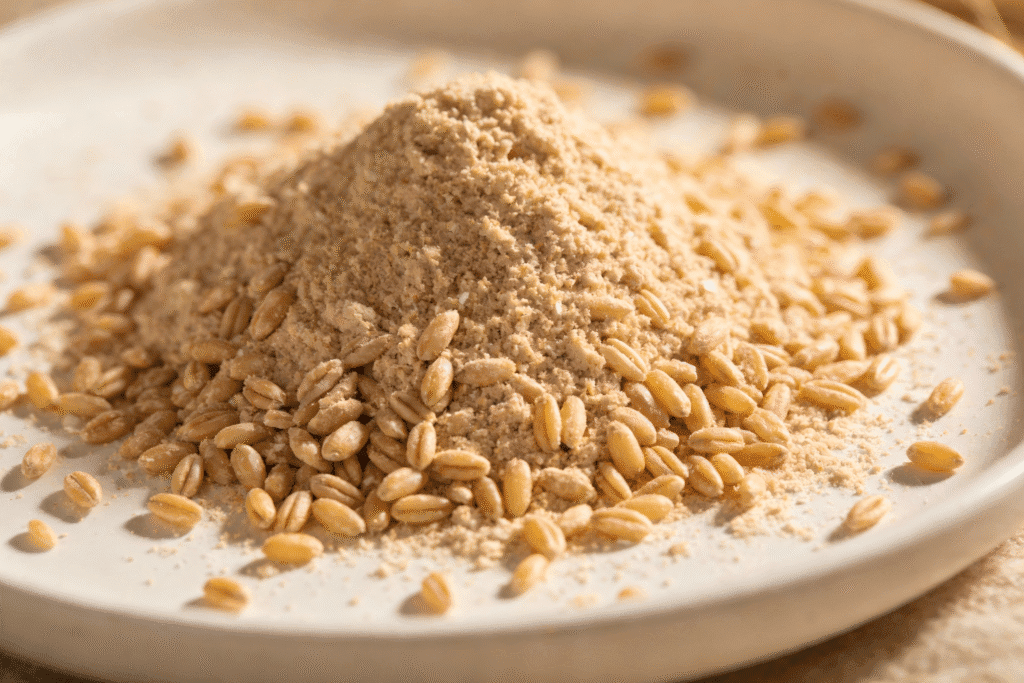
The journey begins long before the ingredients enter the extruder. It starts with the careful receiving and storage of raw materials. Grains like corn, wheat, and rice, along with protein meals (from chicken, fish, or lamb), are delivered in bulk and stored in large silos . Pet food making machine Before they can be used, these dry ingredients must be reduced to a consistent particle size. This is accomplished by hammer mills o fine-grinding systems. The goal is to create a uniform flour or meal, as consistent particle size is crucial for proper mixing, cooking, and the final texture of the kibble .
Step 2: Batching and Mixing
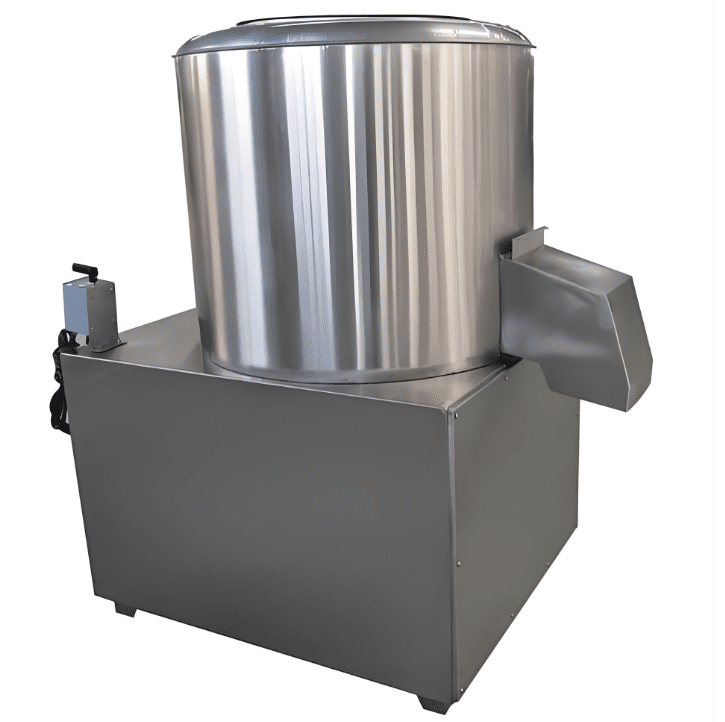
With the ingredients ground, the next step is to combine them into the precise formula developed by pet nutritionists. This is known as batching and mixing. Pet food making machine Highly accurate weighing systems, often using micro-ingredient scaling systems, ensure that even the smallest amounts of vitamins, minerals, and amino acids are added correctly . All these components—the major protein meals, grains, and the critical micro-nutrients—are then loaded into a large, industrial mixer (such as a paddle or ribbon blender). The mixer’s job is to create a perfectly homogeneous dry powder blend, so every piece of kibble will have the same nutritional profile .
Step 3: Conditioning and Extrusion Cooking
This is the heart of the dry pet food process, where the dry powder is transformed into a cooked dough and shaped into kibble.
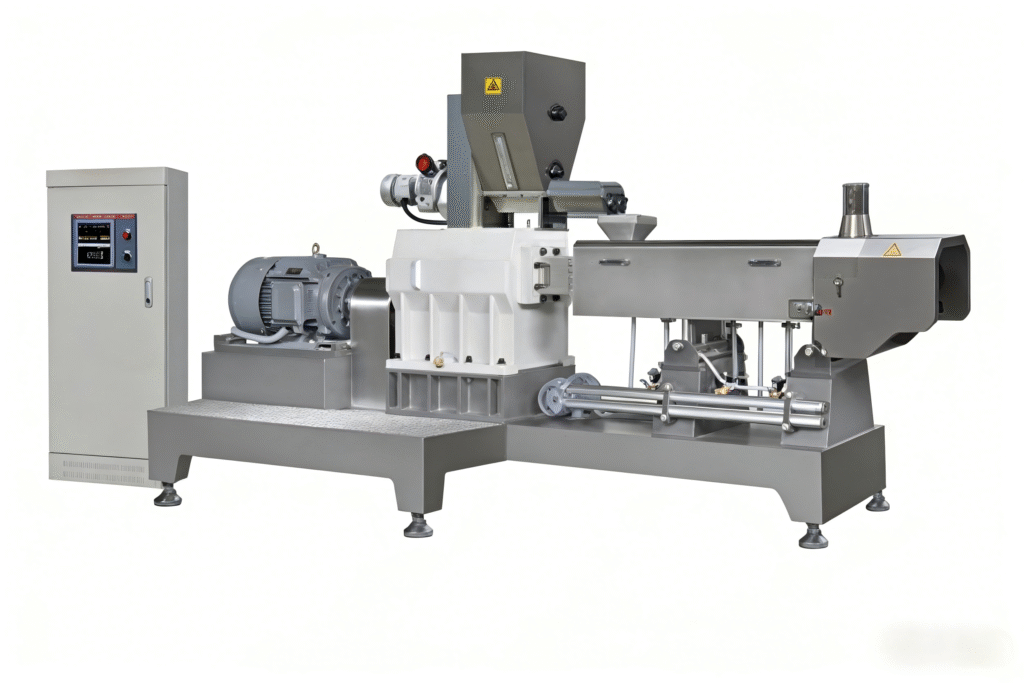
First, the dry mix enters a pre-conditioner. Here, it is vigorously mixed with steam and hot water for several minutes . This step begins the cooking process by hydrating the starches and proteins, and it can also allow for the incorporation of fresh meat slurries or other liquid ingredients . The conditioned, warm mash then flows into the extrusora .
Inside the extruder (typically a single or twin-screw machine), the material is subjected to intense mechanical shear and heat. Temperatures can rapidly rise to between 115°C and 150°C, fully cooking the starches (gelatinization) and denaturing the proteins in a matter of seconds . As the cooked dough is forced toward the die at the end of the barrel, the pressure builds dramatically. The morir is a metal plate with holes of a specific size and shape (round, star, bone-shaped) that will form the kibble. As the dough is forced through the die and exposed to normal atmospheric pressure, the sudden pressure drop causes the water in the product to flash into steam, making the dough expand and puff up into the familiar kibble shape . A rotating knife cuts the emerging product into individual pieces.
Step 4: Drying and Cooling
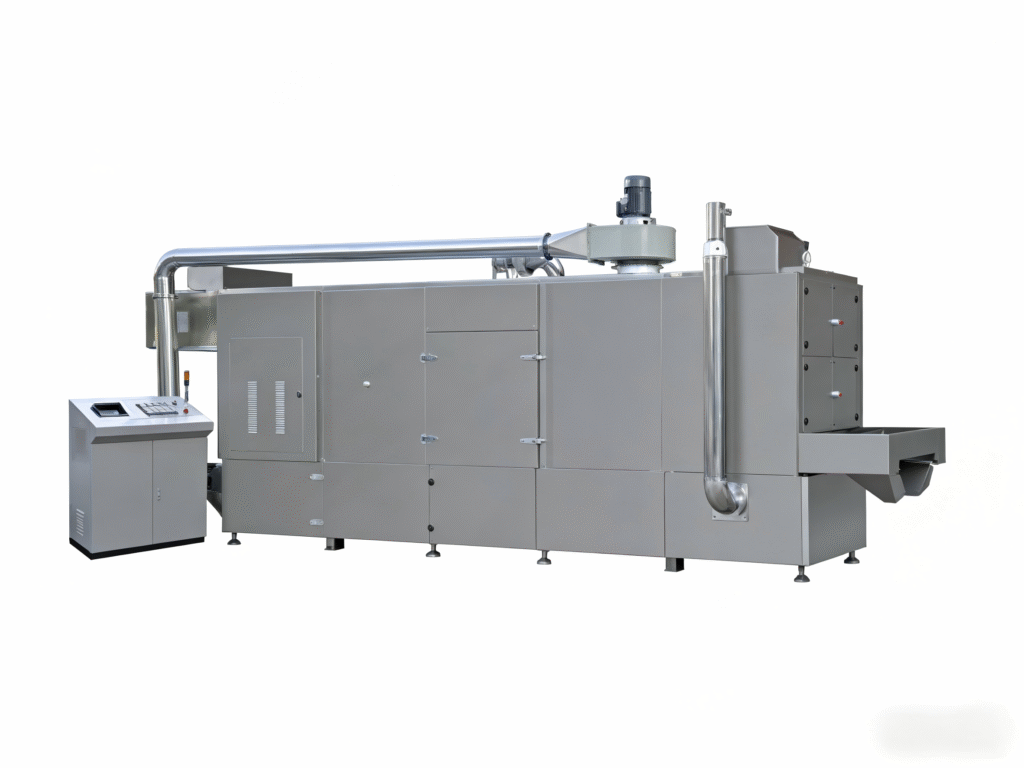
At this point, the kibble is hot (around 80-90°C) and contains too much moisture (about 20-25%) for safe storage . It must be dried to prevent spoilage. The kibble is transferred to a large, industrial dryer, where hot air circulates around it, gradually reducing its moisture content to a target of around 8-10% . After drying, the kibble is still warm and must be cooled before packaging. It moves to a cooler, where ambient air is drawn through the bed of kibble to bring its temperature down to near room temperature (only a few degrees above ambient) . This step ensures the fat applied later won’t go rancid and prevents condensation inside the packaging.
Step 5: Coating for Palatability and Nutrition
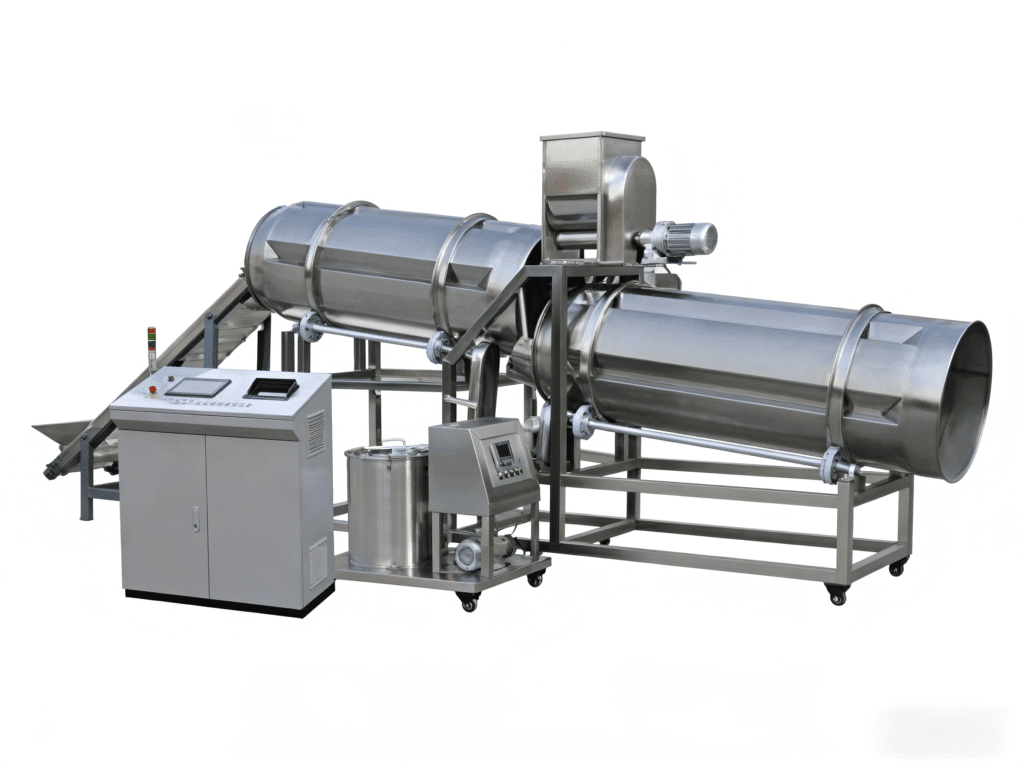
While the base kibble is nutritious, it is the coating that makes it irresistible to pets and adds essential fats. The cooled, dried kibble is transferred to a coating drum. Here, a precise amount of liquid, such as rendered animal fats, poultry digest (which adds a meaty flavor), and other palatants, is sprayed onto the tumbling kibble . For products with a powdered coating, a light application of oil or liquid digest is often used first to help the powder adhere to the kibble’s surface . This step is critical for both the taste of the food and its energy density.
Step 6: Final Screening and Packaging
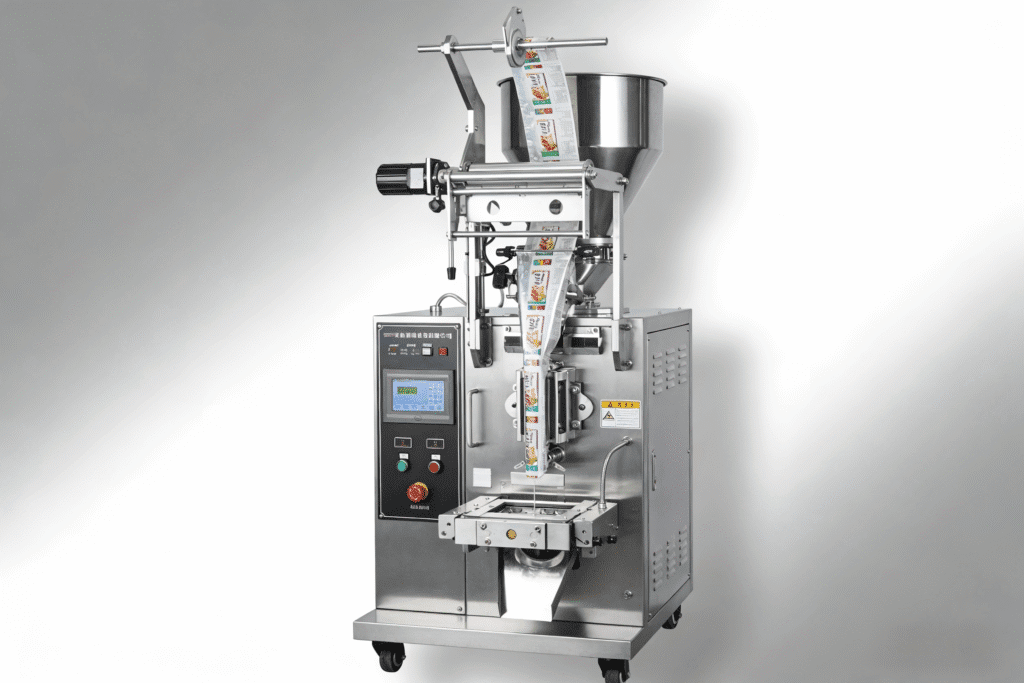
Before the finished kibble is sent off to stores, it passes through a final screener or sifter. This machine removes any fines (dust) or broken pieces created during handling, ensuring only whole, consistent kibble reaches the packaging stage . The clean product then flows into a packaging system, which automatically weighs and fills bags of various sizes, sealing in freshness and preparing the food for its journey to a happy pet’s bowl.
FAQ — Frequently Asked Questions
How long does a typical extruder last?
With preventive maintenance, an industrial extruder lasts 10–15 years. Wear parts such as dies and screws are replaced periodically.
Can one line make both dog food and fish feed?
Yes. By adjusting moisture, screw profile, and dies, the same line can produce floating fish feed or dog food.
What certifications are needed?
CE marking, HACCP, and ISO 22000 are baseline. For exports to EU/US, compliance with AAFCO/FEDIAF is essential.