
The production of corn puffs (extruded expanded snacks) is a complex process where precision determines product safety, quality, and consistency. Kurkure making machine This article outlines the key considerations and critical control points (CCPs) throughout the manufacturing workflow.
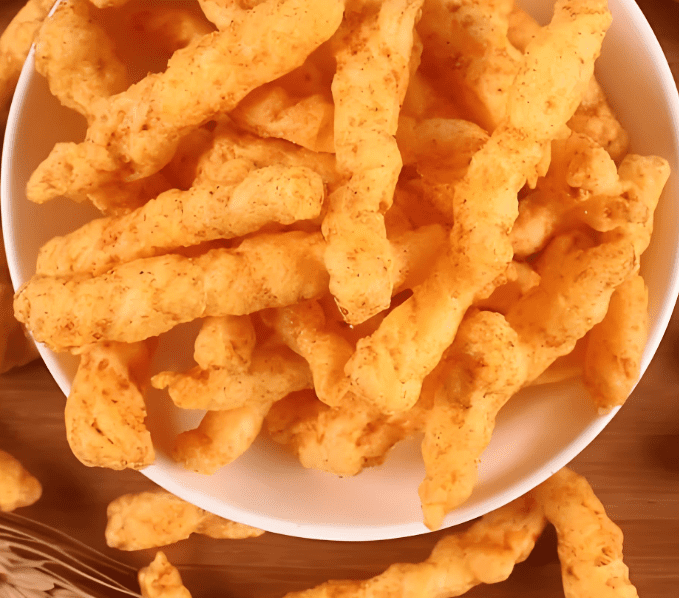
1. Raw Material Inspection & Preparation
Primary Concern: Ingredient Variability and Contaminants.
- Moisture Content of Grits: Inconsistent moisture in the degermed corn grits (raw material) significantly affects water absorption during mixing, Kurkure making machine leading to variable expansion and texture in the final product. Must be monitored and standardized.
- Foreign Material: Metal fragments, stones, or other grains must be removed via sieves, magnets, and destoners to prevent equipment damage and consumer hazards.
- Detección de micotoxinas: Corn is susceptible to aflatoxins. Rigorous testing of incoming batches is non-negotiable for food safety.
2. Mixing & Conditioning
Primary Concern: Uniform Dough Formation.
- Water Ratio & Temperature: The exact amount and temperature of added water are critical. Insufficient water leads to incomplete gelatinization and hard, dense puffs. Excess water causes over-expansion, a weak structure, and excessive stickiness in the extruder.
- Tiempo de permanencia: The mixture must be allowed to hydrate evenly (“condition”) before extrusion. Inadequate conditioning creates a non-homogeneous melt in the extruder.
3. The Extrusion Process: The Heart of Operations
This is the most critical phase, with multiple interdependent variables.
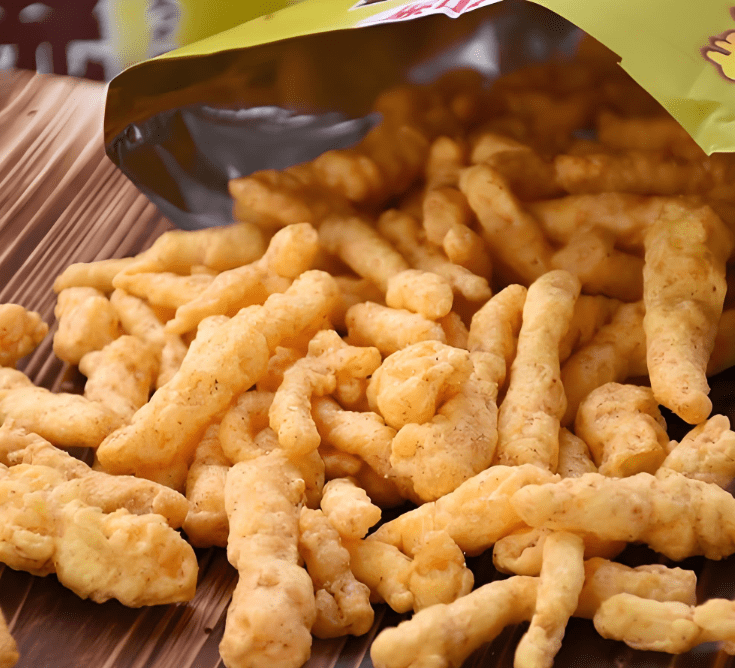
- Barrel Temperature Profile: Temperatures across different extruder zones must be precisely controlled. Insufficient heat results in incomplete starch gelatinization (“white centers,” poor expansion). Excessive heat can cause burning, off-flavors, and nutrient degradation (e.g., loss of added vitamins).
- Velocidad y configuración del husillo: The screw’s rotational speed and design dictate shear force and pressure buildup. High shear can over-degrade starch, Kurkure making machine producing a fine, powdery texture instead of a crisp, cellular one.
- Die Pressure & Design: Pressure at the die head must be stable and optimal. Fluctuating pressure causes uneven expansion and shape distortion. The die hole design directly determines the final puff shape.
- Residence Time: The duration the dough spends inside the extruder barrel must be consistent. Variances lead to batch-to-batch inconsistency.
4. Drying & Toasting
Primary Concern: Moisture Control and Flavor Development.
- Moisture Reduction Post-Expansion: Puffs exiting the extruder have high internal moisture (8-12%). They must be dried in an oven or dryer to a brittle, shelf-stable level (1-3%). Incomplete drying leads to microbial spoilage and loss of crunch.
- Even Airflow & Temperature: Dryers must provide uniform heat and airflow to prevent pockets of moisture (“soft centers”) or over-drying/burning.
- Flavor Application: If coatings (cheese, sugar, etc.) are applied before toasting, temperature control is vital to caramelize or set the coating without scorching.
5. Coating & Flavoring
Primary Concern: Even Application and Hygiene.
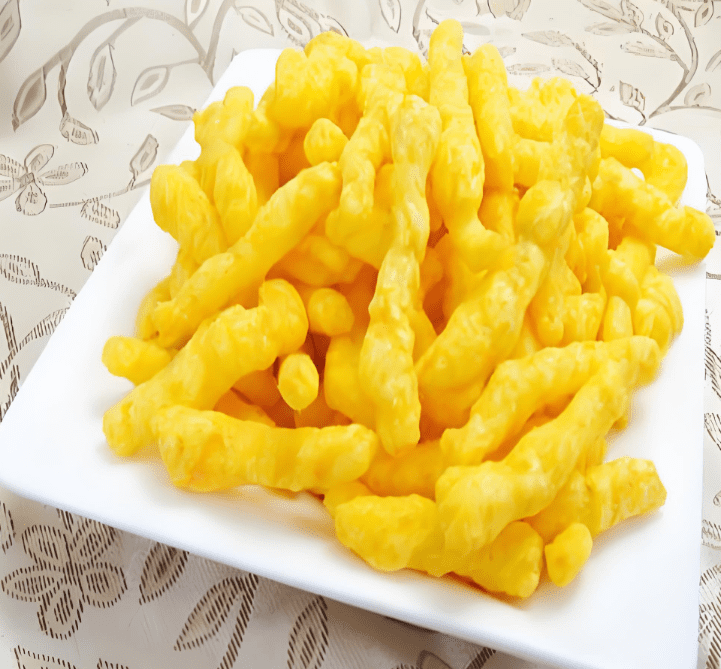
- Slurry Consistency: The oil- or water-based flavor slurry must have a consistent viscosity. Too thick creates clumps; too thin results in inadequate coating and waste.
- Mixing Efficiency: The rotating drum must ensure each puff receives an even, thin layer. Over-application makes the product greasy or soggy.
- Cross-Contamination: Thorough cleaning of coating equipment between flavor runs is essential to prevent allergen cross-contact (e.g., cheese dust migrating to a plain batch).
6. Cooling & Packaging
Primary Concern: Textural Integrity and Shelf Life.
- Adequate Cooling: Products must be cooled to ambient temperature before packaging. Packaging warm puffs leads to condensation inside the bag, causing sogginess and mold growth.
- Modified Atmosphere Packaging (MAP): For maximum shelf life and crispness, nitrogen flushing is often used to displace oxygen, which causes rancidity (in fats) and staleness.
- Integridad del embalaje: Seals must be airtight to maintain the protective atmosphere and prevent moisture ingress. Metal detectors are a mandatory final CCP before palletizing.
Summary: The Philosophy of Control
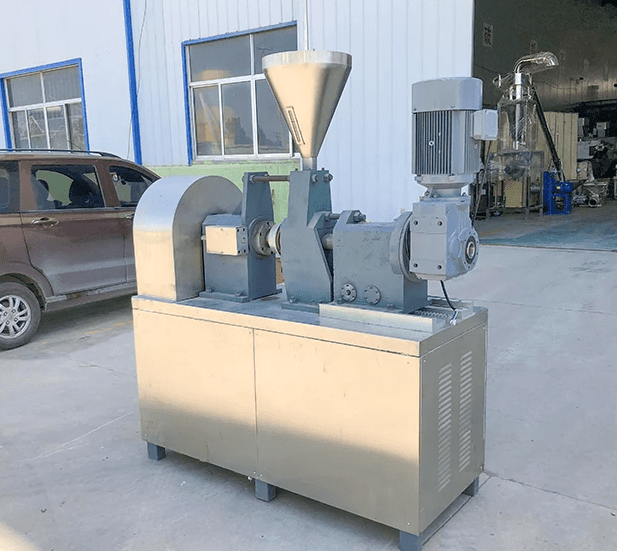
Successful corn puff manufacturing is less about “cooking” and more about controlling energy inputs (heat, shear, pressure) and mass transfer (moisture). Kurkure making machine The goal is to transform a raw grain grit into a uniformly expanded, stable, safe, and appealing snack through a highly engineered, monitored, and controlled process. Any deviation at one stage cascades downstream, impacting final quality, safety, and consumer acceptance. Therefore, rigorous Standard Operating Procedures (SOPs), real-time monitoring, and a robust Hazard Analysis Critical Control Point (HACCP) plan are indispensable.