
Behind the Crunch: The Industrial Alchemy of Instant Noodle Production
The instant noodle is a global icon of convenience, a triumph of food engineering that delivers a complete, shelf-stable meal in minutes.instant noodle machine price While the humble packet seems simple, its journey from wheat field to lunch table is a fascinating saga of large-scale automation, precise science, and clever design. This article pulls back the curtain on the highly industrialized process behind the classic block-style instant noodle, revealing the meticulous steps that transform basic ingredients into an enduring culinary staple.
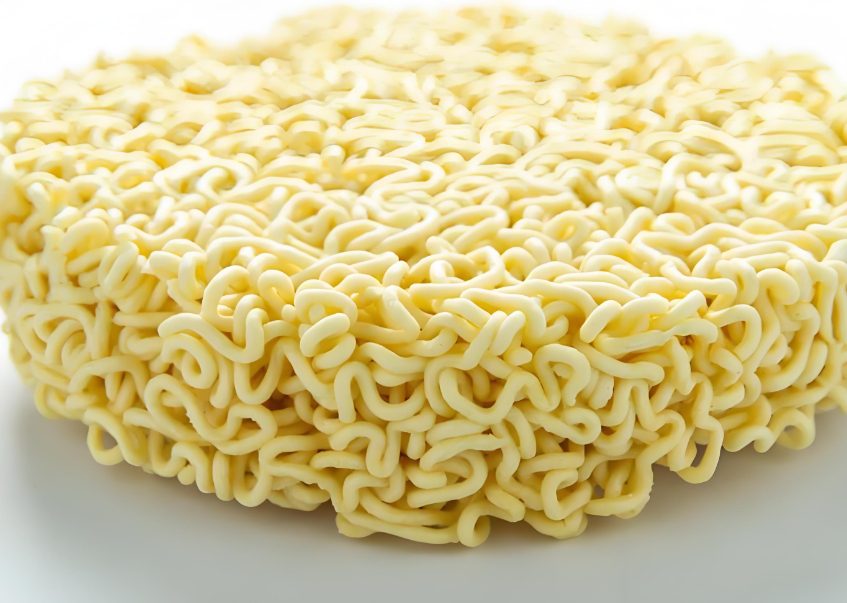
Part 1: The Raw Materials – More Than Just Flour
The process begins with a precise formulation, designed for speed, texture, and shelf life.
- The Flour: High-protein wheat flour (around 9-12% protein) is the backbone, providing the gluten network necessary for the noodle’s chewy, elastic structure. The flour is rigorously tested for consistency.
- Water: Precisely measured and often treated to control mineral content, affecting dough development.
- The Alkaline Agents (Kansui): The secret to the signature springy, yellow noodles. A solution of potassium carbonate and sodium carbonate (and sometimes phosphates) adjusts the dough’s pH. This strengthens gluten, gives the noodles their characteristic color and firm bite, and slightly inhibits starch gelatinization during frying.
- The Foundation: Salt for flavor and gluten strengthening, and sometimes added starches (tapioca, potato) to fine-tune texture.
Part 2: The Factory Line – A Symphony of Automation
Stage 1: Mixing and Dough Sheeting
The ingredients are fed into massive, high-speed mixers to form a crumbly dough. This is then conveyed through a series of sheeting rollers. instant noodle machine price These giant, polished stainless-steel rollers progressively press the dough into a wider, thinner, and more cohesive sheet. The final sheet, typically 1-1.5mm thick, is a smooth, continuous belt of raw noodle dough.

Stage 2: Slitting and Waving – Creating the “Nest”
The wide sheet moves into the most iconic piece of equipment: the slitter and wavy cutter. Here, rows of vertically aligned cutting discs slice the sheet into hundreds of parallel strands. Immediately after cutting, the strands pass under a pair of guiding rollers with low-frequency vibrations. This crucial step imparts the classic wavy pattern. The waves are functional: they increase surface area for faster drying and frying, prevent the noodles from sticking together, and create the loose “nest” structure that allows hot water to penetrate evenly.
Stage 3: Steaming – The First Cook
The waves of raw noodles now enter a large, multi-tiered steaming tunnel. Here, they are subjected to live steam (around 100°C) for 1-5 minutes. This initial steaming partially gelatinizes the starch and sets the protein structure. It pre-cooks the noodles, making them pliable for shaping and preparing them for the dehydration stage.

Stage 4: Cutting and Block Forming
The continuous, steamed noodle strands emerge from the steamer. For cup noodles, the strands are simply cut and loosely packed. instant noodle machine price For the classic block, they are precisely measured by weight and folded by an automated former into a tight, compact block with a specific shape and density. This step requires incredible precision to ensure each block cooks evenly and fits perfectly into its packaging.
Stage 5: Dehydration – The Key to Shelf Stability
This is the critical step that defines the noodle’s final texture and shelf life. There are two primary industrial methods:
- Deep-Fat Frying (The Traditional Method):
- The noodle blocks are conveyed through a long, continuous fryer filled with hot palm oil or a similar high-stability oil (typically at 150-160°C).
- The flash-frying process lasts only 60-100 seconds. The intense heat instantly vaporizes the water inside the noodles, creating a porous, micro-bubble structure. The oil replaces the evacuated water, giving fried noodles their characteristic rich flavor, faster rehydration (3-5 minutes), and a shelf life of 6-12 months.
- Post-frying, the blocks are vigorously air-blown to remove excess surface oil and cooled on a long conveyor.
- Air-Drying / Hot-Air Drying (The “Non-Fried” Method):
- To produce lower-fat noodles, blocks are dehydrated using circulated hot air (70-90°C) in multi-stage drying towers or tunnels.
- This is a much gentler, slower process (30-60 minutes). It removes moisture without adding fat, resulting in a denser, harder noodle block with a longer cooking time (often 4-6 minutes of boiling). Shelf life is comparable, but the texture and flavor differ from fried versions.
Stage 6: Cooling and Seasoning
The dehydrated, brittle noodle blocks are cooled to room temperature to prevent condensation in the packet. They then move to the seasoning station.
- The Powder Packet: A custom blend of salt, MSG (umami), hydrolyzed vegetable protein, yeast extract, sugar, spices, and dehydrated vegetables (chives, carrots) is precisely weighed and packaged.
- The Oil/Sauce Packet: Liquid seasoning—often a blend of palm oil, chili oil, sesame oil, soy sauce, and other flavorings—is injected into small, sealed sachets.
- For cup noodles, the noodles, dried vegetable flakes, and powder are layered directly into the cup. A freeze-dried or air-dried topping (shrimp, beef, egg, corn) is often placed on top for visual appeal.
Stage 7: Packaging and Quality Control
The final assembly is fully automated. A noodle block, a powder packet, and an oil packet are collated and fed into a film packaging machine. The film (a multi-layer laminate for moisture, light, and oxygen barrier) is formed around the product, sealed, and date-coded.
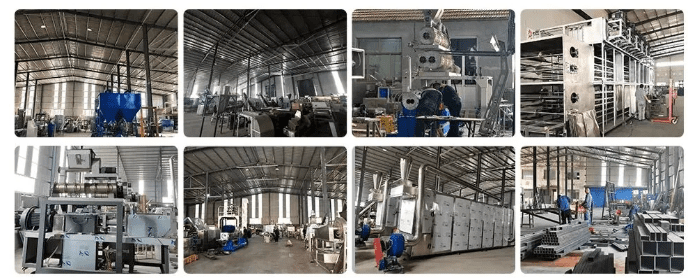
Rigorous quality control happens at every stage: flour protein tests, dough consistency checks, fryer temperature monitoring, block weight verification, instant noodle machine price final moisture content analysis (must be below a critical level, e.g., 8-10%, for safety), and microbiological testing.
The Final Reveal: Engineering Meets Culinary Art
The magic of the instant noodle is not a single secret but the seamless integration of food chemistry, mechanical engineering, and thermodynamics.
- The Wave is a structural engineering solution for efficient hydration.
- Flash-Frying is a rapid dehydration technique that creates texture and flavor.
- Kansui is the chemical key to the authentic ramen mouthfeel.
- Precise Formulation and Drying are the safeguards for global distribution without refrigeration.
When you pour boiling water over that block, you’re reversing the engineered process: the hot water re-gelatinizes the starches, rehydrates the protein network, and dissolves the precisely balanced seasonings, reconstructing a hot broth and tender noodles in mere minutes. instant noodle machine price It is a testament to a process designed not for a chef’s kitchen, but for flawless execution on a factory scale, delivering consistent, affordable, and enduring convenience to billions. The next time you hear the crunch of the block breaking, remember—you’re holding a masterpiece of modern industrial food science.