
مقدمة
Floating fish feed is a specialized type of aquafeed designed to remain on the water’s surface for an extended period (typically over 12-24 hours). Fish feed making machine This characteristic is crucial for species like tilapia, catfish, trout, and salmon, as it allows farmers to monitor feeding behavior and consumption rates, reducing waste and water pollution. The production of high-quality floating feed relies on a specific combination of ingredients, grinding, conditioning, extrusion, and drying technologies.
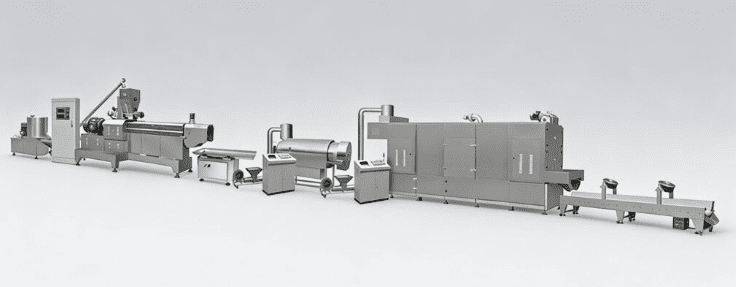
This article outlines the key stages in the manufacturing process.
1. Raw Material Receiving and Grinding
The process begins with the selection of ingredients, including protein sources (e.g., soybean meal, fish meal, corn gluten meal), carbohydrate sources (e.g., wheat flour, starch), lipids (oils and fats), vitamins, and minerals.
The first critical step is size reduction. All dry ingredients must be ground into a fine, homogeneous powder using a hammer mill أو pulverizer. For floating feed, a particle size of 150-250 microns (or finer) is typically required. Fine grinding increases the surface area for steam conditioning, improves starch gelatinization, and ensures the durability of the final pellet.
2. Mixing and Micro-ingredient Addition
The ground ingredients are then transferred to a ribbon or paddle mixer. Macro-ingredients (soybean meal, wheat flour) are blended first, followed by micro-ingredients (vitamins, minerals, and additives). Uniform mixing is vital to ensure every pellet has a complete nutritional profile.
3. Conditioning
Conditioning is a crucial thermal and mechanical treatment that prepares the mash for extrusion. The mixed powder is fed into a conditioner, where it is exposed to live steam (under pressure or atmospheric pressure) for 10-30 seconds to several minutes.
The key goals of conditioning are:
- Hydration: Adding moisture (typically to 25-30% total).
- Gelatinization: Applying heat (80-95°C or 176-203°F) to partially cook the starches. This makes them sticky and digestible.
- Binding: The sticky, gelatinized starch acts as a natural binder for the other ingredients.
4. Extrusion (The Core of Floating Feed)
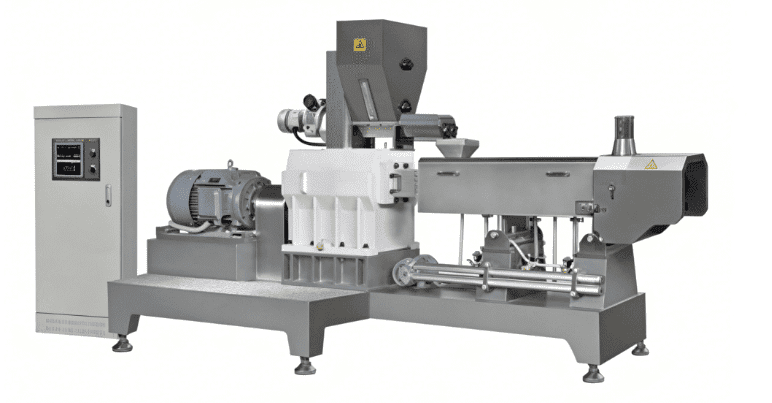
The conditioned, hot mash is then fed into an الطارد – typically a single-screw or twin-screw machine. Extrusion is the heart of the floating feed process and involves three distinct zones inside the barrel:
- Feeding Zone: The mash enters the screw and is transported forward.
- Kneading (Transition) Zone: Pressure and temperature increase significantly (up to 120-150°C or 248-302°F) due to mechanical friction from the screw and optional heated jackets.
- Cooking/Die Zone: The material reaches a superheated, molten, dough-like state. Fish feed making machine Starch is fully gelatinized, and proteins are denatured.
As this molten material is forced through the die plate (which shapes the pellets), the pressure drops instantly from high (30-60 bar) to atmospheric. This causes superheated water within the dough to flash into steam, creating numerous small gas bubbles throughout the matrix – which gives the pellet its porous, low-density structure.
5. Cutting
As the extruded “rope” exits the die plate, a rotating knife cuts it to the desired pellet length. The speed of the knife determines the final pellet length, while the die hole diameter determines the pellet diameter.
6. Drying
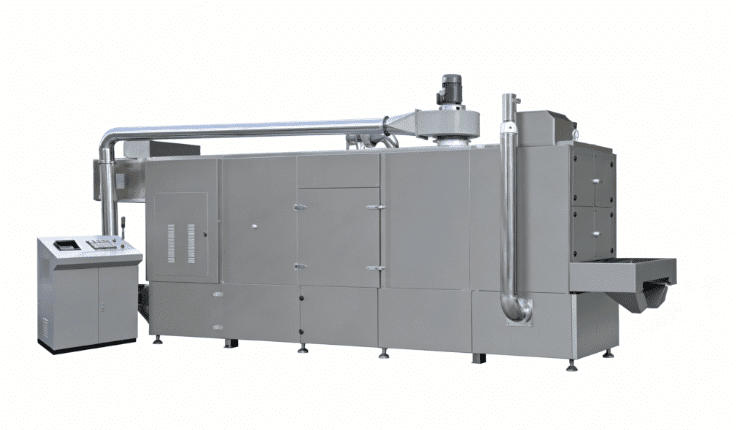
The fresh pellets exiting the extruder have high moisture (22-28%) and temperature. They must be dried to a shelf-stable level (8-10%) to prevent mold and bacterial growth. This is achieved in a continuous belt dryer or rotary dryer, using warm air (80-110°C or 176-230°F) for 10-20 minutes. Proper drying ensures the pellets remain floating and have a long shelf life.
7. Coating (Fat and Oil Spraying)
For high-energy diets, floating pellets often require a post-extrusion coating of fats and oils (e.g., fish oil, soybean oil). After drying, pellets enter a coater (a rotating drum or vacuum coater). Oil is sprayed onto the pellets while they tumble. Because floating pellets are porous (from the expansion step), they readily absorb the oil up to 20-30% of their weight. Vacuum coaters can achieve deeper penetration without surface slickness.
8. Cooling and Packaging
Finally, the coated pellets are warm and must be cooled to near-ambient temperature using a counterflow cooler. Cool air is drawn through the pellet bed, removing residual heat and moisture. Cooled pellets are then screened to remove fines (dust or broken pellets) and conveyed to storage bins or directly to the bagging scale for packaging.
Quality Control Checks
Throughout the process, critical parameters are monitored:
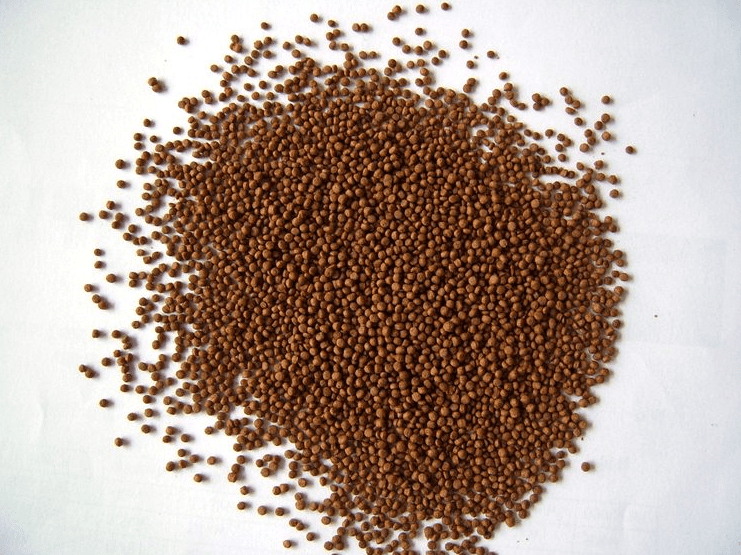
- Floatability: >95% of pellets should float for >30 minutes.
- Durability Index (PDI): Resistance to breakage during handling.
- Water Stability: The pellet should maintain integrity for >2 hours without disintegrating.
- محتوى الرطوبة: Final product at 8-10%.
Conclusion
The manufacturing of floating fish feed is a precise engineering process that leverages high-temperature, high-pressure extrusion technology. Fish feed making machine By carefully controlling grinding fineness, conditioning, extrusion parameters, and drying, producers can create durable, nutritious, and stable floating pellets that optimize aquaculture efficiency and minimize environmental impact.