
Dog food production has evolved into a sophisticated industrial process that combines food science, engineering, and nutritional expertise. dog food making machine The manufacturing methods vary significantly depending on the final product format—dry kibble, wet food, semi-moist food, or baked treats. Each format employs distinct processing technologies, with extrusion being the dominant method for dry pet food production, accounting for approximately 95% of household pet food globally . This article provides a comprehensive overview of the key processing technologies used in dog food manufacturing.
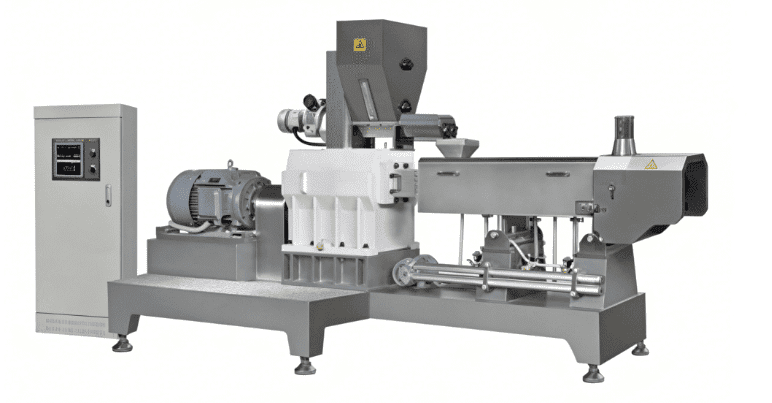
1. Ingredient Preparation and Size Reduction
The manufacturing process begins with the careful selection and preparation of raw ingredients. Dry ingredients such as grains (corn, wheat, rice), protein meals (chicken meal, meat meal), and vitamin-mineral premixes must be ground to a uniform particle size to ensure proper mixing and cooking . This is achieved using hammer mills or similar grinding equipment.
For protein ingredients—particularly fresh or frozen meats, poultry, and fish—specialized meat processing equipment is essential. These ingredients often arrive at the plant in large frozen blocks and require breaking down through grinders, dicers, slicers, and emulsifiers . Consistent particle size is critical for even cooking, proper mixing with other ingredients, and optimal extrusion performance . As industry experts note, “consistency starts with the cut—a uniform cut ensures uniform cooking, blending or drying” .
2. Mixing and Blending
Once all ingredients are properly sized, they are combined according to precise recipes. Dry ingredients are mixed together first, followed by the addition of wet ingredients (meats, water, steam, and fats) to form a homogeneous dough or slurry .
Mixing technologies are critical for ensuring:
- Uniform distribution of all nutrients, including vitamins and minerals
- Consistent texture and color throughout the batch
- Proper hydration of dry ingredients before cooking
- Homogeneous inclusion of fresh proteins
For wet and semi-moist foods, emulsification may be employed to create stable mixtures of fat and water-based ingredients.
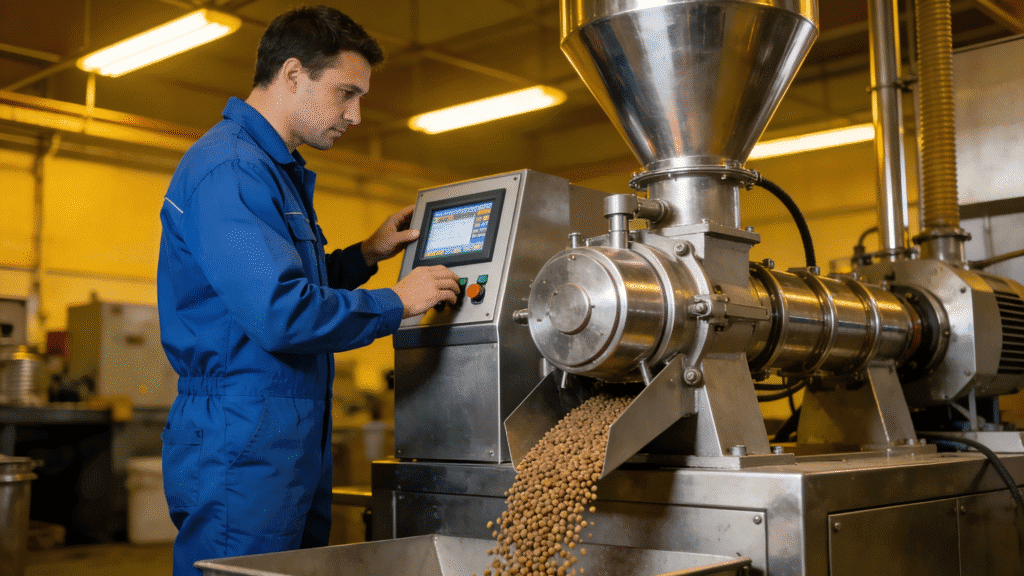
3. Extrusion (Dry and Semi-Moist Food)
3.1 The Extrusion Process
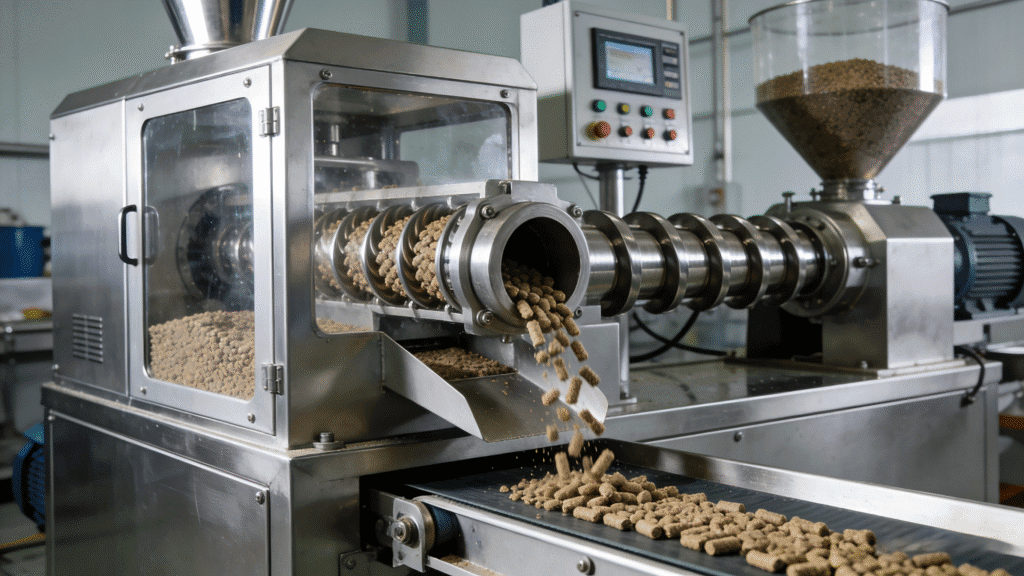
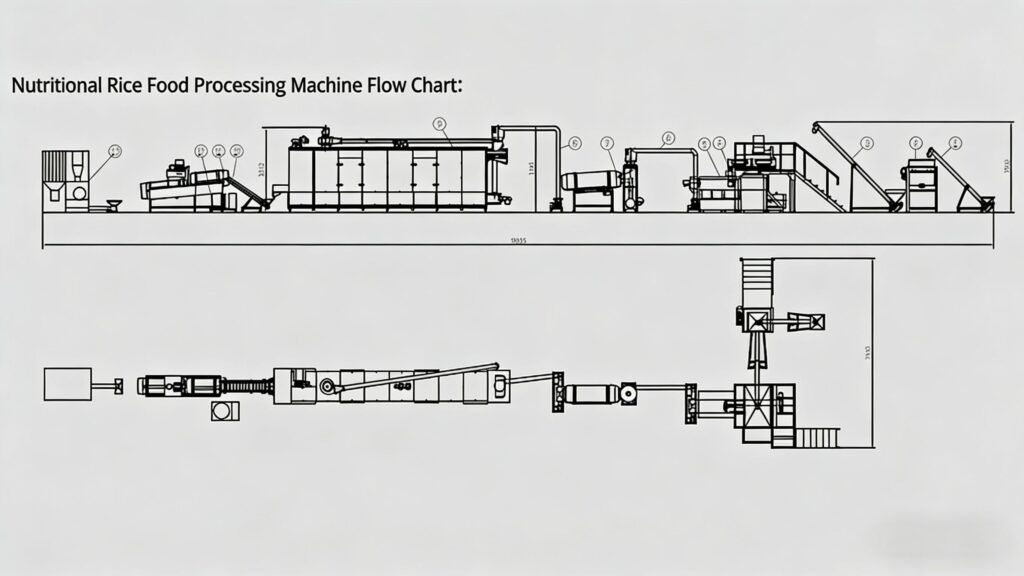
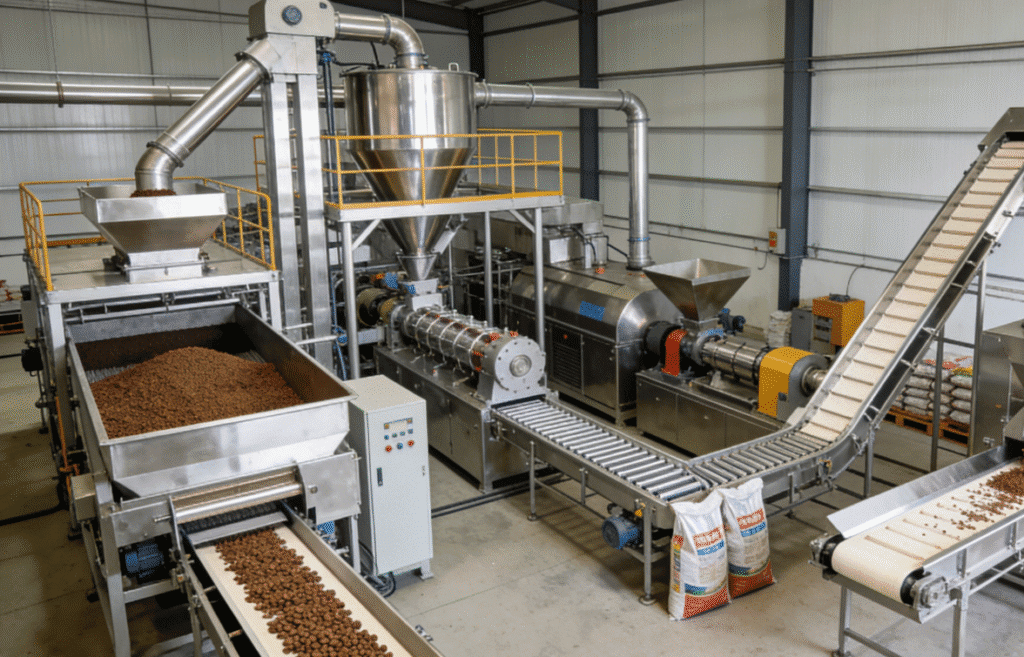
Extrusion is the most widely used technology in dry dog food production. The process involves forcing the prepared dough through a machine called an extruder, where it undergoes controlled cooking under high temperature and pressure .
The extrusion process follows these key stages:
Preconditioning: The mixed ingredients enter a preconditioner where they are combined with steam, water, and sometimes fats. This hydrates the dry powders, begins the cooking process, and forms a dough .
Cooking Under Pressure: The dough then enters the extruder barrel, where mechanical shear and heat cook the material under pressure. dog food making machine Temperatures typically range from 120°C to 200°C in conventional extrusion . This high-heat, high-pressure environment serves several critical functions:
- Gelatinizes starches, making them more digestible
- Denatures proteins, improving their bioavailability
- Kills potentially harmful pathogens (the “kill step”)
Shaping and Expansion: At the end of the extruder, the cooked dough exits through a die plate containing holes of specific shapes and sizes. As the material leaves the high-pressure environment and reaches atmospheric pressure, the superheated steam inside rapidly expands, causing the kibble to puff and become porous . A rotary cutter immediately slices the expanding ribbons into the desired kibble size.
3.2 Key Extrusion Parameters
The quality of the final product depends on careful control of several variables :
- Moisture content within the extruder affects starch gelatinization and kibble texture
- Temperature influences cooking degree and product color
- Screw speed affects shear rate and residence time
- Die configuration determines kibble shape and expansion characteristics
- Pressure impacts the degree of puffing and density
Extrusion process parameters are intimately linked to final kibble physical characteristics, including hardness, durability, expansion ratio, and starch gelatinization .
4. Drying
Freshly extruded kibbles have a high moisture content (typically 20-30%) and must be dried to achieve the final 6-12% moisture level that characterizes dry dog food . This is accomplished in large industrial dryers using forced hot air.
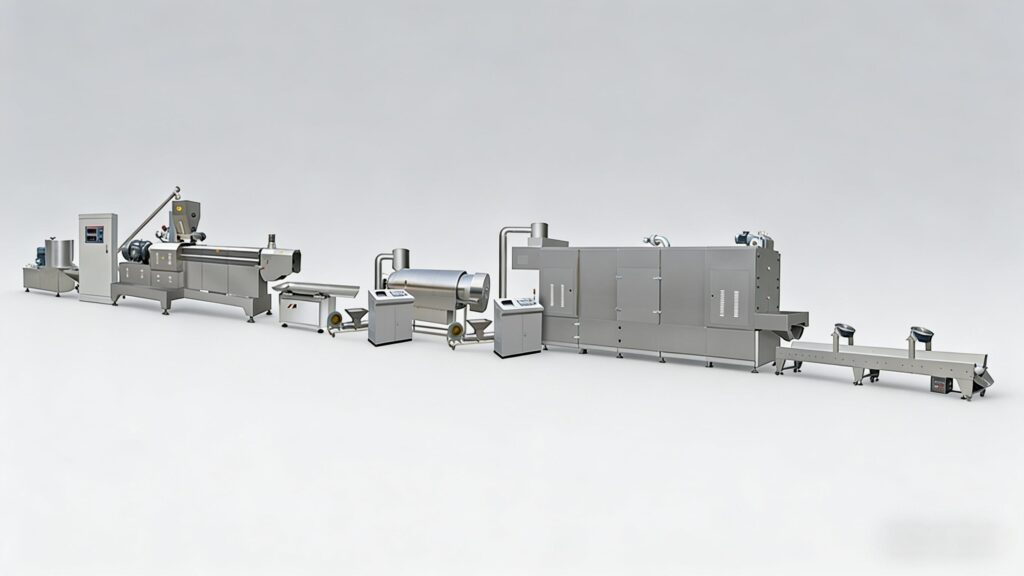
Drying is critical for:
- Preservation: Low moisture inhibits microbial growth and prevents spoilage
- Texture: Proper drying sets the kibble’s crisp, crunchy texture
- Shelf stability: Moisture must be controlled to maintain freshness throughout the product’s shelf life
5. Coating
After drying and cooling, kibbles enter a revolving drum where they are evenly coated with a mix of flavors, oils, and fats . This coating step serves two main purposes:
- Palatability Enhancement: Adds animal fats, digestible proteins, or other palatants that make the food more appealing to dogs
- Nutritional Fortification: Some vitamins and heat-sensitive nutrients that cannot survive the high extrusion temperatures are added during coating
The coating process must be carefully controlled to ensure even application—uneven coating leads to inconsistent taste and nutrient distribution across kibbles.
6. Alternative Processing Technologies
6.1 Baking
While extrusion dominates the market, some dry dog foods are produced through baking—a method similar to making human cookies or biscuits . The process involves mixing ingredients into a dough, rolling it out, cutting into shapes, and baking in an oven at controlled temperatures . Baked products typically have a different texture than extruded kibbles, being generally denser and less expanded.
6.2 Low-Temperature Baking
A newer approach to dry dog food is low-temperature baking, which uses gentler heat (approximately 90°C for 2-3 hours) compared to conventional extrusion . This method is claimed to better preserve heat-sensitive nutrients and produce a more “natural” product without sprayed-on fats and flavorings. However, the production scale is typically smaller than extrusion-based manufacturing.
6.3 Wet Food Processing
Wet dog food (canned or pouched) follows a different processing path. Ingredients are ground, mixed, and precooked before being filled into containers . The sealed containers are then sterilized in a retort—essentially an industrial pressure cooker—using high heat and pressure to ensure complete destruction of pathogens . Wet foods typically contain 70-80% moisture, significantly higher than dry kibble .
6.4 Cold Pressing
Some premium dog foods utilize cold pressing technology, where ingredients are mixed and formed into shapes at lower temperatures without the high heat of extrusion. This is less common but caters to the growing demand for minimally processed pet foods.
7. Quality Control Throughout Processing
Safety and quality monitoring are integrated throughout the entire manufacturing process :
- Incoming ingredient testing: Suppliers are regularly inspected, and all incoming ingredients are tested for contaminants, nutrient content, and specification compliance
- In-process monitoring: Temperature, pressure, pH, and other critical parameters are continuously verified
- Finished product testing: Each batch is tested to confirm the guaranteed analysis (protein, fat, moisture, etc.)
- Environmental monitoring: Regular testing for bacteria in the manufacturing facility
- Metal detection: All products are screened for metal fragments
The cooking process itself serves as a critical control point for food safety, with extrusion and retorting both achieving pathogen elimination when properly controlled .
Conclusion
Dog food processing is a complex, technology-driven field that employs multiple manufacturing methods to produce the diverse range of products available today. dog food making machine Extrusion remains the dominant technology for dry kibble production due to its efficiency, ability to produce consistent products, and capacity to improve nutrient digestibility through controlled cooking. However, alternatives like baking, low-temperature processing, and wet food retort cooking provide important options that cater to different market segments and consumer preferences. Regardless of the specific process employed, rigorous quality control and adherence to safety standards are fundamental to ensuring that the final product is both nutritious and safe for our canine companions.