
The ubiquitous small-pack instant noodle is a global icon of convenience, affordability, and often, intense flavor. Instant noodle making machine Sold by the billions, these palm-sized blocks fuel students, workers, and midnight cravings. However, the journey from raw ingredients to the familiar foil-wrapped brick is a highly industrialized process that prioritizes shelf life, cost, and consistency above all else. Here is an inside look at the standard production chain.
Stage 1: The Dough Matrix
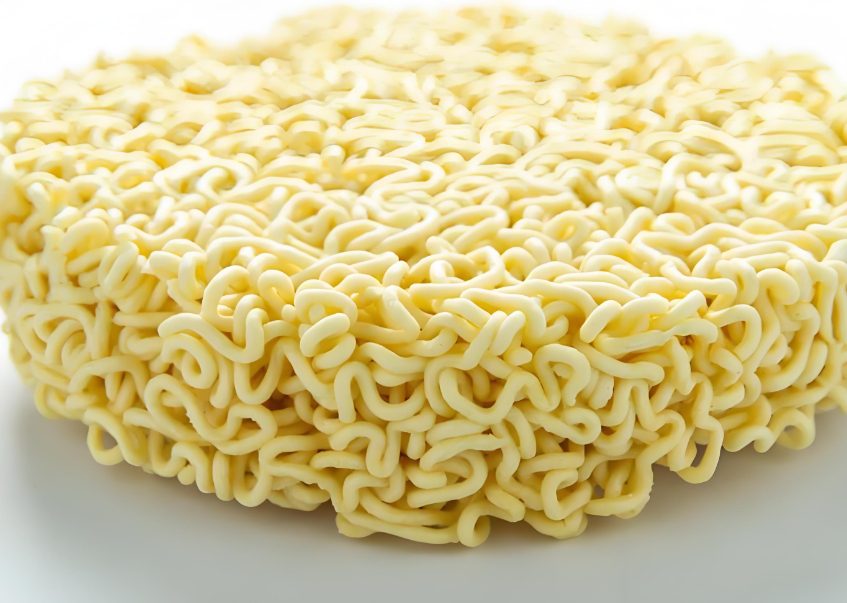
The process begins not with fresh eggs or spring water, but with a precisely metered mix of refined wheat flour, water, and a cocktail of functional additives. Instant noodle making machine Salt is crucial for flavor and tightening gluten. Alkaline agents (kansui), like a mix of sodium carbonate and potassium carbonate, give the noodles their signature yellow hue, firm texture, and rubbery “bite.” Phosphates may be added to improve texture and retain moisture, while guar gum or other hydrocolloids help bind the dough and improve oil uptake during frying. The goal is a uniform, elastic, and perfectly processable dough.
Stage 2: Rolling, Slitting, and Steaming
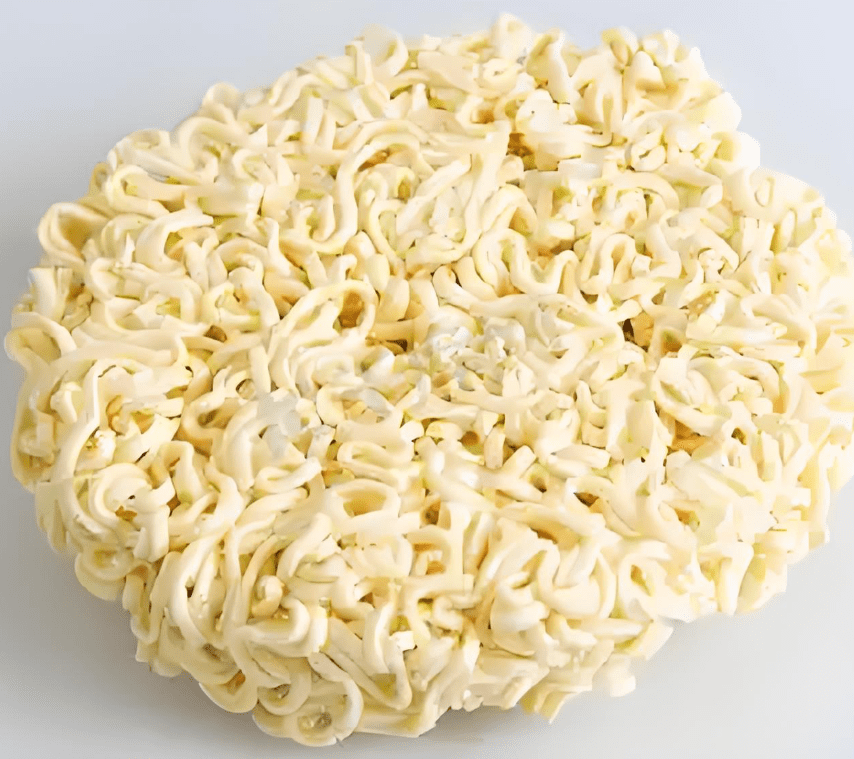
The mixed dough is fed through a series of heavy rollers, progressively thinning it into a wide, continuous noodle sheet. This sheet is then slit into thousands of fine, uniform strands by a slitting machine. The delicate nest of raw noodles then passes through a high-temperature steaming chamber. This critical step partially cooks the starches and proteins, setting the noodle’s structure. It is not for food safety at this point, but for processability.
Stage 3: The Flash-Fry “Dehydration”
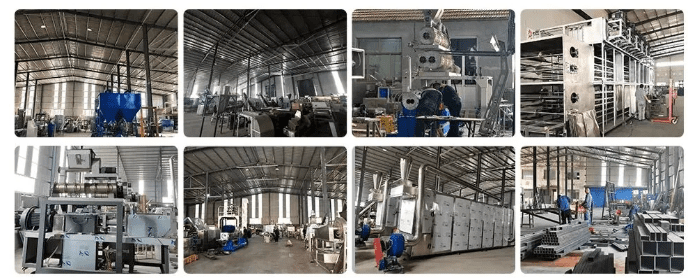
For the classic fried instant noodle, steaming is followed by the core preservation step: deep-frying in palm oil. The noodle blocks are molded into their iconic shape and conveyed through a bath of hot oil (typically 150-170°C) for 60-120 seconds. Instant noodle making machine This flash-frying accomplishes two things: it rapidly reduces the moisture content to 3-6%, making the noodle shelf-stable and microbiologically inert, and it creates the porous, spongy structure that allows for near-instant rehydration. The oil, often a cheaper, highly processed palm oil variant for cost reasons, becomes an integral part of the noodle, contributing significant fat calories. The choice of oil and its repeated use (with regular top-ups in a continuous system) can impact the fatty acid profile, potentially generating trans fats.
Stage 4: The Flavor Arsenal: The Powdered Soup Base
While the noodle block is formed, the flavor packet is created separately. This is where industrial food science takes center stage. The primary ingredient is almost always Monosodium Glutamate (MSG) و salt, providing the fundamental umami and salty punch. Hydrolyzed vegetable protein, yeast extract, and disodium inosinate/guanylate amplify the savory notes. Powdered soy sauce, onion, garlic, and chili provide background flavor notes. However, the “beef,” “shrimp,” or “chicken” taste is frequently generated not from substantial extracts of those ingredients, but from reaction flavors—where amino acids and sugars are heated to create specific savory profiles—and targeted synthetic flavor compounds. The mix is bulked with maltodextrin (a cheap carbohydrate) and anti-caking agents.
Stage 5: Cooling and Assembly
After frying, the noodle blocks are cooled, often on long conveyor lines, to solidify the fat and prepare them for handling. They then move to high-speed automated assembly lines. A precisely measured portion of the powdered soup base (typically 4-7 grams) is dropped onto a piece of foil or plastic film. The cooled noodle block is placed on top, and the package is automatically folded, wrapped, and sealed.
Behind the Shiny Foil: Considerations
- Nutritional Profile: The end product is a highly refined carbohydrate nest, fried in saturated fat, and accompanied by a high-sodium, high-additive flavor bomb. Micronutrients are minimal unless artificially fortified.
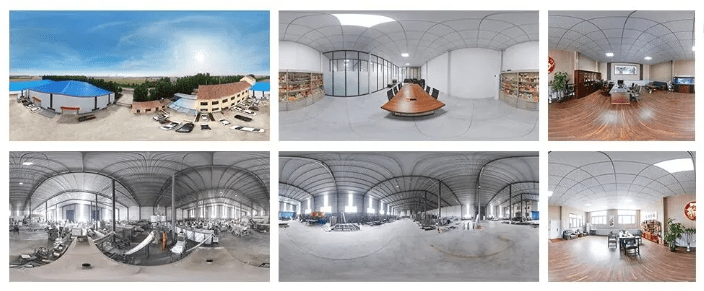
- Scale and Hygiene: Legitimate factories operate under strict hygiene protocols. However, in smaller or less regulated facilities, concerns can arise around oil quality control (potential oxidation from prolonged use), rodent/pest control in bulk ingredient storage, and general plant sanitation.
- The “Small Pack” Paradox: The tiny size encourages consumption as a snack, but it is nutritionally incomplete and can disrupt appetite without providing balanced sustenance.
The production of small-pack instant noodles is a triumph of modern food engineering, designed for maximal shelf life, minimal cost, and addictive flavor. Instant noodle making machine It is a process divorced from traditional cooking, relying on chemistry and heavy processing to transform basic commodities into a globally consistent product. Understanding this process reveals that you are not eating a simplified version of a homemade noodle soup, but a carefully engineered edible artifac designed for durability, speed, and intense sensory impact. While convenient, it stands as a stark example of ultra-processed food, where the list of industrial ingredients tells the true story of its creation.