
Macaroni, the iconic tubular pasta, is a marvel of food engineering disguised as a simple staple. The journey from a humble grain of durum wheat to a perfectly al dente tube is a precise and demanding process that hinges on the careful control of raw materials, pressure, and, most critically, drying. This article pulls back the curtain on the core processes that give macaroni its unique shape, texture, and enduring quality.
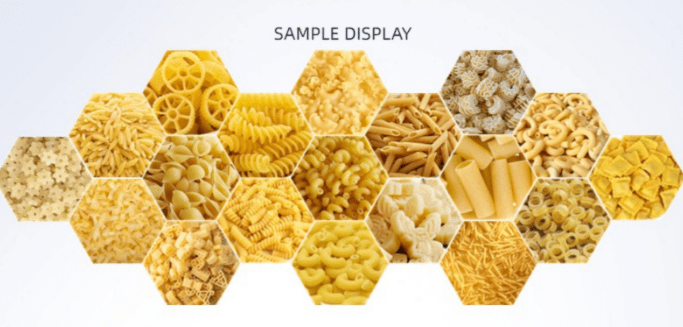
The Foundation: Durum Wheat and Semolina
The quality of macaroni is decided long before it reaches the extruder. The undisputed king of raw materials is durum wheat, a hard tetraploid wheat prized for its high protein content and strong, elastic gluten . This wheat is milled into semolina, a coarse, granular flour that is the ideal raw material for pasta production . Semolina’s unique physical characteristics—its uniform particle size and high quality protein—make it perfectly suited to withstand the intense kneading and pressure of extrusion while maintaining its shape during drying and cooking .
Manufacturers prefer semolina because it produces the highest quality pasta with a characteristic translucent yellow color and excellent cooking performance . Macaroni making machine In some countries, such as Italy, France, and Greece, the use of durum wheat semolina is mandated by law for dry pasta production .
Mixing and Kneading: Building the Dough
The processing journey begins with mixing. Semolina is combined with water—typically at a ratio that brings the dough to about 31% moisture—and sometimes eggs or other optional ingredients for specialized products . The water must be pure and potable, as the dough does not undergo pasteurization .
This is where a critical step comes into play: vacuum mixing. Modern pasta presses are equipped with a vacuum chamber to remove air bubbles from the dough before extrusion . If air is not removed, it creates tiny bubbles that compromise the pasta’s mechanical strength and give the finished product an undesirable white, chalky appearance . This vacuum treatment also makes the pasta’s texture more compact and translucent, improving its cooking performance .
Extrusion: The Birth of the Hole
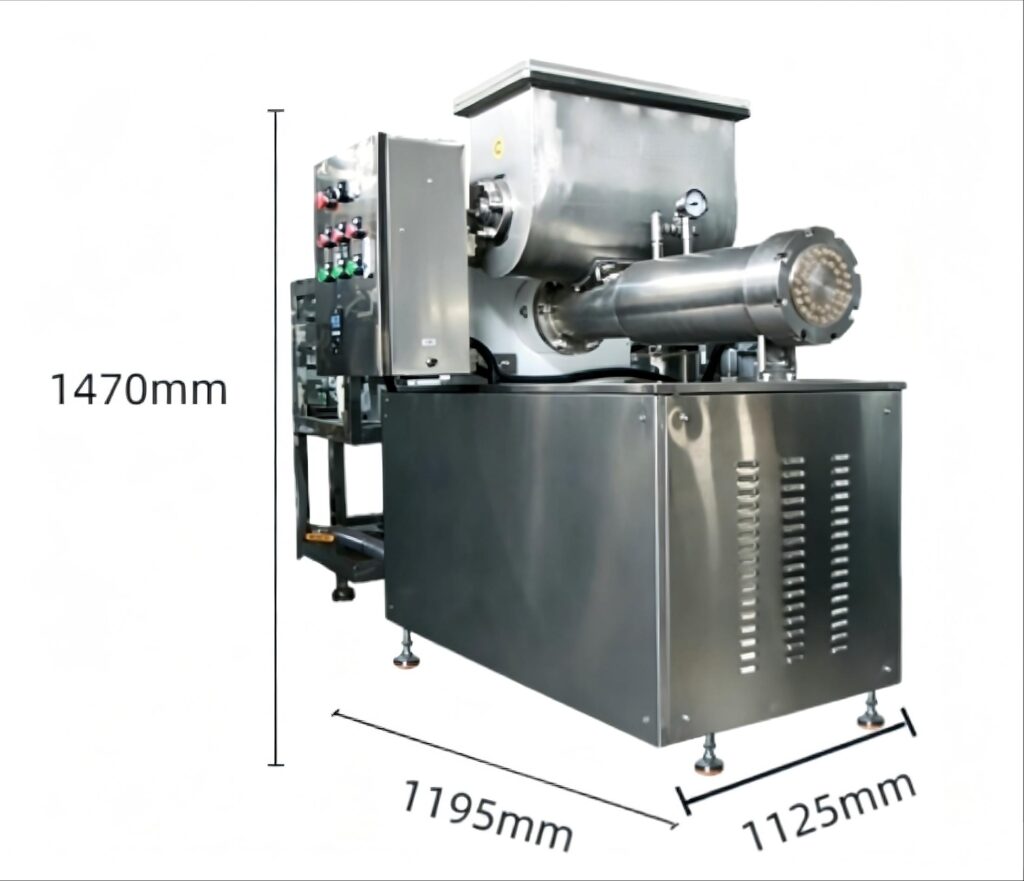
The heart of macaroni processing lies in the extrusion step. The mixed dough is fed into a powerful screw extruder. As the auger turns, it kneads the dough into a homogeneous mass, controls the production rate, and forces it through a metal يموت at the end of the barrel . Macaroni making machine The die is the key to the shape. For macaroni, the die features small, circular perforations with a steel pin in the center, which creates the signature hollow tube . A rotating knife slices the emerging pasta into uniform lengths .
This process generates significant heat from friction. If the dough temperature exceeds approximately 74°C (165°F), the pasta will be damaged . To prevent this, the extrusion barrel is equipped with a water cooling jacket to maintain a constant temperature, ideally around 51°C (124°F) .
The Critical Art of Drying
Drying is universally recognized as the most difficult and critical step in pasta production . The goal is to reduce the moisture content from around 31% to a stable 12-13%, ensuring the product is hard, retains its shape, and is shelf-stable .
This is a delicate balancing act. Drying takes place in two stages:
- Pre-drying: Immediately after extrusion, a preliminary drier hardens the outside surface of the pasta to prevent the pieces from sticking together while keeping the inside soft and plastic .
- Final Drying: The main drying stage carefully removes the bulk of the moisture .
The challenge lies in the moisture gradient. The outside of the pasta dries more quickly than the inside. If the drying process is too rapid, stress cracks will form, ruining the pasta’s appearance and strength. These cracks can even appear weeks after production . Conversely, drying too slowly encourages spoilage or mold growth . The entire drying cycle must be precisely tailored to each pasta shape and size . One key to traditional Italian methods is the principle of maintaining a constant, high relative humidity throughout the drying stages to ensure even, crack-free results .
A Historical Perspective
This highly engineered process has evolved dramatically. Before the industrial revolution, pasta was made by hand in small shops. Macaroni making machine The invention of the steam engine and hydraulic presses in the 19th century, followed by the development of artificial drying, transformed pasta production into the continuous, high-capacity industry it is today . Modern processing, from vacuum mixing to temperature-controlled extrusion and precision drying, ensures that the pasta we enjoy is consistent, durable, and of the highest quality .