
The Alchemy of Convenience: A Technical Exposé of Small-Packaged Instant Fried Noodle Production
Small-packaged instant fried noodles are a ubiquitous global food phenomenon, a testament to human ingenuity in food preservation and flavor delivery. Instant noodle making machine From their humble origins in post-war Japan, they have evolved into a multi-billion-dollar industry, feeding billions. This article provides an exhaustive technical dissection of the entire manufacturing process. It moves beyond the simplistic view of “just frying noodles” to reveal a complex,Instant noodle making machine multi-stage operation involving advanced food chemistry, precision engineering, and sophisticated supply chain logistics. We will explore the science of raw material selection, the intricacies of dough rheology and composite sheeting, the critical control points of steaming and frying, and the engineering behind powder and paste seasoning technology. Furthermore, the article addresses critical aspects of quality control, packaging integrity, nutritional debates, and the future trends shaping this resilient industry. The aim is to offer a definitive, behind-the-scenes look at how a simple blend of flour, water, and oil is transformed into a shelf-stable, instantly preparable meal.
1. Introduction: The Global Bowl
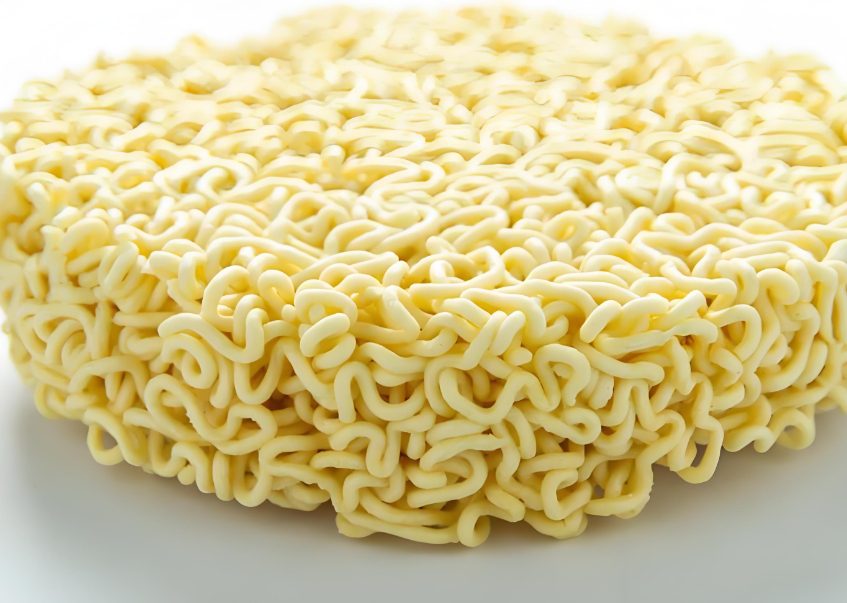
The instant noodle is more than a food; it is a cultural and economic artifact. Conceived by Momofuku Ando in 1958 with the launch of Chicken Ramen, Instant noodle making machine the core innovation was the use of flash frying to dehydrate and puff the noodle strands, creating a stable structure that could be rehydrated in minutes with hot water. The subsequent creation of the “cup noodle” in 1971, a self-contained packaging system, cemented its status as the ultimate convenience food.
The modern production of small, individual packs is a high-speed, continuous process, often running 24/7. A single line can produce hundreds of thousands of packets per day. This scale demands absolute consistency, which is achieved through relentless automation and rigorous scientific control. This article will deconstruct this process, layer by layer, from the silo to the supermarket shelf.

2. The Raw Material Palette: More Than Just Flour
The quality and consistency of the final product are determined at the very first stage: the selection and blending of raw materials.
2.1. Wheat Flour: The Structural Backbone
The primary ingredient is wheat flour, constituting 70-80% of the noodle block. However, not just any flour will do. Manufacturers require a specific protein content and quality.
- Protein Content and Quality: A medium-protein flour (around 9-12%) is typically ideal. The protein in wheat is predominantly gluten (a complex of gliadin and glutenin). Upon hydration and mixing, gluten forms a viscoelastic network. This network is crucial for several reasons:
- Sheeting and Shaping: It provides the dough with the strength to withstand the intense mechanical forces of rolling and cutting without tearing.
- Oil Barrier: A strong, continuous gluten network reduces oil absorption during frying by creating a less porous structure.
- Texture after Rehydration: It gives the cooked noodle its characteristic chewiness (al dente bite) and prevents it from becoming mushy.
- محتوى الرماد: This is a measure of mineral content, derived from the bran. A lower ash content (e.g., <0.50%) indicates a more refined, whiter flour, which is often preferred for its neutral color and longer shelf life.
- Starch Characteristics: The amylose/amylopectin ratio in the starch affects gelatinization and retrogra-dation, which in turn influences noodle firmness and stickiness.
2.2. Water: The Universal Agent
Water is not merely a solvent; it is a functional ingredient. Its quality and quantity are tightly controlled.
- Water Hardness: The concentration of calcium and magnesium ions can strengthen the gluten network, but excessive hardness can make the dough too tough and difficult to sheet. Most plants use treated or deionized water to ensure consistency.
- pH Level: The water’s pH is often adjusted. Slightly alkaline conditions (pH 7.5-9.5) are frequently employed using alkaline salts (discussed next). This “kan-sui” is a defining characteristic of many instant noodle types, giving them a distinctive yellow color, firm texture, and unique flavor.
2.3. The Alkaline Salts (Kan-sui)
The use of alkaline salts is a legacy borrowed from traditional Chinese lamian (pulled noodles). In instant noodles, they serve multiple critical functions:
- Color Development: The alkaline environment promotes the Maillard reaction and caramelization, and it also causes flavonoids in the flour to turn yellow, giving the noodle its characteristic hue.
- Texture Modification: The alkali swells the gluten and starch granules, leading to a tighter, firmer, and more elastic texture. It also gives the noodle a slick, smooth mouthfeel.
- Flavor Impact: It imparts a specific, slightly metallic and savory flavor that is signature to “ramen-style” instant noodles.
- Common Compounds: A typical kan-sui blend includes sodium carbonate (Na₂CO₃) and potassium carbonate (K₂CO₃). Historically, it was made from lye water derived from wood ash. Sodium hydroxide (NaOH) is sometimes used but requires extreme care due to its high corrosiveness.
2.4. Salt (Sodium Chloride)
Salt is indispensable, even before the seasoning packet is added.

- Gluten Strengthener: Like in bread-making, salt tightens and strengthens the gluten network, improving dough handling properties.
- Flavor Enhancer: It provides a basic savory base note to the noodle strand itself.
- Preservative: It slightly reduces water activity, contributing to microbial stability.
2.5. Oils and Emulsifiers
- Dough Conditioners: A small amount of edible oil (e.g., 1-2% palm or soybean oil) is often added to the dough. It acts as a lubricant, reducing stickiness to machinery and making the dough more pliable. Emulsifiers like glyceryl monostearate (GMS) or lecithin are also used. They interact with starch and protein, softening the texture and improving rehydration qualities.
- Frying Medium: The choice of frying oil is paramount. Refined, deodorized, high-stability palm oil is the industry standard due to its semi-solid state at room temperature (providing a pleasing mouthfeel), neutral flavor, high smoke point, and cost-effectiveness. Its oxidative stability is crucial for shelf life.
2.6. Additives for Quality and Stability
- Gums and Hydrocolloids: Guar gum or xanthan gum may be added in small quantities to improve water binding, enhance dough cohesion, and provide a smoother texture.
- Antioxidants: To prevent the frying oil and the finished product from turning rancid,Instant noodle making machine natural (e.g., mixed tocopherols, rosemary extract) or synthetic (e.g., TBHQ, BHA) antioxidants are added to the oil.
3. The Manufacturing Process: A Continuous Ballet of Precision Engineering
The transformation of raw materials into a finished noodle block is a continuous, fully automated process that can be broken down into several discrete but interconnected unit operations.
3.1. Ingredient Dosing and Mixing
Precision begins here. Flour from silos is pneumatically conveyed and weighed continuously by loss-in-weight feeders. Water, along with the dissolved salt, alkaline salts, and other liquid ingredients, is metered in precise ratios. The mixing stage is a high-speed, short-duration affair, typically taking only a few minutes. The goal is not to develop the gluten fully (that comes later) but to achieve a crumbly, uniform mixture with a consistent moisture content (typically around 30-35%). Over-mixing at this stage can cause overheating and premature gluten development, leading to quality issues.
3.2. Dough Compounding and Pre-conditioning
The crumbly mixture from the initial mixer is then fed into a compounding machine, often a twin-screw mixer or a series of rollers. Here, it is gently kneaded and consolidated into a more homogeneous, dough-like mass. This stage ensures all flour particles are fully hydrated and prepares the dough for the sheeting process.
3.3. Composite Sheeting and Lamination: Building the Noodle’s Soul
This is arguably the most critical step for determining the final noodle texture. The dough is not simply rolled out once. It undergoes a multi-stage laminating process.
- Primary Sheeting: The rough dough is passed through a pair of large, counter-rotating rollers. This first pass creates a thick, uneven sheet.
- Lamination: The thick sheet is then folded over itself or multiple sheets are stacked together.
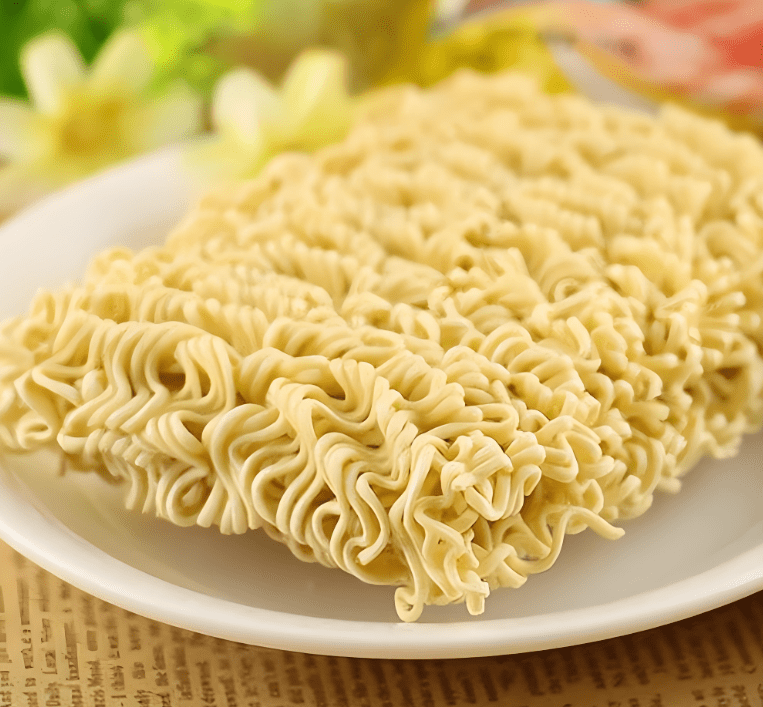
- Successive Reduction Rolling: This laminated stack is then passed through a series of progressively narrower roller gaps. With each pass, the sheet becomes thinner and the layers are compressed. This lamination and reduction process is the secret to the distinct, Instant noodle making machine slightly layered and chewy texture of good quality instant noodles. It aligns the gluten strands, creating a strong, oriented network. A modern line may have 6-10 pairs of rollers in sequence, reducing the dough from several centimeters thick to just 0.8-1.2 mm.
3.4. Slitting and Waving
At the end of the rolling train, the thin, continuous dough sheet arrives at the cutting rollers. These are cylindrical rollers with precisely machined grooves on their surface. As the sheets pass between them, they are cleanly slit into individual noodle strands.
- The Wave Formation: Immediately after cutting, the straight noodle strands are directed onto a conveyor belt that moves at a slower speed than the noodles are being fed. This speed differential causes the noodles to fold and buckle, creating the iconic “wavy” pattern. This is not merely for aesthetics. The waves:
- Increase Surface Area: This aids in both the subsequent steaming and frying processes, allowing for more efficient heat and mass transfer.
- Create a Less Dense Block: The waves introduce air pockets, making the final brick less solid and allowing hot water to penetrate more easily during rehydration.
- Improve Structural Integrity: The wavy shape allows the noodles to interlock, forming a cohesive block that survives packaging and transit.
3.5. Steaming: The Gelatinization Stage
The waved noodles now enter a continuous steam tunnel. This is a critical cooking stage.
- The Science of Gelatinization: The steam, at around 100°C, transfers heat to the noodles, causing the starch granules within them to absorb water and swell, losing their crystalline structure. This process, called gelatinization, is what “cooks” the noodle. The gluten protein also coagulates, setting the structure.
- Process Control: The degree of gelatinization must be carefully controlled (typically aiming for 80-90%). Under-gelatinization results in a coarse, brittle texture and white core in the final product. Over-gelatinization makes the noodles too sticky and difficult to handle. Time, temperature, and steam saturation are all precisely managed. Instant noodle making machine The gelatinized starch matrix is now primed for the next, most transformative step.
3.6. Flash Frying: The Dehydration Revolution
This is Momofuku Ando’s seminal innovation. The steamed noodles are conveyed directly into a continuous fryer, which is a long, thermostatically controlled tank filled with hot oil (typically palm oil at 140-160°C).
- The Physics of Flash Dehydration: The moment the hot, moist noodles hit the oil, two processes occur almost instantaneously:
- Surface Sealing: The water on the noodle’s surface violently flashes into steam, creating a hard, porous, and dry crust.
- Internal Puffing: The internal water, superheated beyond 100°C, rapidly vaporizes. This steam expands outward, seeking escape. It pushes through the gelatinized starch matrix, creating a multitude of tiny, microscopic pores and channels. As the noodle moves through the fryer, this steam continues to escape, driving off moisture. The entire process lasts only 60-120 seconds.
- The Outcome: The final product has a very low moisture content (typically 3-6%). This is the key to shelf stability, as it is too dry for microbial growth. The porous, puffed structure is what allows for near-instant rehydration with boiling water. The oil, which constitutes 15-20% of the final noodle block’s weight, contributes to mouthfeel, flavor, and further acts as a barrier to moisture reabsorption from the air.
3.7. The Alternative: Hot-Air Drying
A non-fried variant of instant noodles exists. Here, after steaming, the noodles are dried using circulated hot air in a multi-stage dryer. The process is much slower (can take hours) and results in a different product:
- Pros: Lower fat content (typically 2-4%).
- Cons: A denser, less porous structure that takes longer to rehydrate and can have a harder, less palatable texture. The flavor is often described as more “cereal-like” and less rich.
3.8. Cooling and Block Forming
After frying, the noodles are too hot and fragile to handle. They pass through a cooling tunnel, where ambient or slightly chilled air is blown over them. This stabilizes the oil and solidifies the noodle’s structure. The continuous ribbon of wavy noodles is then directed into molding boxes. A reciprocating cutter chops them into precise lengths, and they are compressed into the familiar block shape. The weight of each block is continuously monitored by in-line scales.
4. The Seasoning Symphony: Flavor in a Packet
The noodle block is inert; the seasoning packet is its soul. The technology behind these small sachets is a field of food science in itself.
4.1. Powder Seasonings
This is the most common form, a dry blend of numerous ingredients.
- Salt: The primary carrier and flavor base.
- Monosodium Glutamate (MSG) and Nucleotides (I+G): The workhorses of savory flavor. They synergize to provide a powerful “umami” punch, enhancing the overall savory perception and rounding out the flavor profile.
- Hydrolyzed Vegetable Protein (HVP) / Yeast Extract: Used to build meaty, savory background notes (e.g., chicken, beef).
- Sugar and Sweeteners: To balance saltiness and add complexity.
- Spices and Herbs: Dehydrated garlic, onion, pepper, chili, etc. These provide the top notes and characterizing flavors.
- Anti-caking Agents: Such as silicon dioxide, to prevent the powder from clumping due to humidity.
- Mixing Technology: Creating a homogeneous blend from ingredients with vastly different particle sizes and densities (e.g., fine salt vs. flaky herbs) requires sophisticated ribbon blenders and stringent quality control to ensure every packet has the same flavor.
4.2. Paste and Sauce Seasonings
For richer, more authentic flavors, especially in premium products, paste seasonings are used.
- المكوّنات: These often contain soy sauce, fermented pastes (e.g., miso, doubanjiang), animal fats (e.g., chicken fat, lard), and chili oil.
- Stabilization: Emulsifiers and stabilizers are often needed to prevent oil separation.
- Packaging Challenge: These require more expensive laminated sachets with high barrier properties to prevent moisture loss or oxygen ingress.
4.3. Dehydrated Vegetables and Toppings
To enhance visual appeal and provide textural variety, small sachets of dehydrated vegetables (carrots, scallions, corn), textured vegetable protein (TVP), or even freeze-dried meats are included. Dehydration reduces weight and water activity, ensuring stability.
4.4. Packaging the Seasoning
The blended seasonings are fed into high-speed, form-fill-seal (FFS) machines. A web of laminated film (typically PET/AL/PE for excellent barrier properties) is formed into a pouch, filled with a precisely measured dose of seasoning, and then sealed, all in one continuous motion. These machines operate at astonishing speeds, producing hundreds of packets per minute.
5. Final Assembly and Packaging: The Last Line of Defense
The noodle block and its accompanying packets are brought together in the final assembly line.
- Automatic Collation: Robots or intricate conveyor systems place the noodle block into the package (a bag or a cup), followed by the specific seasoning sachets.
- Packaging Materials:
- Bags: For most small packets, the outer bag is also a laminate, often a transparent outer layer (BOPP) for graphics, a metalized layer for light and oxygen barrier, and a polyethene inner layer for heat sealing.
- Cups: Polystyrene (PS) or polypropylene (PP) is used for cup noodles. The lid is a multi-layered laminate of aluminum foil and plastic.
- Gas Flushing (for Cups): For cup noodles, after the ingredients are added, the air in the cup is often replaced by injecting nitrogen. This inert gas displaces oxygen, drastically slowing down oxidative rancidity of the fats and preserving flavor and freshness.
- Sealing and Coding: The bag is heat-sealed, or the lid is applied to the cup and sealed. Every package is stamped with a batch code and best-before date for traceability.
6. Quality Control: The Unblinking Eye
At every single stage of production, quality control is paramount.
- Raw Material Inspection: Flour protein, ash content; oil free fatty acid (FFA) levels and peroxide value (PV).
- In-process Checks: Dough moisture content, sheet thickness, steaming temperature and time, frying oil temperature and quality (monitored for FFA and Total Polar Materials), final noodle block weight, moisture, and fat content.
- Finished Product Analysis: Sensory evaluation (color, aroma, taste, texture), nutritional analysis, and accelerated shelf-life testing (storing products at elevated temperatures to predict longevity).
- الاختبار الميكروبيولوجي: Regular swabs and product tests for yeast, mold, and total plate count to ensure hygiene standards are met.
7. Nutritional Discourse and Future Trajectories
Instant noodles face persistent criticism regarding their nutritional profile: high in refined carbohydrates, saturated fat (from palm oil), and sodium.
7.1. Addressing the Criticisms
- Sodium Reduction: This is the industry’s biggest challenge. Strategies include using potassium chloride (with bitterness masking technology), smaller seasoning packets, promoting the use of less seasoning, and developing novel umami ingredients to maintain flavor with less salt.
- Fat Content: Promoting non-fried (air-dried) options is the primary method. Some companies are experimenting with oils higher in unsaturated fats, though this can compromise shelf life.
- Fortification: Many manufacturers voluntarily fortify their noodles with B vitamins and iron to address micronutrient deficiencies in populations that rely heavily on them.
- Whole Grain and Fiber: Incorporating whole wheat flour, oat fiber, or other functional ingredients to increase dietary fiber content.
7.2. The Future of Instant Noodles
The industry is not static. Key trends for the future include:
- Premiumization: Gourmet-style offerings with authentic, regional flavors, higher-quality ingredients, and restaurant-inspired recipes.
- Health and Wellness: Low-carb, high-protein, and gluten-free formulations using alternative flours (chickpea, lentil, konjac).
- Sustainability: Reducing plastic packaging, developing biodegradable cups, and sourcing sustainable palm oil.
- Smart Manufacturing: Integration of Industry 4.0 principles, using IoT sensors and AI to optimize production lines in real-time, predict maintenance, and further enhance consistency.
The production of a small packet of instant fried noodles is a feat of modern food engineering. It is a process where the ancient chemistry of gluten and starch meets the relentless precision of 21st-century automation. From the laminating rollers that build texture to the flash fryer that creates a porous, stable matrix, every step is a carefully calibrated interplay of time, temperature, and force. While the nutritional debate is valid and driving innovation, the technological achievement is undeniable. Instant noodle making machine The instant noodle is a masterpiece of food preservation and convenience, a product whose simple exterior belies an astonishingly complex and sophisticated creation process. It stands as a testament to the power of applied science to feed the world, one small, flavorful packet at a time.