
The global aquaculture industry is expanding rapidly to meet the rising demand for seafood, and with it, the need for high-quality, nutritionally optimized fish feed has never been greater . fish feed making machine Investing in a fish feed production plant can be a lucrative venture, offering control over supply chains, cost efficiencies, and product customization. However, it is a capital-intensive endeavor that requires meticulous planning. Failure to address key operational, financial, and technical factors can lead to costly delays and inefficiencies. This article outlines the critical questions and considerations every investor must evaluate before breaking ground.
1. Define Your Market and Product Scope
Before purchasing any equipment, you must have a crystal-clear understanding of what you will produce and for whom. This foundational step dictates every subsequent decision .
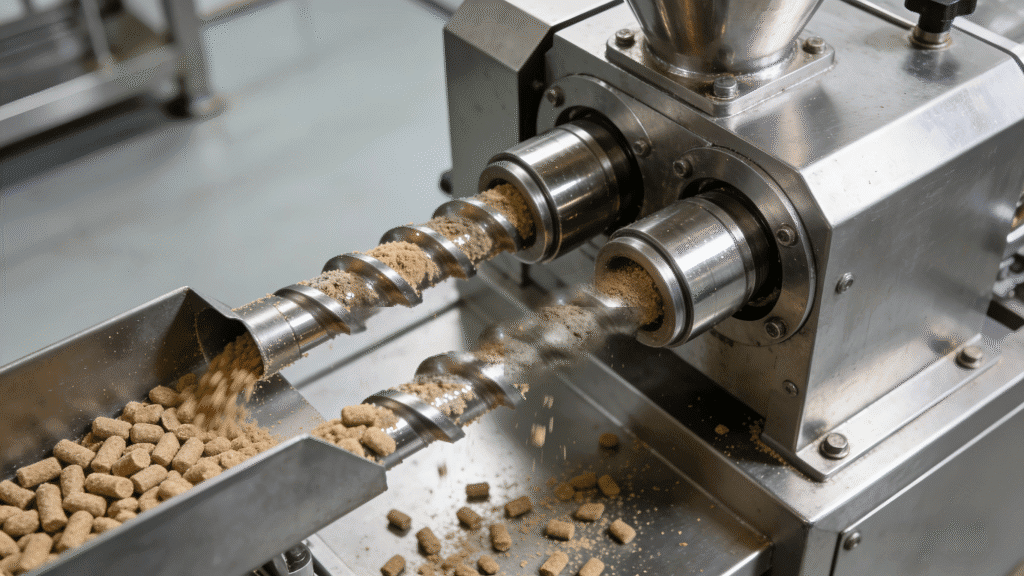
- Target Species and Life Stages: Will you produce feed for tilapia, catfish, shrimp, or high-value marine species like salmon or sea bass? fish feed machine Each species has unique nutritional requirements. Furthermore, feed formulations vary dramatically between fry, grower, and broodstock stages, requiring different pellet sizes (from 0.5 mm crumbles to 8-12 mm pellets) and nutritional profiles .
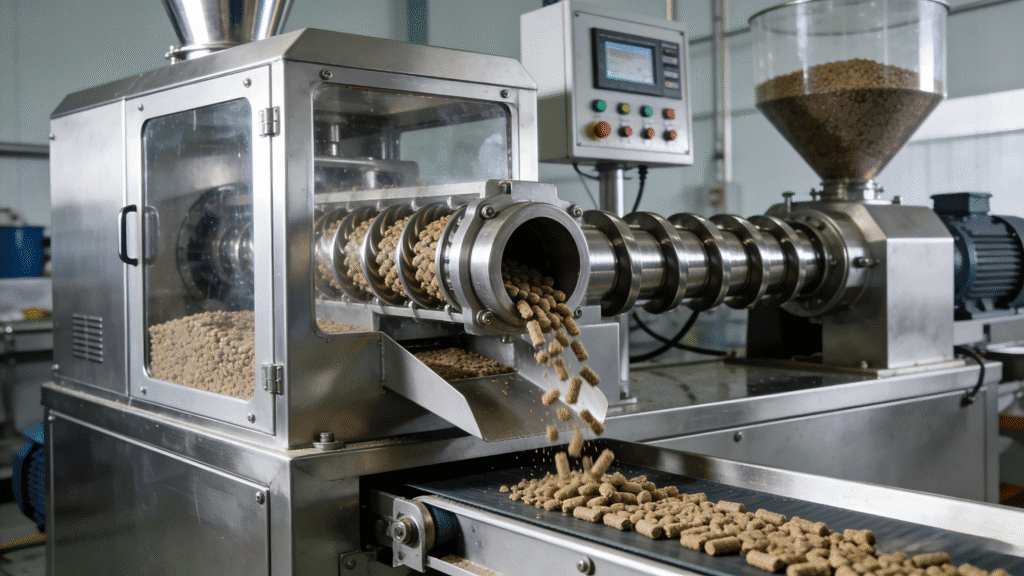
- Feed Type: Determine the physical characteristics of your product. Will you produce floating feed, which requires advanced extrusion technology to achieve buoyancy, or sinking feed, which can be produced with a simpler, less expensive pellet mill ? Floating feed is popular for species like tilapia as it allows farmers to monitor feeding activity, while sinking feed is essential for bottom feeders like shrimp.
- Market Demand: Conduct a thorough market analysis. Who are your potential customers—local smallholder farms or large, integrated aquaculture operations? What is the current farm-gate price for feed, and how price-sensitive is your target market ?
2. Site Selection and Facility Layout
The location and physical design of your plant are critical for operational efficiency and regulatory compliance.
- Site Location: Choose a site with access to reliable utilities (power, water), good transportation links for receiving raw materials and shipping finished products, and proximity to your target market . Sites should also meet environmental and safety regulations .
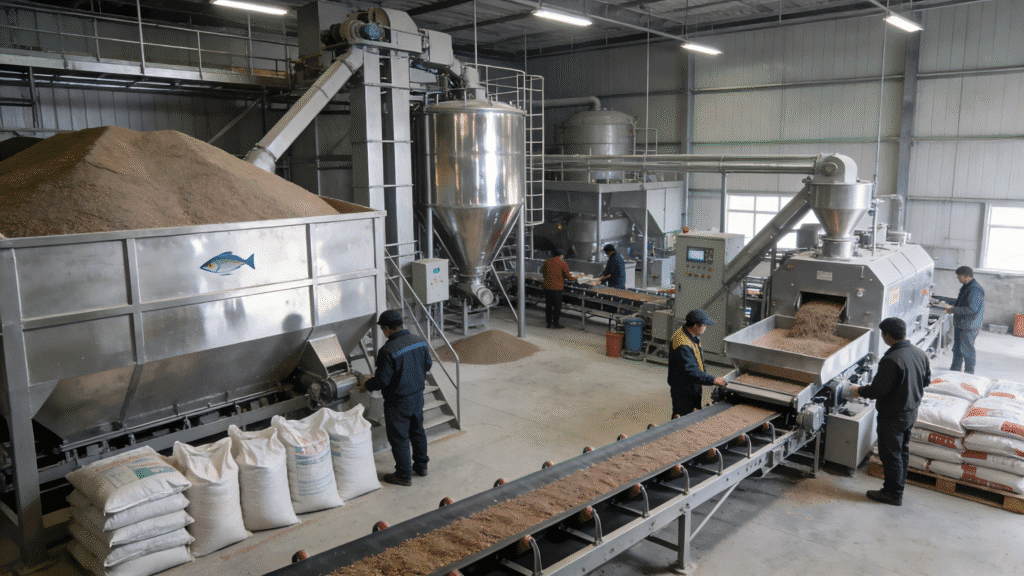
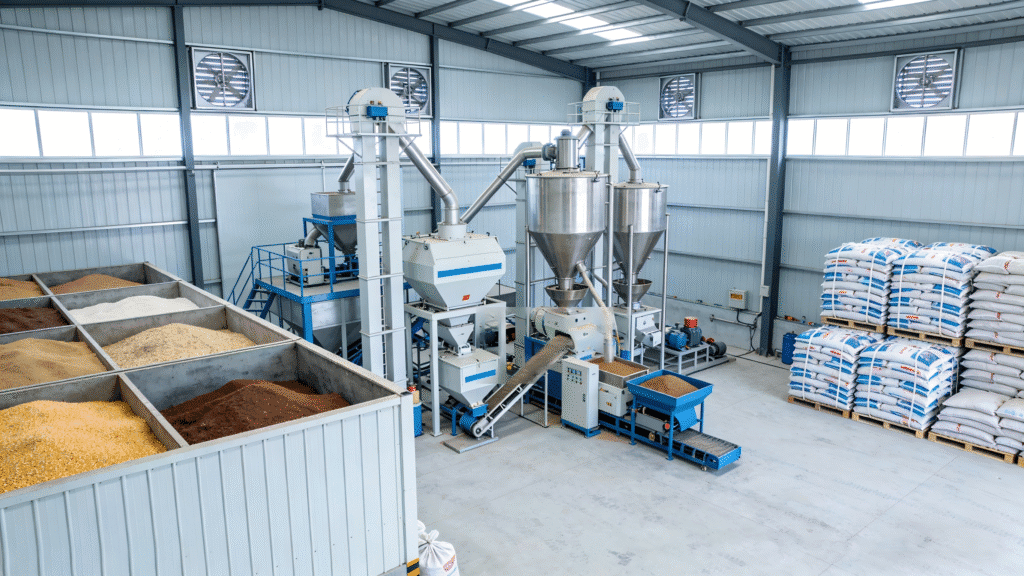
- Space and Layout Planning: A complete feed line requires space for raw material reception and storage, the main processing floor, finished product warehousing, a quality control lab, and maintenance areas .
- Process Flow: The most efficient design follows a logical, linear flow, often utilizing a vertical layout. This uses gravity to move materials from the top floor (grinding) down through mixing, conditioning, pelleting, cooling, and finally to packaging on the ground floor, minimizing the need for mechanical conveyors .
- Infrastructure: You must ensure a stable, high-capacity electrical supply, a reliable water source, and proper drainage. A steam boiler of adequate capacity is essential for conditioning the mash, and a compressed air system is needed for pneumatic controls .
3. Raw Material Sourcing and Storage
Feed ingredients represent the single largest ongoing operational cost . A secure and cost-effective supply chain is vital.
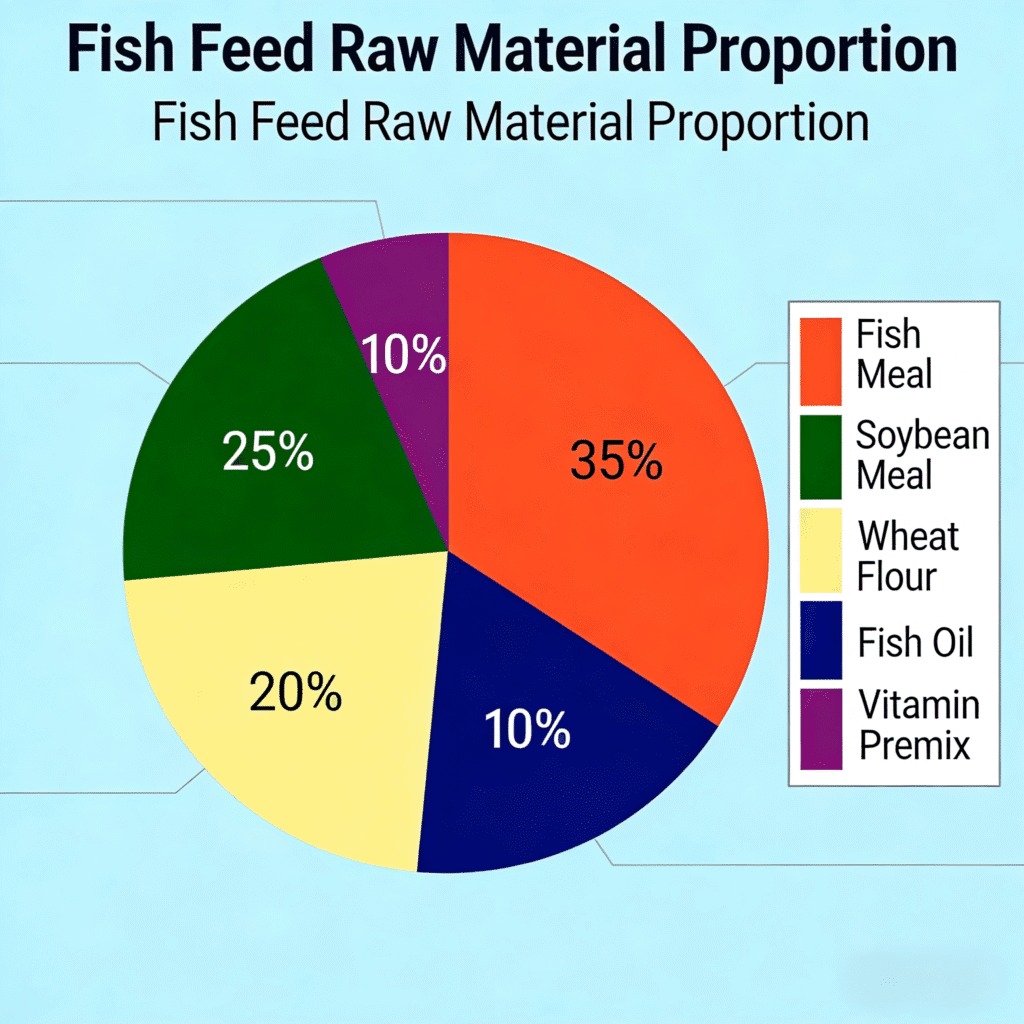
- Ingredient Availability: Identify reliable sources for major components like fishmeal, soybean meal, wheat flour, and rice bran, as well as micro-ingredients like vitamins, minerals, and amino acids . Consider the potential for using local ingredients to reduce costs and supply chain vulnerabilities, but be aware that this may not always significantly lower production costs compared to imports .
- Storage Planning: Different ingredients require different storage solutions. Large volumes of grains and meals are best stored in silos. Micro-ingredients need a clean, climate-controlled warehouse. Liquids like fish oil require heated and insulated tanks with agitators to prevent solidification and separation . The site must also have robust moisture-proofing and drainage to prevent spoilage .
4. Technology and Equipment Selection
Choosing the right machinery is a balance between cost, capacity, and capability.
- Core Processing Equipment: A standard line includes:
- Grinding (Hammer Mill): To achieve a fine, uniform particle size for optimal mixing and digestion .
- Mixing (Paddle or Ribbon Mixer): To ensure perfect homogeneity of all ingredients, including small quantities of additives. Precision scales and PLC control are critical for accuracy .
- Pelleting/Extrusion: This is the heart of the plant.
- Pellet Mills are suitable for producing dense sinking pellets .
- Twin-Screw Extruders are required for floating feeds and high-fat, high-performance sinking feeds, offering greater flexibility and cooking control .
- Drying and Cooling: To reduce moisture to safe levels and bring pellets to ambient temperature for storage .
- Coating and Packaging: For applying liquid fats or probiotics post-extrusion and for final bagging .
- Supplier Evaluation: When sourcing equipment, look beyond the price tag. Evaluate the supplier’s technical expertise, quality assurance (e.g., CE certification), after-sales support, spare parts availability, and track record for on-time delivery . A low-cost machine may prove expensive in the long run due to downtime and poor efficiency .
5. Quality Assurance and Regulatory Compliance
In the feed industry, product safety and consistency are non-negotiable.
- Quality Control Lab: An in-house laboratory is essential to test incoming raw materials for quality (protein content, moisture, mycotoxins) and finished products for nutrient levels, pellet durability, and pathogen load .
- Safety Systems: Install magnets and sieves to remove tramp metal and other contaminants from the raw material stream. A dust collection system is mandatory for workplace safety, environmental compliance, and product recovery . Explosion-proof devices may be necessary in areas handling flammable materials .
- Certifications: Plan to comply with international food safety standards like HACCP (Hazard Analysis Critical Control Point) or ISO 22000, especially if you intend to export. These certifications are often a prerequisite for doing business with large, professional farming operations .
6. Financial Planning and Risk Assessment
A detailed financial model is crucial for securing funding and ensuring long-term viability.
- Capital Costs: Account for all initial investments: land acquisition, site development, building construction, machinery purchase and installation, and initial inventory of raw materials .
- Operating Costs: Develop a detailed budget that includes raw materials, labor, utilities (electricity, water, fuel), maintenance, packaging, and transportation .
- Projections and Feasibility: Create realistic revenue forecasts based on your production capacity and market prices. Calculate your projected return on investment (ROI), net present value (NPV), and break-even point . Your financial model should be stress-tested against potential risks.
- Risk Factors: Identify and plan for potential risks, including volatility in raw material prices, fluctuations in currency exchange rates, changes in government regulations, disease outbreaks in aquaculture that could reduce demand, and the entry of new competitors .
7. Installation, Commissioning, and Maintenance
The work doesn’t end when the equipment arrives.
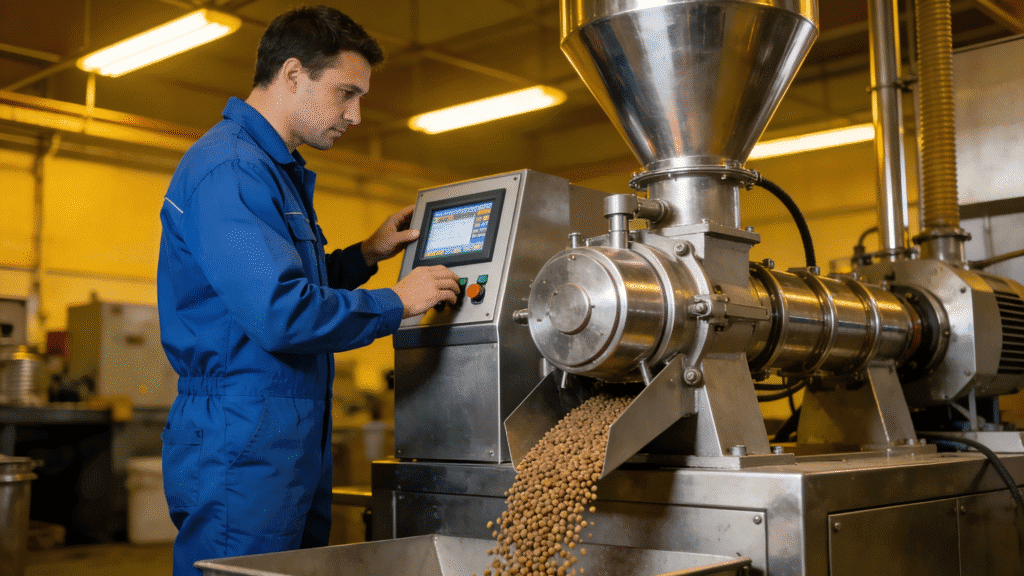
- Professional Installation: Ensure a qualified team handles the installation. Heavy machinery requires properly poured concrete foundations with precise anchor bolt placement to prevent vibration and misalignment . All connections in the conveying system must be tightly sealed to prevent dust leakage .
- Systematic Commissioning: Begin with stand-alone testing of each machine to check for correct rotation, abnormal noise, and proper function. Then, move to joint debugging, running the entire line with materials to ensure smooth material flow, accurate batching, and final product quality meets specifications .
- Training and Maintenance: Your staff must be thoroughly trained on safe and efficient operation. Establish a preventive maintenance schedule for regular lubrication, inspection of wear parts (dies, rollers, screens), and calibration of sensors and scales .
Investing in a fish feed production plant is a complex but potentially rewarding venture. Success hinges on a disciplined approach that begins with a clear product definition and market analysis, proceeds through careful site and technology selection, and is underpinned by robust financial planning and a commitment to quality. By thoroughly investigating each of these areas, investors can mitigate risk and build a facility capable of producing high-quality feed that supports the growth of the global aquaculture industry.